

Antibacterial Soap for Tattoos: What New Ink Actually Needs
You usually don’t need an over-the-counter antibacterial soap to clean a fresh tattoo. Clinical guidance and professional tattoo artists consistently point to the same conclusion: a gentle, unscented liquid soap or a tattoo-formulated foaming cleanser does the job without the risks that come with harsh antibacterial agents. Right now, reach for a fragrance-free gentle soap or a product like TBNC Tattoo Foaming Soap. The one exception is if a clinician has specifically prescribed an antiseptic wash because of an infection or a compromised immune condition.
-
Verdict: Gentle, unscented soap beats antibacterial labels for most healthy people healing a new tattoo.
-
What to use now: Fragrance-free liquid soap, castile soap, or a tattoo-formulated foaming cleanser.
-
Exception: Follow clinician instructions if you’ve been prescribed a medicated wash.
Table of Contents
Do you actually need antibacterial soap for a fresh tattoo?
No. For the vast majority of people with healthy immune systems, a plain gentle soap cleans a new tattoo just as effectively as an antibacterial product, and with less risk of irritation. The Cleveland Clinic’s tattoo aftercare guidance emphasizes gentle cleansing and monitoring for infection signs rather than routine use of over-the-counter antibacterial soaps.
The primary goal of washing a fresh tattoo is to remove plasma, excess ink, and surface debris, not to sterilize the skin. Your tattoo artist already worked in a regulated, sterile environment. What the skin needs now is a calm, supportive wash that keeps the wound clean without stripping the moisture barrier that healing depends on.
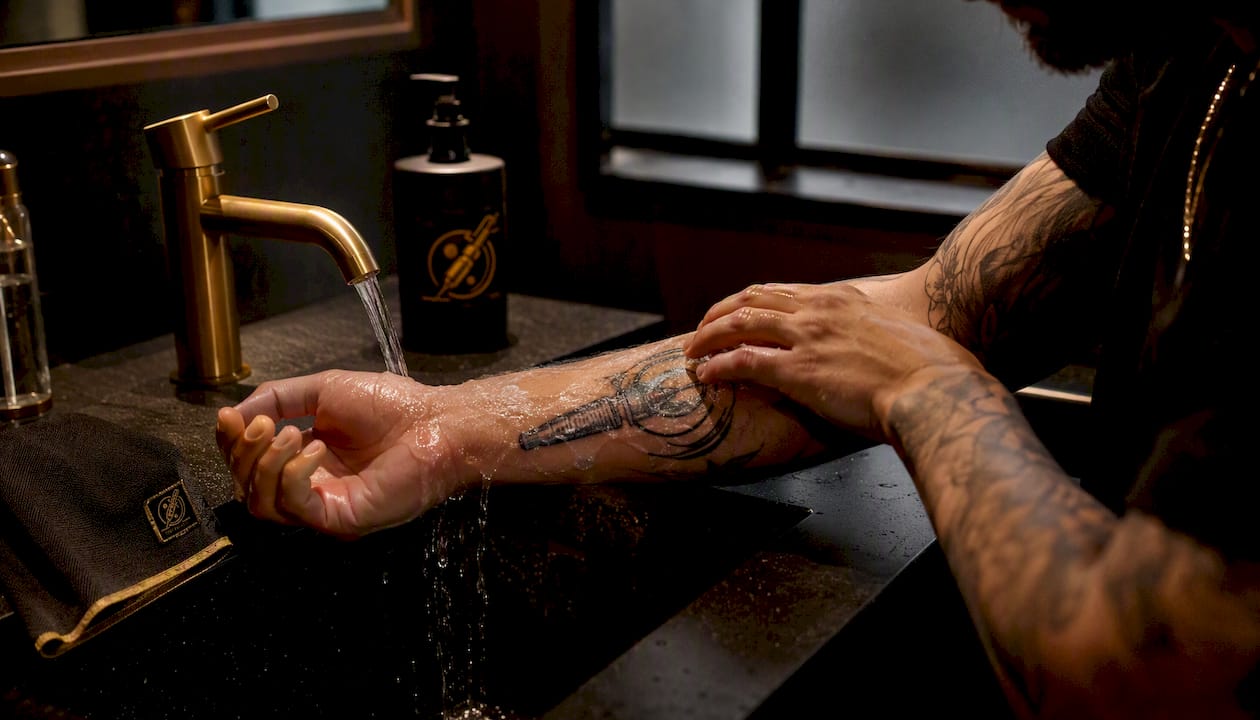
Antibacterial products become reasonable in specific situations: visible signs of infection (spreading redness, pus, fever), a clinician’s direct recommendation, or a compromised immune system. In those cases, follow medical advice precisely.
Pro Tip: Ask your tattoo artist before you leave the studio which cleanser they recommend. Many professional artists have a preferred brand or formula they’ve tested on hundreds of clients. Their specific guidance overrides general advice every time.

What does “tattoo-safe” cleansing actually look like?
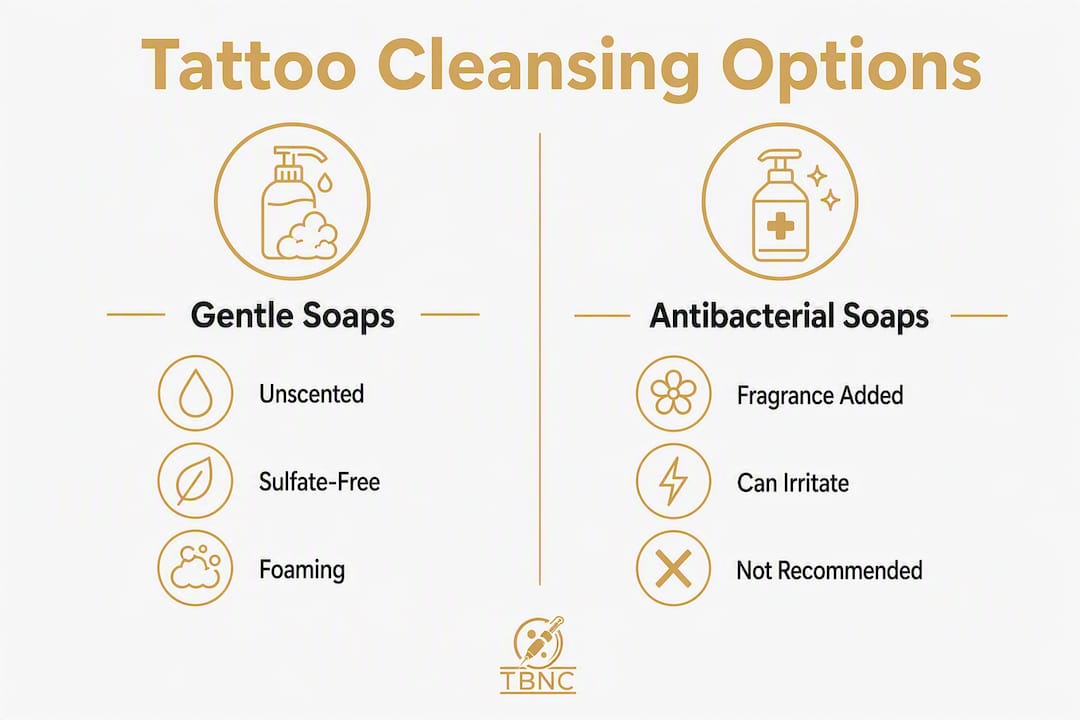
A tattoo-safe wash is gentle, pH-appropriate, non-irritating, and always done with clean hands. That’s the whole framework. Castile and other mild plant-based soaps are widely recommended by tattoo artists because they clean without over-drying or disrupting the skin’s acid mantle.
Do:
-
Wash your hands thoroughly before touching the tattoo.
-
Use warm (not hot) water to wet the area gently.
-
Apply a small amount of unscented gentle liquid soap, castile soap, or a tattoo-formulated foaming cleanser with your fingertips.
-
Rinse completely until no soap residue remains.
-
Pat dry with a clean paper towel or let the area air dry.
Don’t:
-
Scrub with a washcloth, loofah, or any abrasive material.
-
Use scented soaps, body washes, or anything with added fragrance.
-
Soak the tattoo in water (no baths, pools, or hot tubs).
-
Rub aggressively when drying.
After washing, the skin should feel calm and slightly damp, not tight, squeaky, or stinging. If it stings, the product is too harsh. Acceptable product categories include unscented gentle liquid soap, castile soap, hypoallergenic sulfate-free liquid soap, and tattoo-formulated foaming soaps. Foaming, unscented tattoo-formulated soaps are specifically designed for the frequency of washing a healing tattoo demands.
Ingredients and habits to avoid while your tattoo heals
Certain ingredients actively work against healing skin. Avoid them from day one.
Ingredients to skip:
-
Fragrance or parfum: Even “natural” scents can trigger contact dermatitis on broken skin.
-
High-concentration alcohol (ethanol, isopropyl): Strips the moisture barrier and delays re-epithelialization.
-
Harsh sulfates (SLS, SLES): Overly aggressive surfactants that can irritate a fresh wound.
-
Benzalkonium chloride in high concentrations: Found in many “antibacterial” hand soaps; can be cytotoxic to healing tissue.
-
Strong antiseptics (iodine, hydrogen peroxide): These kill bacteria indiscriminately, including the cells your skin needs to rebuild.
Behavioral habits that slow healing:
-
Picking or scratching scabs (pulls out ink and opens the wound to bacteria).
-
Submerging in hot tubs, pools, or natural bodies of water during the first 2–4 weeks.
-
Direct sun exposure on unhealed skin.
-
Applying heavy petroleum-based ointments in thick layers that trap moisture and block airflow.
Some commercial tattoo soaps advertise disinfecting properties while pairing those claims with moisturizing, alcohol-free bases to reduce irritation risk. That balance matters. A product that disinfects aggressively without a moisturizing counterpart can leave the skin barrier compromised.
Liquid vs. bar vs. foaming soap: which format works best?
Liquid and foaming unscented soaps generally outperform bar soaps for healing tattoos. They’re easier to dilute, rinse cleanly, and don’t accumulate bacteria on a shared surface.
Liquid soap:
-
Easiest to control the amount applied.
-
Rinses completely with warm water.
-
Wide range of formulations, so read labels carefully for fragrance and sulfate content.
Bar soap:
-
Can harbor bacteria on the surface between uses, especially in a shared bathroom.
-
Harder to apply with fingertip-only technique without pressing too firmly.
-
If you use one, keep it dry between uses and dedicate it solely to your tattoo.
Foaming soap:
-
Pre-diluted, so it’s inherently gentler and less likely to over-concentrate on sensitive skin.
-
Covers the area evenly with minimal mechanical pressure.
-
Artist-formulated cleansers in foam format emphasize pH balance and alcohol-free formulas specifically to protect healing skin.
For most people washing a fresh tattoo two to three times daily, a foaming tattoo-formulated soap is the most practical choice. The TBNC Tattoo Foaming Soap fits this profile: unscented, pH-balanced, and designed for the gentle frequency that new tattoos require.
How to wash a fresh tattoo, step by step
The routine is simple. Done correctly, it takes under two minutes and protects your investment.
- Apply a thin layer of a recommended aftercare product, such as a tattoo aftercare balm or soothing gel.
Pro Tip: Lukewarm water is the right temperature. Hot water dilates blood vessels and can push ink out of a fresh wound. If the water feels warm on your wrist, it’s too hot for your tattoo.
Common aftercare mistakes and red flags to watch for
Simple mistakes account for most avoidable complications. The good news is they’re easy to correct once you know what to look for.
Top mistakes:
-
Over-washing (more than 3 times daily strips the skin barrier).
-
Applying thick layers of ointment that seal in moisture and block airflow.
-
Picking or peeling scabs before they fall off naturally.
-
Using scented lotions or body butters not formulated for healing skin.
-
Switching products mid-heal without a clear reason.
Red flags that need attention:
If you see any of those signs, contact your tattoo artist first. They’ve seen hundreds of healing tattoos and can tell you quickly whether what you’re experiencing is typical. If they’re concerned, or if you have a fever, see a clinician promptly. Don’t wait and hope it resolves.
What to expect: typical healing timeline for a new tattoo
Most tattoos go through the same stages, though size, placement, and individual skin type affect the pace.
| Phase | Timeframe | What You’ll See | Care Focus |
|---|---|---|---|
| Initial healing | Days 0–3 | Redness, swelling, plasma weeping, tenderness | Gentle washing 2–3x daily, thin aftercare layer |
| Flaking and scabbing | Days 3–14 | Peeling skin, light scabbing, itching | Keep moisturized, do not pick |
| Re-epithelialization | Weeks 2–4 | Scabs fall off, skin looks milky or dull | Reduce wash frequency, continue moisturizing |
| Color settling | Weeks 4+ | True colors emerge, skin normalizes | Regular care, SPF on healed skin outdoors |
Variability is normal. A large back piece heals differently than a small wrist tattoo. Placement over joints or high-friction areas tends to take longer. If your tattoo is still actively scabbing at week four, consult your artist.
-
Days 0–3 are the highest-risk window for contamination. Stick to the washing routine.
-
Itching during weeks 2–3 is normal. Slapping the area gently is safer than scratching.
-
Color that looks faded during peeling usually returns once the outer layer sheds.
What clinical sources and experts actually say
Mainstream clinical guidance consistently emphasizes gentle cleansing and monitoring rather than routine antibacterial soaps for healthy individuals. The Cleveland Clinic recommends washing with mild soap and water and watching for infection signs rather than reaching for medicated cleansers by default.
Key guidance points from clinical and professional sources:
-
What’s the Best Soap for Tattoos? Castile Soap for Tattoo Aftercare – Dr. Bronner’s
-
King Louie’s Royal Soap™ – Professional Tattoo Cleanser & Aftercare | King Louies Tattoo Parlor
-
Tattoo Goo Deep Cleansing Soap, Tattoo and Piercing Aftercare - 3 oz. - Tattoo Unleashed
-
IMPRESA [2 Pack] Tattoo Cleaning Soap – Piercing & Tattoo Foam Soap – Gentle, Moisturizing Vegan Unscented – Tattoo Aftercare Soap & Piercing Cleanser – Tattoo Care Products, Made in USA – 14oz Total - IMPRESA
-
The Importance of TBNC Tattoo Foaming Soap in Tattoo Aftercare
Key Takeaways
A gentle, unscented soap or tattoo-formulated foaming cleanser is the right choice for most new tattoos; antibacterial soaps are only warranted when a clinician specifically recommends them.
| Point | Details |
|---|---|
| Skip the antibacterial label | Gentle, unscented soap cleans effectively without the irritation risk of antibacterial agents. |
| Wash 2–3 times daily | Maintain this frequency for the first two weeks, then reduce as the skin heals. |
| Avoid these ingredients | Fragrance, high-alcohol content, harsh sulfates, and strong antiseptics slow healing. |
| Know the red flags | Spreading redness, fever, or worsening pain after day three warrants prompt attention. |
| TBNC Tattoo Foaming Soap | A pH-balanced, fragrance-free foaming option aligned with clinical and artist aftercare guidance. |
The case for formulated soap over the antibacterial aisle
Here’s the honest take: the antibacterial soap debate in tattoo aftercare is mostly a marketing problem, not a science problem. The clinical answer has been consistent for years. Gentle cleansing protects healing skin. Aggressive antibacterial agents, used routinely on a wound that doesn’t need them, create more problems than they solve.
What gets lost in that debate is the more useful question: not “antibacterial or not?” but “does this soap respect the skin’s healing process?” A product can be effective at removing plasma and debris, pH-appropriate for broken skin, and free of the ingredients that cause contact dermatitis, all without carrying an antibacterial claim on the label.
Tattoo-formulated foaming soaps exist precisely because the frequency of washing a new tattoo demands something gentler than what most bathroom shelves offer. The format matters too. Foam pre-dilutes the cleanser, reducing the concentration that contacts the skin with every wash. That’s not a small detail when you’re washing the same wound two or three times a day for two weeks.
The collectors who heal best aren’t the ones who use the most products. They’re the ones who pick the right ones and stay consistent.
TBNC Tattoo Foaming Soap: built for exactly this routine
Fresh ink deserves a cleanser that was designed for it, not adapted from a hand-washing formula. TBNC Tattoo Foaming Soap is unscented, pH-balanced, and formulated to remove plasma and surface debris without stripping the moisture barrier your skin needs to heal. It fits directly into the step-by-step routine above: a small pump applied with fingertips, rinsed clean with lukewarm water, followed by a thin layer of aftercare balm or lotion.

TBNC Tattoo’s full aftercare product collection pairs the Foaming Soap with balms, soothing gels, and unscented lotions so you have everything the healing timeline calls for in one place. Trusted by over 3,250 studios, the line is built around the same principles clinical guidance supports: gentle, consistent, barrier-respecting care. Browse the collection and add the Foaming Soap to your aftercare kit before your next session.
Useful sources
-
Dr. Bronner’s: Best Soap for Tattoos — Artist and brand perspective on castile soap for tattoo aftercare.
-
King Louie’s Royal Soap — Artist-formulated cleanser emphasizing pH balance and alcohol-free formulas.
-
Tattoo Goo Deep Cleansing Soap — Market example of a tattoo soap pairing cleansing claims with a moisturizing base.
-
IMPRESA Tattoo Foam Soap — Foaming, unscented tattoo-formulated soap example.
-
TBNC Tattoo Foaming Soap Guide — TBNC’s product guidance and usage recommendations.
-
TBNC Tattoo Aftercare Guide — Comprehensive post-tattoo healing guide from TBNC Tattoo.
This article is general information, not medical advice. For personalized guidance, consult your tattoo artist or a qualified clinician.
FAQ
Can I use Dial antibacterial soap on my tattoo?
Dial antibacterial soap is not recommended for new tattoos. It typically contains fragrance and antibacterial agents that can irritate healing skin and disrupt the moisture barrier; a plain unscented gentle soap is a safer choice.
What can I wash my tattoo with if I don’t have antibacterial soap?
A fragrance-free, sulfate-free gentle liquid soap or castile soap works well. Tattoo-formulated foaming soaps like TBNC Tattoo Foaming Soap are also designed specifically for this purpose.
Is Dove antibacterial soap okay for tattoos?
Dove’s antibacterial variants contain added antimicrobial agents and fragrance that can irritate a fresh tattoo. The original unscented Dove bar is gentler, though a liquid unscented soap is easier to apply without pressing too firmly on healing skin.
Can you use antibacterial bar soap on a tattoo?
It’s generally not the best option. Bar soaps can harbor bacteria on the surface between uses, and antibacterial formulas often include ingredients that slow healing on fresh wounds. Stick to unscented liquid or foaming soap unless a clinician directs otherwise.


