

Use Aquaphor 1–3 Days, Then Switch to Tattoo Balm Day 4
Use Aquaphor sparingly as a short-term bridge, generally the first one to three days after your session, then switch to a breathable, tattoo-specific balm or unscented lotion for the rest of healing. Aquaphor’s thick, petroleum-based formula protects raw skin early on, but it isn’t built for the peeling and skin-repair phase that follows. Thin layers matter more than which product you choose, since over-application is the real culprit behind soggy, irritated tattoos.
TL;DR:
- Aquaphor should only be used for the first three days after a tattoo, as it protects raw skin but hinders peeling and shedding later.
- After day three, switching to a breathable tattoo balm or unscented lotion supports cleaner peeling and reduces irritation.
- Applying Aquaphor requires very thin layers and careful resorption to avoid sogginess, bumps, or increased itching.
- Heavy, prolonged occlusion from petrolatum-based products traps fluid and slows the natural healing process during the peeling phase.
- Regional factors like skin type, tattoo location, and initial weeping influence which product and how long to use it effectively.
Table of Contents
- Aquaphor vs Tattoo Balm: The Quick Comparison
- How Do You Apply Aquaphor Correctly?
- Why Do Balms Work Better for Later Healing Stages?
- What Does the Research Say About Staged Aftercare?
- How Do You Choose Based on Skin Type and Tattoo Location?
- TBNC’s Perspective on Staged Tattoo Aftercare
- Build Your Full Aftercare Routine With TBNC
- Sources
- FAQ
Aquaphor vs Tattoo Balm: The Quick Comparison
Aquaphor earns its reputation the old-fashioned way: it’s occlusive, cheap, and sitting in nearly every American drugstore. Its petrolatum base locks in moisture and shields a fresh tattoo from air and bacteria during those first raw days, which is exactly why so many artists still send clients home with a sample packet. The catch is that the same sealing power that helps on day one works against you by day five, when your skin needs to breathe and shed dead tissue.
Tattoo-specific balms take a different approach. Formulas like TBNC’s Tattoo Aftercare Balm blend lighter emollients that support the peel phase without smothering it, and they tend to carry a lower allergen risk for people with sensitive or acne-prone skin. Field comparisons consistently find that breathable balms often produce cleaner peeling and better overall comfort once the initial swelling settles.
Here’s the quick version:
- Pick Aquaphor for the first one to three days, when the tattoo is still weeping and you need a protective barrier.
- Pick a tattoo balm once peeling starts, typically day four onward, when your skin needs airflow more than occlusion.
- Call your artist or a dermatologist if you notice spreading redness, heat, pus, or a rash that doesn’t fade within 48 hours.
How Do You Apply Aquaphor Correctly?
Getting Aquaphor right comes down to restraint. Wash the tattoo gently with fragrance-free soap, pat it dry (never rub), and apply a layer so thin it looks like a chapstick smear rather than a coating. Reapply two to three times a day, and skip a round if the skin still looks shiny or slightly greasy from the last application.
- Wash hands and the tattoo before every application.
- Pat dry completely; damp skin traps product underneath.
- Apply a rice-grain-sized amount per palm-sized area.
- Reapply two to three times daily for one to three days, then stop.
- Watch for sogginess, small bumps, or increased itching, all signs you’re using too much.
If you spot those warning signs, stop applying Aquaphor immediately, clean the area gently with mild soap and water, and let it air out. If redness spreads, the site feels hot, or you see pus, seek medical care rather than waiting it out.
Pro Tip: If your tattoo still looks shiny an hour after applying Aquaphor, you used too much. Wipe the excess off with a clean, damp paper towel instead of leaving it to soak in.
Why Do Balms Work Better for Later Healing Stages?
Petrolatum-based ointments seal the skin almost completely, which helps in the first stretch but can trap dead skin, oils, and wound fluid once the tattoo starts flaking. That trapped moisture creates a soggier peel and, in some cases, thicker crusting that pulls at healing ink. Breathable balm formulas let air exchange happen while still cushioning the skin, which tends to support cleaner shedding and less itch.
Ingredients matter here. Many tattoo balms combine:
- Hyaluronic acid, which draws in moisture without sealing the skin shut.
- Glycerin, a humectant that hydrates without the heavy occlusive film.
- Botanical emollients like shea or cocoa butter, which soften skin during flaking.
Aquaphor’s own formulation includes petrolatum alongside lanolin alcohol, a known allergen for some people. If you’ve reacted to lanolin-containing lip balms or lotions before, a lanolin-free tattoo balm is the safer call from day one, not just after the switch.
What Does the Research Say About Staged Aftercare?
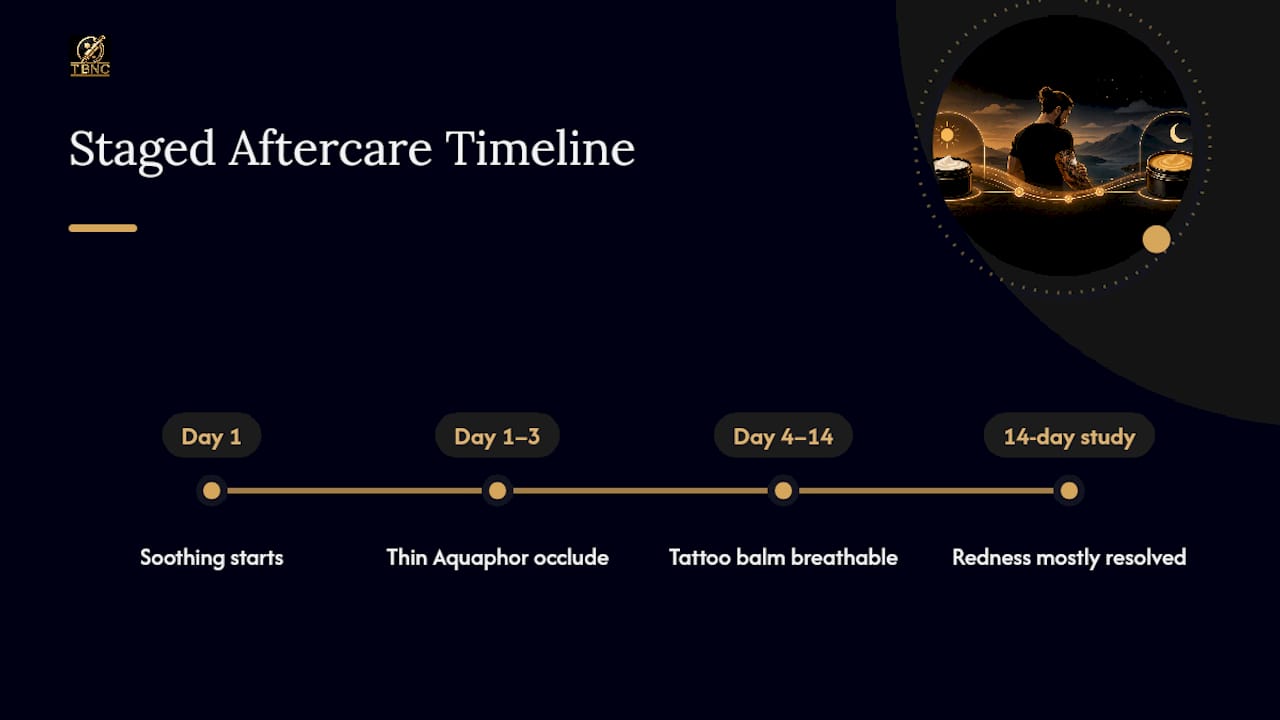
A 14-day clinical study on dermo-cosmetic tattoo aftercare found that a moisturizing product applied twice daily produced meaningful results: redness resolved for 96 to 100% of the 30 subjects tested, edema disappeared, and 87% of participants tolerated the product well with visible soothing effects starting on day one.
The study’s authors noted that consistent, moderate moisturization, not heavy occlusion, drove the improvement in both comfort and visible skin repair over the two-week window.
That’s a small trial, and it studied one specific product line rather than Aquaphor directly, so treat it as supportive evidence rather than a universal rule. Still, it lines up with what dermatological sources and practicing artists report anecdotally: thin, short-term occlusion helps; extended heavy occlusion tends to backfire by trapping fluid and slowing the skin’s natural shedding process.
The practical takeaway is straightforward. A thin layer for a few days supports healing. Days of thick petrolatum piled on top of peeling skin usually works against it.
How Do You Choose Based on Skin Type and Tattoo Location?
Your skin type, the tattoo’s location, and how much it wept in the first 24 hours all factor into which product makes sense and for how long.
- Check your allergy history first. If you’ve reacted to lanolin, fragrance, or heavy petroleum products before, start with a lanolin-free balm instead of Aquaphor.
- Factor in skin type. Acne-prone or oily skin does better with lighter, non-comedogenic balms; very dry skin can tolerate Aquaphor a day or two longer.
- Account for friction. Tattoos on hands, feet, or waistbands shed faster and need breathable coverage sooner than a forearm piece.
- Match your schedule to healing stage. Days 0 through 3: a thin layer of Aquaphor or Tattoo Soothing Gel. Days 4 through 14: a tattoo balm or unscented lotion. After full healing: your regular daily moisturizer.
- Know the red flags. Spreading redness, fever, pus, or a rash that worsens past 48 hours means it’s time to call your artist or see a clinician, not wait it out.
TBNC’s Perspective on Staged Tattoo Aftercare
Aquaphor isn’t the enemy here. Used thin and short, it does its job. TBNC Tattoo’s issue is with how long people keep using it out of habit rather than need.
Our aftercare line is built around the same staged logic the clinical evidence supports: Tattoo Soothing Gel for immediate post-session comfort, Tattoo Aftercare Balm for the peel phase, and unscented lotion for the stretch after that. That structure isn’t a marketing gimmick, it’s dermatologist-approved formulation used across more than 3,250 studios worldwide. We’d rather see you use Aquaphor correctly for three days than misuse a fancier balm for two weeks. The point is matching the product to the stage, not defending a brand for its own sake.
— The Best Numbing Cream
Build Your Full Aftercare Routine With TBNC
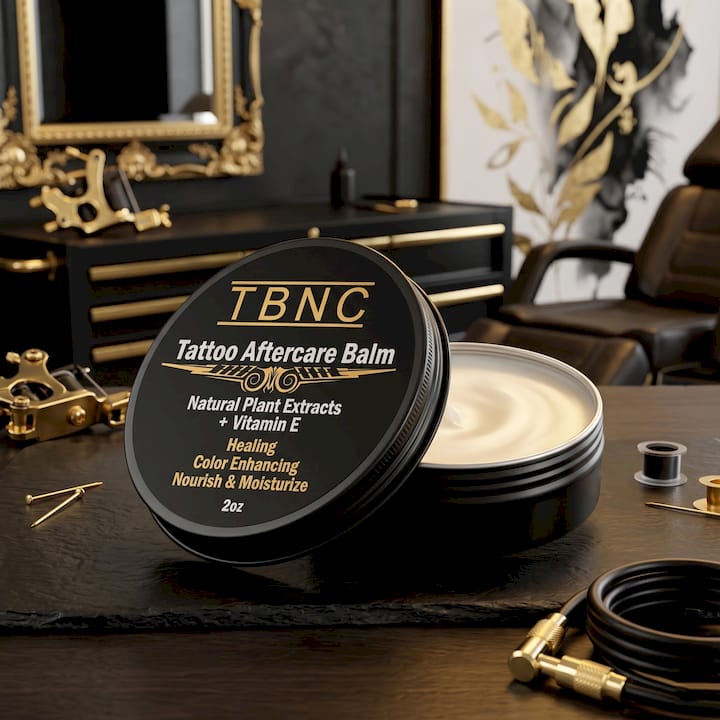
TBNC Tattoo maps every stage of healing to a specific product instead of leaving you guessing which jar to reach for on day six. Start with Tattoo Soothing Gel in the first 72 hours for lightweight comfort without the sogginess risk that comes with over-applying Aquaphor. Once peeling starts, move to the Tattoo Aftercare Balm, formulated to support flaking skin without clogging pores, then finish the healing window with Tattoo Aftercare Lotion, Unscented for long-term hydration.
First-timers who want the entire routine sorted in one order should check the Tattoo Numbing & Aftercare Bundle, which pairs numbing cream with the full aftercare lineup. If you’re only shopping for numbing before your appointment, the Tattoo Numbing Bundle and Ultra Tattoo Numbing Bundle both cover longer sessions. Browse the full aftercare collection to pick sizes that match your tattoo’s scale, and place your order before your next appointment.
Sources
This article draws on a peer-reviewed dermo-cosmetic tattoo aftercare study, DailyMed’s official Aquaphor ingredient listing, Healthline’s tattoo aftercare explainer, and comparative field testing on Aquaphor versus tattoo balm. For sensitive-skin emollient options beyond tattoo care, Luméra Cosmetica’s guide to lip balm types offers useful background on non-irritating formulas.
- Tattoo aftercare management with a dermo‐cosmetic product: Improvement in discomfort sensation and skin repair quality - PMC
- Can You Use Aquaphor on a New Tattoo? (Healthline)
- Aquaphor (label / ingredients) — DailyMed
- Aquaphor vs Tattoo Balm: Which Wins? | ReviewTattoo
FAQ
Why do tattoo artists say not to use Aquaphor long-term?
Many artists worry that extended use traps wound fluid under an occlusive layer, which can thicken crusting, increase itch, and slow natural peeling; short-term use is generally fine.
What is better for tattoo healing, lotion or Aquaphor?
Aquaphor works best for the first few protective days, while an unscented lotion or tattoo balm tends to work better once peeling begins, since it hydrates without sealing the skin shut.
Do tattoos heal faster with Aquaphor?
Clinical evidence on moisturizing dermo-cosmetic products shows improved comfort and visible skin repair within days, but that speed comes from consistent thin moisturizing, not from Aquaphor specifically or from applying it thickly.
What is better for a tattoo, Vaseline or Aquaphor?
Aquaphor is the better of the two because it contains humectants alongside petrolatum, giving it some hydrating benefit, while plain Vaseline offers occlusion with none of that added moisture support.


