

4% Lidocaine for Tattoos: TBNC Picks That Follow FDA Safety
Properly labeled OTC 4% lidocaine products, applied correctly, offer the safest and most reliable path to a more comfortable tattoo session. TBNC Tattoo’s numbing and aftercare line is built around that exact concentration and the FDA’s application guidance. Anything marketed above 4% without clinical oversight raises real risk of seizures, irregular heartbeat, and other dangerous reactions.
TL;DR:
- Products containing more than 4% lidocaine are unsafe for tattoo numbing and pose risks of seizures and irregular heartbeat, especially if misused.
- The most effective and safe tattoo numbing products follow the FDA’s 4% lidocaine guideline and are designed with skin-friendly ingredients for repeated use.
- Application should involve a patch test, thorough skin cleaning, and avoiding occlusion or applying on broken skin to minimize absorption risks.
- Among formulations, lidocaine works by blocking nerve signals; higher concentrations do not mean better pain relief and increase systemic danger.
- Reapplication should be careful, limited to the tattoo area being worked on, and timed precisely to ensure safety and effectiveness during longer sessions.
Table of Contents
- Which TBNC Products Work Best for Your Tattoo
- What Does the FDA Say About Lidocaine Safety?
- How to Apply Numbing Cream Safely Before a Tattoo
- Lidocaine vs. Prilocaine vs. Tetracaine: What’s the Difference?
- How Long Does Tattoo Numbing Cream Actually Last?
- Why We Recommend TBNC’s Dermatologist-Approved Line
- Our Take: Stronger Isn’t Safer
- Where to Buy TBNC Numbing and Aftercare Products
- Sources
- FAQ
Which TBNC Products Work Best for Your Tattoo
Not every session calls for the same numbing strategy. A two-hour back piece and a twenty-minute wrist touch-up have different pain profiles, different skin exposure, and different aftercare needs. Matching the product to the situation matters more than reaching for whatever has the biggest jar.
The core lineup breaks down like this:
- The Best Numbing Cream (2 Pack): typically sized for a single medium session or two smaller ones at 4% lidocaine concentration.
- The Best Numbing Cream (5 Pack): comes in a larger quantity intended for frequent use or multiple appointments.
- Tattoo Numbing Bundle: includes numbing cream along with select essentials for a typical tattoo session.
- Tattoo Numbing & Aftercare Bundle: combines numbing cream with aftercare products suitable for post-tattoo healing.
- Ultra Tattoo Numbing Bundle: intended for longer sessions or areas of higher pain requiring extended numbing coverage and possible reapplication.
- Tattoo Aftercare Lotion (Unscented): a fragrance-free aftercare option, designed for sensitive skin during healing.
- Tattoo Aftercare Balm: a richer product intended for use during healing stages where extra moisture retention is needed.
- Tattoo Soothing Gel: a lighter aftercare product designed for use during the initial 24 to 48 hours post-tattoo when inflammation and heat are greatest.
For a first tattoo under two hours, the standard 2 Pack or the Tattoo Numbing Bundle covers most needs. For full-day sessions or repeat sittings on large pieces, the Ultra Tattoo Numbing Bundle or the 5 Pack make more sense financially and practically, since you will likely need multiple applications across the appointment. Sensitive skin types, especially those prone to eczema or contact dermatitis, tend to do better with the unscented aftercare lotion rather than a fragrance-heavy alternative.
Pro Tip: Buy your numbing cream and aftercare together if you can. Studios rarely stock every SKU, and having the right soothing gel or balm ready before you leave the chair prevents a scramble at the pharmacy with irritated, freshly tattooed skin.

Size format matters more than people expect. A single small jar might look like enough for a forearm piece, but once you factor in the layer thickness the labeling recommends and the possibility of a touch-up reapplication, most clients underestimate how much they need. Bundles solve that guesswork by pairing the right volume with the right session length instead of leaving you to eyeball it.
What Does the FDA Say About Lidocaine Safety?
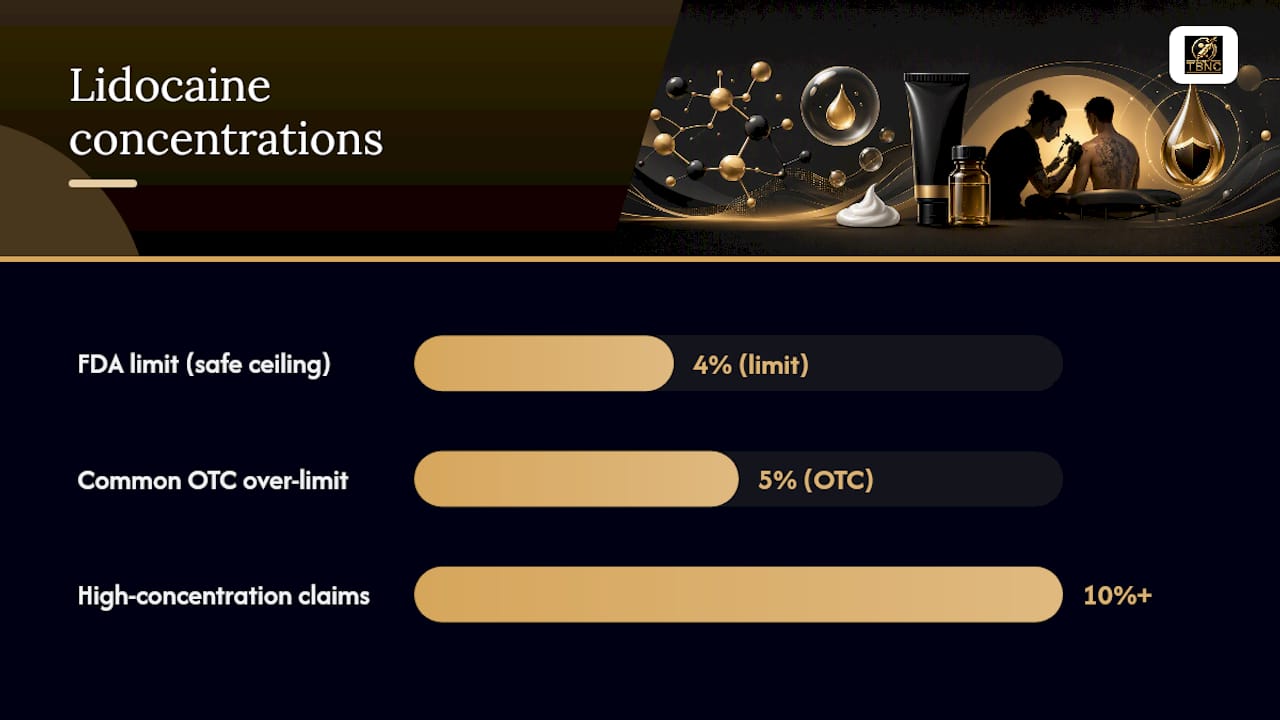
The FDA has warned consumers to avoid OTC topical pain relief products that contain more than 4% lidocaine, specifically flagging products marketed for tattooing and similar cosmetic procedures. That 4% threshold isn’t arbitrary. It reflects the point past which topical absorption starts posing a meaningful risk of systemic toxicity, including seizures and irregular heartbeat, particularly when the product is misused.
The FDA issued warning letters in 2024 and 2025 to multiple sellers of high-concentration or noncompliant topical analgesics marketed specifically for tattoo numbing. Several of those products claimed concentrations of 10% or higher, sometimes marketed as “extra strength” or “professional grade” without any clinical backing for that framing.
Products advertised at 5%, 10%, or higher lidocaine concentrations sold over the counter for tattoo numbing sit outside FDA-recommended limits and carry documented safety warnings.
Three application habits push risk higher regardless of concentration:
- Covering treated skin with plastic wrap or bandages, which the FDA specifically warns against because occlusion drives more of the drug into the bloodstream.
- Applying over large surface areas in a single session, since more skin coverage means more absorption.
- Using on broken, cut, or irritated skin, which removes the natural barrier that slows absorption and lets lidocaine enter circulation faster than intended.
Before you commit to any numbing cream, run a patch test on a small area of skin at least 24 hours ahead of your appointment. Watch for redness, swelling, or itching beyond mild tingling. If you’re on medications that affect heart rhythm, blood pressure, or liver metabolism, or if you have a known cardiovascular condition, talk to a doctor before using any lidocaine product. And if you have widespread skin conditions like eczema flares or psoriasis in the tattoo area, skip the numbing cream that day rather than applying it over compromised skin. Our OTC lidocaine limits guide breaks down exactly how the 4% ceiling compares to prescription-strength options your dermatologist might use.
How to Apply Numbing Cream Safely Before a Tattoo
Getting the timing and technique right is what separates a numbing cream that actually works from one that just sits on your skin doing very little.
- Patch test first. Apply a small amount to your inner forearm 24 to 48 hours before your session and watch for any reaction.
- Clean the area. Wash the tattoo site with soap and water and let it dry fully before application, following the same prep steps outlined on OTC lidocaine product labeling.
- Apply a thick, even layer only to the exact area being tattooed. Don’t extend it onto surrounding skin “just in case.”
- Skip the plastic wrap. The FDA’s guidance is explicit that occluding treated skin increases absorption risk, so resist the urge to wrap the area for a “deeper” effect.
- Wait roughly a half hour, then wipe off the excess cream. Peak numbness typically hits shortly after removal, which is the window your artist should be starting in.
- Reapply sparingly if the session runs long, and never exceed the surface area guidance on the label or what your artist recommends for a multi-hour sitting.
Surface area matters more than most people realize. Clinical dosing references put the maximum safe topical lidocaine exposure on intact skin at roughly 5 mg per kilogram of body weight, which is why covering an entire back or thigh in a single application isn’t something any responsible product label supports. If you’re planning a large-scale piece, talk to your artist about numbing only the section being worked on during that sitting rather than the whole design at once. Our surface area and body guide walks through specific limits by body region.
Pro Tip: Set a timer for your wait period instead of guessing. Numbing cream that’s removed too early hasn’t fully penetrated, and cream left on too long past the labeled window doesn’t add extra numbness, it just increases absorption risk for no benefit.
If you’re on blood thinners, have a known heart rhythm condition, or are pregnant, check with a clinician before using any topical anesthetic, even at OTC strength.
Lidocaine vs. Prilocaine vs. Tetracaine: What’s the Difference?
Lidocaine works by blocking voltage-gated sodium channels in nerve membranes, which interrupts pain signals from reaching the brain. That mechanism makes it effective at reducing pain intensity, though it’s not a switch that turns pain off entirely. Expect meaningfully less discomfort, not a completely numb experience.
Other topical anesthetics work through similar sodium channel blockade but differ in potency, onset speed, and how long they last:
- Plain lidocaine creams (4%): the OTC standard, moderate onset around 30 to 45 minutes, decent duration once absorbed.
- EMLA (lidocaine/prilocaine combination): typically needs 60 to 90 minutes under occlusion to reach full effect, which makes timing tighter for walk-in appointments.
- Lidocaine/tetracaine peel formulations: clinical evidence shows faster onset and stronger pain reduction for some dermatologic procedures, but the higher-potency vehicle changes absorption rates and requires tighter area limits.
- Benzocaine-based products: generally weaker and shorter-acting than lidocaine at comparable concentrations, and carry their own rare but serious risk of methemoglobinemia at high doses.
Mixing multiple “caine” agents, or adding a vasoconstrictor like epinephrine to prolong numbness, changes the risk profile enough that those combinations are typically reserved for prescription or clinician-administered use rather than something you’d apply at home. Vasoconstrictors can extend numbness, but they also reduce local blood flow, which can complicate healing in the hours after your tattoo. For a deeper side-by-side on formulation differences, see our lidocaine vs. prilocaine vs. tetracaine comparison.
How Long Does Tattoo Numbing Cream Actually Last?
Most 4% lidocaine creams start working within 30 to 45 minutes of application and peak shortly after you wipe off the excess, per DailyMed’s labeled application guidance. Numbness generally holds for the first 60 to 90 minutes of tattooing before it starts to fade, which is exactly why session planning matters as much as the product itself.
Here’s the part most people don’t expect: numbing cream works best on intact skin. Once the needle starts breaking the surface, lidocaine’s ability to penetrate drops, because inflamed and broken tissue interferes with how the drug diffuses into nerve cells. That’s not a flaw in the product. It’s a basic property of how topical anesthetics function once the skin barrier they were designed to cross is gone.
- Expect strong numbing for the first hour or so, tapering as the piece progresses.
- Body areas with thinner skin or higher nerve density (ribs, feet, hands) may need a shorter reapplication window than fleshier areas.
- Reapplication mid-session is reasonable if your artist pauses for a break, but stick to the same thin-layer, no-wrap approach used the first time.
- Don’t chase numbness by applying more cream directly onto already-broken skin. It won’t restore the original effect and adds absorption risk instead.
Planning a longer piece across a single sitting means accepting that the back half of the session will likely hurt more than the front half. That’s normal, not a sign the product failed.
Why We Recommend TBNC’s Dermatologist-Approved Line
TBNC Tattoo’s formulas are built around the FDA-aligned 4% lidocaine standard rather than chasing the marketing appeal of higher, unregulated concentrations. That decision shapes everything else about the recommendation.
- The numbing cream line is developed with skin-friendly, non-irritating ingredients.
- The product has been adopted by a large number of tattoo studios worldwide, indicating professional use beyond retail.
- The product has been used in numerous tattoo sessions, suggesting repeat use among clients.
- The product has received various industry recognitions and positive consumer feedback, reflecting client satisfaction.
A numbing product’s real test isn’t the concentration printed on the label. It’s whether tattoo studios keep buying it and clients keep coming back to it session after session.
For readers who want to go deeper on formulation choices, TBNC’s comprehensive guide to lidocaine in tattoo numbing cream and the OTC limits explainer both cover the reasoning behind staying within the 4% ceiling instead of following the “stronger is better” marketing angle that shows up on unregulated imports.
Formal third-party clinical testing data and dermatologist endorsement documentation for this product line are pending publication and will be added as they become available.
Our Take: Stronger Isn’t Safer
The conventional wisdom around tattoo numbing has always chased concentration. Ten percent. Twenty percent. Whatever number sounds most aggressive on a bottle. That instinct is backwards, and the FDA’s warning letters against high-strength unregulated sellers prove it. More lidocaine doesn’t mean more comfort past a certain point. It means more absorption, more systemic risk, and in documented cases, more emergency room visits.
That’s less exciting than a bottle claiming double-digit concentrations, but it’s the version backed by both regulatory guidance and consistent studio-level adoption. If you take one thing from this article, let it be this: check the percentage on the label before you check the price, and skip anything sold without clear, compliant labeling entirely.
— The Best Numbing Cream
Where to Buy TBNC Numbing and Aftercare Products
If you’re getting your first tattoo, the Tattoo Numbing Bundle gives you everything needed for a standard session without over-buying. Planning a longer sitting or a larger piece across multiple hours? The Ultra Tattoo Numbing Bundle is built for exactly that scenario, with enough product to cover reapplication without stretching a single small jar past its limits. Anyone who wants numbing and healing covered in one order should look at the Tattoo Numbing & Aftercare Bundle, which pairs the core numbing cream with soothing products for the days after your appointment.
For repeat collectors who go through numbing cream regularly, the 5 Pack is the more economical route than buying single jars each time. Whatever you choose, apply it the way this article laid out: thin layer, no wrap, correct timing, and never on broken or irritated skin.
This article is general information, not a substitute for advice from a qualified doctor. Consult a qualified healthcare professional about your own circumstances before acting on anything here.
Sources
- FDA warns consumers to avoid certain topical pain relief products due to potential for dangerous health effects
- Lidocaine - StatPearls - NCBI Bookshelf
- DailyMed - TATTOO NUMBING CREAM- lidocaine cream
- Topical anesthetics clinical review (PMC)
FAQ
What Is the Strongest Numbing Cream for Tattoos?
Prescription-strength or clinician-administered lidocaine/tetracaine formulations can offer stronger effects but require professional oversight.
Is 4% Lidocaine or 20% Benzocaine Stronger?
Lidocaine at any given concentration generally produces stronger, more reliable numbing than benzocaine at a comparable strength, and high-concentration benzocaine also carries a rare but serious risk of methemoglobinemia.
What Is the Best Numbing Cream for Tattoos?
TBNC Tattoo’s numbing cream line follows that standard and is used across thousands of tattoo studios.
Can I Wrap My Skin After Applying Numbing Cream?
No. The FDA specifically warns against wrapping or occluding treated skin because it increases absorption and raises the risk of serious side effects.
Why Does Numbing Cream Stop Working Once the Tattoo Starts?
Topical lidocaine numbs intact skin effectively, but once the needle breaks the surface, inflamed tissue interferes with drug diffusion into nerve cells. That’s a normal limitation of topical anesthetics, not a sign of a defective product.


