

Best Tattoo Numbing Spray: Top Picks for Pain-Free Sessions
For most collectors, the Tattoo Numbing & Aftercare Bundle from TBNC Tattoo is the single strongest starting point: it pairs dermatologist-approved lidocaine numbing with a complete aftercare lineup, covering you from the first needle stroke through the healing stretch. If you want a focused shortlist before diving deeper:
- Best overall: Tattoo Numbing & Aftercare Bundle — full session coverage, pre and post
- Best for repeat use: The Best Numbing Cream - TBNC - 2 Pack — two tubes of TBNC’s flagship cream, transparent labeling
- Best for long installs: Ultra Tattoo Numbing Bundle — larger quantities for studios and frequent clients
- Best spray + cream workflow: Tattoo Numbing Bundle — pairs cream for pre-session onset with spray for mid-session touch-ups
U.S. safety callout: The FDA limits OTC topical lidocaine to specific concentration thresholds: products applied to the skin without a prescription are generally capped at 5%. Always check the active ingredient percentage on the label, patch-test 24 hours before your session, and confirm your studio’s policy on topical anesthetics before applying anything on-site. Rolling the dice on an unlabeled product is never worth it.
Table of Contents
- How the best tattoo numbing sprays compare side by side
- Short reviews of every TBNC Tattoo product in this guide
- How to pick the right numbing spray for your session
- What you need to know about OTC lidocaine safety in the U.S.
- The final verdict: best picks by use case
- Key Takeaways
- Why ingredient transparency is the real differentiator
- TBNC Tattoo products for your next session
- FAQ
How the best tattoo numbing sprays compare side by side
The table below covers every TBNC Tattoo product in this guide across the dimensions that actually matter at the counter: active ingredient, onset, duration, primary use case, and where to buy. Sprays and creams work differently at a pharmacological level, so the format column matters as much as the lidocaine percentage.
| Product | Format | Active Ingredient | Onset | Duration | Best For | Aftercare Properties | Availability |
|---|---|---|---|---|---|---|---|
| Tattoo Numbing & Aftercare Bundle | Bundle (cream + aftercare) | Lidocaine | 20–45 min (cream) | Extended | Marathon sessions, full pre/post care | Yes — includes aftercare line | TBNC store |
| The Best Numbing Cream - TBNC - 2 Pack | Cream | Lidocaine | 20–45 min | Extended | Pre-session, repeat use | No | TBNC store |
| Tattoo Numbing Bundle | Cream + Spray | Lidocaine | Cream: 20–45 min / Spray: 5–15 min | Combined coverage | Cream + spray workflow, touch-ups | No | TBNC store |
| Ultra Tattoo Numbing Bundle | Bundle (premium) | Lidocaine | 20–45 min | Extended | Frequent clients, studio use | Yes — premium aftercare | TBNC store |
| Tattoo Aftercare Lotion - Unscented | Lotion | N/A (aftercare) | N/A | N/A | Sensitive skin, healing phase | Yes — fragrance-free moisturizer | TBNC store |
| Tattoo Aftercare Balm | Balm | N/A (aftercare) | N/A | N/A | Occlusive moisture during healing | Yes — nourishing barrier | TBNC store |
| Tattoo Soothing Gel | Gel | N/A (aftercare) | Immediate (cooling) | Short-term comfort | First 48–72 hours post-session | Yes — cooling, anti-irritant | TBNC store |
| Tattoo Aftercare Bundle | Bundle (aftercare) | N/A (aftercare) | N/A | N/A | Post-session healing, vibrancy | Yes — stepwise aftercare kit | TBNC store |
A quick note on reading the table: a higher lidocaine percentage does not automatically mean longer numbness. According to clinical pharmacology research on topical anesthetics, onset and duration depend on formulation, skin condition, and occlusion as much as concentration. A 5% spray applied mid-session on open skin absorbs faster than a 5% cream on intact skin with no wrap.
- Creams with occlusion (plastic wrap) generally deliver deeper, longer-lasting numbness for pre-session use.
- Sprays shine for rapid mid-session reapplication when the skin is already open.
- Products that disclose their lidocaine percentage give you a real basis for comparison; those that don’t are harder to evaluate.
Short reviews of every TBNC Tattoo product in this guide
1. Tattoo Numbing & Aftercare Bundle — best overall
The bundle that covers the whole session arc. You apply the numbing cream before your appointment, and the included aftercare products take over the moment the needle stops. For collectors booking multi-hour pieces, this is the format that makes the most sense: no separate aftercare run, no guessing which lotion is safe on fresh ink.
- Dermatologist-approved formulation with transparent labeling
- Pairs numbing and clinically minded aftercare in one purchase
- Available directly through the TBNC store
Usage caveat: Apply the cream to intact skin 20–45 minutes before your session under occlusion. Do not apply to large areas of broken or irritated skin.
2. The Best Numbing Cream - TBNC - 2 Pack — best for repeat clients
Two tubes of TBNC’s flagship cream. The value here is straightforward: you get a second tube without reordering, which matters when you’re booking back-to-back sessions or touching up a sleeve over multiple visits. The transparent labeling is a genuine differentiator — you can see exactly what’s in it, which is not a given across the category.
- Pre-session application, 20–45 min onset under wrap
- Dermatologist-approved; ingredient list clearly disclosed
- No aftercare included — pair with a soothing gel or lotion post-session
3. Tattoo Numbing Bundle — best spray + cream workflow
This is the pairing strategy that professional artists actually use. According to Eikon Tattoo Supply’s artist roundup, many artists apply a cream pre-session for deep onset, then switch to a spray mid-session to refresh numbing on open skin. The Tattoo Numbing Bundle is built around exactly that workflow.
- Cream handles pre-session onset; spray handles mid-session touch-ups
- Convenient for clients who want coverage across the full appointment
- Spray absorbs faster on open skin — onset as short as 5–15 minutes mid-session
Usage caveat: Confirm your studio allows mid-session spray application before booking. Some artists prefer to control product use themselves.
4. Ultra Tattoo Numbing Bundle — best for studios and heavy collectors
Larger quantities, premium aftercare, and a format built for repeated use. Studios managing long installs or clients who book frequently will get more mileage from this bundle than from single-use purchases. The premium aftercare items included make it a practical choice for artists who want to offer clients a complete experience.
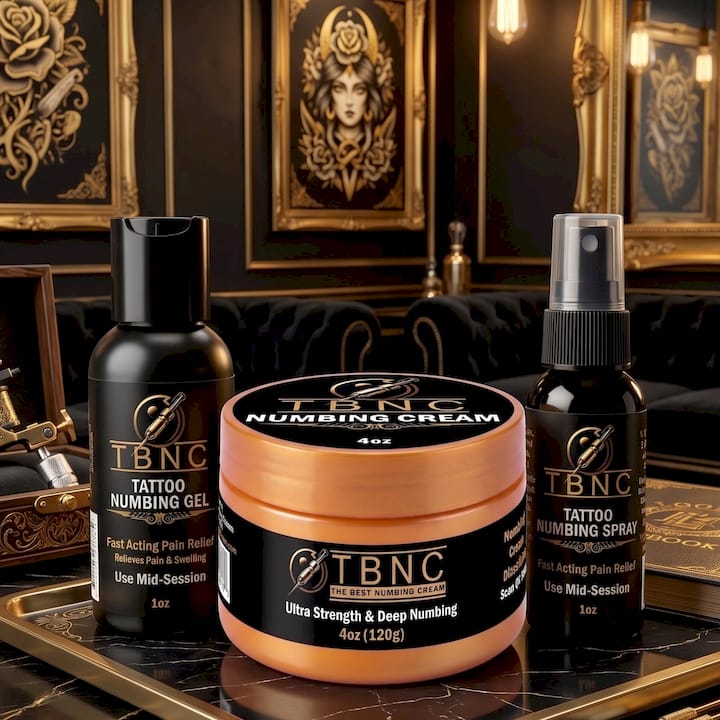
Pro Tip: If you’re a studio owner, buying in bulk through TBNC Tattoo’s wholesale options can reduce per-session cost significantly compared to retail single-unit pricing.
5. Tattoo Aftercare Lotion - Unscented — best for sensitive skin healing
No fragrance, no unnecessary additives. The unscented formula is the right call for clients with reactive skin or anyone whose artist has flagged sensitivity concerns. It keeps the healing tattoo moisturized without the irritation risk that scented lotions carry on compromised skin.
6. Tattoo Aftercare Balm — best for occlusive moisture
Richer than a lotion, the balm creates a protective barrier over healing skin. Use it once the initial weeping phase has passed, when the tattoo needs moisture retention more than it needs breathability. Particularly useful for large-area pieces where skin dries out quickly.
7. Tattoo Soothing Gel — best for the first 48–72 hours
The cooling texture addresses the hot, inflamed feeling that follows a long session. Apply it in the first two to three days when the skin is still reactive. It’s not a numbing product — it’s a comfort product for the post-session window before a richer moisturizer takes over.
8. Tattoo Aftercare Bundle — best for stepwise healing
Curated for the full healing arc from fresh ink to settled skin. If your primary concern is vibrancy and long-term color retention rather than numbing, this bundle gives you the aftercare sequence without the numbing products you may not need.
How to pick the right numbing spray for your session
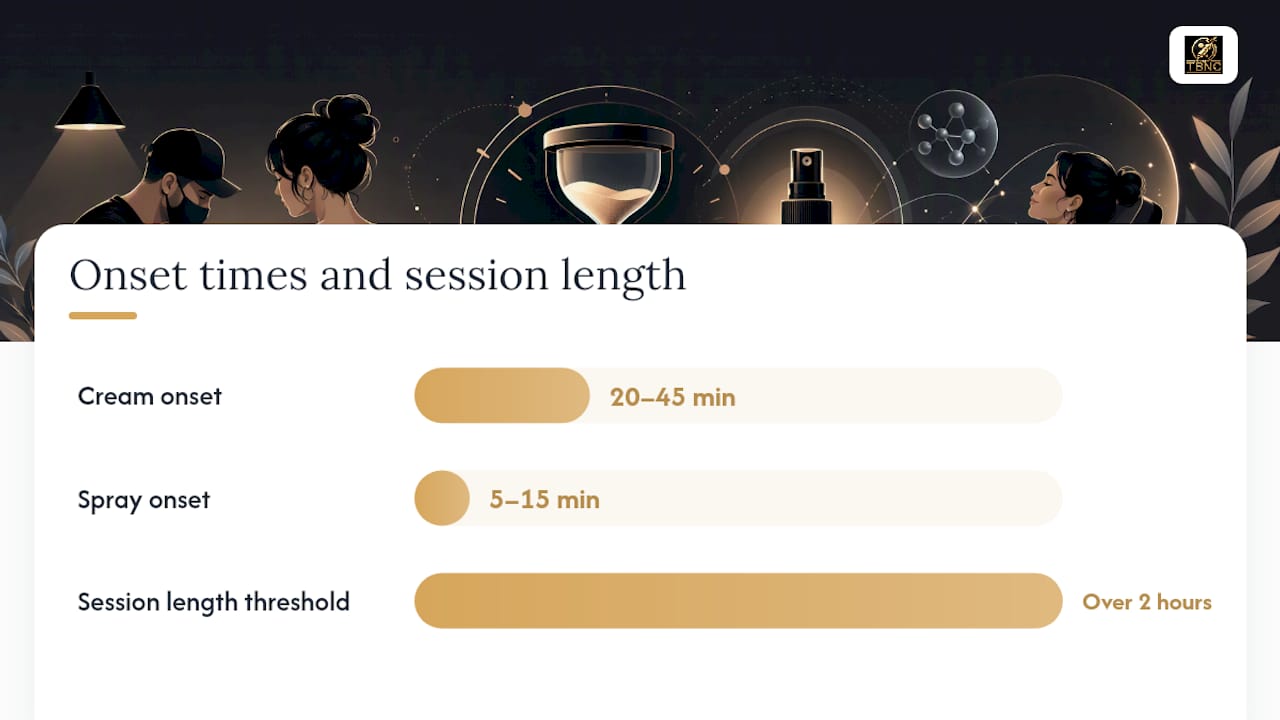
Start with two questions: What is the lidocaine percentage, and are you applying before or during the session? Those two answers narrow the field faster than any other criteria. Understanding how lidocaine compares to other topical anesthetics like prilocaine and tetracaine also helps when reading labels on less familiar products.
Criteria checklist:
- Lidocaine percentage — OTC products in the U.S. are capped at specific concentrations. Higher is not always better; formulation and application method matter as much as the number.
- Onset time — Creams need 20–45 minutes under occlusion; sprays on open skin can work in 5–15 minutes.
- Duration — Creams typically outlast sprays. For sessions over two hours, a cream pre-session plus spray touch-up is the most reliable approach.
- Vasoconstrictor presence (epinephrine) — Products containing epinephrine can extend numbing duration, but epinephrine’s vasoconstrictive effects may change skin texture and make shading harder. Many artists prefer epinephrine-free formulas for that reason.
- Ingredient transparency — If the label does not disclose the active ingredient and its percentage, that is a red flag. Buyer roundups consistently flag this as a purchase signal.
- Studio acceptance — Not every studio allows clients to arrive pre-numbed or apply products mid-session. Ask before you buy.
- Portability — A small spray fits in a bag; a cream tube with wrap requires more prep. Match the format to your logistics.
- Price per session — Bundles typically reduce per-session cost compared to buying cream and spray separately.
Questions to ask your artist or check on the label:
- Does your studio allow topical anesthetics applied before arrival?
- Does the product list its active ingredient and percentage clearly?
- Does the formula contain epinephrine or any vasoconstrictor?
- Is the product intended for intact skin, open skin, or both?
Red flags to avoid:
- No active ingredient or concentration listed anywhere on the label
- Seller shipping warnings that suggest the product is not regulated for OTC sale
- No ingredient list at all
- Reports of allergic reactions with no patch-test guidance provided
What you need to know about OTC lidocaine safety in the U.S.
Topical lidocaine is a regulated drug in the United States. The FDA’s drug approval documentation defines the labeling requirements and allowed formulations for OTC topical anesthetic products, including concentration limits that apply to products sold without a prescription.
Statistic callout: OTC topical lidocaine products in the U.S. are generally limited to concentrations at or below 5% for skin-applied formulations, per FDA OTC drug labeling standards. Products exceeding this threshold require a prescription.
The Cleveland Clinic’s guidance on lidocaine skin cream is clear: topical lidocaine is safe when used per label instructions, but users should always patch-test before full application and check for interactions with other topical products or underlying skin conditions.
Common side effects to know:
- Mild redness or irritation at the application site
- Temporary skin blanching (especially with epinephrine-containing products)
- Rare: allergic contact dermatitis — stop use immediately and seek medical advice if this occurs
How to patch-test:
Apply a small amount to the inner forearm 24 hours before your session. If you see significant redness, swelling, or itching, do not proceed with full application.
Epinephrine tradeoffs: Some sprays include epinephrine as a vasoconstrictor to prolong numbing. The Cleveland Clinic’s epinephrine guide notes systemic cautions, and clinical research on epinephrine pharmacology confirms that while it extends anesthetic duration, it can cause skin texture changes that interfere with shading. Artists surveyed by Eikon Tattoo Supply noted that epinephrine-containing sprays can make skin feel “mushy,” which complicates fine-line and shading work.
In-studio safety checklist:
- Confirm the product is FDA-compliant and labeled with active ingredient + percentage
- Patch-test 24 hours before
- Do not apply to broken, infected, or heavily irritated skin
- Disclose any known lidocaine or amide anesthetic allergy to your artist
- Follow the label’s maximum application area and time guidelines
The final verdict: best picks by use case
The Tattoo Numbing & Aftercare Bundle is the strongest choice for most collectors: it handles pre-session numbing and post-session healing in one purchase, with dermatologist-approved formulations and transparent labeling throughout.
- Sensitive skin / healing focus: Tattoo Aftercare Lotion - Unscented or Tattoo Aftercare Bundle
- Immediate post-session relief: Tattoo Soothing Gel for the first 48–72 hours
Next steps: Patch-test 24 hours before your appointment. Confirm your studio’s policy on topical anesthetics. Check the lidocaine percentage on any product you buy. Browse TBNC Tattoo’s full numbing cream collection for single items or bundles that match your session length and skin type.
Key Takeaways
TBNC Tattoo’s dermatologist-approved bundles cover the full session arc, from pre-session lidocaine numbing to stepwise aftercare, making them the strongest all-in-one choice for U.S. collectors.
| Point | Details |
|---|---|
| Top pick for most collectors | The Tattoo Numbing & Aftercare Bundle pairs lidocaine numbing with a complete aftercare line. |
| Choose by lidocaine % and format | Creams (20–45 min onset) suit pre-session use; sprays (5–15 min) work best for mid-session touch-ups. |
| OTC lidocaine ceiling | U.S. OTC topical lidocaine is generally capped at 5%; always verify the label before buying. |
| Patch-test before every session | Apply to the inner forearm 24 hours ahead; stop use if redness, swelling, or itching appears. |
| TBNC Tattoo | Trusted by over 3,250 studios and used in over one million sessions; available direct at thebestnumbingcream.com. |
Why ingredient transparency is the real differentiator
Most buyers focus on the headline claim — “strongest numbing,” “fastest onset” — and skip the ingredient panel. That’s rolling the dice. After reviewing the clinical evidence and practitioner commentary in this guide, the single most reliable purchase signal is whether a product clearly discloses its active ingredient and percentage.
A 5% lidocaine spray that lists its concentration gives you something to evaluate. A spray that says “maximum strength” with no percentage listed gives you nothing but marketing copy. The FashionBeans roundup of top numbing sprays flagged this transparency gap across multiple products, and it’s a pattern that shows up consistently in consumer reviews too: buyers who felt let down by a spray almost always report that the concentration was never disclosed.
There’s also a format bias worth naming. Sprays get outsized attention because they’re convenient and feel high-tech. But clinical pharmacology is clear: a well-formulated cream applied under occlusion will outperform most sprays on duration, every time. Sprays earn their place as a mid-session tool, not a replacement for a proper pre-session cream. The collectors who get the most out of their numbing products are the ones who use both formats intentionally, not the ones who pick the most impressive-sounding spray and hope for the best.
TBNC Tattoo’s approach — dermatologist-approved formulations with transparent labeling, available in both cream and spray formats, and bundled for the full session arc — reflects exactly what the evidence says works.
TBNC Tattoo products for your next session
Skip the guesswork on ingredient labels. TBNC Tattoo’s dermatologist-approved line gives you the lidocaine percentage upfront, in every product, with formulations trusted by over 3,250 studios and used across more than one million tattoo sessions. For a multi-hour piece, the Tattoo Numbing & Aftercare Bundle covers pre-session numbing and the full healing sequence in one order. Frequent clients who want a reliable pre-session cream without reordering gaps will find the TBNC 2 Pack the smarter buy. Patch-test 24 hours before your appointment, confirm your studio’s policy on topical anesthetics, and order direct at thebestnumbingcream.com.
FAQ
What numbing spray do tattoo artists use?
Many professional artists favor 5% lidocaine sprays for stronger mid-session numbing, applied directly to open skin with a wash bottle for even coverage. Artists surveyed by Eikon Tattoo Supply noted that 2% options like Bactine “take the edge off,” while 5% formulations deliver deeper relief for longer sessions.
What is the strongest OTC numbing spray for tattoos?
The strongest OTC topical lidocaine sprays available in the U.S. reach 5% concentration, which is the maximum allowed for non-prescription formulations under FDA OTC standards. Products that disclose their percentage clearly, like those in the TBNC Tattoo line, let you verify you’re actually getting maximum-strength coverage.
What is the most effective tattoo numbing product overall?
A cream applied under occlusion 20–45 minutes before the session consistently outperforms sprays on duration, according to clinical pharmacology research on topical anesthetic formulations. For full-session coverage, pairing a pre-session cream with a mid-session spray, as in the TBNC Tattoo Numbing Bundle, delivers the most reliable result.
Is it safe to use numbing spray during a tattoo?
Yes, when the product is FDA-compliant, clearly labeled with its active ingredient and percentage, and applied per instructions. Always patch-test 24 hours before use, avoid application on large areas of broken or infected skin, and disclose any known amide anesthetic allergy to your artist before the session.


