

EMLA Cream Alternatives: What Actually Numbs Skin for Tattoos
If EMLA isn’t cutting it, or you simply can’t find it in stock, your best bets fall into three lanes: OTC lidocaine-only creams (up to 4%), prescription or compounded topicals for tougher cases, and non-cream formats like gels, sprays, or patches. For tattoo sessions specifically, TBNC Tattoo’s dermatologist-approved numbing cream is the go-to OTC pick, backed by studio-level adoption. Topicals dull surface pain; only an injection reaches deeper tissue.
TL;DR:
- OTC lidocaine creams limited to 4% are as effective as EMLA for superficial pain with similar onset times, but they do not reach deep tissue.
- Prescription or compounded formulations with higher lidocaine concentrations are necessary for deeper or more extensive numbing, but they require a medical provider’s approval.
- Proper application involves cleaning, thick layer spreading, occlusion, and full wait times, highlighting technique’s importance for effective numbing.
- FDA rules restrict OTC lidocaine strength to 4%, and higher concentrations sold outside regulation pose absorption and systemic risk concerns.
- For multi-hour tattoo sessions, long-lasting lidocaine formulas like TBNC Tattoo’s cream outperform generic alternatives due to better durability and safer, regulated concentrations.
Table of Contents
- What Are the Best EMLA Cream Alternatives?
- How Do EMLA Alternatives Compare on Onset and Depth?
- Are There FDA Limits on Numbing Cream Strength?
- How Do You Apply a Numbing Cream Correctly?
- Why Tattoo Artists Recommend TBNC Over Generic Alternatives
- What About Benzocaine and Tetracaine as EMLA Substitutes?
- What Combination Anesthetic Creams Exist Besides EMLA?
- What Side Effects Should You Watch For?
- Which Numbing Cream Alternatives Do Users Rate Highest?
- The Real Trade-Off Nobody Talks About
- Ready to Try a Numbing Cream Built for Tattoo Sessions?
- Sources
- FAQ
What Are the Best EMLA Cream Alternatives?
Depending on what you’re numbing and how much time you’ve got before your appointment, one of these four categories will fit better.
OTC lidocaine-only creams are the most accessible substitute. Products capped at 4% lidocaine, the ceiling set for over-the-counter external analgesics, are sold without a prescription and work well for short procedures like blood draws, minor injections, and shorter tattoo sittings. They skip the prilocaine found in EMLA, which some people react to, and several studies suggest they perform comparably for surface-level pain. The tradeoff: like EMLA, they still need real dwell time to work.
Prescription or compounded formulations, sometimes reaching 5% lidocaine or blended with other anesthetics, get pulled in when a dermatologist or clinic wants stronger, more consistent numbing for procedures like laser resurfacing or larger excisions. These require a provider’s sign-off and shouldn’t be self-sourced from unregulated online sellers.
Non-cream formats fill specific niches. Numbing sprays work for quick, small-area jobs like piercing or minor injections where a 45 to 60 minute wait isn’t realistic. Lidocaine patches suit static, low-movement areas. Gels sit between creams and sprays for absorption speed.
Adjuncts like cooling devices and vibration tools (a nurse’s trick borrowed by tattoo artists) can be layered on top of any topical to blunt the sting further.
How Do EMLA Alternatives Compare on Onset and Depth?
Speed and depth are where these products actually diverge, and that difference should drive your choice more than brand loyalty.
EMLA typically needs at least 60 minutes under occlusion before it delivers reliable dermal numbness, a timeline confirmed in a randomized crossover trial on lumbar puncture pain in pediatric patients. Many lidocaine-only creams work on a similar or slightly shorter timeline, though neither category is fast. None of them touch deep tissue. That’s the anesthesia ceiling for anything topical: it numbs the surface nerve endings, not the muscle or fat layer a needle or blade might reach.
- Topical creams (EMLA, LMX4, LMX5): superficial numbing only, 30 to 60+ minute onset, best for skin-deep pain
- Injected/infiltrative lidocaine: reaches deeper tissue, works within minutes, requires a needle and typically a clinical setting
- Sprays and gels: fast application but shallow, short-lived effect
The evidence in one line: a randomized crossover trial found no significant difference in pain scores between EMLA and 5% lidocaine cream during venipuncture in adults, while a separate systematic review and meta-analysis found infiltrative lidocaine outperforms topical EMLA for deeper minor procedures.
The practical takeaway: for skin-surface pain, like most tattoo work, a solid lidocaine cream competes fine with EMLA. For anything that goes beneath the dermis, only a needle gets you real relief.
Are There FDA Limits on Numbing Cream Strength?
Yes, and this is the part shoppers skip at their own risk. The FDA’s OTC external analgesic monograph (M017) caps over-the-counter lidocaine at 4%, with some formulations allowed up to 4% lidocaine combined with other agents. Anything marketed above that without FDA approval as a new drug is operating outside the rules.
The agency has acted on this directly. A 2025 warning letter to TKTX Numbing Cream USA called out 40%-labeled numbing creams sold for tattooing, piercing, and laser work as unapproved and misbranded. That’s ten times the OTC ceiling, marketed for use on skin that’s about to be repeatedly punctured.
That absorption risk is real. Broken or freshly tattooed skin absorbs topical anesthetic faster and more unpredictably than intact skin, raising the chance of systemic effects like dizziness, irregular heartbeat, or in rare cases, methemoglobinemia.
High-concentration numbing creams sold for tattoo prep often skip FDA review entirely. If a product’s labeled strength sounds too aggressive to be legal over the counter, it probably is.
TBNC Tattoo’s own breakdown of OTC lidocaine limits covers this in more depth.
How Do You Apply a Numbing Cream Correctly?
Technique matters almost as much as the product itself. A thin smear rubbed in and left uncovered will underperform even the best formula, while proper application can make a modest cream feel like it’s punching above its weight class.
- Clean and dry the area completely before applying anything.
- Apply a thick, even layer, don’t rub it in fully, over the area you plan to tattoo or inject.
- Cover with plastic wrap or a provided occlusive dressing to trap heat and moisture, which drives absorption.
- Wait the full recommended window, usually 30 to 60 minutes depending on the product, before removing the wrap.
- Wipe off excess cream just before the artist or clinician starts.
- Patch-test any new product on a small area 24 hours ahead if you have sensitive skin or a history of topical reactions.
Pro Tip: Numbing creams kill surface pain, not pressure. If your tattoo involves heavy shading or your artist leans hard on the machine, expect to feel the push even when the sting is gone. Tell your artist which areas you’re most worried about so they can plan the session order around it.
If you’re covering a large area, on broken skin, or you have a cardiac or liver condition, skip the DIY approach and ask about infiltrative lidocaine instead. Full timing and wrap guidance lives in TBNC Tattoo’s numbing cream directions.
Why Tattoo Artists Recommend TBNC Over Generic Alternatives
TBNC Tattoo’s numbing cream is used across more than 3,250 tattoo studios and has been part of over one million tattoo sessions, according to TBNC’s own studio adoption data. That scale matters in a category where a lot of cheap, unregulated creams flood the market with vague labeling.
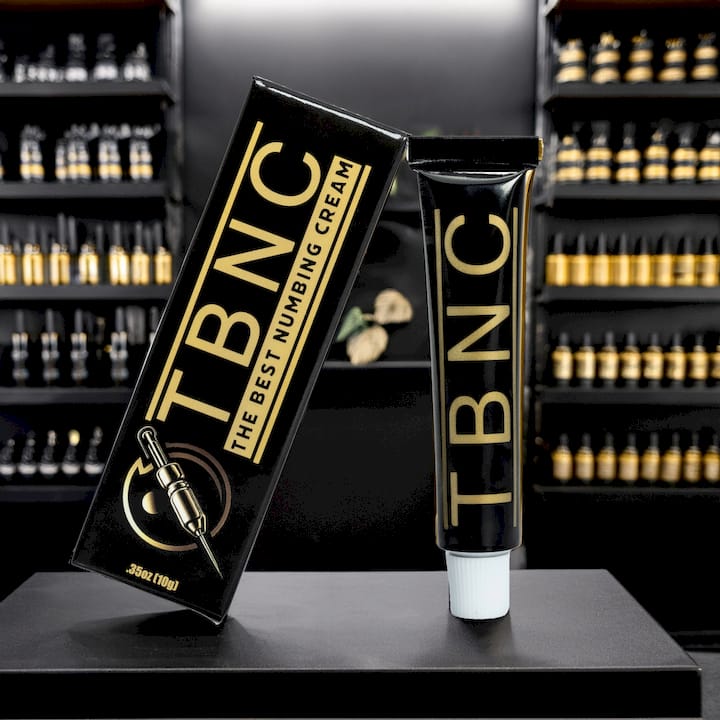
The formula is built around a longer-lasting lidocaine base specifically for multi-hour sessions, where a cream that fades after 45 minutes leaves you exposed for the back half of the appointment. It’s dermatologist-approved and formulated to stay within safe OTC concentration ranges rather than chase an inflated percentage claim. For collectors booking full-day sessions or sleeve work, that durability is the actual differentiator, not marginal onset speed.
What About Benzocaine and Tetracaine as EMLA Substitutes?
Lidocaine isn’t the only anesthetic on the shelf. Benzocaine and tetracaine are the two most common non-lidocaine actives you’ll find in OTC and clinical topical products, and each behaves differently on skin.
It’s less commonly used for tattoo work because its numbing window is shorter and less consistent across a multi-hour session. Benzocaine also carries a documented risk of methemoglobinemia, a rare but serious blood disorder, particularly at high doses or with repeated application on broken skin.
Tetracaine is a longer-acting ester anesthetic, often paired with other actives in combination products, and it’s used more in ophthalmic and ENT settings than in tattoo studios. It penetrates well but has a higher allergic-reaction profile than lidocaine among ester-type anesthetics.
Neither benzocaine nor tetracaine is a straightforward swap for EMLA in a tattoo setting. Both work through a different mechanism than lidocaine’s amide structure, and both have narrower safety margins when used repeatedly or over large areas. For tattoo prep, a lidocaine-based cream generally remains the more predictable, better-studied choice, and it’s why most tattoo-specific numbing products, TBNC Tattoo included, build around lidocaine rather than these alternatives.
What Combination Anesthetic Creams Exist Besides EMLA?
EMLA isn’t the only compound anesthetic on the market for different use cases.
LMX4 and LMX5 (sometimes still referenced by the older brand name ELA-Max) are lidocaine-only, not combination products, but they’re frequently mentioned alongside EMLA because pharmacy resources list them as direct alternatives for the same use cases: venipuncture, minor dermatologic procedures, and pre-injection numbing.
True combination compounds, blending two or three anesthetics like lidocaine, tetracaine, and phenylephrine, exist mostly as compounded prescriptions from specialty pharmacies. These are custom-mixed for specific clinical needs, such as laser treatments or longer dermatologic procedures, and they aren’t something you’ll find on a drugstore shelf.
For everyday tattoo and minor-procedure use, the practical choice usually comes down to a single-agent lidocaine cream (matching or exceeding EMLA’s performance for surface pain per venipuncture trial data) rather than chasing a multi-ingredient blend that requires a prescription. Combination compounds earn their place in a clinic, not a tattoo chair. TBNC Tattoo’s own comparison of lidocaine, prilocaine, and tetracaine breaks down how each active behaves if you want the ingredient-level detail.
What Side Effects Should You Watch For?
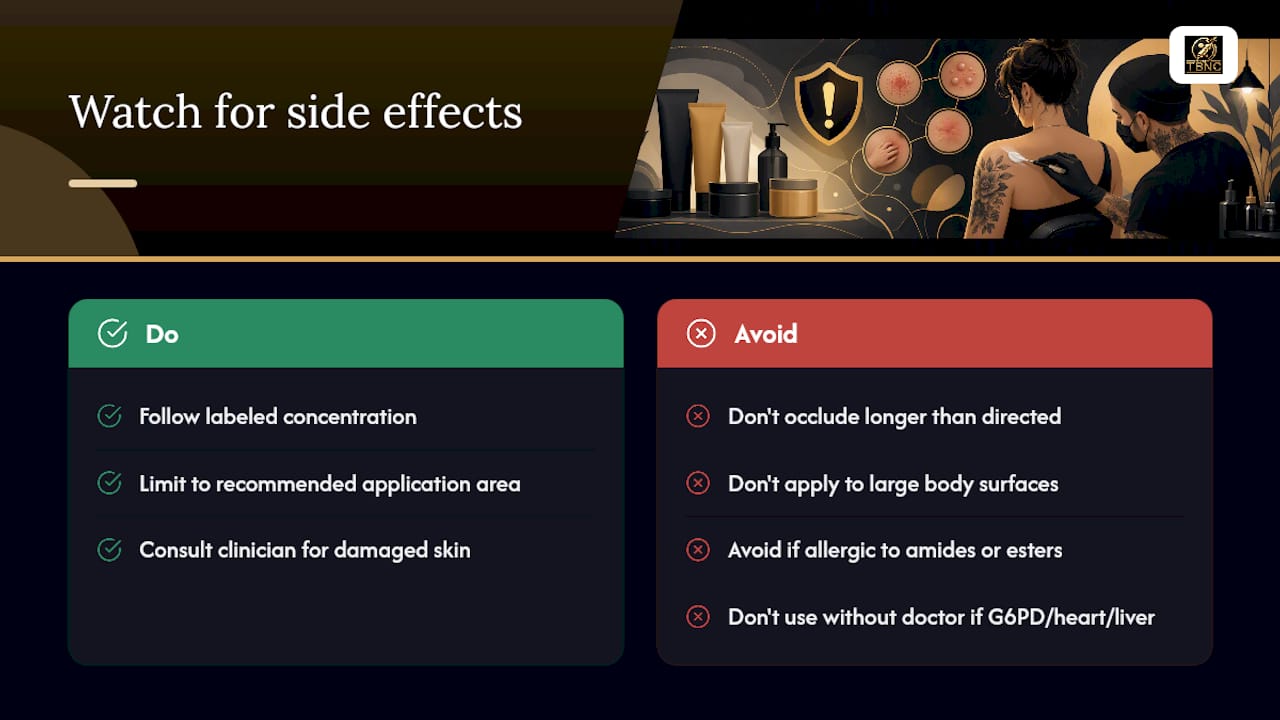
Every topical anesthetic carries some risk profile, and the risk generally rises with concentration, application area, and skin condition. Redness, mild swelling, and temporary itching at the application site are the most common and usually harmless reactions across lidocaine, benzocaine, and prilocaine-based products.
More serious reactions are rare but worth knowing. Lidocaine and prilocaine can cause contact dermatitis in sensitive individuals, and prilocaine specifically has been linked to methemoglobinemia at high doses, the same rare blood disorder associated with benzocaine overuse. Applying any numbing cream over a large body surface, or leaving it occluded far longer than directed, raises systemic absorption and with it the odds of dizziness, ringing in the ears, or an irregular heartbeat.
Contraindications matter too. People with known allergies to amide anesthetics (lidocaine, prilocaine) or ester anesthetics (benzocaine, tetracaine) should avoid the corresponding category entirely. Anyone with G6PD deficiency, certain heart conditions, or liver impairment should talk to a doctor before using any numbing cream over more than a small area, since these conditions affect how the body clears the anesthetic.
The safest posture is a same-standard rule regardless of use case: whether you’re prepping for a blood draw or a six-hour tattoo session, respect the labeled concentration, stick to the recommended application area, and check with a clinician before using any topical anesthetic on broken, tattooed, or heavily irritated skin.
Which Numbing Cream Alternatives Do Users Rate Highest?
Across tattoo forums, pharmacy review sections, and clinical feedback, a consistent pattern shows up: lidocaine-only creams tend to earn steadier praise than combination or high-concentration products, largely because their effect is predictable and their side-effect profile is better understood.
Users comparing EMLA to 4% and 5% lidocaine-only creams for procedures like venipuncture often report similar pain relief, which lines up with trial data showing no significant difference between EMLA and LMX5. For tattoo-specific use, feedback tends to favor formulas built for longer wear, since a cream that starts fading an hour into a three-hour session gets flagged repeatedly in reviews regardless of how strong the initial numbing felt.
High-concentration unregulated creams, the kind flagged in FDA warning letters, generate a different kind of feedback: strong initial numbness followed by inconsistent results, skin irritation, or complaints that don’t match the marketing claims. That mismatch between labeled strength and real-world consistency is a recurring theme wherever these products get discussed.
The efficacy comparison that matters most isn’t cream A versus cream B in isolation. It’s whether a product’s numbing duration matches the length of your actual procedure, and whether it stays within a concentration range that’s been tested and regulated rather than guessed at.
The Real Trade-Off Nobody Talks About
Most guides on this topic treat EMLA alternatives as a simple swap: find another cream, apply it, done. That misses the actual decision point, which isn’t cream A versus cream B. It’s whether you’re solving for surface pain or pressure pain, and almost nobody separates the two clearly enough before their appointment.
The conventional wisdom oversells topical anesthetics generally. A cream that kills needle sting still lets you feel a heavy hand with the machine, and plenty of first-timers walk in expecting numbness that simply isn’t available outside a clinical injection. That’s not a product failure; it’s a mismatch between what topicals can do and what people assume they do.
What actually matters is matching the tool to the session length and pain type: OTC lidocaine creams for shorter sittings, a long-wear formula for multi-hour work, and realistic expectations about pressure regardless of which cream you pick. Skip products chasing an inflated percentage claim.
— The Best Numbing Cream
Ready to Try a Numbing Cream Built for Tattoo Sessions?
If you’ve read this far, you already know generic drugstore lidocaine wasn’t built with hours-long tattoo sessions in mind.
For a single session or a touch-up, the TBNC 2 Pack covers you without overbuying. If you’ve got a full sleeve or a multi-appointment piece planned, the Tattoo Numbing Bundle or the Ultra Tattoo Numbing Bundle stack numbing cream with the aftercare products you’ll need once the needle stops. Before you apply anything, run through the numbing cream directions so you get the full wear time out of the product rather than half of it.
Pick your bundle, read the directions once, and go into your next appointment with a plan instead of a guess.
This article is general information, not a substitute for advice from a qualified doctor. Consult a qualified healthcare professional about your own circumstances before acting on anything here.
Sources
- Comparison of EMLA cream versus lidocaine injection for lumbar puncture pain control in pediatric oncology patients
- Randomized crossover trial: EMLA vs LMX5 for venipuncture (2019)
- Emla VS Infiltrative Lidocaine: A Comparative Analysis in Pain Management in Minimally Invasive Medical Procedures in Dermatology - A Systematic Review and Meta-Analysis
- Are there any alternatives to EMLA Cream? · Treated
FAQ
What numbing cream is stronger than EMLA?
Nothing legally sold over the counter in the U.S.
What can I use to numb my skin before injections?
A 4% OTC lidocaine cream applied under plastic wrap for 30 to 60 minutes works for most injection sites, and trial data shows it performs comparably to EMLA for this kind of superficial pain.
Which is better, lidocaine or EMLA?
For surface-level procedures like venipuncture or short tattoo sittings, lidocaine-only creams and EMLA perform similarly in head-to-head trials; EMLA’s prilocaine component adds no clear advantage for most people and can trigger sensitivity in some.


