

The Best Fragrance-Free Tattoo Soap for New Ink
Use a mild, fragrance-free liquid or foaming cleanser with lukewarm water, washing gently once or twice daily. Dermatologists at Cleveland Clinic recommend this exact rhythm because scented products and rough handling both slow healing.
- Wash with a fragrance-free cleanser and lukewarm water daily, gently, once or twice a day
- Pat dry with a clean paper towel, then apply a thin layer of unscented aftercare product
- Skip antibiotic creams and heavily perfumed soaps unless a clinician tells you otherwise
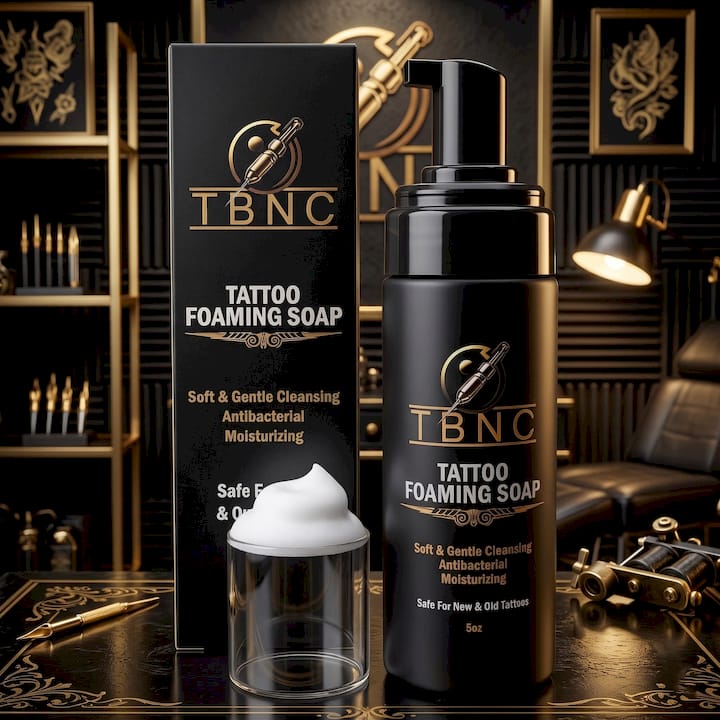
- TBNC Tattoo’s unscented foaming soap and unscented aftercare lotion or balm cover both steps in one line
Key Takeaways
A mild, fragrance-free cleanser used daily, combined with gentle drying and light unscented moisturizer, is the single most reliable routine for healing a new tattoo.
| Point | Details |
|---|---|
| Wash frequency | Clean the tattoo gently 1 to 2 times daily with lukewarm water and a fragrance-free cleanser. |
| Check the label | Choose fragrance-free, dye-free formulas and skip alcohols, essential oils, and exfoliants. |
| Skip antibiotics | Avoid routine antibacterial soaps or creams unless a clinician diagnoses an infection. |
| Watch for red flags | Spreading redness, fever, or worsening pain means it’s time to call a clinician, not add products. |
| Reach for TBNC Tattoo | TBNC Tattoo’s unscented foaming soap, lotion, balm, and soothing gel cover the full healing timeline in one dermatologist-informed line. |
Table of Contents
- TBNC Tattoo’s Fragrance-Free Aftercare Lineup, Explained
- What Makes a Tattoo Soap Truly Fragrance-Free?
- How to Wash a New Tattoo the Right Way
- What Can I Use Instead of a Dedicated Tattoo Cleanser?
- When Healing Looks Wrong: Infection Warning Signs
- Why Dermatologists and Studios Both Point to TBNC
- The Gap Between Aftercare Advice and What People Actually Do
- Get Your Full Fragrance-Free Aftercare Routine in One Order
- Sources
- FAQ
TBNC Tattoo’s Fragrance-Free Aftercare Lineup, Explained
Every stage of tattoo healing calls for a different tool, and using the wrong one at the wrong time is where most collectors go sideways. TBNC Tattoo built its aftercare line around that timeline instead of a single do-everything bottle.
- Tattoo Foaming Soap: your daily cleanser, first wash through the final week of visible healing
- Tattoo Aftercare Lotion, Unscented: light, fast-absorbing moisture for the early peeling and itching phase
- Tattoo Aftercare Balm: thicker coverage for dry, flaking, or scab-prone skin later in healing
- Tattoo Soothing Gel: calming relief when skin feels hot, tight, or irritated
- Tattoo Numbing & Aftercare Bundle or the Tattoo Numbing Bundle: numbing cream plus the full aftercare set in one order, useful if you’re prepping for the session and the healing afterward at the same time
A pea-sized amount of foaming soap is enough for most tattoos; larger pieces need a bit more, but lathering heavily just strips the skin. Apply lotion or balm in a thin layer, never a thick coat that traps moisture against the surface. The pump and foil-pack formats matter more than they sound: they cut down on contamination from dipping fingers into a jar repeatedly.
Dermatologist involvement and adoption by working studios both count as real signals here. TBNC Tattoo’s aftercare formulas have been shaped with dermatologist input and are used across thousands of studios, which tells you they’re built for actual healing skin, not just marketing copy.
Pro Tip: Keep your foaming soap in the shower and your lotion by the sink. Splitting the two locations makes the twice-daily habit almost automatic instead of something you have to remember.
What Makes a Tattoo Soap Truly Fragrance-Free?
“Fragrance-free” and “unscented” get used loosely on packaging, and the difference matters more than most shoppers realize. A product labeled unscented can still contain masking fragrance chemicals added to cancel out a base smell. True fragrance-free products skip added scent compounds entirely, which is the standard you want on skin that’s technically an open wound.
Look for these on the label:
- Fragrance-free or unscented, explicitly stated — not just “light scent” or “fresh”
- Dye-free formulas, since added colorants offer zero healing benefit and add another irritant
- Mild, nonionic or amphoteric surfactants rather than harsh sulfates like sodium lauryl sulfate
- A pH-balanced claim, when listed, since healthy skin sits close to neutral to slightly acidic
Skip these ingredients during healing:
- Parfum, fragrance, or essential oils of any kind, even “natural” ones like tea tree or lavender
- Drying alcohols (look for “alcohol denat” or “SD alcohol” high on the ingredient list)
- Exfoliating acids, scrubs, or beads, which have no place on fresh tattooed skin
- Added antibacterial agents for routine use, which the American Academy of Dermatology notes are unnecessary outside a diagnosed infection
Format matters too. Foaming cleansers rinse cleanly and require less product to cover the same area, which means less residue sitting on inflamed skin. Liquid cleansers work fine if you control the amount. Bar soaps are the riskiest choice: they often contain hardening agents and leave a film that’s tough to rinse fully off a tender tattoo.
How to Wash a New Tattoo the Right Way
Your artist’s instructions come first, always. Studios vary slightly on first-wash timing and bandage type, so if they told you something specific, follow it over any general rule. Absent specific instructions, the standard routine looks like this:
- Wash your hands thoroughly before touching the tattoo at all
- Wet the area with lukewarm water, never hot
- Apply a small amount of your fragrance-free cleanser directly to fingertips
- Wash gently using fingertip circles, no washcloths, no scrubbing, no loofahs
- Rinse thoroughly until no soap residue remains
- Pat dry with a clean paper towel, patting rather than rubbing
Medical News Today’s guidance on this exact sequence lines up with what most studios teach, and the fingertip-only rule is the part people skip first when they’re tired or rushed.
Once the skin is dry, apply a thin layer of your fragrance-free lotion or balm. Thin is the operative word; a thick coat blocks air and can actually trap bacteria against the surface. Avoid soaking the tattoo in baths, pools, or hot tubs until it’s fully healed, and keep it out of direct sun, since new skin burns and scars easily.
If you’re using diluted castile soap instead of a tattoo-specific cleanser, mix it well before applying and never use it at full strength daily. Washing too often, regardless of product, dries out healing skin and can delay the process rather than speed it up.
Pro Tip: Set a phone reminder for your second daily wash. Most people nail the morning routine and forget the evening one, which throws off consistency during the week that matters most.
What Can I Use Instead of a Dedicated Tattoo Cleanser?
Travel days, empty bottles, and unexpected trips happen. When your usual cleanser isn’t within reach, a few household options work as a stopgap.
- Fragrance-free castile soap, diluted with water rather than used at full concentration, per guidance on avoiding antibacterial soap
- Unscented baby cleansers or dermatologist-tested unscented body washes, checked carefully for hidden fragrance on the label
- Avoid exfoliating or medicated body washes entirely
- Avoid bar soaps loaded with additives, and anything marketed as “deeply moisturizing” with a heavy scent
Treat these as short-term substitutes, not permanent replacements. Castile soap especially can dry out skin if you lean on it daily for weeks.
When Healing Looks Wrong: Infection Warning Signs
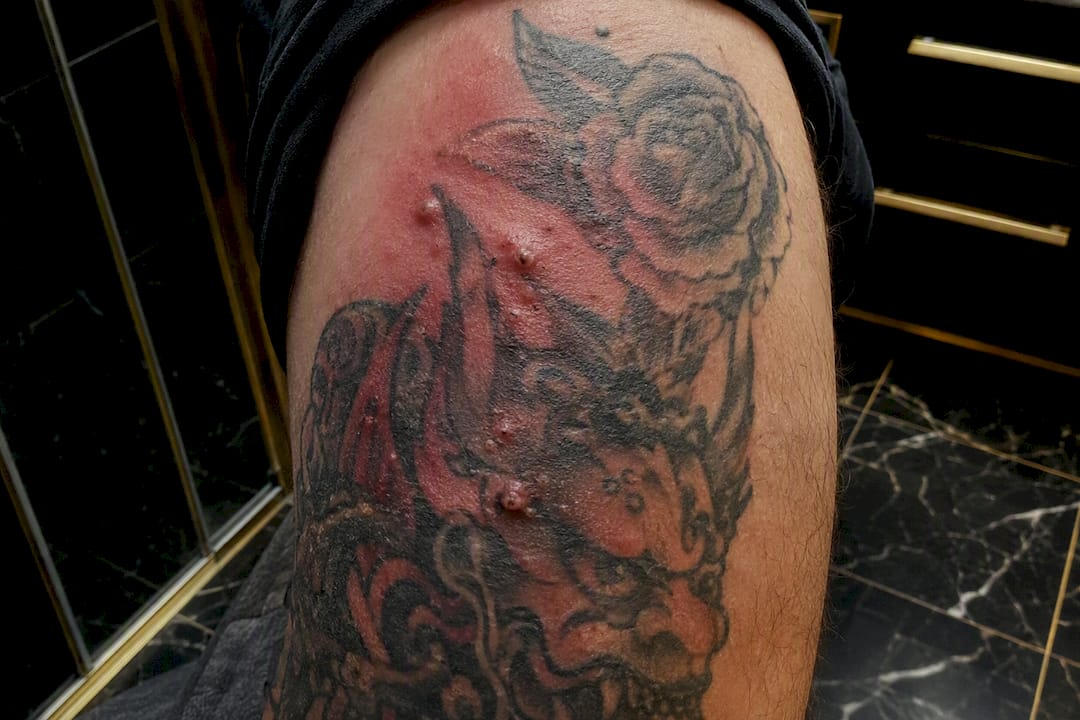
Most new tattoos go through a predictable arc: redness for a few days, then peeling, then flaking, then done. Anything outside that pattern deserves attention rather than a shrug.
- Pus that increases rather than decreases over time
- Redness that spreads outward instead of staying contained to the tattoo
- Warmth, swelling, or fever
- Red streaking extending away from the tattooed area
- Pain that gets worse instead of better after the first few days
Reaching for an antibacterial soap or antibiotic cream at the first sign of trouble is a common instinct, but it’s the wrong move. The AAD’s guidance on topical antibiotics is clear that these products should be reserved for infections a clinician has actually diagnosed, since misuse on healthy or mildly irritated skin can cause its own irritation.
If you notice any of these signs, stop using whatever product you suspect is causing trouble, keep the area clean with your regular fragrance-free routine, and get in touch with a clinician or dermatologist rather than self-treating with stronger products.
Why Dermatologists and Studios Both Point to TBNC
Trust in aftercare products comes down to two questions: does the science back it, and do the people who use it every day actually rely on it? TBNC Tattoo answers both.
- Formulated with dermatologist input for skin that’s actively healing, not just cosmetically dry
- Used across more than 3,250 tattoo studios worldwide
- Applied in over one million tattoo sessions to date
- A full product range covering every healing stage: foaming soap, unscented lotion, balm, soothing gel, and bundled kits
A tattoo studio recommending the same aftercare product to thousands of clients isn’t a marketing accident. It reflects consistent results across a huge range of skin types, tattoo sizes, and healing speeds, which is a harder bar to clear than a single good review.
For a deeper look at how each piece fits together, the TBNC Tattoo aftercare guide walks through the full healing timeline, and the foaming soap breakdown covers exactly how the formula was built for tattooed skin specifically. The full post-tattoo aftercare collection lays out every product side by side if you’re stocking up before a session.
The Gap Between Aftercare Advice and What People Actually Do
Most tattoo aftercare content treats every product decision as equally weighty, which buries the one choice that actually matters: keep it simple and keep it unscented. The Cleveland Clinic’s own position is telling here. There’s no single standardized aftercare protocol across the industry, and dermatologists themselves say the fundamentals, hygiene, gentle cleansing, and avoiding irritants, matter more than an elaborate five-step routine.
That’s the gap. Collectors get overwhelmed by conflicting studio advice, forum threads, and product marketing, when the actual research points to something almost boring: wash gently, moisturize lightly, skip the antibiotics unless a doctor says otherwise. The instinct to “do more” when a tattoo looks irritated is usually the wrong instinct. Reaching for a stronger soap or an antibacterial product at the first sign of redness is treating normal healing like a crisis.
If you take one thing from this guide, let it be this: consistency with a mild, fragrance-free product beats sophistication every time. Skip the product-hopping. Pick one clean routine and stick with it through the full healing window.
— The Best Numbing Cream
Get Your Full Fragrance-Free Aftercare Routine in One Order
Piecing together a safe aftercare routine from grocery store shelves means reading a dozen labels and hoping you didn’t miss a hidden fragrance. TBNC Tattoo skips that guesswork entirely with a line built specifically for healing skin, foaming soap, unscented lotion, balm, and soothing gel, all dermatologist-informed and tested across thousands of working studios.
If you’re prepping for a session and want pain relief covered too, the Tattoo Numbing & Aftercare Bundle pairs TBNC’s numbing cream with the full unscented aftercare set, so you’re not placing separate orders for before and after your appointment. First-timers who just want the healing side covered can start with the unscented aftercare lotion on its own. Either way, check the full product line and order before your next session so the routine is sitting in your bathroom, not on a shipping truck, when the bandage comes off.
Sources
- Tattoo Aftercare: Instructions and Healing Tips — Cleveland Clinic
- When to use (or not use) antibiotics on your skin — American Academy of Dermatology (AAD)
- How to Clean a Tattoo Without Antibacterial Soap — Sortra
- What soap should I use for a new tattoo? — Medical News Today
FAQ
What soap is fragrance-free for tattoos?
Look for cleansers explicitly labeled fragrance-free or unscented with mild, nonionic surfactants and no dyes. TBNC Tattoo’s foaming soap and unscented aftercare lotion are formulated specifically for this purpose.
Do you have to use fragrance-free soap on tattoos?
It’s strongly recommended rather than strictly required, since scented products can trigger contact dermatitis or irritation on healing skin, according to Cleveland Clinic. Using a scented soap once likely won’t ruin healing, but it raises unnecessary risk for no benefit.
What soap is safe for a new tattoo?
A mild, fragrance-free, dye-free liquid or foaming cleanser used with lukewarm water is the safest standard choice. Avoid antibacterial soaps for routine cleaning unless a clinician has diagnosed an infection.
What can I use instead of unscented soap for tattoos?
Diluted fragrance-free castile soap or an unscented, dermatologist-tested baby cleanser can work as a temporary substitute. Skip exfoliating or medicated body washes and heavily perfumed bar soaps entirely.


