

Hypoallergenic Tattoo Aftercare for Reactive, Sensitive Skin
The safest hypoallergenic tattoo aftercare routine comes down to one sequence: clean gently with a fragrance-free wash, apply a thin layer of 100% petrolatum or a lanolin-free ceramide ointment while the tattoo is open, switch to a fragrance-free moisturizer once peeling starts, and stop immediately (then call a dermatologist) if anything you’re using makes things worse. That’s the whole prescription. Everything else is detail.
TBNC Tattoo built its aftercare line around that exact logic, formulating dermatologist-approved balms, gels, and lotions without the fragrances, dyes, and lanolin that tend to set off reactive skin. The brand’s numbing and aftercare products have been used extensively across many tattoo sessions in a broad network of partner studios, allowing the formulas to be stress-tested on various skin types before they reach users.
- Wash with fragrance-free cleanser and lukewarm water only.
- Apply a thin, lanolin-free occlusive during open healing.
- Transition to a fragrance-free ceramide moisturizer as peeling begins.
- Watch for spreading redness, blistering, or symptoms past 1 to 2 weeks.
Quick fact: Tattoos are common enough that allergy-prone aftercare isn’t a niche concern, with Statista reporting roughly a third of US adults now have at least one. If you’re one of them and your skin reacts to everything from laundry detergent to sunscreen, the rest of this guide is written for you. Jump to the red flags section if you’re already seeing something that worries you.
Key Takeaways
Hypoallergenic tattoo aftercare works by removing the specific allergens (lanolin, fragrance, dye, neomycin) that cause most reactive-skin flare-ups, not by adding more products.
| Point | Details |
|---|---|
| Follow the core sequence | Gentle cleanse, lanolin-free occlusive during open healing, fragrance-free moisturizer once peeling starts. |
| Check labels, not marketing terms | “Unscented” still permits masking fragrance; look for “fragrance-free” and “dye-free” specifically. |
| Patch-test before full use | Apply to intact forearm skin for 24 to 48 hours and watch for redness or itching before using on a tattoo. |
| Know your escalation timeline | See a dermatologist if symptoms persist beyond one to two weeks, or sooner for fever, spreading redness, or red streaking. |
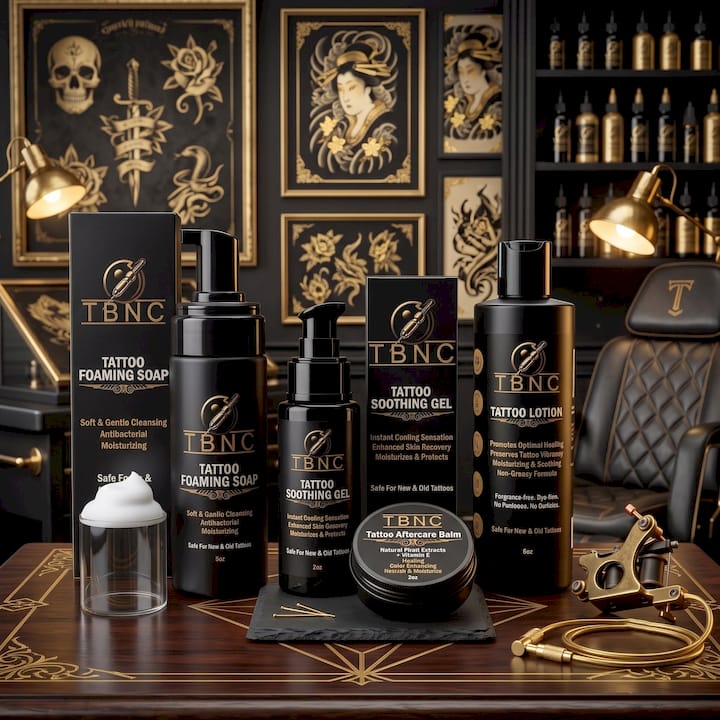
| Match product to healing stage | TBNC Tattoo’s balm suits open healing, its soothing gel calms irritation, and its unscented lotion handles long-term moisturizing. |
This article is general information, not a substitute for advice from a qualified doctor. Consult a qualified healthcare professional about your own circumstances before acting on anything here.
Table of Contents
- What Should You Do in the First 24 to 72 Hours With Sensitive Skin?
- Which Ingredients Should You Avoid With Reactive Skin?
- How Should Hypoallergenic Aftercare Change From Day 0 to Week 4?
- Which TBNC Products Match Each Stage of Healing?
- What Are the Red Flags for Allergy or Infection?
- What Does the Evidence Actually Say About Tattoo Allergies?
- Ready to Build a Hypoallergenic Aftercare Routine That Actually Fits?
- Sources
- FAQ
What Should You Do in the First 24 to 72 Hours With Sensitive Skin?
The first three days set the tone for how your skin behaves for the rest of the healing process, and reactive skin punishes shortcuts here faster than normal skin does.
- Remove the wrap on your studio’s schedule. Most artists ask you to leave the initial bandage or second-skin covering on for anywhere from a couple hours to overnight. Follow their timing, not a generic internet rule.
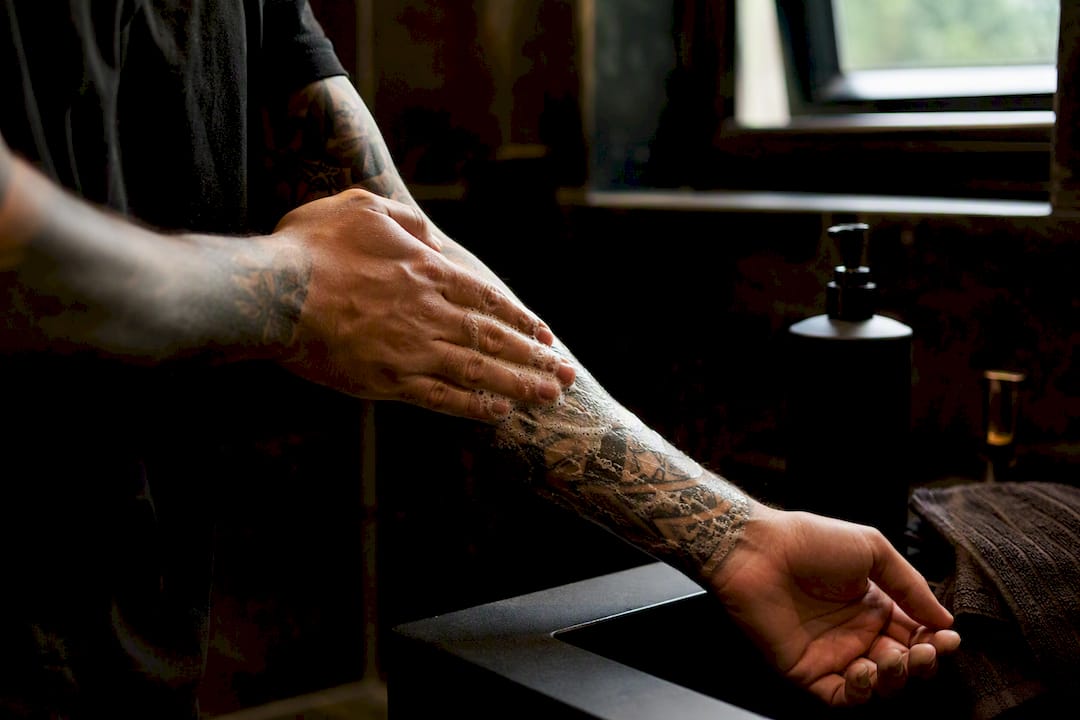
- Wash with lukewarm water and a fragrance-free cleanser, hands only. No washcloths, no loofahs, no scrubbing. Pat dry with a clean towel or paper towel; never rub.
- Apply a thin layer of 100% petrolatum or a lanolin-free ointment. Reapply a few times a day at most. A thick, greasy coat traps moisture and can actually slow healing rather than help it.
- Skip adhesive second-skin dressings if you have a history of tape or bandage reactions. A simple wrap-and-wash approach avoids the adhesive layer entirely.
Pro Tip: If you’ve never used a product on your skin before, dab a small amount on your inner forearm and cover it with a piece of hypoallergenic tape for 24 to 48 hours before it ever touches your new tattoo. It costs you two days. A flare-up on a fresh tattoo costs you a lot more.
Which Ingredients Should You Avoid With Reactive Skin?
Lanolin is the most common hidden allergen in tattoo aftercare, and it shows up in some of the most recommended products on the internet, including classics like A&D ointment and Aquaphor. Lanolin comes from sheep’s wool grease, and a meaningful share of people with eczema or contact dermatitis react to it without ever knowing that’s the ingredient responsible. If a product doesn’t say “lanolin free” on the label, assume it has some and check the ingredient list yourself.
Fragrance is the second offender, and it hides under vague terms. “Unscented” is not the same claim as “fragrance-free.” Unscented often means a masking fragrance was added to cancel out the smell of other ingredients, which still leaves fragrance compounds in the formula. Look specifically for “fragrance-free” and “dye-free” on the label, not just “unscented.”
Preservatives round out the usual suspects. Methylisothiazolinone, formaldehyde-releasing preservatives, and certain parabens are established contact-dermatitis triggers, and they show up in lotions marketed as gentle. Neomycin, a common topical antibiotic in over-the-counter ointments, is one of the more frequent causes of allergic contact dermatitis in dermatology clinics, so it’s worth avoiding unless a doctor specifically prescribes it for your tattoo.
Here’s what to reach for instead:
- 100% petroleum jelly for acute occlusion during the first few open-wound days.
- Lanolin-free ceramide ointments (the Vanicream and CeraVe style of formula) for barrier repair as healing progresses.
- Silicone or dimethicone-based products for patients who need a breathable barrier without heavier occlusives.
- Skip botanical extracts, essential oils, and topical antibiotics entirely unless your dermatologist tells you otherwise. Plant-derived “natural” ingredients are common allergens precisely because they’re complex chemical mixtures, not because “natural” means safe.
How Should Hypoallergenic Aftercare Change From Day 0 to Week 4?
Healing isn’t one phase. It’s four distinct stages, and treating them identically is one of the fastest ways reactive skin gets irritated.
- Days 0 to 2: Clean gently once or twice daily with a fragrance-free cleanser, then apply a thin occlusive layer. Watch for burning that doesn’t fade within a few minutes of application, unusual swelling beyond the tattoo margin, or a rash pattern that mirrors where the ointment sits. Any of those signals mean stop that product and switch to plain petrolatum until you can assess further.
- Days 3 to 7: Expect flaking, light scabbing, and some tightness as the skin regenerates. Resist picking. This is typically when you shift from a heavy ointment to a lighter, fragrance-free moisturizer, since continued heavy occlusion on peeling skin can trap debris and slow the process rather than help it.
- Weeks 2 to 4: Moisturize consistently, twice a day is usually enough, and start thinking seriously about sun protection. Fresh ink is more UV-reactive than healed skin, and sunburn on a new tattoo can trigger both fading and irritation that mimics an allergic response. Avoid soaking in pools, hot tubs, or the ocean until the surface has fully closed, and steer clear of tight or abrasive clothing that rubs against the area. This is also the window where true pigment-related reactions, as opposed to simple irritation, tend to surface, since some ink allergies are delayed rather than immediate.
A few practical habits make a bigger difference than people expect. Loose, breathable clothing over the tattoo location prevents friction-driven irritation, especially with rib, forearm, or ankle placements that catch on fabric all day. Hold off on swimming and heavy sweating sessions at the gym for at least two weeks, since both softened skin and salt or chlorine exposure disrupt a healing barrier. If you’re traveling, pack your ointment or moisturizer in a size that survives airport security and keep it in the same routine, since skipping days because you forgot your product at home is a common reason healing stalls. At night, looser bedding and breathable sheets reduce friction against a tattoo you’re still protecting while you sleep.
Which TBNC Products Match Each Stage of Healing?
Matching the right form factor to the right healing stage matters as much as picking hypoallergenic ingredients in the first place. An ointment, a gel, and a lotion do genuinely different jobs, and reactive skin notices the difference.
- Tattoo Aftercare Balm is the pick for the open-wound phase, days 0 through roughly day 3. It’s built for occlusion, sealing moisture in and irritants out while your skin is still technically an open wound.
- Tattoo Soothing Gel works when skin feels hot, tight, or irritated rather than simply dry. Gels absorb faster and deliver a cooling effect without the heavier occlusive layer, which suits inflamed but intact skin.
- Tattoo Aftercare Lotion - Unscented is the transition and maintenance product, formulated without fragrance for the moisturizing stage that starts once peeling begins and continues for long-term tattoo care.
- Tattoo Butter Travel Sticks solve the practical problem of maintenance on the road, small enough for a carry-on, solid enough not to leak, and formulated the same way as the full-size line.
Every one of these formulas is built around avoiding lanolin, added fragrance, and dye, which is the same short list dermatology sources flag as the most common tattoo aftercare allergens.
Pro Tip: Before using any new TBNC product on a fresh tattoo, patch-test it on intact skin, your inner forearm works well, for 24 to 48 hours if your schedule allows it. Watch for redness, itching, or bumps at the test site. No reaction after two days is a reasonably strong signal the formula will sit well on your healing tattoo, too.
What Are the Red Flags for Allergy or Infection?
Most irritation during tattoo healing is minor and resolves on its own. Some of it isn’t, and knowing the difference determines whether you wait it out or call someone.
Signs pointing toward an allergic reaction:
- Redness that spreads noticeably beyond the tattoo’s edges, rather than staying contained to the inked area.
- Raised, itchy bumps or a textured rash, especially one that follows the outline of a specific ink color.
- Blistering that wasn’t part of the normal healing scabbing.
- Itching that gets worse over days instead of gradually fading.
Signs pointing toward infection:
- Pus or cloudy drainage, as opposed to the clear plasma that’s normal in the first day or two.
- Fever or feeling generally unwell alongside tattoo symptoms.
- Red streaking radiating outward from the tattoo, which can signal a spreading infection and warrants urgent evaluation.
The American Academy of Dermatology notes that allergic reactions to tattoo ink can appear immediately or show up years after the tattoo was done, which is why a rash that develops long after healing shouldn’t automatically get dismissed. As a general timeline, mild reactions that persist beyond one to two weeks warrant a dermatologist visit, while anything with fever, spreading redness, or red streaking deserves urgent care sooner. Dermatologists have several conservative tools available, including topical corticosteroids and oral antihistamines, and in chronic or severe ink allergy cases, removal by laser or surgical excision sometimes becomes the only reliable long-term fix.
What Does the Evidence Actually Say About Tattoo Allergies?
Dermatology research draws a consistent line: allergic reactions to tattoo pigment can be immediate or delayed by years, and once a reaction becomes chronic, home care alone often isn’t enough. A peer-reviewed review indexed on NCBI found that patch testing, the standard allergy-screening tool for cosmetics and skincare, frequently fails to predict how someone will react to tattoo pigment specifically, which is a different exposure than a topical product sitting on the skin’s surface.
A negative patch test on your forearm doesn’t guarantee your skin will tolerate the same ink once it’s implanted under the surface. That gap is exactly why dermatologists lean on symptom monitoring and conservative treatment over predictive testing for tattoo ink allergies specifically.
That gap between predictive testing and real-world response is part of why TBNC Tattoo builds its aftercare formulas around ingredient avoidance rather than allergy prediction. It’s a more reliable lever than trying to guess who will react to what.
A note from TBNC Tattoo on formulating for reactive skin
TBNC Tattoo didn’t build its aftercare line by starting with what’s trendy. We started with the allergen list dermatologists actually flag, lanolin, added fragrance, dye, and worked backward from there. That’s the reasoning behind formulas trusted across more than 3,250 studios and used in over a million tattoo sessions: artists don’t want callbacks about rashes, and clients don’t want to choose between a healed tattoo and comfortable skin.
Every product in our aftercare range, the balm, the soothing gel, the unscented lotion, skips the ingredients that cause the most trouble for reactive skin, without cutting corners on what actually helps a tattoo heal. Sensitive skin shouldn’t mean settling for a worse aftercare routine. It just means a more deliberate one.
Ready to Build a Hypoallergenic Aftercare Routine That Actually Fits?
If your skin reacts to half the lotions in your bathroom cabinet, piecing together an aftercare routine from random drugstore shelves is a gamble you don’t need to take. TBNC Tattoo’s Tattoo Aftercare Lotion - Unscented was formulated specifically without fragrance, lanolin, or dye for exactly the moisturizing stage where most reactions happen. Pair it with the Beginner Tattoo Bundle if this is your first session, or the Tattoo Numbing & Aftercare Bundle if you want numbing cream and a full healing kit in one order.
Patch-test whichever product you pick on intact skin for 24 to 48 hours before your appointment, then order ahead so it’s waiting when you get home. Studios that buy in bulk can also inquire about wholesale resale options directly through TBNC Tattoo. Browse the full tattoo aftercare and numbing product line to build the exact kit your skin needs.
Sources
- Tattoo Allergy: Rash and Other Reactions to Ink, Treatment & More — Healthline
- Tattoo skin reactions — American Academy of Dermatology (AAD)
- NCBI PMC review on tattoo reactions — 2022/2023 review
- Tattoos and allergies — MedicalNewsToday
FAQ
How long do tattoo allergies last?
Allergic reactions can resolve within days with conservative care, but chronic ink allergies can persist for months or years and sometimes require removal for a lasting fix.
Is Aquaphor or A&D better for tattoos if you have sensitive skin?
Both contain lanolin, a common hidden allergen, so people with reactive skin generally do better switching to 100% petrolatum or a lanolin-free ceramide ointment instead of either one.
What helps tattoos heal faster?
Gentle cleansing, a thin occlusive layer during open healing, avoiding sun and soaking, and switching to a fragrance-free moisturizer once peeling starts all support faster, cleaner healing.
What is the best tattoo aftercare cream for sensitive skin?
Look for a fragrance-free, lanolin-free, dye-free formula built around ceramides or petrolatum; TBNC Tattoo’s Tattoo Aftercare Balm and unscented lotion are formulated specifically without those common allergens.
Can I use scented lotion on a new tattoo?
No. Fragrance compounds are among the most common contact-dermatitis triggers, and using them on healing skin raises the risk of irritation or an allergic reaction well before the tattoo has closed.


