

Numbing Cream Expiration: What Tattoo Clients Need to Know
Expired numbing cream is almost never dangerous outright, but it likely won’t numb you well enough to matter during a tattoo session. Before your next appointment, check the printed expiration date and the period-after-opening (PAO) symbol on the tube, inspect the cream for any color change, separation, or odd smell, and replace it if there’s any doubt. Using a sub-potent topical anesthetic mid-session is rolling the dice on pain control at exactly the wrong moment.
Quick action checklist:
- Find the expiration date on the crimp or box and confirm it hasn’t passed.
- Locate the PAO symbol (an open-jar icon with a number, e.g., “12M”) and count forward from when you first opened it.
- Squeeze a small amount onto a clean surface and check for discoloration, separation, or unusual odor.
- If the tube has been open beyond the typical period recommended by the product label, or shows any sign of degradation, discard it.
- Replace before your session, not after.
Pro Tip: Write the date you opened the tube directly on the label with a permanent marker. This single habit eliminates guesswork about whether the PAO window has passed.
If you experience hives, swelling, difficulty breathing, or any neurological symptom (dizziness, ringing ears, numbness beyond the application site) after applying any topical anesthetic, stop use immediately and seek medical care. This is general information, not a substitute for professional medical advice.
Key Takeaways
Expired numbing cream is primarily a potency and contamination risk, not an acute toxicity risk, but for a tattoo session, inadequate numbing has real consequences for both comfort and result quality.
| Point | Details |
|---|---|
| Expiration dates assume sealed storage | The printed date only holds if the product was stored per label conditions in its original sealed container. |
| Opened cream lasts 12 months | The PAO symbol, not just the printed expiry, sets the real deadline once you’ve opened the tube. |
| Spoilage signs override the date | Discard any cream showing color change, separation, unusual odor, or texture change, regardless of the printed date. |
| Safe disposal matters | Use a drug take-back kiosk or the FDA’s mix-and-trash method; do not flush topical lidocaine cream. |
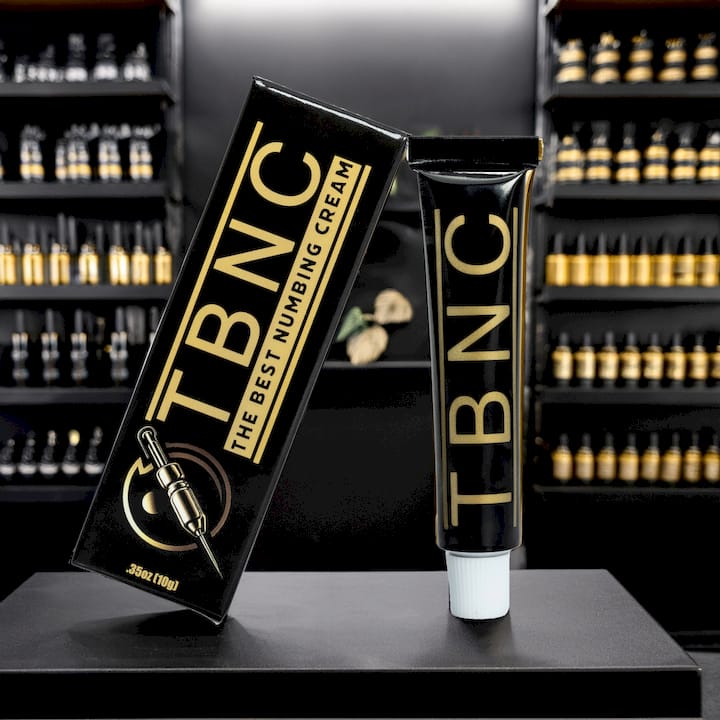
| TBNC Tattoo offers fresh replacements | The TBNC 2-Pack and Tattoo Numbing & Aftercare Bundle provide dermatologist-approved, in-date options with clear label directions. |
Table of Contents
- What does a numbing cream expiration date actually mean?
- How long does numbing cream last, sealed vs. opened?
- What can go wrong if you use expired numbing cream?
- How to tell if your numbing cream has spoiled
- How to store numbing cream to preserve potency
- How to dispose of expired numbing cream safely in the U.S.
- When does an expired numbing cream require medical attention?
- What dermatologists, pharmacists, and regulators say
- Does expiration affect lidocaine and prilocaine differently?
- How to buy numbing cream and avoid near-expiry products
- What to use when expired cream can’t be used
- The TBNC Tattoo perspective on expired product use
- Fresh, dermatologist-approved numbing cream from TBNC Tattoo
- Sources
- FAQ
What does a numbing cream expiration date actually mean?
The FDA states that expiration dates reflect the period a drug product is expected to remain stable in strength, quality, and purity when stored under the labeled conditions — and that guarantee applies only to the original, sealed container.
That framing matters. The date on your tube is not a conservative guess; it’s the endpoint of manufacturer stability testing conducted under controlled conditions. The FDA has required expiration dating on most prescription and OTC medications since 1979. Once you open the tube, expose it to bathroom humidity, or store it in a hot car, that tested stability window no longer applies.
What each marking tells you:
- Expiration date (EXP MM/YYYY or stamped on the crimp): the last month the sealed product is guaranteed stable.
- PAO symbol (open-jar icon + number + “M”): how many months the product is considered safe to use after you first open it, regardless of the printed expiry.
- Both can apply simultaneously. If a tube expires in December but you opened it 14 months ago and the PAO says 12M, the PAO window has already closed.
The DailyMed lidocaine label directs users to follow label storage and application instructions as the authoritative source for a specific product. When in doubt, the label wins.
How long does numbing cream last, sealed vs. opened?
Most topical lidocaine creams carry a sealed shelf life of roughly 2–3 years from the manufacture date, though the exact window varies by formulation and brand. After opening, the practical safe-use period drops considerably.
| Condition | Typical timeframe | Basis |
|---|---|---|
| Sealed, stored per label | 2–3 years | Manufacturer stability testing |
| Opened, ideal storage | 12 months | PAO symbol on label |
| Opened, bathroom/heat storage | Often less than 12 months | Real-world degradation factors |
Creams and liquids are generally less stable than tablets once exposed to air, light, and temperature swings. An emulsion-based numbing cream contains water, active lidocaine, and preservatives that all degrade at different rates.
Formulation caveats worth knowing:
- Gel formulations tend to be more sensitive to temperature fluctuation than cream bases.
- Ointments (petrolatum-based) can be slightly more stable than water-in-oil emulsions, but they’re less common for tattoo use.
- Any product stored in a humid bathroom cabinet should be treated as having a shorter effective life than the label suggests.
What can go wrong if you use expired numbing cream?
The most common outcome is simply that it doesn’t work. Expired topical anesthetics commonly lose potency first; the result is inadequate numbing during a session, which means flinching, movement, and a harder time for your artist to place clean lines. That’s a practical problem with real consequences for the quality of your tattoo.
Beyond potency loss, there are three additional risks:
- Preservative failure and contamination. Once preservatives degrade, bacterial growth in an opened tube becomes more likely, especially if a shared applicator has been double-dipped. Applying a contaminated cream to skin that will be punctured by needles is a direct infection pathway.
- Skin irritation from degraded ingredients. Oxidized or broken-down lidocaine byproducts can irritate skin, cause redness, or trigger a localized allergic response even in people who have used the product before without issue.
- Rare systemic toxicity. Lidocaine absorbed through compromised skin in excessive amounts can cause dizziness, ringing in the ears, a metallic taste, or in severe cases, seizures. This is uncommon with properly dosed topical use, but degraded formulations applied to large areas or broken skin raise the risk profile.
The FDA advises against using medicines past their expiration date specifically because storage conditions in real homes almost never match the controlled lab conditions used during stability testing.
How to tell if your numbing cream has spoiled
Visual and sensory checks take under a minute and give you reliable field evidence of whether a cream is still usable.
Check the packaging first:
- Expiration date missing, smudged, or illegible: discard.
- Swollen tube or box, broken seal, or damaged crimp: discard.
- No PAO symbol and you can’t remember when you opened it: treat it as expired.
Then inspect the cream itself:
- Color change: yellowing or browning often signals oxidation.
- Separation or layering: the emulsion has broken down; the cream is no longer stable.
- Unusual odor: a musty, sour, or chemical smell indicates microbial or chemical degradation.
- Grainy or powdery texture: active ingredient crystals may have precipitated out of solution.
- Visible specks or cloudiness: possible contamination.
These sensory changes are reliable indicators that a topical product should be discarded regardless of what the printed date says. Trust your eyes and nose here.
Pro Tip: Never double-dip an applicator back into a shared tube. A single contaminated application can introduce bacteria that degrade the entire remaining product within days, well before the PAO date.

How to store numbing cream to preserve potency
Where and how you store a tube directly determines how close to the printed expiry it will actually remain effective.
- Store in a cool, dry, dark location: a bedroom drawer, a dedicated kit pouch, or a bathroom cabinet that stays dry and doesn’t get direct sunlight.
- Keep the cap tightly closed between uses. Oxygen exposure accelerates degradation.
- Do not refrigerate unless the label specifically instructs it. Repeated freeze-thaw cycles can break down an emulsion faster than room-temperature storage.
- Use single-use applicators or a clean spatula each time. Avoid touching the cream directly with fingers that have been near the tattoo site.
- Follow TBNC Tattoo’s numbing cream directions for product-specific storage guidance.
The FDA’s conservative framing is worth repeating here: the printed expiry assumes ideal, labeled storage conditions. Bathroom humidity, heat from a nearby vent, or leaving a tube in a gym bag through summer will shorten real-world shelf life, sometimes significantly.
How to dispose of expired numbing cream safely in the U.S.
Safe disposal keeps expired topical medications out of the water supply and away from children or pets.
- Check for a drug take-back kiosk first. Many pharmacies (CVS, Walgreens, Rite Aid) maintain permanent drop-off kiosks. The DEA’s National Prescription Drug Take-Back Day, held twice yearly, also accepts most OTC topical medications.
- Use the FDA’s household disposal method if no take-back is available. Mix the cream with an unappealing substance (used coffee grounds, dirt, or kitty litter), seal it in a zip-lock bag or container, and place it in your household trash.
- Do not flush topical lidocaine cream unless the label or the FDA’s flush list specifically permits it. Most topical creams are not on that list.
- Do not donate or re-gift expired topical medications. Passing along a degraded product creates the same safety risks for the recipient.
The FDA’s disposal guidance recommends take-back programs as the preferred option and provides the mix-and-trash method as a fallback. For operational guidance on managing product handling in a studio setting, clinic workflow protocols offer a useful framework for stock rotation and disposal documentation.
When does an expired numbing cream require medical attention?
Most reactions to expired topical creams are mild and resolve on their own. Some are not.
Seek prompt medical care (urgent care or your primary care provider) if you notice:
- Increasing redness, warmth, swelling, or pus at the application site, especially 24–48 hours after use.
- Red streaks spreading from the site, or fever: these suggest a possible skin infection.
- A rash or hives limited to the application area that worsens over several hours.
Call 911 or go to an emergency room immediately for:
- Hives spreading beyond the application site, swelling of the face or throat, or any difficulty breathing: these are signs of a serious allergic reaction.
- Dizziness, ringing in the ears, a metallic taste, slurred speech, or seizures after applying a topical anesthetic to a large area: these are signs of systemic lidocaine toxicity and require emergency care.
For non-emergency questions, Poison Control is available 24/7 at 1-800-222-1222. They handle questions about expired or misused topical medications and can advise on whether a reaction warrants a clinic visit.
What dermatologists, pharmacists, and regulators say
Expired topical anesthetics are seldom inherently toxic, but sub-potency is the primary clinical concern. For procedures requiring reliable anesthesia, the conservative recommendation is replacement — not because expired cream will necessarily harm you, but because it may simply fail to work when you need it most.
This consensus view from Poison Control’s clinical guidance aligns with what pharmacists and dermatologists advise in practice. The FDA’s framework is deliberately conservative: it assumes ideal storage, which most consumers don’t maintain.
Research on topical lidocaine formulation stability confirms that physicochemical and microbiological stability depend on formulation, pH, and intact packaging. Once a seal is broken, those variables shift.
Practical studio-level tips backed by pharmacist guidance:
- Write the open date on every tube the day you first use it.
- Discard any shared-use container that has been open longer than the PAO window, regardless of how much product remains.
- Keep single-use applicators in stock and never reuse them between clients.
- Rotate stock so near-expiry products are used first or replaced before a session.
Pro Tip: Manufacturer liability ends at the expiration date. If you use a product past that date and experience an adverse outcome, the manufacturer’s safety data no longer covers that use. Following label instructions is both a safety and a liability consideration.
Does expiration affect lidocaine and prilocaine differently?
Lidocaine and prilocaine are both amide-type local anesthetics, but they degrade at slightly different rates and under different conditions. Lidocaine is the most common active ingredient in OTC tattoo numbing creams and is generally well-characterized for stability. Prilocaine, often combined with lidocaine in prescription-strength formulations like EMLA, can oxidize to form methemoglobin-inducing byproducts in degraded product, which is a more specific safety concern than simple potency loss.
For OTC tattoo use, the comparison between lidocaine, prilocaine, and tetracaine matters when choosing a product, but from an expiration standpoint, the practical rule is the same across types: follow the PAO, store correctly, and replace if any sensory change is present. Higher-concentration or combination formulations don’t earn extra shelf life just because they’re stronger.
How to buy numbing cream and avoid near-expiry products
Buying from a reputable, high-turnover source is the single most reliable way to avoid receiving near-expiry stock. A tube sitting in a warehouse or on a third-party marketplace shelf for 18 months may have only months of usable life left when it reaches you.
When purchasing, check the following:
- Verify the expiration date before checkout if buying in person, or immediately upon delivery if ordering online. A reputable seller will accept returns on near-expiry product.
- Buy direct from the brand or an authorized retailer. Third-party resellers on general marketplaces don’t always rotate stock.
- Avoid bulk purchases you can’t use within the PAO window. Buying a 12-pack when you’ll only use two tubes in a year means the rest will expire opened or unopened.
- Check for a manufacture date if listed. A product manufactured 20 months ago with a 24-month shelf life has only 4 months left, even if the EXP date hasn’t passed yet.
For a comparison of numbing cream formulations and which type fits your session type, TBNC Tattoo’s guide covers the practical differences between creams, gels, and sprays.
What to use when expired cream can’t be used
If your numbing cream has expired and your session is soon, you have a few practical options.
Replace with a fresh OTC product. This is the most straightforward path. A fresh tube of a dermatologist-approved, lidocaine-based cream applied correctly 45–60 minutes before your session will outperform any expired product regardless of how it looks. For pain management in aesthetic and tattoo procedures, fresh product applied per label directions is the standard recommendation.
Consult your tattoo artist. Many studios stock their own numbing products and can apply them as part of your session prep. Ask ahead of time whether this is an option.
Talk to a pharmacist or clinician if you have a medical condition, are pregnant, breastfeeding, or taking medications that interact with lidocaine. Numbing cream breastfeeding safety, for example, depends on the specific product, concentration, and application area, and a pharmacist can advise on the safest approach for your situation.
Adjust session length or placement. For clients who can’t use any topical anesthetic, shorter sessions, strategic placement, and breaks are legitimate pain-management tools that professional artists use routinely.
The TBNC Tattoo perspective on expired product use
From where we stand, the math on expired numbing cream is simple: the risk isn’t usually acute toxicity, it’s a session that hurts more than it should because the product failed quietly. A tattoo is a significant investment of time, money, and skin real estate. Using a product you’re not sure about to save a few dollars is a trade-off that rarely makes sense. The conservative call is always to replace before a session, not after. Check your tube’s expiry and PAO before every appointment. If there’s any doubt, get a fresh one. Your artist will thank you, and so will your skin.
Fresh, dermatologist-approved numbing cream from TBNC Tattoo
When it’s time to replace an expired tube, TBNC Tattoo offers dermatologist-approved, lidocaine-based options with clear storage directions and a formulation trusted by over 3,250 tattoo studios. The Tattoo Numbing & Aftercare Bundle covers both session prep and post-tattoo healing in one order, including the Tattoo Aftercare Lotion, Tattoo Aftercare Balm, and Tattoo Soothing Gel. For clients who want to keep a backup on hand, the TBNC 2-Pack is the practical choice. Always follow the label directions and your studio’s protocol. Browse the full TBNC lidocaine cream collection and order fresh stock before your next session.
Sources
- Expiration Dates - Questions and Answers | FDA
- Expired medicines: Should you take them? | Poison Control
- Expiration Dating and National Drug Code Rules - StatPearls - NCBI Bookshelf
- Drug Expiration Dates - Are Expired Drugs Still Safe to Take?
- DailyMed - LIDOCAINE ointment
FAQ
Is it safe to use expired numbing cream?
Expired topical numbing cream is unlikely to cause acute harm, but it often loses potency and may harbor bacterial contamination if the preservatives have degraded. For a tattoo session, sub-potent cream is a practical failure, not just a theoretical one.
Does lidocaine expire and lose effectiveness?
Yes. Lidocaine degrades over time, especially after a tube is opened and exposed to air, heat, or humidity. An expired or improperly stored lidocaine cream may deliver significantly less numbing than the label concentration suggests.
What happens if you use a cream after the expiration date?
The most likely outcome is reduced effectiveness. If the preservatives have also broken down, there is an increased risk of skin irritation or infection, particularly when applied to skin that will be punctured. Systemic toxicity from a degraded topical cream is rare but possible with large-area application.
Is it okay to use expired pain relief cream?
The FDA advises against using any medication past its expiration date. For topical pain relief creams, the primary concerns are potency loss and contamination risk, not acute toxicity. Replace the product if it has passed its printed expiry or PAO window.


