

Over-Moisturized Tattoo: How to Tell and Fix It
If your new tattoo looks persistently shiny, feels spongy, or has developed small whiteheads after repeated lotion use, stop applying product immediately and let the skin air-dry. That single step resolves most cases of over-moisturization. Guidance from the Cleveland Clinic and the American Academy of Dermatology both confirm that healing tattoos need a careful balance of cleanliness and light hydration, not a constant coat of product. TBNC Tattoo’s aftercare line is built around exactly that principle.
Immediate action steps:
- Stop applying any lotion, balm, or ointment right now.
- Gently wash the area with a fragrance-free, foaming soap using clean fingertips.
- Pat dry with a single-use paper towel. Do not rub.
- Leave the tattoo uncovered and let it air-dry for at least 30 minutes.
- Loosen or remove any clothing sitting directly on the tattoo.
Seek medical attention if you notice any of these:
- Fever or chills
- Spreading redness that moves beyond the tattoo border
- Thick yellow or green discharge
- Increasing warmth and severe pain that worsens over 24 hours
Key Takeaways
Keeping a healing tattoo lightly moisturized on dry skin, using fragrance-free products applied sparingly 2–3 times daily, prevents over-moisturization and protects long-term ink quality.
| Point | Details |
|---|---|
| Stop product immediately | If the tattoo looks shiny, soggy, or has soft scabs, halt all lotion and let the skin air-dry for 30–60 minutes. |
| Wash gently, then monitor | Use a fragrance-free foaming soap, pat dry with a single-use towel, and check progress over 24–48 hours. |
| Apply thin layers on dry skin | A pea-sized amount on fully dry skin, 2–3 times daily maximum, is the correct moisturizing approach during active healing. |
| Avoid petroleum occlusives | Thick petrolatum-based products trap moisture and bacteria; switch to a fragrance-free, water-based lotion after initial weeping stops. |
| TBNC Tattoo aftercare | The Foaming Soap, Unscented Lotion, and Aftercare Balm cover every stage of the reset protocol with dermatologist-approved formulas. |
Table of Contents
- What does an over-moisturized tattoo look and feel like?
- Why does over-moisturizing happen in the first place?
- How to fix an over-moisturized tattoo right now
- How to moisturize correctly so this doesn’t happen again
- Which products are safe, and which ones cause problems?
- When should you see a doctor or call your artist?
- TBNC Tattoo aftercare makes the reset simple
- Sources
- FAQ
What does an over-moisturized tattoo look and feel like?
Recognizing the difference between normal healing and a tattoo that has had too much lotion applied is the first real skill in aftercare. Most people panic unnecessarily, or worse, keep applying product when the skin is already overwhelmed.
Visual cues are usually the clearest signal. An over-moisturized tattoo has a persistent wet or glossy sheen that does not fade 30 minutes after application. The skin around it may look slightly wrinkled or waterlogged, and you might notice product pooling in the recessed lines of the design. Colors can appear muted or cloudy rather than crisp, which is a sign the surface layer is not breathing properly.
Tactile cues tell the rest of the story. Scabs that feel soft, spongy, or almost gummy instead of firm and dry are a red flag. You may also notice increased itching immediately after applying lotion, or small pimple-like pustules forming around the tattooed area. These are not normal healing responses.
The key distinction: Normal healing produces a firm, slightly raised scab that gradually flakes on its own. An over-moisturized tattoo produces soft, soggy scabs that lift prematurely, which can pull pigment with them and leave patchy areas in the finished piece.
Normal healing timeline vs. over-moisturization vs. infection:
A fresh tattoo typically weeps clear or slightly yellow plasma for the first 24–48 hours. Scabbing forms by day 3–5 and peeling begins around day 7–14. If your tattoo is still weeping heavily after 72 hours, or scabs are soft and lifting rather than drying down, over-moisturization is likely the cause. Infection looks different: the redness spreads outward, the skin feels hot to the touch, and the discharge is thick and colored rather than clear. AAD guidance on tattoo skin reactions distinguishes allergic reactions and infections from standard healing irritation, which is worth reviewing if you are unsure which category your symptoms fall into.
Why does over-moisturizing happen in the first place?
A fresh tattoo is an open wound. The skin’s barrier is compromised, and it needs controlled airflow to heal efficiently. When you apply too much product, especially thick petroleum-based occlusives, you essentially seal that wound shut.
Dr. Shilpi Khetarpal at the Cleveland Clinic explains it plainly: thick petroleum-based products can block pores, trap bacteria, and increase inflammation by preventing the gas exchange that healing tissue depends on. That trapped environment is where problems compound fast.
The most common behavioral mistakes are applying product on skin that is still damp after washing, reapplying every hour out of anxiety, and using far more product than the skin can absorb. Large, heavily shaded pieces and tattoos placed under clothing are especially vulnerable because fabric holds heat and reduces airflow further. Oily or acne-prone skin types already produce more sebum, so adding a heavy layer of lotion on top creates a genuinely occlusive environment even with a moderate amount of product.
Pro Tip: If you have already over-moisturized, do a quick reset: wash gently, pat completely dry, and wait a full hour before deciding whether the skin even needs product. Dry skin feels tight; over-moisturized skin still looks shiny. Trust what you see, not the clock.
How to fix an over-moisturized tattoo right now
The fix is straightforward, but the order matters. Work through these steps within the next hour.
- Stop all product. No lotion, no balm, no ointment. Give the skin a chance to breathe before you do anything else.
- Wash gently. Use lukewarm water and a fragrance-free foaming soap. Work in small circles with clean fingertips for about 20 seconds, then rinse thoroughly.
- Pat dry with a single-use towel. Paper towels are ideal. Cloth towels harbor bacteria and the texture can snag on soft scabs.
- Air-dry for at least 30–60 minutes. Sit in a well-ventilated room. Do not cover the tattoo with plastic wrap or bandaging unless your artist has specifically instructed otherwise.
- Monitor over the next 24–48 hours. The skin should begin to look less shiny and scabs should firm up. If they do, you are on track.
Dos and don’ts during recovery:
- Do blot away any excess product that surfaces rather than rubbing it in further.
- Do wear loose, breathable clothing over the area.
- Do photograph the tattoo now so you can track changes over 24 hours.
- Don’t pick or rub softened scabs, even if they look ready to come off.
- Don’t re-bandage the area unless a clinician advises it.
- Don’t reintroduce any lotion until the skin feels dry and slightly tight, not before.
Once the skin has dried out and scabs have firmed up, typically within 24–48 hours, you can reintroduce a thin layer of a lightweight, unscented aftercare lotion applied once or twice daily on completely dry skin.
How to moisturize correctly so this doesn’t happen again
Timing, quantity, and product choice are the three variables that determine whether your tattoo heals cleanly or ends up over-moisturized.
Most artists recommend waiting until after the first wash to apply any product, typically 24–48 hours after the session. That window varies based on how much the tattoo weeps, your skin type, and your artist’s specific protocol. Follow their guidance first; these are general parameters.
Quantity is where most people go wrong. A pea-sized amount for a palm-sized area is the right starting point. The AAD recommends keeping skin lightly moisturized, not saturated. WebMD’s tattoo care guidance suggests up to 2–3 applications daily during active healing, which is a ceiling, not a target.
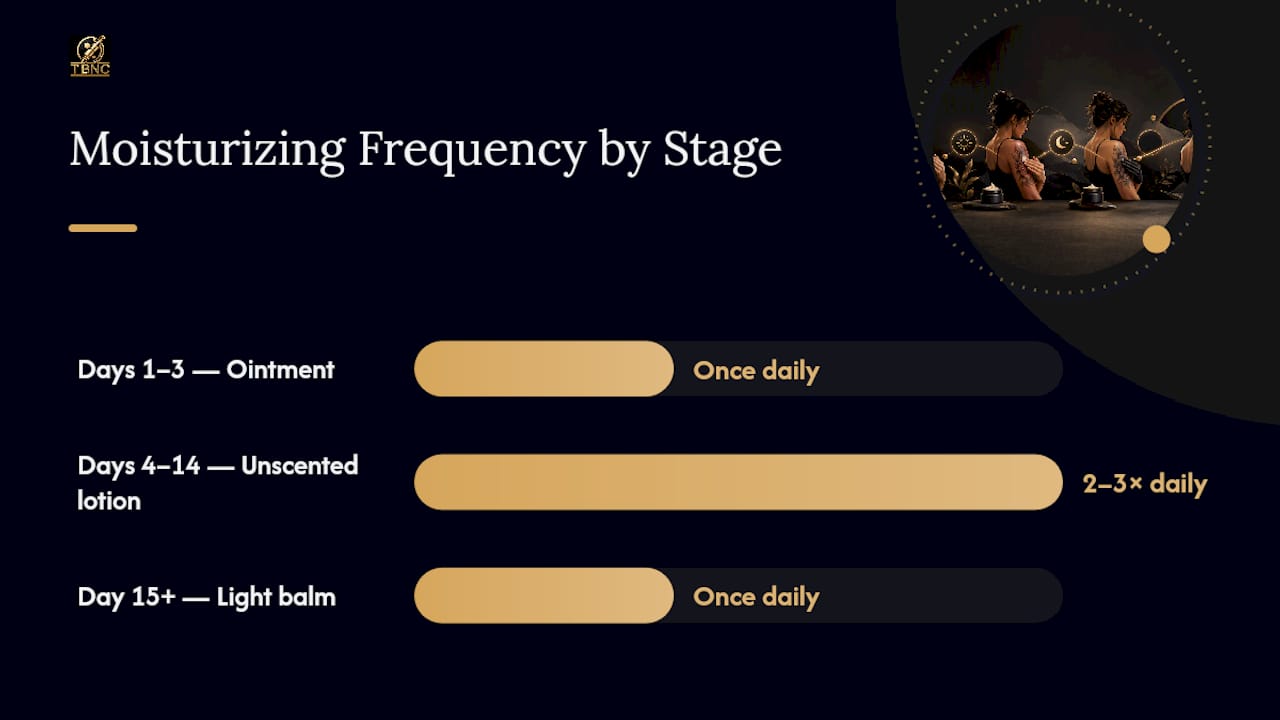
| Healing Stage | Product Type | Frequency |
|---|---|---|
| Days 1–3 (active weeping) | Thin ointment or surgeon-recommended product | Once daily or as artist directs |
| Days 4–14 (scabbing/peeling) | Fragrance-free, water-based unscented lotion | 2–3 times daily on dry skin |
| Day 15+ (surface healed) | Light unscented lotion or tattoo balm for spot use | Once daily or as needed |
Pro Tip: Use the “sheen test” before every application. Your skin should have a slight satin finish after moisturizing, not a wet or glossy look. If it still looks wet 15–30 minutes after applying product, you used too much.
Which products are safe, and which ones cause problems?
Product choice has a bigger impact on healing than most collectors realize. The wrong formula at the wrong stage can undo a technically perfect tattoo session.
Avoid these during active healing:
- Pure petroleum jelly and thick petrolatum-based ointments used beyond the first 24–48 hours
- Heavy balms with strong occlusive ingredients like lanolin or beeswax applied in thick layers
- Fragranced lotions, body butters, and oil-based formulas that can trigger allergic reactions on broken skin
- Any product layered on top of another without letting the first fully absorb
Medical News Today’s aftercare guidance is direct on petroleum jelly: it traps moisture and air, making it a poor choice for ongoing tattoo care once initial weeping has stopped. The EADV’s clinical aftercare recommendations align with this, advising hypoallergenic emollients rather than heavy occlusives, and cautioning against routine use of antibiotic creams unless infection is clinically confirmed.
Recommended product types:
- Fragrance-free, water-based lotions
- Hypoallergenic emollients with minimal ingredients
- Tattoo-specific foaming cleansers for the washing step
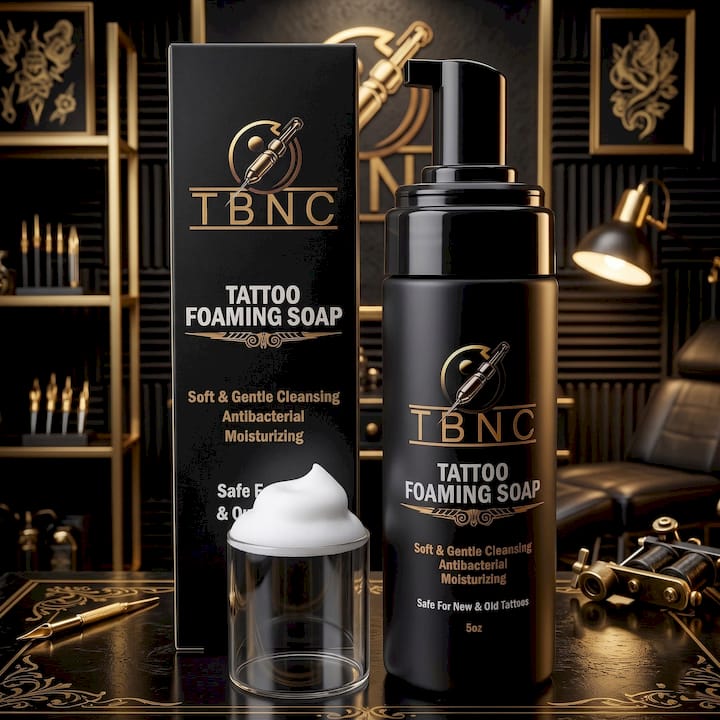
The TBNC Tattoo aftercare line covers each stage. The Tattoo Foaming Soap is formulated for gentle cleansing without stripping the skin or irritating fresh ink. The Tattoo Aftercare Lotion, Unscented delivers light, water-based hydration that absorbs without occluding, making it the right choice for the day-to-day moisturizing stage. The Tattoo Aftercare Balm is designed for targeted, spot-use only, not full-coverage application, which keeps the risk of over-moisturization low while protecting areas that need extra attention.
Artist guidance from Hammerhead Tattoo is worth noting here: even Aquaphor, a product many artists recommend, can pull out ink and damage tattoo quality when applied in excess. The principle holds across every product category: thin layers, on dry skin, applied sparingly.
For readers who want to explore natural-based balm formulations as part of their healing kit, ZenChemy Lab’s healing balm range offers ingredient-conscious options worth reviewing.
When should you see a doctor or call your artist?
Over-moisturization is fixable at home in most cases. Infection is not.
The NCBI peer-reviewed review on tattoo complications confirms that trapped moisture and occlusive conditions can increase infection risk and interfere with pigment settling, which is why catching the problem early matters.
Seek medical care if you notice any of the following: spreading redness that extends beyond the tattoo border, skin that feels increasingly hot to the touch, severe or worsening pain after 48 hours, thick yellow or green discharge, fever, or a rapidly deteriorating appearance. These are not signs of over-moisturization; they are signs of infection.
A clinician may perform a wound check, take a bacterial culture, or prescribe antibiotics depending on what they find. Your tattoo artist can also help: send a clear photo in good lighting and ask for an in-studio check if you are uncertain. Most experienced artists have seen over-moisturization many times and can tell the difference from a photograph.
An honest note on balancing moisture and airflow
The most common mistake is treating aftercare like a hydration competition. More product does not mean faster healing. In practice, the tattoos that heal with the sharpest lines and most vivid color are the ones that were kept clean, lightly moisturized, and allowed to breathe. Less product, applied correctly on dry skin, consistently outperforms aggressive moisturizing routines. TBNC Tattoo’s aftercare products are formulated with that principle in mind: light enough to hydrate without occluding, fragrance-free to avoid irritation, and designed to work with the skin’s own healing process rather than against it. Small adjustments to your routine, stopping product for 24 hours, switching to a thinner formula, applying less, typically resolve most cases without any lasting damage to the tattoo.
TBNC Tattoo aftercare makes the reset simple
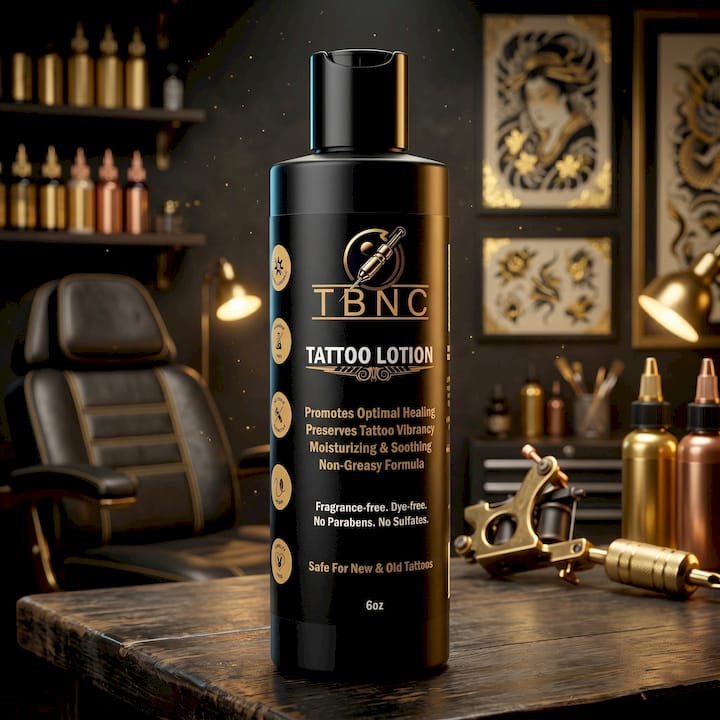
When you need to correct an over-moisturized tattoo, the product you reach for next matters as much as the step you just stopped. TBNC Tattoo’s complete aftercare collection gives you exactly what the reset protocol calls for: a gentle foaming cleanser that removes excess product without stripping the skin, a lightweight unscented lotion that reintroduces hydration without occluding, and a targeted balm for spot care on areas that need extra protection. Each product is dermatologist-approved and formulated specifically for healing tattoo skin. Start with the Foaming Soap, let the skin dry fully, then reintroduce the Unscented Lotion in a single thin layer once or twice daily. Browse the post-tattoo aftercare collection to find the right products for your healing stage.
Sources
- Tattoos and aftercare — Cleveland Clinic Health Essentials
- EADV tattoo aftercare guidance (PDF)
- NCBI / PMC article on tattoo complications
- Caring for tattooed skin — AAD
- Tattoo aftercare guidance — Medical News Today
This article is general information, not a substitute for advice from a qualified doctor. Consult a qualified healthcare professional about your own circumstances before acting on anything here.
FAQ
How do I fix an over-moisturized tattoo?
Stop applying all products, wash gently with a fragrance-free soap, pat dry with a single-use towel, and allow the tattoo to air-dry uncovered for at least 30–60 minutes. Resume only a thin layer of unscented lotion once the skin feels dry and slightly tight, not before.
How do you know if your tattoo is over-moisturized?
The clearest signs are a persistent wet or glossy sheen that does not fade 30 minutes after application, soft or spongy scabs, and small pimple-like pustules around the tattooed area. Normal healing produces firm scabs that dry down gradually.
What happens if you use too much moisturizer on a new tattoo?
Excess product creates an occlusive environment that traps moisture and bacteria, raises inflammation risk, and can cause soft scabs to lift prematurely, potentially pulling pigment with them and leaving patchy areas in the healed tattoo.
What happens if you put too much Aquaphor on your tattoo?
Artist guidance from Hammerhead Tattoo warns that excess Aquaphor can pull out ink and damage tattoo quality. Even products recommended by artists carry risk when over-applied; a thin layer on dry skin is always the correct approach, regardless of the product.


