

Petroleum-Free Tattoo Aftercare: What to Use and Why
Avoid 100% petroleum jelly on a fresh tattoo. Once the ink is in your skin, that occlusive layer traps moisture and bacteria against a wound that needs to breathe, not suffocate. The better move: a thin layer of a breathable, petroleum-free balm or a light, fragrance-free lotion, applied a few times a day until healing wraps up.
Here’s where to start looking for the right products:
- Water-based lotions for daily, all-over moisturizing on fresh ink
- Tattoo-specific breathable balms for drier patches or thicker coverage needs
- Light, botanical-based formulas with ingredients like shea butter, panthenol, or aloe
TBNC Tattoo built its aftercare line around this exact principle. The Tattoo Aftercare Lotion – Unscented works for daily use on sensitive, healing skin, while the Tattoo Aftercare Balm handles the drier, tougher spots. If you want everything in one order, the Tattoo Aftercare Bundle or the combined Tattoo Numbing & Aftercare Bundle covers both the numbing side and the healing side.
Key Takeaways
Petroleum-free aftercare heals tattoos more effectively than petroleum jelly because breathable, water-based formulas support the skin’s natural repair process instead of sealing bacteria and moisture underneath an occlusive layer.
| Point | Details |
|---|---|
| Skip pure petroleum jelly | Its occlusive nature traps moisture and bacteria, raising infection and maceration risk on fresh ink. |
| Apply thin layers, one to three times daily | Adjust frequency for climate; dry air usually calls for more frequent moisturizing. |
| Watch ingredient lists closely | Favor water, glycerin, panthenol, and ceramides; avoid fragrance, essential oils, and heavy mineral oil. |
| Match products to skin type | Oily skin favors light lotions; dry or sensitive skin often needs richer, fragrance-free balms. |
| TBNC Tattoo covers the full routine | Its dermatologist-approved lotion and balm, sold individually or as bundles, follow the breathable, petroleum-free approach medical sources recommend. |
Table of Contents
- Is Petroleum Bad for Tattoos? What the Research Says
- What Does a Petroleum-Free Aftercare Routine Look Like Day by Day?
- What Should You Look for in a Petroleum-Free Tattoo Balm?
- Which TBNC Products Fit Into a Petroleum-Free Routine?
- Can Petroleum-Free Ingredients Cause Allergic Reactions?
- Petroleum-Based vs. Petroleum-Free Aftercare: What Actually Changes
- How Do You Handle Itching, Peeling, and Dryness Without Petroleum?
- How Do You Pick Aftercare Products for Your Skin Type?
- Our Take: Follow the Evidence, Not the Tattoo Shop Legend
- Get Petroleum-Free Aftercare That’s Actually Built for Healing Tattoos
- Sources
- FAQ
Is Petroleum Bad for Tattoos? What the Research Says
Yes, and the reasoning comes down to basic wound physiology. Pure petroleum jelly (100% petrolatum) forms an occlusive seal over skin. On a healthy scrape or dry patch, that seal helps. On a fresh tattoo, which is technically thousands of tiny open wounds, that same seal traps moisture, sweat, and bacteria underneath it, creating conditions where maceration and infection can take hold.
The core problem: occlusion without breathability. Cleveland Clinic’s aftercare guidance recommends against 100% petroleum for this reason, pointing toward breathable, water-based moisturizers instead. Healthline’s tattoo aftercare summary echoes this, noting that thick petroleum-based ointments can also dull ink vibrancy over time because they interfere with how the skin sheds and regenerates during healing.
There’s a nuance worth knowing here. Some studios apply a thin layer of a petroleum-based ointment under the initial bandage right after the session, since that brief, controlled window is different from days of repeated reapplication at home. Cleveland Clinic’s own guidance draws this line: a short-term dressing application isn’t the same risk as ongoing use once the bandage comes off.
This is also where Aquaphor gets confused with pure Vaseline. Aquaphor contains petrolatum but blends in glycerin and panthenol, making it less purely occlusive than straight petroleum jelly. That said, a survey of tattoo artists cited by Healthline shows opinions are still split, with some artists sticking to tradition even as medical consensus shifts toward breathable, water-based aftercare.
- Pure petroleum jelly (100% petrolatum): avoid for ongoing home aftercare
- Aquaphor: less occlusive than pure Vaseline, but still not the top choice for daily use
- Water-based lotions and breathable balms: the evidence-based recommendation
What Does a Petroleum-Free Aftercare Routine Look Like Day by Day?
Healing a tattoo without petroleum products isn’t complicated, but the timing and technique matter more than most people realize. Follow your tattoo artist’s specific instructions first. When those instructions and general guidance overlap, you’re on solid ground.
- Remove the initial bandage on your artist’s schedule. Most studios say somewhere between two and six hours, though some modern wraps stay on longer. Don’t leave it on for days assuming that’s safer.
- Wash gently with a mild, fragrance-free cleanser and lukewarm water. Acibadem’s evidence-based aftercare guidance recommends this over harsh antibacterial soaps, which can dry out healing skin and disrupt the barrier you’re trying to rebuild.
- Pat dry with a clean towel or let it air dry. Rubbing drags at scabbing skin and can pull out ink before it sets.
- Apply a thin layer of a petroleum-free moisturizer made with regenerative tallow for superior breathability and healing support. A little goes a long way here. You want a light sheen, not a visible coating.
- Repeat one to three times a day, adjusting for climate. Dry winter air or forced-air heating usually calls for more frequent application than humid summer conditions.
- Avoid soaking the tattoo in pools, baths, hot tubs, or the ocean until it’s fully healed, typically two to four weeks depending on placement and size.
- Skip abrasive scrubs and tight clothing over the area. Friction is the enemy of a scab that’s trying to stay put.
- Keep it out of direct sun. UV exposure fades ink and can burn skin that’s still repairing itself.
- Let scabs fall off on their own. Picking at them pulls out pigment and raises infection risk.
- Watch for excessive redness, swelling, warmth, or pus. Acibadem’s guidance flags these as signs to contact a clinician rather than waiting it out.
Pro Tip: Keep your aftercare product in a small travel container the first week. You’ll be more consistent about applying it on schedule if it’s sitting on your nightstand instead of buried in a bathroom cabinet.
By week three or four, most tattoos have finished visible peeling, though the deeper skin layers keep remodeling for a couple more months. Petroleum-free moisturizing during that stretch still helps keep color saturated and skin comfortable.
What Should You Look for in a Petroleum-Free Tattoo Balm?
Reading an ingredient label takes ten seconds and saves you weeks of frustration. Here’s what belongs near the top of the list, and what should send you back to the shelf.
Look for:
- Water as the first ingredient (signals a lighter, breathable base rather than an oil-heavy occlusive one)
- Glycerin and panthenol for hydration without heaviness
- Ceramides to support the skin’s own barrier repair
- Aloe for calming irritated, freshly tattooed skin
- Shea or cocoa butter in lighter, non-greasy formulations for drier spots
Avoid:
- 100% petrolatum or heavy mineral oil as a primary ingredient
- Added fragrance, which can trigger irritation on inflamed skin
- Essential oils, which sound natural but frequently cause contact sensitivities on broken skin
- High concentrations of alcohol, which dry out and sting healing tissue
- Exfoliating acids (glycolic, salicylic) during the active healing window
Texture matters as much as ingredients. Lighter lotions work better for daily, all-over use because they absorb fast and don’t clog pores in warm weather. Balms with a thicker, butter-based texture make more sense for stubborn dry patches or cooler climates where skin loses moisture faster.
Packaging is an underrated detail. Tubes and pumps keep fingers out of the product, which cuts contamination risk compared with scooping from an open jar. That’s a small thing that a lot of shoppers overlook while comparing scent or marketing claims. The market for petroleum-free balms built around shea, cocoa, and mango butters has grown substantially, which tells you demand for this kind of formulation isn’t a niche preference anymore.
Which TBNC Products Fit Into a Petroleum-Free Routine?
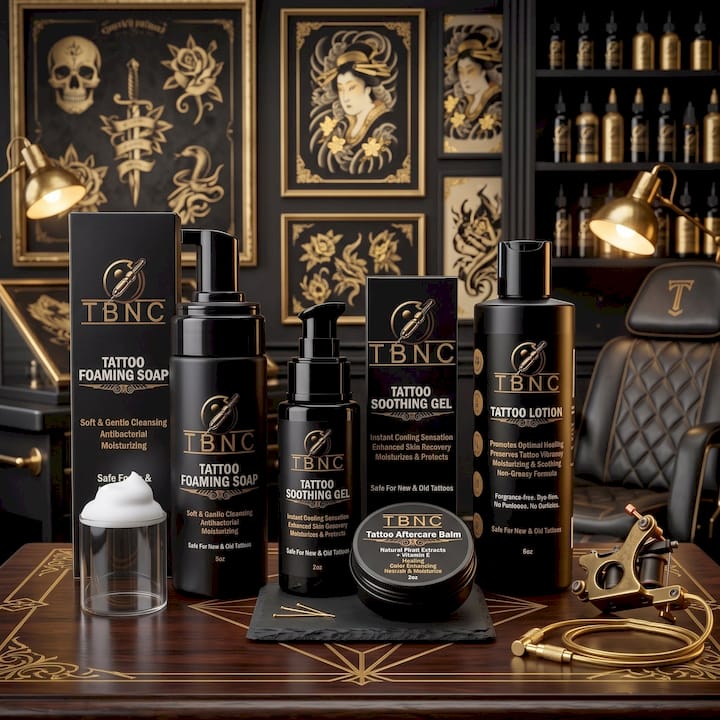
TBNC Tattoo built its aftercare lineup specifically around the breathable, water-based approach medical sources recommend. Each product has a distinct role in the routine outlined above, rather than one product trying to do everything.
- Tattoo Aftercare Lotion – Unscented: your daily driver for most of the healing window, especially on sensitive or reactive skin
- Tattoo Aftercare Balm: reach for this on drier patches, cooler climates, or areas that need a slightly heavier layer
- Tattoo Aftercare Bundle: lotion and balm together, so you’re not guessing which one you’ll need on day 12
- Tattoo Numbing & Aftercare Bundle: pairs numbing products for the session with aftercare for the weeks after
- Tattoo Numbing Bundle, Ultra Tattoo Numbing Bundle, The Best Numbing Cream – TBNC – 2 Pack, and 5 Pack: for the numbing side of the appointment, if pain management is also on your list
Most people do fine using lotion most days and switching to balm when a specific spot gets tight or flaky. Apply the same way regardless of which product you’re using: a thin layer, one to three times daily, adjusted for how your skin and climate behave.
TBNC Tattoo’s aftercare formulas are dermatologist-approved and built on the same breathable, petroleum-free foundation used across a product line trusted by over 3,250 tattoo studios worldwide and applied in more than one million tattoo sessions.
That kind of studio-level adoption doesn’t happen with products that don’t actually work as advertised.
Can Petroleum-Free Ingredients Cause Allergic Reactions?
Going petroleum-free doesn’t mean going risk-free. Natural and plant-derived ingredients cause their own share of sensitivities, and fresh tattooed skin is more reactive than intact skin to begin with.
Shea and cocoa butter rarely cause problems but can clog pores on acne-prone skin if applied too heavily. Essential oils (lavender, tea tree, citrus oils) are the most common culprits behind contact irritation on healing tattoos. They’re often marketed as “natural” and “soothing,” but broken skin absorbs them differently than intact skin, and reactions like redness, itching, or small bumps around the tattoo border show up within a day or two of use.
Aloe vera is generally well tolerated but occasionally triggers contact dermatitis in people sensitive to plants in the lily family. Fragrance, whether synthetic or “natural,” remains one of the most frequent irritants in any skincare category, tattoo aftercare included.
The safest approach: patch-test any new product on a small area of unaffected skin 24 hours before using it on your tattoo, especially if you have a history of sensitive skin or eczema. If you notice increased redness, small raised bumps, or itching that gets worse rather than better after applying a product, stop using it and switch to a simpler, shorter ingredient list. Fragrance-free formulas with fewer active botanicals carry the lowest risk profile for reactive skin during the healing window.
Petroleum-Based vs. Petroleum-Free Aftercare: What Actually Changes
The practical differences between these two approaches show up in three areas: healing comfort, infection risk, and ink quality.
Breathability is the biggest one. Water-based and breathable balm formulas let the skin exchange air and moisture naturally, which supports the skin’s own repair process. Petroleum-based products seal that exchange off, and Healthline’s guidance notes this occlusion can contribute to trapped bacteria and slower, messier healing.
Ink vibrancy tends to hold up better with breathable aftercare too. Heavy petroleum layers can interfere with how the top skin layers shed during peeling, occasionally pulling at pigment in the process. Lighter, water-based products let that shedding happen more evenly.
Comfort is where petroleum products sometimes get credit they haven’t earned. They feel soothing on contact because they create an immediate barrier, but that same barrier can trap sweat against the tattoo in warm weather or during exercise, leading to a stickier, itchier feel by the end of the day. Petroleum-free lotions absorb rather than sit on top, which most people find more comfortable over the multi-week healing stretch, not just in the first ten minutes.
The one area where petroleum-based products hold an edge is raw upfront protection for very short-term use, which is why some studios use it under the initial bandage before switching clients to breathable aftercare at home.
How Do You Handle Itching, Peeling, and Dryness Without Petroleum?
These three symptoms show up in nearly every healing tattoo, and none of them require a petroleum-based product to manage.
Itching usually peaks around days 5 through 10, right as peeling ramps up. Resist scratching. Instead, apply a thin layer of your lotion or balm to the itchy area, since dryness is often the actual trigger. A cool, clean cloth pressed gently against the skin (not rubbed) can also take the edge off without disturbing scabs.
Peeling is a normal, expected part of healing, similar to a sunburn shedding its top layer. Let it happen on its own. Picking or peeling skin manually pulls out ink before it’s had time to settle and raises the odds of patchy color loss. Keep the area moisturized through this stage so the flaking skin doesn’t crack or tear.
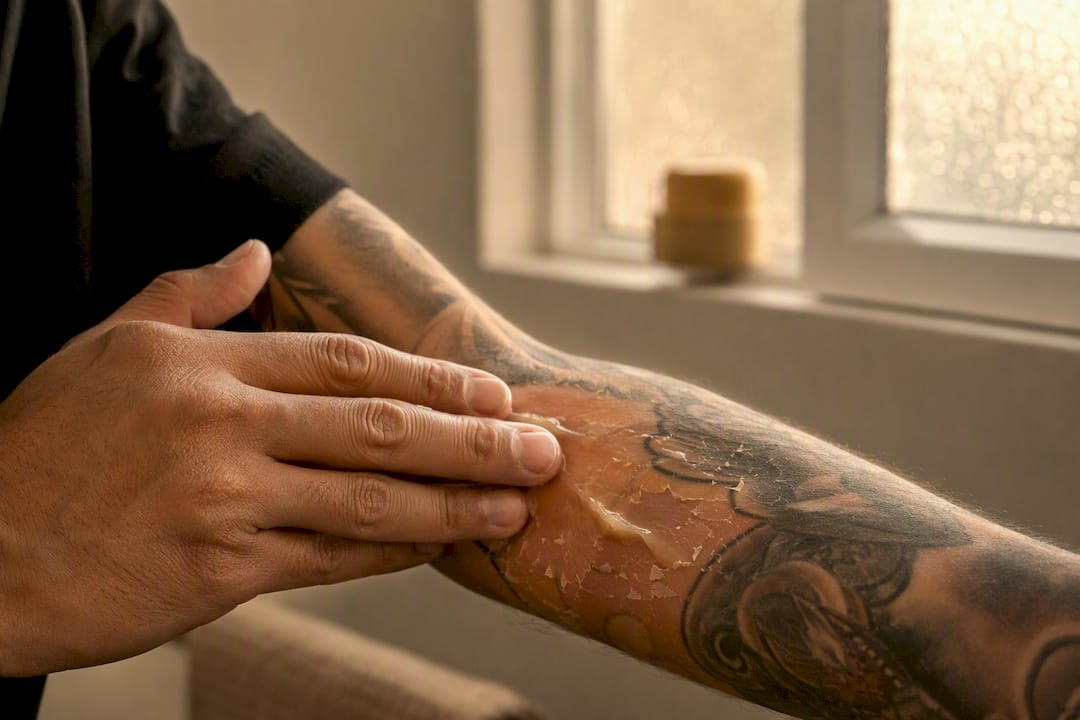
Dryness tends to show up in the second and third week, once initial swelling has gone down but the deeper skin is still repairing. This is when a slightly heavier balm often works better than a light lotion, particularly on tattoos over joints or areas that flex a lot, like elbows or knees. Reapply as soon as the skin starts to feel tight rather than waiting for visible flaking.
If any of these symptoms come with spreading redness, increasing pain, or a foul odor, that’s outside the range of normal healing and worth a call to your artist or a clinician.
How Do You Pick Aftercare Products for Your Skin Type?
Not every petroleum-free product suits every skin type, and matching the formula to your baseline skin behavior cuts down on trial and error.
Oily or acne-prone skin does better with lightweight, water-based lotions that absorb quickly and won’t add to existing shine or clogged pores. Heavier butter-based balms can feel greasy and may contribute to breakouts around the tattoo border, particularly on the back, chest, or shoulders where oil production runs higher.
Dry skin benefits from richer formulas with shea butter, ceramides, or panthenol, applied slightly more often than the standard one to three times daily. Dry skin loses moisture faster during healing, and under-moisturizing here tends to show up as excessive flaking or tightness by week two.
Sensitive or reaction-prone skin should stick to short ingredient lists: fragrance-free, minimal botanicals, no essential oils. Patch-testing matters more here than for any other skin type, since sensitive skin is more likely to flag an ingredient that would be a non-issue for someone else.
Combination skin often does best alternating: lighter lotion on the parts of the tattoo that sit over naturally oilier skin, and a touch more balm on the parts over drier areas, like the outer edges of a large piece that wraps around a limb.
Our Take: Follow the Evidence, Not the Tattoo Shop Legend
Plenty of aftercare advice still floating around comes from tradition, not testing. Some artists still recommend petroleum jelly out of habit, and it’s not because they’re careless. It’s because that’s what they were told when they started, and nobody corrected it.
The evidence has moved past that. Cleveland Clinic, Healthline, and Acibadem all point the same direction: breathable, water-based aftercare outperforms heavy occlusion for healing quality and infection risk. That’s not a minor technical distinction. It’s the difference between a routine that supports your skin’s own repair process and one that works against it.
Where we think the conventional advice actually falls short is the overcorrection toward “natural equals safe.” Essential oils and heavily fragranced “clean” products cause plenty of reactions on fresh tattoos, sometimes more than a simple, well-formulated lotion would. The priority isn’t natural versus synthetic. It’s breathable, fragrance-free, and simple, applied consistently for the first month.
If you take one thing from this guide, take that: consistency with a light, breathable product beats an occasional thick application of anything, petroleum-based or otherwise.
Get Petroleum-Free Aftercare That’s Actually Built for Healing Tattoos
Most drugstore options weren’t formulated with fresh ink in mind. They’re general-purpose lotions repackaged with a tattoo on the label. TBNC Tattoo took a different approach: build the aftercare line specifically around what breathable healing actually requires, then back it with dermatologist approval instead of guesswork.
That’s why studios adopt it at scale rather than one artist at a time. If you’re finishing a session and want a routine ready to go, start with the Tattoo Aftercare Bundle for lotion and balm together, or go with the Tattoo Numbing & Aftercare Bundle if you’re also planning ahead for pain management during the appointment itself. First-timers often do well starting with the Beginner Tattoo Bundle, which simplifies the decision entirely. Pick the bundle that matches your next session and add it to your cart before you leave the studio chair.
Sources
- Tattoo Aftercare: Instructions and Healing Tips — Cleveland Clinic
- Tattoo Aftercare: Tips, Daily Routine, Products, and More — Healthline
- Tattoo aftercare explained by medical evidence, not myths — Acibadem
FAQ
What Are Some Non-Petroleum Products for Tattoo Aftercare?
Water-based lotions, breathable tattoo-specific balms, and light botanical formulas with shea butter, glycerin, or panthenol all work as petroleum-free alternatives. TBNC Tattoo’s unscented lotion and balm are formulated specifically for this healing window.
Why Do Tattoo Artists Say Not to Use Aquaphor?
Aquaphor still contains petrolatum, just blended with glycerin and panthenol, so it’s less occlusive than pure Vaseline but still heavier than most artists recommend for ongoing daily use. Many prefer a fully water-based lotion or breathable balm instead once the initial bandage comes off.
Is Coconut Oil or Aquaphor Better for Tattoos?
Neither is the top pick according to current medical guidance, since coconut oil can clog pores on some skin types and Aquaphor remains partially occlusive. A fragrance-free, water-based lotion or breathable balm generally outperforms both for daily healing support.
What Helps Tattoos Heal Quickly?
Gentle washing with a mild cleanser, pat-drying, and applying a thin layer of a breathable moisturizer one to three times daily gives skin what it needs to repair itself efficiently. Avoiding sun exposure, soaking, and picking at scabs matters just as much as the product you choose.
Is Petroleum-Free Aftercare Safe for Sensitive Skin?
Yes, and it’s usually the better choice for sensitive skin specifically, as long as the formula is also fragrance-free and low in essential oils. Patch-testing any new product before applying it to the tattoo remains the safest first step regardless of skin type.


