

Pre Tattoo Numbing: What Works and How to Use It Safely
Yes, a properly applied numbing product can meaningfully reduce tattoo pain, and for most people it is worth using. That single number is your safety anchor before you buy anything.
- Stick to FDA-recognized 4% lidocaine formulas, like those in the TBNC lineup, rather than unregulated “extra strength” blends.
- Never wrap large areas of skin for hours hoping for stronger numbness. More time under occlusion does not mean more safety.
- Bring the product packaging to your appointment so your artist can check the concentration before you start.
Key Takeaways
| Point | Details |
|---|---|
| Stick to 4% lidocaine | FDA-recognized OTC strength balances effective numbing with a manageable safety margin. |
| Timing drives results | Apply 45 to 65 minutes before your appointment with occlusion for best absorption. |
| Numbness has a window | Effective relief generally lasts a limited time, so plan longer sessions accordingly. |
| Talk to your artist first | Skin texture changes from cream can affect stencils, linework, and ink saturation. |
| TBNC fits the checklist | Dermatologist-approved lidocaine formulas across the Tattoo Numbing & Aftercare Bundle, Ultra Tattoo Numbing Bundle, and TBNC 2 Pack meet the safety standards outlined above. |
Table of Contents
- How Does Pre Tattoo Numbing Cream Actually Work?
- Do Numbing Creams Actually Work for Tattoos?
- How Do You Apply Numbing Cream Before a Tattoo?
- Why Do Tattoo Artists Not Recommend Numbing Cream?
- What Should You Look for in a Pre Tattoo Numbing Product?
- Do Numbing Creams Affect Certain Ink Colors or Tattoo Styles?
- What Are the Best Alternatives to Numbing Cream During a Tattoo?
- Which TBNC Products Fit This Safety Checklist?
- Sources
- FAQ
How Does Pre Tattoo Numbing Cream Actually Work?
Topical anesthetics work by blocking sodium channels at nerve endings near the skin’s surface, which interrupts the pain signal before it ever reaches your brain. That’s the same basic mechanism Cleveland Clinic describes for any topical numbing agent used in minor procedures.
Three active ingredients dominate the tattoo numbing market:
- Lidocaine — the most common and best studied, with a long clinical track record described in reviews of its pharmacology.
- Prilocaine — often paired with lidocaine in eutectic mixtures for a broader numbing effect.
- Tetracaine — frequently combined with lidocaine in creams designed for longer procedures.
Lidocaine typically penetrates about 2 to 3 millimeters into skin, which lines up closely with how deep a tattoo needle actually deposits ink. Onset generally falls somewhere between 15 and 60 minutes depending on the formula and whether you cover the area, with effective numbness lasting roughly one to two hours under standard application.
Do Numbing Creams Actually Work for Tattoos?
Clinical trials say yes, within limits. Randomized, double-blind studies on lidocaine/tetracaine creams found statistically significant pain reduction for dermatologic procedures, including laser-assisted tattoo removal, when applied for 20 to 60 minutes. Lidocaine/prilocaine combinations show similar results, though trial application times ranged from 5 to 75 minutes depending on the procedure and site.
The catch is duration and consistency:
- Numbness fades well before most multi-hour tattoo sessions end, so the first 60 to 90 minutes usually feel the biggest difference.
- Thin skin over bone (ribs, spine, ankles) tends to numb less predictably than fleshier areas.
- Higher-strength compounded creams at 5% to 6% lack the standardization that FDA-regulated 4% products carry, meaning results and safety margins vary widely between brands.
The honest takeaway: pre tattoo numbing genuinely reduces initial pain for most people, but it isn’t a switch that turns a six-hour sleeve session into a pain-free nap.
How Do You Apply Numbing Cream Before a Tattoo?
Getting this right is mostly about following the timing and amount on the label, not improvising.
Before you apply anything:
- Confirm the skin is clean, dry, and free of cuts, rashes, or sunburn.
- Skip numbing cream entirely on broken or irritated skin.
- Check for lidocaine allergies and flag any heart conditions or medications with your doctor first.
Step-by-step application:
- Wash and dry the area thoroughly.
- Apply a thick, even layer of 4% lidocaine cream, roughly 2mm deep, following standard label directions.
- Cover with plastic wrap to create an occlusive seal, which improves absorption.
- Leave it on for 45 to 65 minutes. Do not exceed the labeled window.
- Remove the wrap and wipe the area completely clean before your artist begins.
Occlusion for 60 to 120 minutes noticeably improves absorption, with analgesia often peaking two to three hours after application. That’s a wide window, and it’s exactly why timing your appointment matters as much as the product itself.
Always patch test a small area 24 hours beforehand if you’ve never used the product. Cancel or consult a clinician if you notice swelling, hives, or unusual burning.
For longer sessions, plan around the numbing window rather than fighting it. A single application covers the first hour or so well; reapplying mid-session is generally not recommended once your artist has started working, since the skin is now open. Splitting a large piece into multiple shorter sessions often works better than trying to numb through a marathon sitting.
Know the warning signs of systemic toxicity: dizziness, ringing in the ears, muscle twitching, slurred speech, or an irregular heartbeat. These are rare but documented risks of misuse, especially with large-area application or high-strength products. If they appear, stop and seek medical attention immediately.
Pro Tip: Set a timer the moment you apply the cream. Guessing at 45 minutes almost always turns into 70, and that extra wrap time is where problems start.
Why Do Tattoo Artists Not Recommend Numbing Cream?
Plenty of studios push back on numbing cream, and it’s not just tradition talking. Cream can leave skin slightly swollen or slick, which makes stencils lift or smudge mid-outline. Some artists also report duller ink saturation on numbed skin, since the tissue behaves differently under the needle.
- Wet or waxy skin texture can cause the tattoo machine to skip or drag.
- Artists may need to stop and re-wipe repeatedly, adding real time to the appointment.
- Poor stencil visibility on treated skin increases the chance of line errors.
The fix is simple: communicate early. Bring your product, show the concentration on the label, and let your artist make the final call for your specific piece. Want me to wipe it fully before we start, or would you rather I hadn’t used it for this design?"
Pro Tip: Message your artist before your appointment, not in the chair. Most studios have a clear policy on numbing cream, and finding out in advance saves everyone a rescheduled session.
What Should You Look for in a Pre Tattoo Numbing Product?
Not every “numbing cream” on the shelf is created equal, and the differences matter more than most first-time buyers realize.
- Choose FDA-compliant 4% lidocaine products for general use. Anything sold over the counter above that concentration is operating outside standard consumer safety limits.
- Reserve prescription-strength formulas for situations where a clinician has specifically directed their use.
- Creams tend to offer the most control for tattoo prep, while sprays and patches can be harder to dose evenly across curved or hairy areas. Gels sit somewhere in between, often absorbing faster but wearing off sooner.
None of that lines up with how regulated 4% products are labeled.
If you’re pregnant, tattooing a large surface area, have a cardiac history, or you’re considering numbing a child or teen for a piercing or minor procedure, talk to a doctor before applying anything. These are exactly the situations where the margin for error shrinks.
Do Numbing Creams Affect Certain Ink Colors or Tattoo Styles?
Numbing cream itself doesn’t chemically react with ink pigment, but the skin condition it leaves behind can affect how ink settles, and that matters more for some styles than others.
Fine-line and micro-realism work depend on crisp, shallow needle control. If numbed skin is puffy or slightly swollen, an artist working with thin needle groupings may find lines come out less sharp than on unnumbed skin. Bold traditional linework and heavy blackwork tend to tolerate this better since the technique already uses deeper, more saturated passes.
Color saturation is where studios report the most noticeable issue. Vasoconstriction, a side effect of some numbing agents that temporarily narrows blood vessels, can reduce how evenly pigment settles into treated skin. Artists working on large color-fill pieces sometimes notice patchier saturation on numbed sections compared to areas tattooed without cream, though this varies by product and individual skin response.
Watercolor and soft-shading styles that rely on subtle gradients are the most sensitive to any texture change, since they depend on the needle gliding consistently across the skin’s natural surface. If you’re planning a piece with this kind of detail, it’s worth raising the numbing question with your artist before you book, not after you’ve already applied cream in the waiting room. Bold, high-contrast designs generally have more room for error.
What Are the Best Alternatives to Numbing Cream During a Tattoo?
Cream isn’t the only tool for managing tattoo pain, and some artists actively prefer alternatives that don’t touch the skin’s surface at all.
Cold therapy is the most common substitute. Ice packs applied before the session (never during, and never directly on skin) can dull surface sensitivity temporarily without altering skin texture the way cream can. Some studios use cold air devices during the session itself, blowing chilled air across the area being worked to take the edge off without any topical product involved.
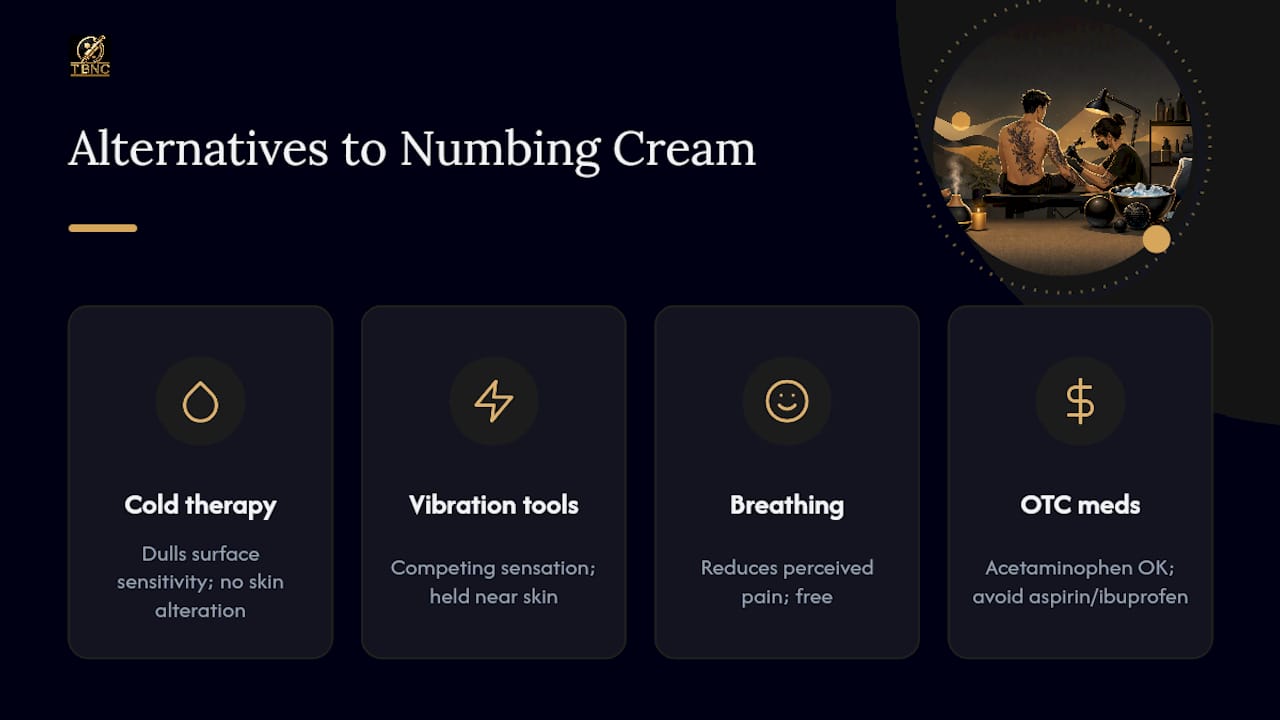
Vibration and distraction tools work on the gate control theory of pain, essentially giving your nervous system a competing sensation to focus on. Small handheld vibration devices held near (not on) the tattoo area during breaks can reduce perceived discomfort for some clients.
Breathing techniques and pacing matter more than most people expect. Slow, controlled breathing during the more painful passes (over bone, near joints) genuinely reduces how intense pain feels, and it costs nothing.
Over-the-counter pain relief taken before your appointment, like acetaminophen, is a common approach, though you should avoid aspirin and ibuprofen beforehand since they thin blood and can increase bleeding during the session.
A Practitioner’s View on Getting Numbing Right
Clients who use numbing cream correctly and tell their artist upfront usually have smoother sessions with less mid-appointment stress. The problems show up when cream gets applied heavily, hidden from the artist, and left to interfere with stencil work. If you’re weighing this decision, bring your product to the appointment and let your artist weigh in before you start.
Which TBNC Products Fit This Safety Checklist?
Everything covered above points to the same shortlist: dermatologist-approved, lidocaine-based, clearly labeled at a safe concentration. TBNC Tattoo builds its entire lineup around that exact standard, which is why it’s trusted across more than 3,250 tattoo studios and over one million recorded sessions.
For first-timers who want numbing and healing covered in one order, the Tattoo Numbing & Aftercare Bundle pairs a lidocaine cream with the balms and soothing gel your skin needs once the session ends. If you’re planning a longer sitting or working over a more sensitive area, the Ultra Tattoo Numbing Bundle is built for that added intensity. For collectors who already know their routine and just want a reliable stock, The Best Numbing Cream - TBNC - 2 Pack keeps you covered for more than one appointment.

Whichever you choose, apply it exactly as directed, wipe it off before your artist starts, and mention it during your consultation. TBNC Tattoo sells these products directly online; for any medical questions specific to your health history, check with a clinician first. Ready to plan your next session with less discomfort? Browse the full lineup and pick the option that matches your appointment length.
Sources
- DailyMed - Lidocaine topical product (penetration and application notes)
- UCSF Pain - Local Anesthetic Systemic Toxicity (LAST)
- Review: Lidocaine/tetracaine cream as a topical anesthetic for dermatologic procedures (Dermatol Surg.)
- Cleveland Clinic - Topical anesthetic overview
This article is general information, not a substitute for advice from a qualified doctor. Consult a qualified healthcare professional about your own circumstances before acting on anything here.
FAQ
Does Numbing Before a Tattoo Actually Work?
Yes, properly applied lidocaine-based creams significantly reduce pain for the first portion of a session, backed by randomized clinical trials, though effectiveness fades within one to two hours.
Will 4% Lidocaine Numb My Skin Enough for a Tattoo?
What Can I Take Before a Tattoo to Ease the Pain?
Why Do Some Tattoo Artists Not Recommend Numbing Cream?
Numbing cream can change skin texture, affecting stencil adhesion, ink saturation, and line precision, which is why many artists prefer to know in advance or skip it for detailed work.
How Long Does Pre Tattoo Numbing Cream Last?
Effective numbness typically lasts one to two hours after standard application, with peak effect occurring two to three hours after application in some cases, which is why session planning matters for longer pieces.


