

Second Skin Tattoo Care: Remove, Wash, and Moisturize Right
Second skin is your sealed initial dressing, and the routine is straightforward: leave the first sheet on for 24–48 hours, replace it with a fresh sheet if you have one, wear that second application for 3–5 more days, then remove it, wash gently, and moisturize. Total wear time should never exceed 7 consecutive days.
Quick-start checklist:
- Leave the first film intact as applied by your artist
- At 24–48 hours, check for heavy fluid buildup; if the film is lifting or leaking, remove and replace
- Peel the final sheet slowly under warm running water, never dry-pull
- Immediately after removal: wash with a fragrance-free gentle soap, pat dry with a clean paper towel, apply a thin layer of non-occlusive moisturizer
- Repeat washing and moisturizing 2–3 times daily for the next 2–3 weeks
Warning: Seek medical attention if you notice thick yellow or green pus, spreading redness or red streaks, a foul odor from under the film, or fever. These are not normal healing signs.
Key Takeaways
Second skin aftercare works when you follow the timeline precisely: sealed for up to 7 days total, then consistent washing and moisturizing for 2–3 weeks after removal.
| Point | Details |
|---|---|
| Wear time limit | First sheet 24–48 hours; second sheet up to 5–6 days; never exceed 7 days total. |
| Safe removal method | Peel slowly under warm running water; never dry-pull or use alcohol to loosen adhesive. |
| Post-removal routine | Wash with fragrance-free soap, pat dry, apply a thin non-occlusive moisturizer 2–3 times daily. |
| What to avoid | No soaking, sun, petroleum jelly, picking, scrubbing, or tight abrasive clothing during healing. |
| Warning signs | Spreading redness, thick pus, foul odor, or fever require medical attention, not watchful waiting. |
| TBNC Tattoo sequence | Foaming Soap → Soothing Gel → Aftercare Balm covers every step from first wash to full healing. |
Table of Contents
- What is second skin for tattoos?
- Why use second skin instead of traditional wrap?
- How long should you keep second skin on?
- How to remove second skin safely
- What to do right after removing second skin
- Showering and water rules while healing
- What to avoid while your tattoo heals
- Normal healing signs vs. warning signs
- Adhesive reactions and troubleshooting
- Dermatologist-backed tips for the first week
- An honest studio perspective on second skin
- TBNC Tattoo’s aftercare sequence after film removal
- Sources
- FAQ
What is second skin for tattoos?
Second skin is a transparent, adhesive polyurethane film dressing applied directly over a fresh tattoo at the end of your session. According to Blair Tattoos, the film is breathable and latex-free, designed to lock in moisture while allowing oxygen and water vapor to pass through. That breathability matters: it creates a moist healing environment that supports skin repair without suffocating the wound.
The film works as a sealed barrier against bacteria, friction from clothing, and airborne contaminants. Because it’s waterproof to normal water exposure, you can shower without loading the tattoo with thick ointment every time. Your artist applies it immediately after finishing the tattoo, so the skin never has an unprotected window in those critical first hours.
A few properties worth knowing:
- Transparent: you can monitor healing without removing the film
- Adhesive-backed: sticks directly to skin around the tattoo, not over it
- Breathable but not soak-proof: resists light water; prolonged soaking will compromise the seal
- Single-use: never reapply a sheet you have already removed
Why use second skin instead of traditional wrap?
The short answer: less scabbing, better protection, and a simpler daily routine during the first week. When used correctly, second skin can compress the traditional open-healing window and reduce the heavy scabbing that comes with cling-wrap-and-ointment methods, according to Jotapas.
Clear benefits:
- Barrier protection against bacteria and friction without reapplying ointment every few hours
- Waterproof for normal showers, so you are not managing a plastic-wrap-and-tape setup
- Reduced scabbing means less risk of pulling ink out during the peeling phase
- Less frequent product application in the first 3–5 days
Limits and risks to know:
- Adhesive allergy or contact dermatitis is possible; watch for redness or blistering outside the tattoo edges
- Fluid buildup under the film is normal in small amounts but needs monitoring; do not puncture the film to drain it
- Not a pass to swim, soak, or sweat heavily; the film is a barrier, not a substitute for common sense
Second skin vs. traditional cling wrap
| Factor | Second skin film | Cling wrap + ointment |
|---|---|---|
| Breathability | Yes, allows vapor transfer | No, fully occlusive |
| Scabbing risk | Lower | Higher |
| Shower-friendly | Yes, with care | No, must rewrap |
| Adhesive reaction risk | Possible | None |
| Reapplication needed | Once or twice total | Multiple times daily |
Pro Tip: Second skin performs best on flat or low-flex areas like the upper arm, thigh, or back. On joints like the inner elbow or knee, the film tends to lift at the edges from constant movement — in those spots, your artist may recommend a hybrid approach or traditional aftercare from day one.
How long should you keep second skin on?
Hammersmith Tattoo’s studio guidance lays this out clearly: the first sheet stays on for 24–48 hours, then a second application can be worn for up to 5–6 more days, with total consecutive wear never exceeding 7 days. That ceiling exists because prolonged occlusion past 7 days raises the risk of maceration and bacterial growth under the film.
What affects your specific timeline:
- Heavy weeping or plasma buildup that lifts the film edges means change it earlier, not later
- Large tattoos or areas with high movement (ribs, inner arm) may need earlier removal
- Your artist’s instructions take priority over any general guidance; they know the tattoo’s depth and placement
Change the film early if you notice:
- Edges lifting significantly and not resealing
- Fluid leaking out from under the film
- A foul or unusual odor
- Severe discomfort, burning, or blistering under the film
If your studio gave you a spare sheet, Sun Spirit Tattoo’s aftercare protocol recommends removing the first film at 24–48 hours, cleaning and drying the tattoo, and applying the spare for several more days. No spare sheet? Remove the film at the 3–7 day mark and move straight to lotion-based aftercare.
How to remove second skin safely
The single most important rule: never peel the film dry. Dry removal pulls at healing skin and can lift fresh ink. Warm water loosens the adhesive and makes the whole process painless.
Step-by-step removal:
- Wash your hands thoroughly before touching the film or the tattoo
- Step into a warm shower or run warm water directly over the film for 30–60 seconds
- Find a corner or edge of the film and lift it gently
- Peel slowly back over itself, keeping the film low and parallel to the skin — not pulling upward
- If the film resists, hold it under warm water for another 30 seconds and try again
- Once removed, rinse the tattoo gently with lukewarm water
- Pat dry with a clean paper towel; do not rub
What to avoid during removal:
- Never use alcohol, acetone, or any solvent to loosen the adhesive; these damage healing skin and can cause chemical irritation on an open wound
- Do not rush or yank the film if it sticks; patience and warm water solve the problem every time
- Avoid removing the film over a sink with cold water; the adhesive stays stiff and the pull is harder
If a section of film is firmly adhered over a sensitive area and warm water is not releasing it after a couple of minutes, contact your artist before forcing it. Some studios keep additional adhesive-release products on hand for exactly this situation.
What to do right after removing second skin
The moment the film comes off, your tattoo is exposed for the first time since your session. Move through these steps without delay.
Immediate post-removal routine:
- Wash hands again if you have not already
- Cleanse the tattoo with lukewarm water and a mild, fragrance-free soap, using only your fingertips — no washcloths, sponges, or scrubbing
- Rinse thoroughly to remove all soap residue
- Pat dry with a clean paper towel; let it air-dry for 5–10 minutes
- Apply a thin layer of fragrance-free, non-occlusive aftercare moisturizer or balm
Healthline’s tattoo aftercare guidance recommends moisturizing 2–3 times per day for the next 2–3 weeks until healing is complete, and specifically advises against petroleum jelly because it traps bacteria and clogs pores. The healing timeline from Sortra breaks down as follows: days 1–3 bring redness and tenderness, days 4–7 bring peeling and itching, and weeks 2–4 are the skin-settling phase.
What “thin layer” actually means: after applying moisturizer, the skin should look slightly hydrated, not shiny or greasy. If you can see the product sitting on top of the skin, you have used too much. Wipe the excess off with a clean paper towel.
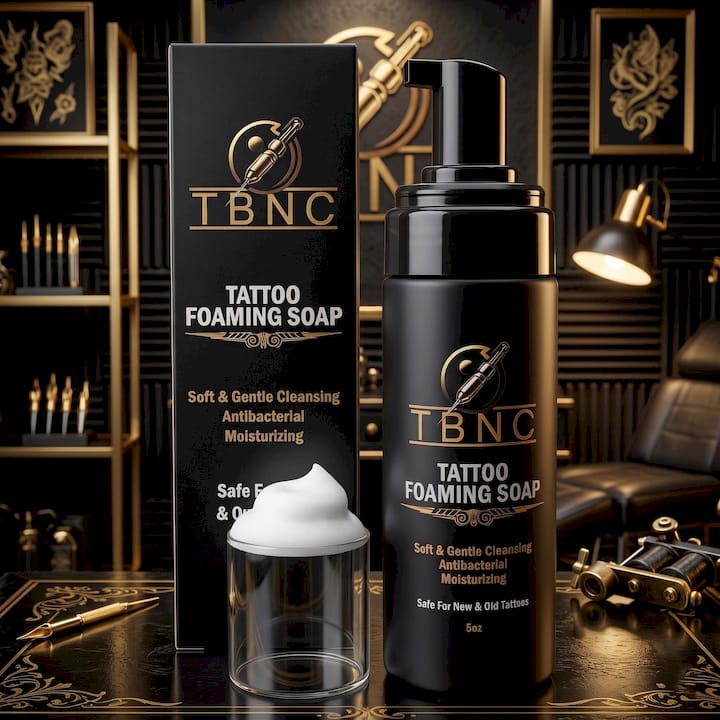
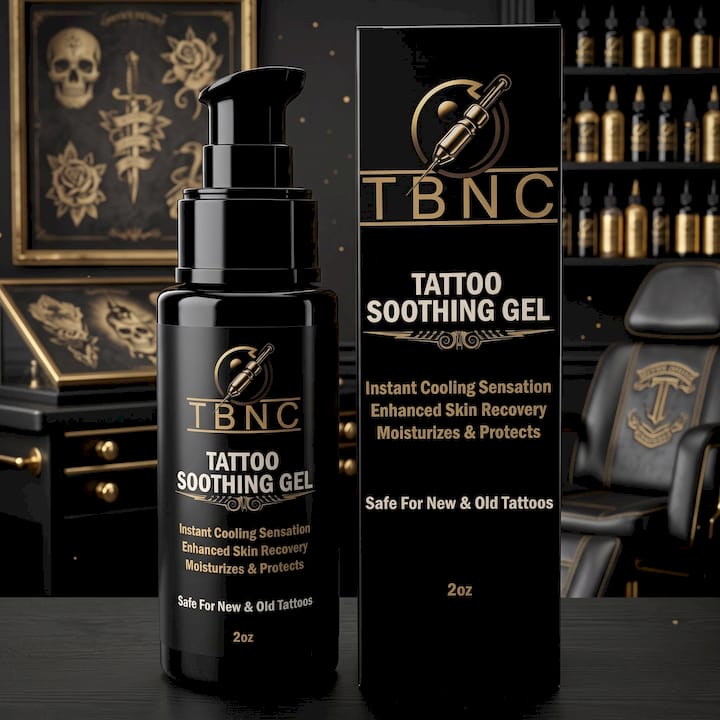
Pro Tip: For the cleansing step, a tattoo foaming soap formulated for fresh tattoos removes plasma and surface debris without the harsh surfactants in standard hand soaps. Follow with a tattoo soothing gel to calm the skin immediately after washing, then switch to a dedicated tattoo aftercare balm for the ongoing moisturizing phase.
Showering and water rules while healing
Showers are fine with the film on. The film is designed for it. What you are avoiding is prolonged soaking, which softens healing skin, compromises the film’s seal, and creates a warm, wet environment where bacteria thrive.
While the film is on:
- Normal showers are permitted; keep them reasonably brief
- Avoid directing a high-pressure stream straight at the tattoo
- Pat the film dry after showering; do not rub
- Baths, hot tubs, pools, lakes, and the ocean are off-limits until fully healed
After film removal:
- Short showers remain fine; avoid soaking the tattoo under running water for extended periods
- No baths, hot tubs, or swimming for at least 2–3 weeks after removal, as prolonged water exposure softens the healing skin layer and raises infection risk
According to the Cleveland Clinic, even with a sealed film dressing, you should avoid soaking, hot tubs, and heavy sweating throughout the multi-week healing window. The film helps, but it does not change the biology of how skin heals.
Heavy sweating and exercise: intense workouts in the first week stretch the skin, generate heat, and produce sweat that can seep under the film edges. If you must exercise, keep it low-intensity, cover the tattoo loosely with clean clothing, and check the film edges immediately after.
What to avoid while your tattoo heals
Some of the most common healing problems come from things people do without thinking. Keep this list somewhere visible for the first two weeks.
- Do not pick scabs or peeling skin. Pulling off a scab pulls ink with it. Let it fall off on its own.
- Do not scrub the tattoo or use exfoliating products anywhere near it.
- Avoid fragranced or alcohol-based products on or near the fresh tattoo; both cause irritation and slow healing.
- Skip tight or abrasive clothing over the tattoo; friction damages the healing surface and can cause ink loss.
- No direct sun exposure until the tattoo is fully healed; UV breaks down fresh ink and can cause hyperpigmentation. After healing, use SPF 30 or higher every time the tattoo is exposed.
- Avoid thick, petroleum-based ointments like Vaseline; they create an occlusive seal that traps bacteria and prevents the skin from breathing during the open-healing phase.
For a deeper look at why aftercare matters as much as the tattoo itself, the risks of skipping these steps go beyond cosmetic damage.
Normal healing signs vs. warning signs
Knowing the difference between expected healing and a genuine problem saves you unnecessary panic and, more importantly, keeps you from ignoring something that needs attention.
Normal during healing:
- Mild redness and tenderness in the first 2–3 days
- Some plasma or ink-tinted fluid visible under the film
- Peeling and flaking starting around days 4–7
- Temporary itching as the outer skin layer regenerates
- A slight milky or cloudy appearance under the film during the first day or two
Warning signs that need action:
- Pain that increases after the first 48 hours instead of decreasing
- Spreading redness or red streaks radiating outward from the tattoo
- Thick yellow or green pus (not clear plasma)
- A foul smell from under the film
- Fever, chills, or swollen lymph nodes near the tattoo site
When to call your artist vs. when to see a clinician: contact your artist first for questions about normal healing, film behavior, or whether a reaction looks like an adhesive issue. Go directly to a clinician if you have fever, spreading infection signs, or symptoms that suggest systemic involvement. Do not wait on those.
Quick answers: Smells a little under the film? Mild odor from trapped plasma is common; a foul or rotten smell is not. Heavy weeping in the first 24 hours? Normal for larger tattoos. Redness still present at day 5? Normal if mild and localized; abnormal if it is spreading or worsening.
Adhesive reactions and troubleshooting
Not every skin reacts well to adhesive film, and not every body placement holds the film flat. Both problems are manageable.
Signs of an adhesive allergy or contact dermatitis:
- Persistent redness, itching, or a rash outside the tattoo edges (not over the tattooed skin itself)
- Blistering or hives under the film
- Burning that does not improve after the first few hours
If any of these appear, remove the film immediately, wash the area gently with fragrance-free soap and cool water, and switch to traditional lotion-based aftercare. Consult your artist or a dermatologist if the reaction is severe; a short course of topical steroid may be appropriate.
If the film won’t stay sealed:
- Trim any lifting edges with clean scissors rather than trying to press them back down
- On curved areas like ribs or ankles, apply two overlapping smaller pieces instead of one large sheet
- If the film keeps lifting on a high-movement area (inner elbow, back of knee), switch to traditional aftercare rather than fighting the adhesive
Reapplying a fresh sheet: only do this if your studio provided a spare sheet and the tattoo shows no signs of infection. Clean and fully dry the skin before applying, and follow the same 7-day total ceiling regardless of when you switched sheets.
Dermatologist-backed tips for the first week
The film handles the first phase, but the habits you build around it determine how the tattoo actually heals.
What experts consistently flag as mistakes:
- Leaving the film on past 7 days, thinking longer means better protection; it does not
- Reapplying a used sheet after removal; a used sheet carries bacteria from the first wear
- Using alcohol to loosen the adhesive during removal; warm water is the only safe solvent
- Over-applying moisturizer after removal, which creates the same occlusive problem as petroleum jelly
Daily monitoring checklist for days 1–7:
- Check film edges each morning for lifting, leaking, or unusual odor
- Confirm the fluid under the film remains clear or slightly pink, not yellow or green
- Note whether redness is decreasing day over day
- After removal, confirm peeling is superficial (outer skin layer only) and not deep or weeping
Pro Tip: The film is a tool, not a guarantee. Artists who see the best healed results are the ones who treat second skin as the first phase of a two-phase routine: sealed protection for the first week, then consistent washing and moisturizing for the next two. Skipping the second phase because the film “did the work” is one of the most common reasons tattoos heal patchy.
Second skin vs. cling wrap: a practical comparison
| Factor | Second skin film | Cling wrap + ointment |
|---|---|---|
| Infection protection | High (sealed barrier) | Moderate (not sealed) |
| Convenience | High (no daily reapplication) | Low (multiple daily changes) |
| Scabbing | Minimal when used correctly | More common |
| Allergic reaction risk | Low but possible | Negligible |
| Best for | Most placements, first-time clients | High-flex joints, adhesive-sensitive skin |
An honest studio perspective on second skin
Second skin changed the first-week conversation in studios. Before it, the most common client call was “my tattoo is scabbing badly — did I do something wrong?” Now, most clients with properly applied film get through the first week with minimal scabbing and a cleaner peel. The film does what it promises when clients follow the timeline.
The questions that still come up most often in-studio: “Can I go to the gym?” (not in the first week), “What if it smells?” (mild is fine, foul is not), and “Do I really need to replace it?” (yes, if you have a spare and there is heavy weeping). Studios that give clients a spare sheet and a written timeline see noticeably better healing outcomes than those that hand over a verbal summary at the door. If your artist did not give you written instructions, ask before you leave.
TBNC Tattoo’s aftercare sequence after film removal
Once the film comes off, your tattoo needs a clean, simple three-step routine. TBNC Tattoo’s dermatologist-approved aftercare line is trusted by over 3,250 studios worldwide and covers each phase precisely.
Start with TBNC Tattoo Foaming Soap for every wash: it removes plasma and surface debris without stripping the healing skin. Follow immediately with TBNC Tattoo Soothing Gel to calm inflammation and add lightweight hydration right after cleansing. For the ongoing moisturizing phase, apply a thin layer of TBNC Tattoo Aftercare Balm 2–3 times daily until the skin has fully settled. The full TBNC aftercare collection has everything you need in one place. Pick up your kit and follow the routine your tattoo deserves.
Sources
- Tattoo aftercare — Healthline
- Tattoo aftercare — Cleveland Clinic
- Tattoo aftercare: How to properly use Second Skin for healing — Hammersmith Tattoo
- SECOND SKIN BANDAGE | Blair Tattoos
- What to do after removing Second Skin tattoo — Sortra
This article provides general information only and is not a substitute for professional medical advice. If you suspect an infection or allergic reaction, consult a clinician or your tattoo artist promptly.
FAQ
How long do you leave second skin on a tattoo?
Leave the first sheet on for 24–48 hours, then replace with a fresh sheet worn for up to 5–6 more days; total consecutive wear should never exceed 7 days.
What should you put on a tattoo after removing second skin?
Wash with a mild fragrance-free soap, pat dry, and apply a thin fragrance-free, non-occlusive moisturizer or aftercare balm 2–3 times daily; avoid petroleum jelly.
Do tattoos heal faster with second skin?
Second skin can shorten the open-healing phase and reduce scabbing compared to traditional cling-wrap methods, but it does not replace the 2–3 week moisturizing routine required after removal.
What should you not do with a second skin tattoo?
Do not soak in baths, pools, or hot tubs; do not pick peeling skin; do not use alcohol or petroleum-based products; and never leave the film on past 7 days or reapply a used sheet.
Can you shower with second skin on your tattoo?
Yes, brief showers are fine while the film is on; avoid directing high-pressure water at the tattoo and pat the film dry afterward rather than rubbing it.


