

Sun on a New Tattoo: Protect Your Fresh Ink
No — direct sun on a new tattoo is a hard no until the skin barrier has fully healed. Fresh ink sits in inflamed, broken skin, and UV exposure on that wound accelerates damage fast. Here’s what to do right now:
- Move out of direct sunlight immediately and find shade or go indoors.
- Cover the tattoo loosely with clean clothing or a bandage if you’re stuck outside.
- If the skin already feels hot or looks red, apply a cool (not ice-cold) compress for 10–15 minutes.
- Call your tattoo artist or a clinician if you see blistering, spreading redness, or any signs of infection.
Pro Tip: Even a cloudy day delivers up to 80% of UV radiation. “Out of the sun” means out of UV — not just out of direct sunlight.
Key Takeaways
Keeping a new tattoo out of direct sun and using the right aftercare products at the right healing stage are the two decisions that protect both your skin and your ink.
| Point | Details |
|---|---|
| No sun on fresh ink | Avoid direct sun exposure for at least 2–4 weeks and until the tattoo is fully healed (no scabs, normal texture); larger or colored pieces often require the longer end of this window. |
| No sunscreen on broken skin | Wait until the tattoo is fully healed (no scabs, normal texture) before applying any sunscreen. |
| Mineral SPF once healed | Use broad-spectrum SPF 30+, apply 30 minutes before exposure, and reapply every 2 hours. |
| Physical barriers during healing | UPF clothing, shade, and loose fabric are the only safe protection while skin is still healing. |
| TBNC Tattoo aftercare | The Tattoo Aftercare Balm and Tattoo Butter provide hydration and barrier support during healing and long-term maintenance. |
Table of Contents
- Why does sun damage a fresh tattoo so quickly?
- What’s the healing timeline for sun exposure on a new tattoo?
- What should you do if your fresh tattoo gets sunburned?
- When can you put sunscreen on a new tattoo?
- Physical protection works better than sunscreen while you’re still healing
- How do you protect a healed tattoo for the long term?
- What do dermatologists and public-health researchers say?
- What tattoo artists actually see when sun exposure goes wrong
- TBNC Tattoo aftercare products built for healing skin
- Sources
- FAQ
Why does sun damage a fresh tattoo so quickly?
MD Anderson dermatologists are direct about this: a new tattoo is inflamed, compromised skin, and that vulnerability is about the wound state, not the ink itself. The needling process punctures the dermis thousands of times per session. Until the skin barrier rebuilds, every UV photon hits tissue that has zero normal defense.
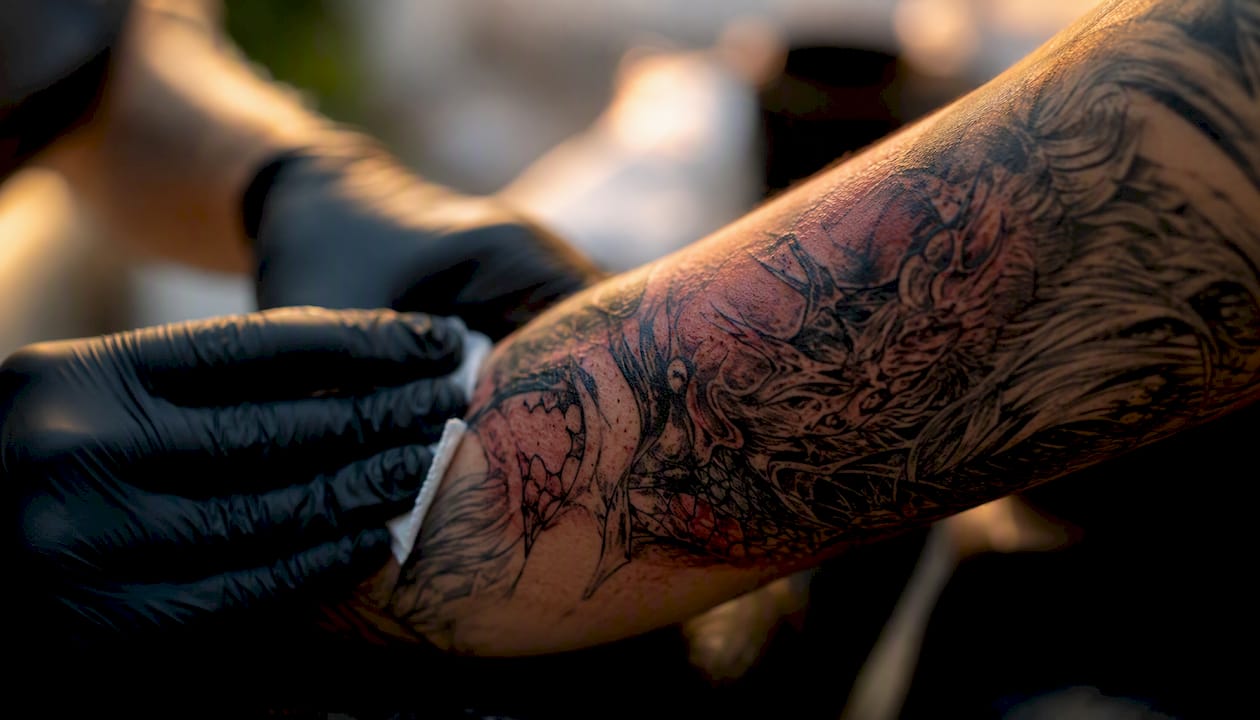
The immediate consequences stack up fast. Sunburn on top of an already-inflamed tattoo intensifies redness, worsens scabbing, and raises the risk of permanent pigment damage. Severe cases can blister directly over the design, pulling ink out of the skin as the blister fluid separates from the dermis. That’s not a cosmetic inconvenience — it’s a structural loss that no touch-up fully corrects.
Long-term, UV radiation breaks down tattoo pigments through oxidation and degrades the collagen that keeps linework crisp. Sun exposure accelerates tattoo fading, and the effect compounds over years of unprotected exposure. Colors shift, blacks turn gray-green, and fine lines blur.
Clinical research on photodermatoses and tattoos confirms that these phototoxic mechanisms are real and documented, not theoretical. If your piece includes yellow, orange, or bright red pigments, treat sun avoidance during healing as non-negotiable.
Pro Tip: Colored tattoos — especially those with yellow or red pigments — need stricter physical protection during healing than black-and-gray work.
What’s the healing timeline for sun exposure on a new tattoo?
Healing happens in phases, and each phase has a different risk level for sun exposure. Knowing where you are in the process tells you exactly what protection you need.
Most artists recommend keeping a new tattoo out of direct sun for a few weeks; many dermatologists and studios advise longer for larger or colored pieces. The range exists because healing speed varies with tattoo size, placement, skin type, and aftercare quality.
The checklist for “healed enough for sunscreen” is simple:
- No open scabs or weeping areas anywhere on the tattoo
- Skin texture feels smooth and normal (not raised, crusty, or flaking)
- No persistent redness or tenderness to the touch
- The surface looks like regular skin, not a healing wound
Until every item on that list is true, physical protection is your only safe option. Avoid soaking in pools, hot tubs, or baths during this entire window — water exposure compounds the risk and slows barrier recovery.
What should you do if your fresh tattoo gets sunburned?
Act quickly. A sunburn on a healing tattoo is significantly more damaging than a sunburn on intact skin, and the window for damage control is short.
- Get out of the sun immediately and stay out for the rest of the day.
- Cool the area gently with a clean, cool (not ice-cold) compress for 10–15 minutes. Never apply ice directly — it can cause additional tissue damage.
- Rinse with lukewarm water and a gentle, fragrance-free cleanser. Skip hot showers entirely until the burn calms down.
- Apply a thin layer of fragrance-free aftercare balm or unscented lotion to keep the skin hydrated. Avoid heavy occlusives like petroleum jelly on a burned tattoo — they can trap heat and worsen inflammation.
- Keep it covered with loose, breathable fabric when you go back outside.
- Monitor closely for the next 24–48 hours.
Contact your tattoo artist first for cosmetic concerns (pigment loss, uneven healing). Go to urgent care or a dermatologist for any sign of infection, systemic symptoms, or blistering that covers a significant portion of the design.
When can you put sunscreen on a new tattoo?
The rule is simple: do not apply sunscreen to a fresh tattoo while the skin is still healing. A healing tattoo is essentially an open wound, and sunscreen ingredients — even gentle ones — can irritate broken skin, introduce bacteria, and interfere with the healing process.
Once the skin has fully healed (all four checklist items above), sunscreen becomes your best long-term defense. Here’s how to use it correctly:
- Apply broad-spectrum SPF 30+ at least 30 minutes before sun exposure.
- Reapply every 2 hours, or immediately after swimming or heavy sweating.
- Use a gentle, patting motion rather than rubbing to avoid disrupting healed skin.
Mineral vs. chemical sunscreens for tattooed skin:
| Type | Active ingredients | Pros for tattoos | Cons |
|---|---|---|---|
| Mineral | Zinc oxide, titanium dioxide | Sits on skin surface; less irritation risk; recommended by dermatologists for sensitive/healing skin | Can leave a white cast; thicker texture |
| Chemical | Avobenzone, oxybenzone, octinoxate | Lightweight; no white cast; easier to apply | Higher irritation potential; some ingredients may react with certain pigments |
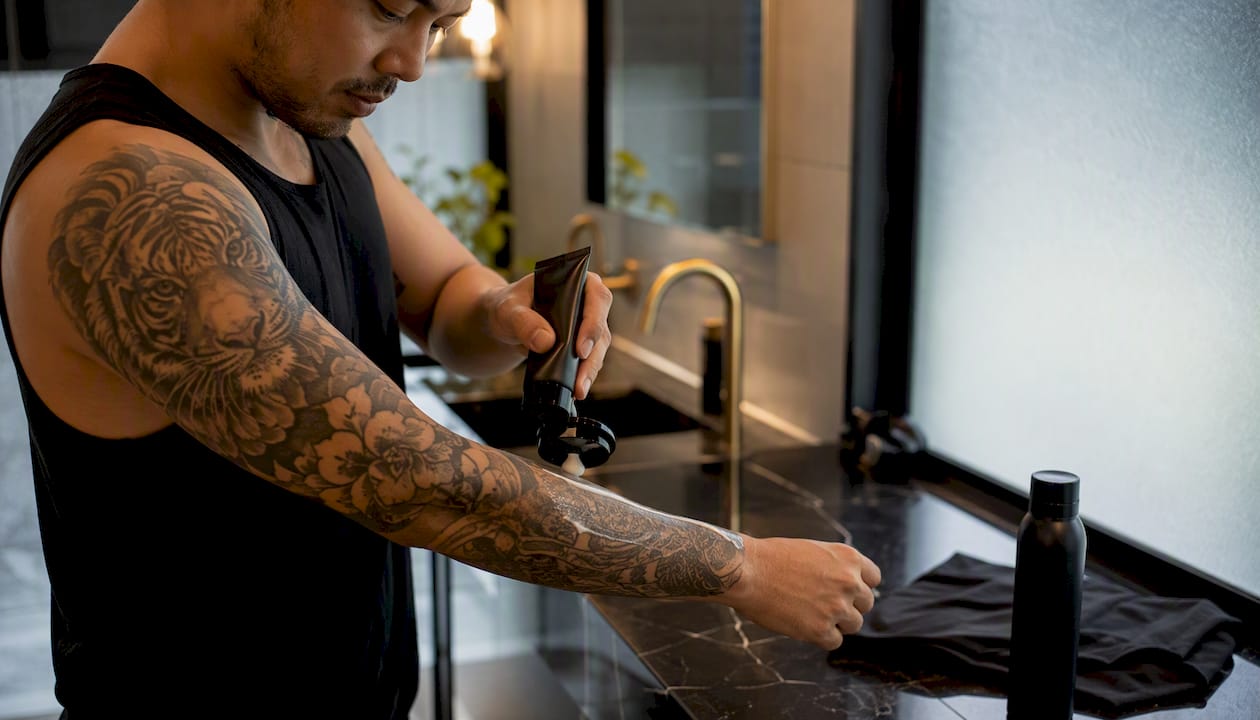
MD Anderson recommends mineral broad-spectrum SPF once the skin barrier has healed. Mineral formulas sit on the skin’s surface rather than absorbing into it, which makes them a better fit for skin that has recently been through trauma.
Pro Tip: Stick-format sunscreens let you apply precise, controlled coverage over a tattoo without the rubbing that lotion requires. They’re worth keeping in your bag.
Physical protection works better than sunscreen while you’re still healing
While the tattoo is healing, clothing and shade are your primary tools. Sunscreen is not an option yet, so physical barriers carry all the weight.
By body location:
- Arms and legs: Long-sleeve UPF 50+ shirts and lightweight pants block UV effectively without touching the tattoo directly. Loose fit matters — tight fabric rubbing on a healing tattoo causes irritation.
- Hands and fingers: Thin cotton gloves or medical-grade finger cots for short outdoor stints. Hands are among the hardest locations to protect and among the fastest to fade.
- Face and neck: Wide-brim hats (3-inch brim minimum) combined with shade. Face tattoos heal in a high-UV zone with constant incidental exposure.
- Torso: A loose, long-layer shirt or a rash guard for any outdoor activity. Rash guards with UPF ratings are particularly useful for beach or water environments.
Bandages and occlusive dressings are useful for short-term protection (a few hours outdoors) but should not stay on for extended periods during healing — trapped moisture under a bandage can create conditions for bacterial growth. Change any covering regularly and let the skin breathe between uses.
One exposure risk most people underestimate: driving. Side windows in most vehicles block very little UVA radiation. A tattoo on your left arm or hand gets meaningful UV exposure on every commute. A lightweight sleeve or UPF arm cover is an easy fix.
How do you protect a healed tattoo for the long term?
Once fully healed, the goal shifts from wound protection to pigment preservation. UV exposure ages skin and oxidizes tattoo pigments — both processes are cumulative and largely irreversible.
Daily habits that make a real difference:
- Apply broad-spectrum SPF 30+ every morning to any tattooed skin that will see daylight, even incidentally.
- Follow with a quality tattoo-specific moisturizer to keep skin supple and prevent the dryness that makes colors look dull.
- Check the UV index before extended outdoor time and plan coverage accordingly.
- Skip tanning beds entirely. The concentrated UV output in a tanning bed accelerates fading faster than natural sun and offers no protection benefit.
- After full healing, gentle exfoliation (once or twice a week) removes dead skin buildup that mutes color vibrancy.
Location matters significantly for long-term fading. Face and hand tattoos fade faster than torso or upper-arm pieces because they receive more daily UV exposure with less natural coverage. If you have ink on your hands, fingers, or face, more frequent SPF reapplication and physical coverage are worth the extra effort. Scheduled touch-ups every few years are normal for high-exposure locations — plan for them rather than being surprised.
What do dermatologists and public-health researchers say?
The guidance across dermatology, public health, and regulatory sources is consistent.
MD Anderson is explicit: new tattoos are inflamed, compromised skin, and physical barriers are the safe method until the barrier is restored. Once healed, mineral broad-spectrum SPF is the recommended formula.
A peer-reviewed public-health review published in PMC found that while most tattoo artists provide some aftercare instructions, many do not include full-body sun-protection guidance. The review recommends standardizing aftercare to include explicit sun-safety steps and identifies tattoo studios as an underused venue for skin cancer education.
At the regulatory level, Texas Administrative Code § 229.408 requires written aftercare instructions that include minimizing sun exposure for at least two weeks. Texas is one example of a state that has codified the two-week minimum into law — a signal of how seriously public-health authorities treat this guidance.
What tattoo artists actually see when sun exposure goes wrong
The pattern in studios is predictable: clients who get sun on a healing tattoo in the first two weeks come back with uneven scabbing, blown-out lines, and patchy color. It’s almost always preventable. The most common mistake isn’t deliberate sun-seeking — it’s underestimating incidental exposure. A 20-minute walk to lunch, an afternoon at an outdoor event, a weekend road trip with the window down. Those small exposures add up fast on skin that has zero UV defense.
Artists also consistently report that yellow and bright red pigments show sun damage first. A piece that looked vibrant at the two-week check-in can look washed out by summer’s end if the client skipped SPF after healing. The fix is simple and the cost is low — the only real barrier is knowing the rules before the damage happens.
Follow your artist’s aftercare instructions to the letter, and treat any red-flag symptoms (blistering, spreading redness, fever) as a reason to call a clinician, not wait it out.
TBNC Tattoo aftercare products built for healing skin
Healing skin needs hydration and barrier support, not sunscreen. TBNC Tattoo’s aftercare line is built specifically for this window.
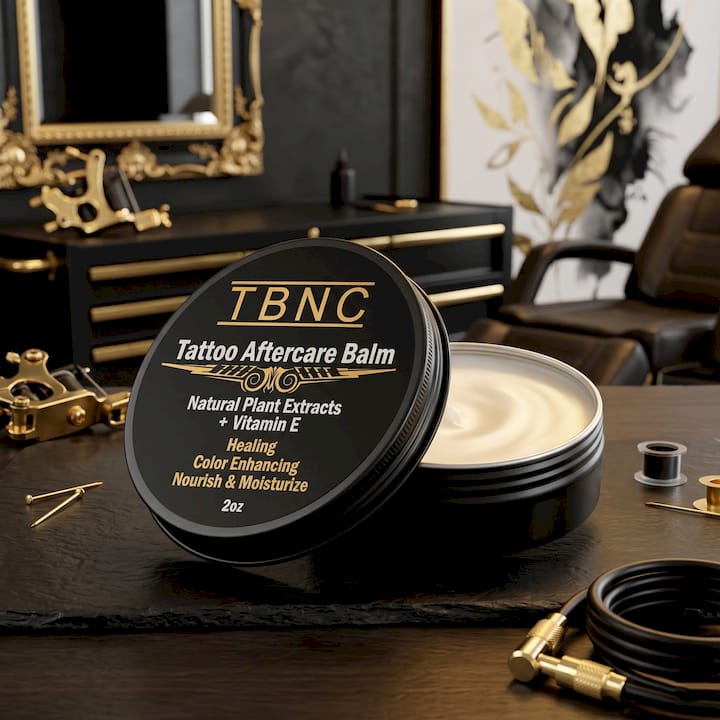
The Tattoo Aftercare Balm is the go-to for early healing: a dermatologist-approved formula that moisturizes without clogging pores or irritating broken skin. Use it in place of sunscreen during the healing phase to keep the tattoo hydrated and reduce peeling.
For collectors who are always on the move, the Tattoo Butter Travel Sticks (3-pack) fit in any pocket or bag and deliver precise, no-mess moisture wherever you are — ideal for reapplying during a day out without rubbing or disrupting healing skin.
Once fully healed, the Tattoo Butter keeps color vivid and skin supple for the long term. Pair it with your daily SPF routine to get the most out of both. Browse the full aftercare collection and find the right product for your healing stage.
Sources
- How to protect tattoos from sun exposure | UT MD Anderson
- Aftercare Instructions in the Tattoo Community: An Opportunity to Educate on Sun Protection and Increase Skin Cancer Awareness - PMC
- Sun protection and tattoos | Byrdie
- Can You Put Sunscreen On a New Tattoo? | Supergoop
- Sun Damage and Your Tattoo - Paper Crane Tattoo Studio
- 25 Tex. Admin. Code § 229.408 - Care of the New Tattoo and/or Body Piercing | State Regulations | US Law | LII / Legal Information Institute
- Tattooing and body piercing | HealthHub (CPCMG)
This article is general information, not a substitute for advice from a qualified doctor. Consult a qualified healthcare professional about your own circumstances before acting on anything here.
FAQ
What happens if a 2-week-old tattoo gets sunburned?
At two weeks, most tattoos are still mid-healing with the skin barrier not yet fully restored. A sunburn at this stage can worsen scabbing, cause uneven pigment loss, and raise infection risk — cool the area, keep it moisturized with a fragrance-free balm, and see a clinician if blistering or spreading redness develops.
Can I put sunscreen on a 2-week-old tattoo?
Only if the skin has fully healed — no open scabs, no weeping, and normal skin texture. Many tattoos are not fully healed at two weeks, so check the skin rather than going by the calendar alone. When in doubt, stick to physical coverage and wait.
How much sun is too much for a new tattoo?
Any direct UV exposure is too much during the first two to four weeks. Even brief incidental exposure, like a short walk or time near a window, adds up on skin that has no UV defense while healing.
Do bandages protect tattoos from the sun?
A bandage blocks UV for short periods and is a useful backup when clothing isn’t practical, but it shouldn’t stay on for extended periods during healing. Trapped moisture under a bandage can encourage bacterial growth, so use it as a short-term cover and let the skin breathe between uses.
When can a new tattoo go in the sun safely?
Once the tattoo is fully healed, usually after 2 to 4 weeks depending on size and placement and when the skin shows no scabs or open areas, you can expose it to sun with broad-spectrum SPF 30+ applied 30 minutes before exposure and reapplied every two hours.


