

Swimming After Tattoo: When It's Safe and What to Do
Wait at least a few weeks before swimming with a new tattoo. Only swim earlier in a genuine emergency, and only with a waterproof dressing, minimal time in the water, and immediate cleanup afterward. Bigger tattoos, heavily saturated color work, and pieces on joints or feet need more time on the back end of that window.
The Mayo Clinic and Cleveland Clinic both treat a fresh tattoo as an open wound, and a documented case tied a fatal Vibrio infection to ocean swimming just five days after getting inked. That’s the extreme end. The everyday risk is duller but still real: chlorine irritation, faded ink, and a healing process that stalls out and starts over.
- Only exceptions: medical necessity (physical therapy in a pool, for example) or a short, unavoidable splash you didn’t see coming.
- If it happens anyway: rinse with clean water immediately, wash with mild soap, pat dry, cover loosely, and watch the site for 24 to 48 hours.
Key Takeaways
Fresh tattoos need two to four weeks of protection from water before swimming becomes reasonably safe, and physical healing signs matter more than the calendar.
| Point | Details |
|---|---|
| Standard wait time | Give a new tattoo two to four weeks before swimming; larger or color-heavy pieces need more time. |
| Open-water carries extra risk | Marine bacteria like Vibrio have caused documented severe infections in unhealed tattoos exposed to ocean water. |
| Trust your skin, not the calendar | Wait until there are no scabs, no redness, and no tenderness, even if that’s past four weeks. |
| Emergency exposure needs a fast routine | Rinse, wash with mild soap, pat dry, and apply a fragrance-free product within hours of any accidental splash. |
| TBNC Tattoo supports the healing window | The Aftercare Lotion, Balm, and Soothing Gel each target a different stage of healing and accidental water exposure cleanup. |
This article is general information, not a substitute for advice from a qualified doctor. Consult a qualified healthcare professional about your own circumstances before acting on anything here.
Table of Contents
- Why Swimming Too Soon Risks Your Tattoo and Your Health
- Healing Timeline: What Happens Week by Week
- If You Absolutely Must Swim: Protection and Cleanup Steps
- Signs of Infection or Damage After Swimming
- How to Tell Your Tattoo Is Fully Healed
- A Publisher’s Note on Patience and Ink
- Aftercare Products That Support the Healing Window
- Sources
- FAQ
Why Swimming Too Soon Risks Your Tattoo and Your Health
A fresh tattoo isn’t skin with some decoration on top. It’s thousands of tiny puncture wounds that the Mayo Clinic classifies the same way it classifies any other open wound, meaning submersion introduces bacteria and chemicals directly into tissue that hasn’t closed yet. Pool water carries pathogens even with chlorine treatment. Ocean and lake water carry marine bacteria, including Vibrio species that thrive in warm saltwater and have caused documented, severe infections tied to swimming with unhealed tattoos.
Infection isn’t the only casualty. Dermatologists point out that trapped moisture under a scab or under swollen skin can cause “bubbling,” where fluid pockets form and distort the design as it sets. Poor pigment retention often follows, leaving patchy or faded areas that no amount of touch-up work fully corrects.
Dermatologists note that the danger isn’t limited to infection. Trapped moisture can cause bubbling in the skin, and that disruption during healing often leads to poor pigment retention, according to commentary reported by Women’s Health.
Chlorine dries out healing skin and can trigger contact irritation on top of the wound itself, while saltwater’s abrasive quality does mechanical damage that neither type of water reliably offsets with disinfecting power. Most tattoo artists and dermatologists land on the same number: wait two to four weeks before any swimming, full stop.
Healing Timeline: What Happens Week by Week
Healing isn’t a single event, it’s a sequence, and each stage carries a different level of water risk.
- Week 0 to 1 — open wound stage. The tattoo oozes plasma and ink, looks red and swollen, and needs short lukewarm showers only. No soaking, no baths, no pools.
- Week 1 to 2 — scabbing and peeling. Skin flakes and forms thin scabs. It looks better than it feels; submersion here can pull off healing tissue and pull ink out with it.
- Weeks 3 to 4 — surface closure. The top layer often looks healed, but deeper dermal layers are still repairing. Cautious reintroduction to water is reasonable only if there are no scabs, no redness, and no tenderness left.
- Beyond week 4 — full maturation. Complete dermal remodeling can take several months, and surface appearance is a poor proxy for what’s happening underneath.
Some tattoos take longer than others to clear each stage:
- Large pieces and heavily shaded or color-saturated work.
- Tattoos on joints, hands, or feet, where skin flexes constantly and healing is slower.
- Individual factors: age, immune status, and smoking all extend recovery.
If You Absolutely Must Swim: Protection and Cleanup Steps
Sometimes there’s no getting out of it. A group swim lesson, a physical therapy pool, a beach vacation booked before the tattoo appointment. If skipping the water isn’t an option, follow this sequence closely.
- Confirm the tattoo has no open bleeding or active scabbing. If it’s still weeping or scabbed, don’t put it near water at all.
- Apply a medical-grade waterproof dressing right before entry, not hours ahead of time. Transparent occlusive film dressings can shield a tattoo for brief, unavoidable submersion, but they aren’t a true seal. Skip the adhesive over large scabs or inflamed skin.
- Keep the exposure short. Minimize time submerged and stay away from choppy or visibly dirty water.
- Remove the dressing immediately after you’re out, then wash the area gently with mild soap and lukewarm water and pat it dry with a clean towel.
- Apply a fragrance-free aftercare product right after drying, using something like the TBNC Tattoo Aftercare Lotion to replace lost moisture without clogging healing skin.
- Watch the site over the next 24 to 48 hours for anything that looks off.
- Never leave a waterproof dressing on longer than the exposure itself; trapped moisture under film for hours does more harm than the swim did.
Pro Tip: Put the dressing on at the pool deck, not at home. The longer it sits before you’re actually in the water, the more sweat and moisture build up underneath, and that trapped moisture is exactly what causes bubbling.
Signs of Infection or Damage After Swimming
Most accidental splashes cause nothing worse than mild redness that fades in a day. Watch closely anyway.
- Spreading redness that extends beyond the tattoo’s original border.
- Increasing warmth, swelling, or visible pus and discharge.
- A foul odor coming from the site.
- Fever or chills, which point to a systemic infection rather than a local skin reaction.
Bubbling, sudden patchy fading, or pain that gets worse instead of better over a few days signals something beyond a normal reaction, even without classic infection signs. For mild irritation: clean gently, apply aftercare, and observe for 24 to 48 hours. If redness spreads, swelling increases, or fever develops, that’s your cue to see a healthcare provider rather than wait it out.
Pro Tip: Your tattoo artist can often tell the difference between normal healing irritation and a real problem from a photo. Send one before assuming the worst, but don’t hesitate to see a doctor if fever or spreading redness shows up.
How to Tell Your Tattoo Is Fully Healed
Calendar time is a rough guide. Your skin gives the real answer.
- No scabs or flakes remaining anywhere on the design.
- No redness, heat, or tenderness when lightly touched.
- Skin texture matches the surrounding, untattooed skin exactly, with ink settled and colors looking stable rather than raw.
If you’re past the four week mark and the physical signs above still aren’t all present, wait longer. Surface healing can be misleading, and rushing based on outer appearance alone is how people end up with faded patches or infections weeks after they thought they were in the clear. If you’re genuinely unsure, a quick check-in with your tattoo artist costs nothing and settles the question fast.
A Publisher’s Note on Patience and Ink
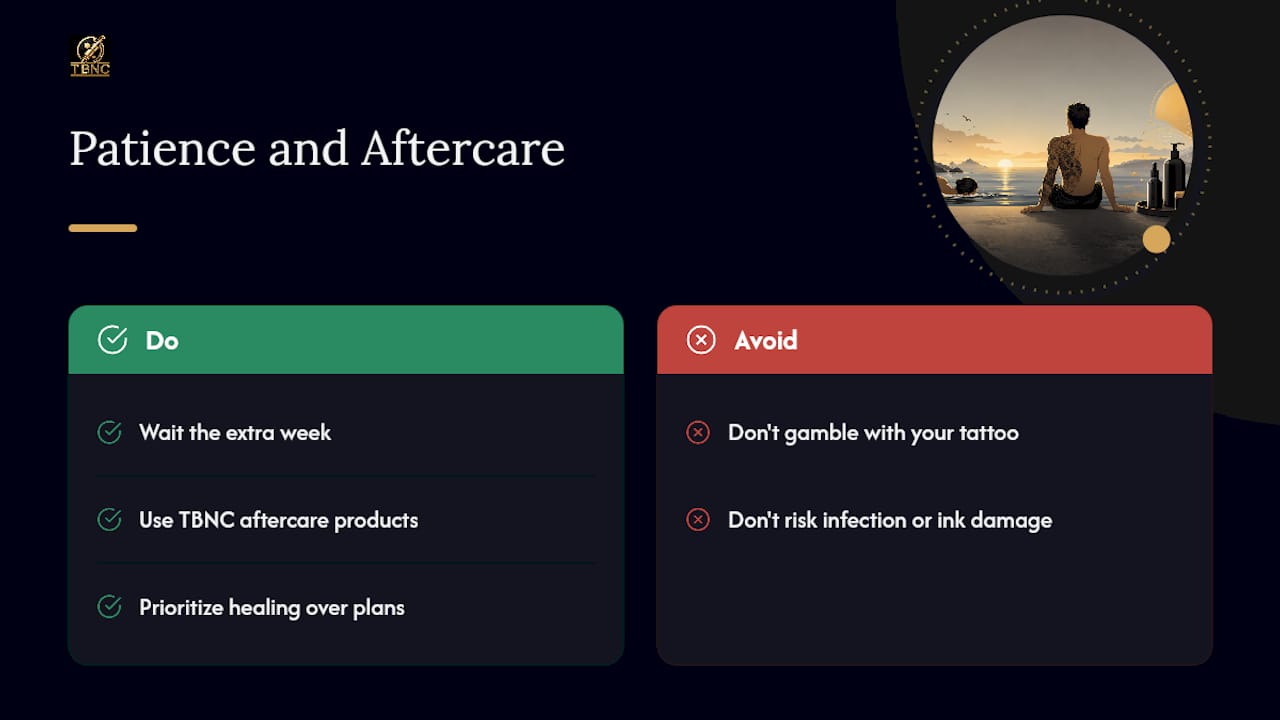
We get it. You just spent hours in the chair and a beach trip or pool party is calling your name. But the evidence on infection risk and ink damage is consistent enough that we’d rather you wait the extra week than gamble on a piece you’ll wear for decades. TBNC Tattoo built its aftercare line specifically for this stretch of impatience, so healing doesn’t have to feel like punishment.
Aftercare Products That Support the Healing Window
There are other ways to get through the healing stretch, and plenty of people just tough it out with plain lotion from the drugstore. TBNC Tattoo built a line specifically for this window because generic moisturizers aren’t formulated for skin that’s actively repairing itself, and that difference shows up in how fast irritation calms down.
The Tattoo Aftercare Lotion - Unscented works well for daily moisturizing once the wound stage has passed, keeping skin flexible without adding fragrance chemicals that can irritate healing tissue. The Tattoo Aftercare Balm forms more of a protective barrier, useful during the scabbing and peeling phase or right after any accidental water exposure. The Tattoo Soothing Gel delivers cooling relief for transient stinging or redness, the kind that shows up after a hot shower or a stray splash at the pool.
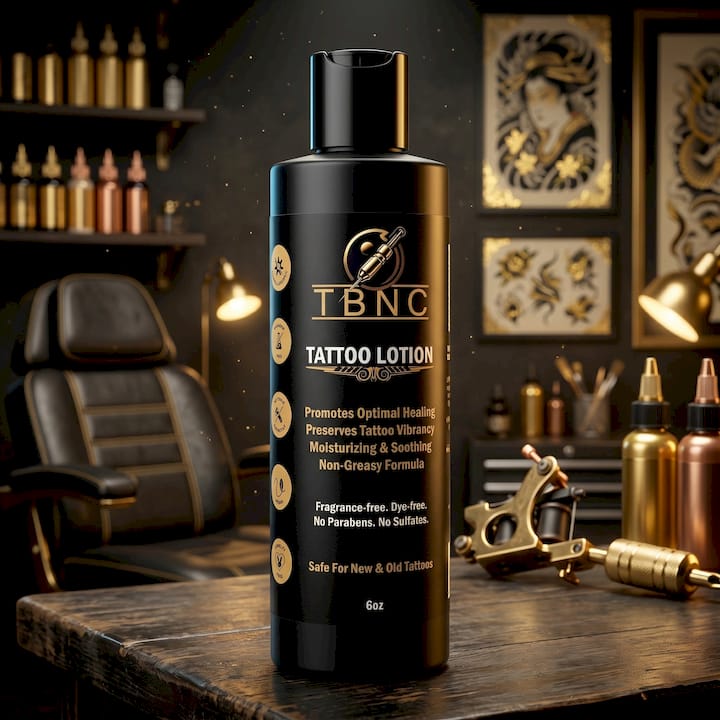
The routine is simple: wash gently, pat dry, then apply whichever product matches your healing stage. Keep a travel-sized balm or gel in your gym bag or beach tote. Accidental exposure happens, and having the right product on hand beats scrambling for whatever’s in the hotel bathroom. Browse the full aftercare collection to build a kit that covers you from day one through full healing.
Sources
- Tattoos: Understand risks and precautions - Mayo Clinic
- Tattoo infection - Cleveland Clinic
- Swimming With a New Tattoo: Everything You Need To Know
- How long should I wait before swimming after getting a tattoo? - USMS
- If Your New Tattoo Hasn’t Yet Healed, Swimming In The Sea Could Be Deadly
FAQ
How can I protect my new tattoo while swimming?
Apply a medical-grade waterproof dressing immediately before entering the water, keep submersion time as short as possible, and remove the dressing right after to wash and dry the area.
Is it safe to swim four days after getting a tattoo?
No. A tattoo four days old is still an open wound in the earliest healing stage, and a documented case linked a fatal infection to ocean swimming at exactly that point in healing.
What happens if I get pool water on my new tattoo?
Rinse the area with clean water right away, wash gently with mild soap, pat dry, and apply a fragrance-free aftercare product like the TBNC Tattoo Soothing Gel, then watch for redness or swelling over the next two days.
How long should I wait before swimming after a tattoo?
Most artists and dermatologists recommend two to four weeks, with longer waits for larger tattoos, heavier color saturation, or placement on joints and feet.


