

Tattoo Aftercare Mistakes That Cost You Ink and Money
The single biggest threat to a new tattoo’s healing is bad aftercare, and three mistakes cause most of the damage: over-moisturizing, picking at scabs, and exposing fresh ink to sun or water. Under-washing and the wrong products cause the rest. The core rule is simple: follow your artist’s instructions, keep the area clean, and apply a thin, nonocclusive layer of a fragrance-free moisturizer. Right now, if your tattoo looks dry or is weeping, do two things:
- Wash it gently with a mild, fragrance-free soap and pat it dry.
- Apply a thin film of a water-based aftercare product, not a thick coat.
Key Takeaways
Most tattoo damage comes from three avoidable errors: applying too much product, picking at scabs, and exposing healing skin to sun or water too soon.
| Point | Details |
|---|---|
| Follow your artist first | Their instructions override generic advice since ink, machine, and bandage type vary. |
| Moisturize thin, not thick | Apply a light film of a fragrance-free, water-based product; avoid petroleum-based ointments. |
| Hands off scabs and peeling | Tap or use a cool compress for itch; picking causes ink loss and scarring. |
| Delay sun and water exposure | No pools, hot tubs, or direct sun until fully healed; SPF 30+ only after healing completes. |
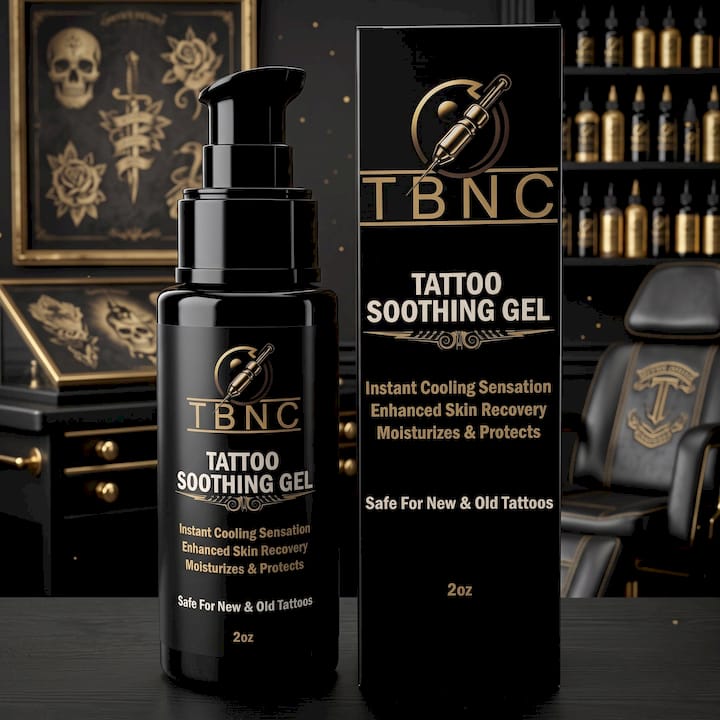
| Choose dermatologist-approved products | TBNC Tattoo’s Aftercare Balm, Soothing Gel, and Bundle are hypoallergenic and used across thousands of studios. |
Table of Contents
- How to Care for a New Tattoo, Step by Step
- The Most Common Tattoo Aftercare Mistakes
- Recognizing Infection or an Allergic Reaction
- Handling Scabs and Peeling Without Losing Ink
- Sun Exposure, Water, and Activity While Healing
- Choosing Safe Aftercare Products (and Spotting the Wrong Ones)
- What the Healing Timeline Actually Looks Like
- What Backs This Guidance
- What We See Go Wrong Most in Studios
- The Right Aftercare Products for Each Stage
- Sources
- FAQ
How to Care for a New Tattoo, Step by Step
Your artist sets the first rule: how long the initial bandage stays on. Some use plastic wrap for two to three hours; others apply a second-skin bandage that stays for several days. Peel it off slowly in the shower with warm water running over it, never dry, so you don’t tear off ink along with the adhesive.
Once the bandage is off, the routine is:
- Wash twice daily with a gentle, fragrance-free antibacterial soap and warm water. Use your fingertips, not a washcloth or loofah.
- Pat dry with a clean paper towel. Rubbing with a bath towel reintroduces bacteria and irritates fresh skin.
- Moisturize thin with a hypoallergenic, water-based product. A light sheen is the goal, not a glossy coat.
- Wear clean, loose clothing over the area, and change bedding more often during the first week.
Most people can return to normal activity within a few days, but it is generally recommended to avoid intense exercise for a short period if the tattoo is in a place that flexes or sweats heavily. This routine matches what many studios already tell clients: apply a thin ointment layer initially, then shift to gentle washing and light moisturizing several times daily once the bandage comes off.
Pro Tip: Set a phone reminder for washing times during the first week. Missing a wash isn’t a big deal once, but skipping it for a full day lets dead skin and ointment build into a crust that’s harder to manage later.
The Most Common Tattoo Aftercare Mistakes
Most healing problems trace back to a handful of repeated errors. Here’s what actually goes wrong, and the fix for each one.
Over-moisturizing. Slathering on lotion feels responsible, but it saturates scabs, traps moisture against the skin, and can pull ink out with the peeling skin underneath. Both over- and under-moisturizing create real healing setbacks, and the fix is moderation: a thin film, reapplied only when the skin looks dry, not on a fixed schedule.
Under-moisturizing. The opposite mistake cracks the skin and produces heavier, tougher scabs that take longer to shed. If your tattoo feels tight or looks flaky, add a light layer more often, not a thicker one.
Picking, scratching, or peeling scabs. This is the single most avoidable cause of blotchy, faded tattoos. Pulling a scab early takes ink with it and can leave permanent scarring. Tap or pat the itch instead, or press a cool, clean compress against it for relief. Keep your nails short during the first two weeks so accidental scratching in your sleep does less damage.
Petroleum-based products. Vaseline and similar occlusives seal moisture and bacteria against the skin at the same time. Dermatologists flag this because petroleum jelly can trigger bacterial overgrowth and added inflammation on healing skin, exactly when you need the opposite.
Over-washing or harsh soaps. Scrubbing or washing more than twice a day strips the skin’s barrier and slows healing. Stick to a gentle, fragrance-free soap and use your hands, never a brush.
Shaving, tight clothing, and friction. Razors nick healing skin, and tight waistbands or bra straps rub scabs loose before they’re ready. Give the area breathing room until it’s fully closed over.
Water submersion. Pools, hot tubs, lakes, and baths all expose open skin to bacteria loads far beyond what a quick shower carries. Brief showers are fine; just don’t aim a direct, forceful stream at the tattoo.
Overtraining and sweat. Heavy sweating irritates fresh ink and can loosen scabs through friction. Ease back into intense workouts over the first one to two weeks.
Pro Tip: If you’re unsure whether a product is safe, check the label for “fragrance-free” and “noncomedogenic.” Those two words filter out most of the products that cause problems.
Recognizing Infection or an Allergic Reaction
Some redness, warmth, and mild swelling are normal for the first two days. What isn’t normal: redness that spreads outward, a fever, pus or foul-smelling discharge, or pain that gets worse rather than better after 48 hours. These signs point to infection or an allergic reaction that needs medical attention, not more ointment.
If you see any of them:
- Stop every non-prescribed product you’re using on the area immediately.
- Keep the area clean and uncovered, and avoid re-bandaging it tightly.
- Call your artist to rule out a technique or ink issue, and call a physician if you have fever, spreading redness, or discharge.
- Skip over-the-counter antibiotic ointments or strong antiseptics unless a doctor tells you to use them.
Waiting out a suspected infection is the mistake that turns a manageable problem into a scar.
Handling Scabs and Peeling Without Losing Ink
Weeping, a mix of clear or pink fluid and a bit of ink, is normal for the first three to five days. Wash it away gently rather than letting it dry into a thick crust; that crust is what pulls out ink when it eventually falls off.
- Light, thin scabs: keep moisturized and leave them alone.
- Heavy, raised scabs: increase gentle washing frequency and contact your artist rather than picking or scraping.
- Persistent itch: use a cool compress or a light tap instead of scratching.
- Abnormal scabbing (thick, cracked, or bleeding when touched) warrants a check with your artist or a clinician.
Sun Exposure, Water, and Activity While Healing
Fresh ink and UV rays don’t mix, and the risk isn’t just fading. Broken skin under sunscreen traps chemicals and bacteria against a wound that hasn’t closed yet.
- Skip direct sun and tanning beds entirely until the tattoo has fully healed. Cover it with clothing if you have to be outside.
- Apply SPF 30 or higher only after full healing, generally two to four weeks in, never over actively healing skin.
- Avoid pools, hot tubs, and natural water until scabbing is gone. Quick showers are fine; just don’t blast the tattoo with a direct stream.
- Ease back into exercise, starting with low-impact movement and loose clothing that won’t rub the area.
Choosing Safe Aftercare Products (and Spotting the Wrong Ones)
Look for fragrance-free, water-based, hypoallergenic moisturizers built for healing skin, not general-purpose lotion. Heavy, occlusive balms marketed for “deep hydration” often trap more than they help during the active healing window.
- Avoid petroleum jelly and thick ointments during the first two weeks; they block pores and encourage bacterial growth instead of letting skin breathe.
- Patch-test any new product on unlinked skin, like your forearm, 24 hours before using it on the tattoo. Redness or itching there means don’t use it on healing ink.
- Larger, flatter placements (forearms, calves) tolerate slightly more product than joints and creases (elbows, ribs), where friction and sweat build up faster.
What the Healing Timeline Actually Looks Like
Days zero through three bring swelling, weeping, and the most dramatic-looking skin. Days four through fourteen bring scabbing and peeling, usually the itchiest and least attractive stretch. Deeper skin layers keep settling for weeks after that, often two to eight weeks depending on placement and size.
- Days 3 to 7 are typically the worst for itching and peeling.
- Redness and tenderness should be fading, not worsening, by day 5 or 6.
- If swelling, pain, or redness increases past day 5, that’s outside the normal curve and worth a call to your artist or a clinician.
What Backs This Guidance
TBNC Tattoo builds its aftercare line around dermatologist-approved, hypoallergenic formulas used across more than 3,250 tattoo studios worldwide. That matters here because the mistakes covered above, occlusion, irritation, fragrance sensitivity, are exactly what nonocclusive, fragrance-free formulations are built to avoid.
A moisturizer that’s too heavy defeats its own purpose on fresh ink. The goal isn’t maximum hydration; it’s the right amount, delivered in a formula that doesn’t trap bacteria against healing skin.
Studio adoption at that scale reflects consistent, repeat use by professionals who see healing outcomes daily, not just a marketing claim.
What We See Go Wrong Most in Studios
The mistake we hear about constantly is simple: clients think more product means better healing, when a thin layer, applied a little more often, beats a thick layer every time. Whatever your artist tells you at checkout overrides anything you read here or anywhere else. Their instructions are calibrated to your specific tattoo, placement, and ink.
— The Best Numbing Cream
The Right Aftercare Products for Each Stage
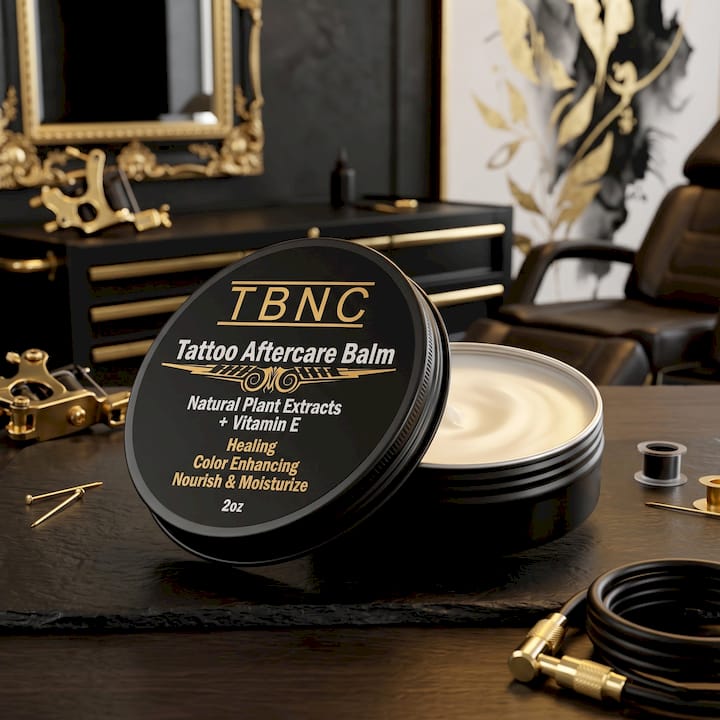
Once the bandage comes off, the products you reach for matter as much as the routine itself. TBNC Tattoo Aftercare Balm is built for daily moisturizing during the scabbing and peeling stage, a thin, nonocclusive layer that hydrates without suffocating healing skin, and you can see how to apply it correctly for best results. If itching or redness shows up early, TBNC Tattoo Soothing Gel targets irritation without the fragrance or heavy occlusives dermatologists warn against. For readers who want the full routine sorted in one order, the Basic Tattoo Aftercare Bundle pairs a cleanser with a balm so you’re not guessing which product to use at which stage. All three are formulated hypoallergenic and dermatologist-approved, the same standard used across thousands of studios. Browse the full aftercare lineup and pick the combination that matches your healing stage today.
Sources
The American Academy of Dermatology guides the washing and product-avoidance recommendations here. The Mayo Clinic informs the healing timeline. The Cleveland Clinic backs the infection warning signs, and Healthline supports the moisturizing balance discussed throughout.
- Caring for tattooed skin — American Academy of Dermatology (AAD)
- Tattoos and piercings — Mayo Clinic
- Tattoo aftercare — Cleveland Clinic
- Tattoo aftercare — Healthline
FAQ
Why do tattoo artists say not to use Aquaphor or Vaseline?
Petroleum-based products like Vaseline and Aquaphor can trap bacteria against the skin and increase inflammation, which is why dermatologists recommend water-based, fragrance-free alternatives instead.
What are the worst days of tattoo healing?
The period of a few days in the first week after tattooing is often the most uncomfortable for itching, peeling, and visible scabbing, with redness and tenderness typically improving around the middle of the first week.
Does a tattoo heal better dry or moisturized?
Neither extreme works: over-moisturizing saturates scabs and risks ink loss, while under-moisturizing causes cracking and heavier scabs, so a thin, consistent layer is the goal.
What are signs of bad tattoo healing?
Spreading redness, fever, pus or foul-smelling discharge, and pain that worsens after 48 hours are signs of infection that need medical attention rather than home treatment.
Are TBNC Tattoo aftercare products safe for sensitive skin?
TBNC Tattoo formulates its Aftercare Balm and Soothing Gel to be hypoallergenic and fragrance-free, matching the dermatologist guidance on avoiding heavy, irritating ingredients during healing.


