

Your Complete Tattoo Aftercare Routine for the First 30 Days
The fastest path to a well-healed tattoo is a consistent daily routine: remove the studio bandage as instructed, wash gently twice daily with a fragrance-free cleanser, apply a thin layer of aftercare ointment or unscented lotion, avoid sun and soaking, and follow your artist’s specific guidance. That’s it. Everything else in this guide is the detail behind those five steps.
Here’s your immediate checklist for the first hours:
- Remove the bandage when your artist says to (typically 2–24 hours, depending on dressing type)
- Wash hands before touching the tattoo
- Rinse with lukewarm water and a gentle, fragrance-free soap
- Pat dry with a clean paper towel
- Apply a thin layer of aftercare ointment or balm
- Avoid sun, swimming, and tight clothing over the area
Pro Tip: Keep your aftercare kit on the bathroom counter from day one. Out of sight means out of routine.
The surface layer of your tattoo typically heals within 2–4 weeks, but deeper skin layers continue remodeling for several months. Treating the first 30 days seriously is what separates a crisp, vibrant tattoo from a patchy, faded one.
Key Takeaways
A consistent tattoo aftercare routine, washing twice daily and moisturizing with the right product for each phase, is what protects ink vibrancy and prevents infection across the full 30-day healing window.
| Point | Details |
|---|---|
| Surface heals in 2–4 weeks | Deeper layers continue remodeling for months; treat the skin carefully throughout. |
| Wash twice daily, pat dry | Use lukewarm water, fragrance-free soap, and a clean paper towel every time. |
| Ointment first, then lotion | Switch from balm or ointment to a fragrance-free lotion around day 5. |
| SPF 30+ protects healed ink | Apply broad-spectrum sunscreen 15 minutes before sun exposure; reapply every 2 hours. |
| TBNC Tattoo phase-matched products | Aftercare Balm for days 1–5, Unscented Lotion for days 5–30+, Soothing Gel for irritation. |
Table of Contents
- What does a tattoo aftercare routine look like day by day?
- How do you clean and moisturize a fresh tattoo correctly?
- Which products should you use for each phase of healing?
- How do you know if your tattoo is infected or having a reaction?
- How do you keep a tattoo looking vibrant long term?
- Why does this routine work? What dermatologists say
- An honest note from TBNC Tattoo
- TBNC Tattoo aftercare products that match your healing timeline
- Sources
- FAQ
What does a tattoo aftercare routine look like day by day?
The routine shifts as your skin heals. What you do on day one is not what you do on day twenty. Here’s the full breakdown.
Day 0: leaving the studio
Your artist will cover the fresh tattoo with either a traditional plastic wrap or a transparent film dressing (sometimes called second skin). Many artists now use transparent film dressings that can stay on anywhere from a few hours to several days. Follow your artist’s specific instructions for that dressing type — they know what they applied.
Day 1: first wash and first moisturize
Remove the initial bandage as directed. Wash the tattoo gently with lukewarm water and a mild, fragrance-free soap. Pat it dry with a clean paper towel (not a cloth towel, which can harbor bacteria). Apply a thin layer of aftercare ointment or balm. Repeat the wash-and-moisturize cycle twice that day.
You may notice the tattoo weeping a mix of plasma, blood, and excess ink during the first 24–48 hours. This is typically normal as long as the amount is small and decreases with regular gentle cleaning. Avoid panicking and over-washing.
Days 2–3: managing the weep
The oozing usually tapers off. Keep washing twice daily and applying a thin ointment layer after each wash. The skin may feel tight and slightly raised. Light redness around the tattoo is expected. Wear loose clothing over the area to prevent friction.
Days 4–6: the itch begins
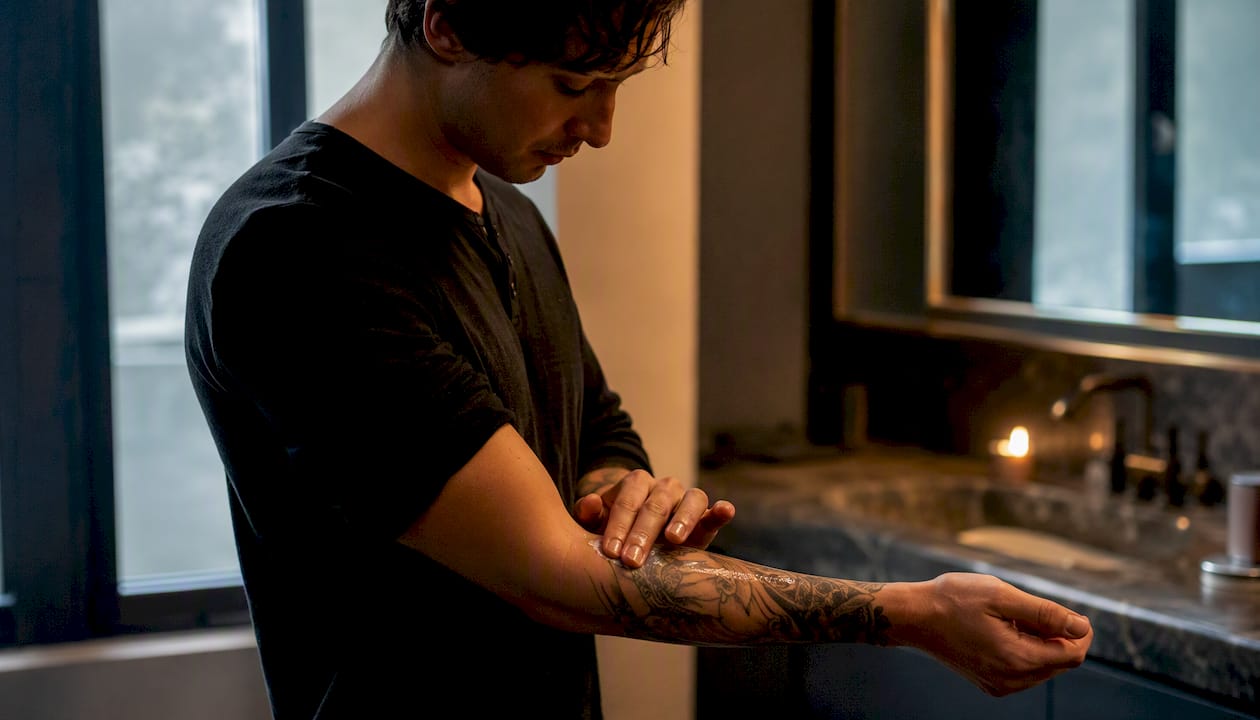
Itching signals that healing is progressing. Resist picking or scratching. Around day 5, switch from a thick ointment to a fragrance-free lotion for moisturizing — the skin no longer needs the heavy occlusive barrier it did in the first days. Continue washing twice daily.
Days 7–14: flaking and peeling
The top layer of skin begins to peel, similar to a sunburn. Do not pull the flaking skin off. Let it shed naturally. Washing and moisturizing twice daily remains the standard. Avoid direct sun exposure on the tattoo during this phase — UV light on healing skin causes both damage and ink fading.
Pro Tip: If the peeling skin looks like a second tattoo outline lifting off, that’s the dead epidermis, not your ink. The color underneath will clarify once peeling is complete.
Days 15–30: surface healed, deeper layers still working
The outer surface looks healed and the color appears settled. You can reduce washing to once daily if the skin feels comfortable. Continue moisturizing daily. Avoid prolonged sun exposure, tanning beds, and soaking in pools, hot tubs, or the ocean. The deeper dermal layers are still remodeling, so treat the area with care even though it looks finished.
How do you clean and moisturize a fresh tattoo correctly?
Technique matters as much as frequency. Doing either step wrong can pull ink, cause infection, or create thick scabs that leave gaps in the design.
Washing step by step
- Wash your hands thoroughly before touching the tattoo.
- Run lukewarm water over the tattooed area. Hot water opens pores and can draw out ink; cold water is uncomfortable and less effective at rinsing.
- Apply a small amount of fragrance-free, dye-free liquid soap to your clean fingertips.
- Gently work the soap over the tattoo using circular motions. No washcloths, loofahs, or sponges.
- Rinse completely until no soap residue remains.
- Pat dry with a fresh paper towel. Cloth towels can snag on healing skin and carry bacteria.
- Let the area air-dry for 5–10 minutes before applying any product.
Moisturizing: how much is enough?
Apply a pea-sized amount of ointment or a thin film of lotion. The skin should look slightly shiny, not greasy. Over-applying traps moisture and creates a breeding ground for bacteria. Under-applying lets the skin dry out and crack, which pulls ink.
For the first 4–5 days, a thicker ointment or balm works best to protect the wound barrier. After that, switch to a fragrance-free lotion for the remainder of the healing period.
What to avoid:
- Hydrogen peroxide and rubbing alcohol — both destroy healthy tissue and increase scabbing, which pulls ink and causes patchiness
- Scented soaps, body washes, or lotions with dyes
- Petroleum jelly as a routine moisturizer (more on this below)
- Scrubbing, picking, or peeling flaking skin
- Soaking the tattoo in any standing water
Which products should you use for each phase of healing?
Not all moisturizers are equal for tattooed skin, and the right product depends on where you are in the healing timeline.
Product types and when to use them
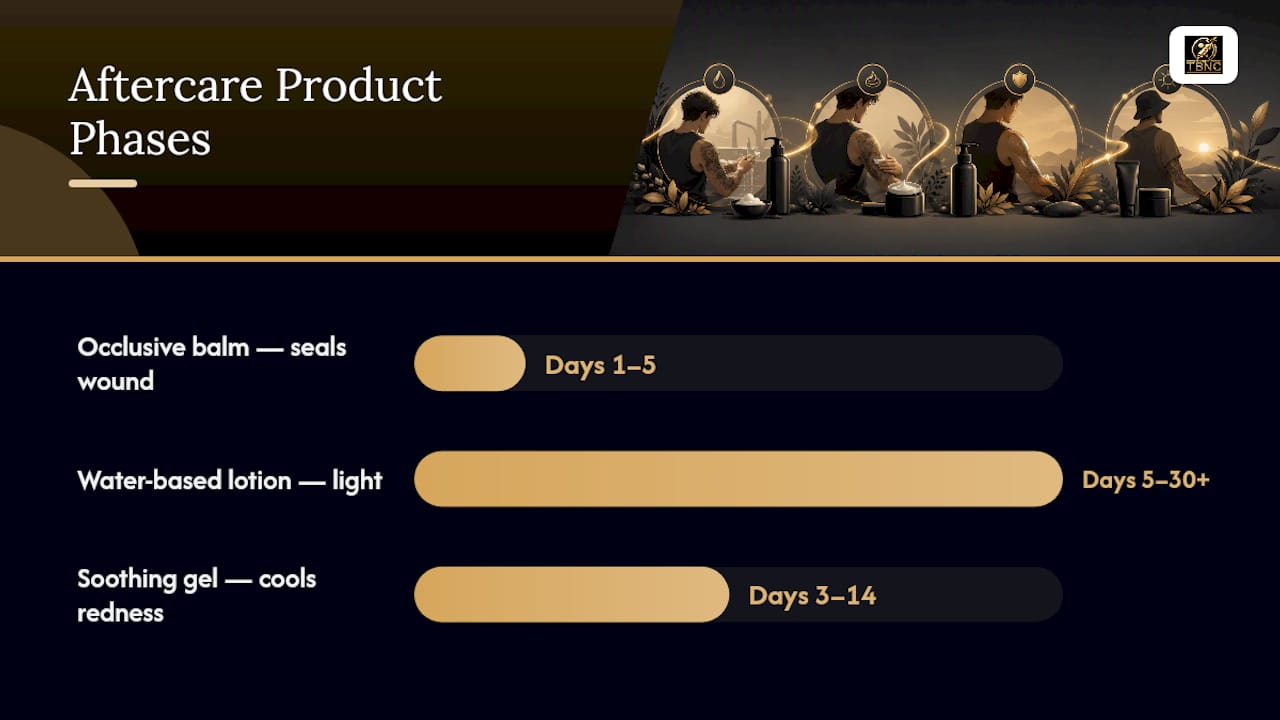
| Product Type | Best Phase | Key Benefit | What to Watch For |
|---|---|---|---|
| Occlusive balm or ointment | Days 1–5 | Seals the wound barrier, reduces moisture loss | Apply thin layer only; heavy application traps bacteria |
| Water-based fragrance-free lotion | Days 5–30+ | Lightweight hydration, won’t clog pores | Avoid formulas with fragrance, dyes, or alcohol |
| Soothing gel (aloe-based) | Days 3–14 | Cools irritation and reduces redness | Choose alcohol-free versions only |
| Broad-spectrum SPF 30+ sunscreen | After full surface healing | Prevents UV fading of ink | Apply 15 minutes before sun exposure; reapply every 2 hours |
The AAD advises using water-based lotions for dry tattooed skin and cautions against petroleum-based products, which can trap dirt and may fade ink over time. A board-certified dermatologist reporting through AAD specifically recommends water-based creams as the preferred routine moisturizer for tattooed skin.
What to avoid in product ingredients:
- Fragrances and synthetic dyes (common allergens on healing skin)
- Alcohol (drying, disrupts barrier)
- Lanolin (potential allergen for sensitive skin)
- Heavy petroleum as a daily moisturizer after the first few days
TBNC product matches by phase:
- Days 1–5: Tattoo Aftercare Balm provides the occlusive protection fresh skin needs without over-saturating the wound.
- Days 5–30+: Tattoo Aftercare Lotion (Unscented) transitions the skin to lightweight, fragrance-free hydration.
- Days 3–14 (irritation): Tattoo Soothing Gel cools inflammation and reduces redness during the itch-and-peel phase.
Pro Tip: Before committing to any new lotion on healing skin, test a small amount on your inner wrist for 24 hours. If redness or itching appears, switch products before applying it to the tattoo.
How do you know if your tattoo is infected or having a reaction?
Most discomfort in the first week is normal healing. The signs below are not.
Infection checklist — act on any of these:
- Fever or chills appearing after the tattoo session
- Pain that increases rather than decreases after day 2
- Redness that spreads beyond the tattoo border
- Yellow or green drainage (not the clear plasma of the first 24 hours)
- Foul odor from the tattooed area
- Warm, swollen skin that worsens after day 3
Allergic or delayed reactions can appear days, weeks, or even years after tattooing. Red ink is the most commonly implicated color, but any pigment can trigger a response. Signs include a persistent raised rash, unusual texture changes, or localized itching that doesn’t resolve with normal healing.
What to do if you suspect a problem:
- Stop applying any topical products that could be causing or worsening the reaction.
- Photograph the area with a timestamp — this helps your doctor track progression.
- Contact your tattoo artist to rule out a product or technique issue.
- Schedule a dermatologist appointment if symptoms persist beyond 48 hours or worsen.
- Go to urgent care or an emergency room if you develop fever, spreading redness, or systemic symptoms.
State health departments, including resources from agencies like the Florida Department of Health, note that infections can sometimes be traced to studio hygiene issues. If you suspect the studio environment was a factor, report it to your state health department.
How do you keep a tattoo looking vibrant long term?
Once the surface heals, the work isn’t over. UV exposure is the single biggest threat to ink vibrancy over time.
Long-term care habits:
- Apply a broad-spectrum, water-resistant SPF 30+ sunscreen to healed tattoos 15 minutes before sun exposure, and reapply every 2 hours during extended outdoor time.
- Avoid tanning beds entirely. UV radiation from tanning beds fades ink and damages the surrounding skin.
- Moisturize the tattooed area daily, even after full healing. Dry skin makes colors look dull and lines appear less defined.
- Avoid prolonged soaking in chlorinated pools or saltwater, which can degrade ink over time.
- Consider a touch-up if ink fades or gaps appear after the tattoo is fully healed (typically several months after the session).
The deeper dermal layers of a tattoo continue remodeling for several months after the surface looks healed. Treating the skin well during that window preserves the quality of the final result.
Ink can also mask early clinical signs of skin cancer. The AAD advises avoiding tattooing over moles and recommends dermatologic screening if a tattooed area develops suspicious changes, such as new growths, color shifts, or irregular borders.
Why does this routine work? What dermatologists say
Tattooing is controlled skin trauma. The needle punctures the epidermis and deposits ink into the dermis, creating an open wound that follows the same biological healing pathway as any other skin injury. The aftercare routine works because it supports that process at each stage.
The Cleveland Clinic frames early tattoo aftercare as first aid for a controlled wound. The primary goals are infection prevention and protecting the skin barrier to avoid scarring and ink loss. Washing removes bacteria and excess plasma before they can form a thick crust. Moisturizing maintains the barrier so the skin doesn’t crack. Avoiding sun and soaking prevents external disruption to the repair process.
The AAD’s guidance on tattooed skin reinforces this: water-based products are preferred because they hydrate without occluding the wound excessively, and sunscreen is non-negotiable for preserving ink once healed. Skin reactions to tattoos can appear immediately or years later, and a dermatologist can diagnose whether a change is an allergic reaction, infection, or an unrelated skin condition that happens to appear in the tattooed area.
When to see a dermatologist specifically:
- Any reaction that persists beyond two weeks
- Texture changes in the tattooed skin (raised, bumpy, or thickened areas)
- Suspicious color changes or new growths within or near the tattoo
- Recurring itching or rash that returns after clearing
An honest note from TBNC Tattoo
The most common mistake we see is collectors treating aftercare as optional once the tattoo stops hurting. Pain fades quickly. The healing process doesn’t. Your artist’s instructions are the first authority here, and any clinical guidance from a dermatologist overrides general advice. What we’ve built at TBNC Tattoo is a product line that fits neatly into the routine your artist already recommends, not a replacement for it.
Keep a small aftercare kit next to your bathroom sink: a gentle cleanser, your balm or lotion, and a box of paper towels. When the products are already there, the routine takes 90 seconds. That consistency is what heals tattoos cleanly.
TBNC Tattoo aftercare products that match your healing timeline
Healing a tattoo well starts with the right products at the right phase. TBNC Tattoo’s post-tattoo aftercare collection is built around exactly that logic: dermatologist-approved formulas matched to each stage of the 30-day routine.
The Tattoo Aftercare Balm is the right choice for days 1–5, providing the occlusive barrier fresh skin needs. The Tattoo Aftercare Lotion (Unscented) takes over from day 5 onward, delivering lightweight fragrance-free hydration without the heaviness that traps bacteria. The Tattoo Soothing Gel handles the itch-and-irritation window in between. For collectors who want everything in one order, the Tattoo Numbing & Aftercare Bundle pairs numbing cream with the full aftercare lineup, covering both the session and the recovery. Always follow your artist’s or clinician’s instructions if they differ from general guidance.
Sources
The guidance in this article draws from the following authoritative sources. For any skin reaction, infection concern, or unusual change in a tattooed area, consult a board-certified dermatologist.
- Tattoo Aftercare
- Tattoo Aftercare: How To Take Care of a New Tattoo
- Caring for tattooed skin
- Everything You Need to Know About Tattoo Aftercare
This article is general information, not a substitute for advice from a qualified doctor. Consult a qualified healthcare professional about your own circumstances before acting on anything here.
FAQ
What is the best aftercare for a new tattoo?
Wash the tattoo twice daily with a fragrance-free soap, pat dry, and apply a thin layer of aftercare ointment for the first 4–5 days, then switch to an unscented water-based lotion for the remainder of the healing period. Avoid sun, soaking, and picking.
What should you not do after getting a tattoo?
Avoid hydrogen peroxide, rubbing alcohol, scented products, direct sun exposure, swimming, and picking or peeling the flaking skin. These actions damage healing tissue, increase scabbing, and can pull ink out of the skin.
Is Vaseline or Aquaphor better for tattoos?
Aquaphor is generally preferred over plain Vaseline for fresh tattoos because it contains humectants that support healing, while pure petroleum jelly can be overly occlusive and may trap bacteria. The AAD cautions against petroleum-based products as a routine moisturizer, recommending water-based options instead.
What is the 1/3 rule for tattoos?
The 1/3 rule is an informal guideline used by some artists suggesting that a tattoo’s final appearance is one-third the artist’s work, one-third the healing process, and one-third long-term care. It underscores that aftercare and sun protection are as important to the final result as the session itself.
When is a tattoo fully healed?
The surface layer typically heals within 2–4 weeks, but the deeper dermal layers continue remodeling for several months. A tattoo may look finished long before it is fully healed beneath the surface.


