

Keep Tattoos Vibrant: A Fading Prevention Guide
The single most effective way to prevent tattoo fading is daily sun protection paired with consistent moisturizing and correct early aftercare. The American Academy of Dermatology recommends broad-spectrum, water-resistant SPF 30 or higher, reapplied every two hours outdoors, and a mouse-model study found simulated sunlight reduced retained ink by roughly 32% within 42 days. Start today:
- Apply broad-spectrum sunscreen with SPF 30 or higher to any fully healed tattoo before sun exposure.
- Stop using tanning beds entirely, even for a “quick base tan.”
- Switch from ointment to a fragrance-free, water-based lotion once oozing stops.
- Skip harsh exfoliants and heavy friction (tight gym straps, rough towel drying) on tattooed skin.
- Ask your artist directly about their sun-care recommendations at your next visit.
Key Takeaways
Daily broad-spectrum sunscreen combined with consistent fragrance-free moisturizing and correct early aftercare prevents most tattoo fading over a lifetime.
| Point | Details |
|---|---|
| Sunscreen is non-negotiable | Use SPF 30 to 50 on healed tattoos, reapplied every 80 to 120 minutes outdoors. |
| Fading is cumulative | Each unprotected sun exposure adds small damage that compounds over years, not days. |
| Timing matters most early on | Switch from ointment to unscented lotion once weeping stops, usually within 2 to 3 days. |
| Touch-ups are normal maintenance | Wait at least 8 to 12 weeks post-tattoo, and expect a refresh every 5 to 10 years. |
| Match products to healing stage | TBNC Tattoo’s Balm, unscented Lotion, and Butter cover healing through long-term maintenance. |
Table of Contents
- Tattoo Fading Prevention Checklist You Can Follow Today
- What Should You Do in the First 12 Weeks After Getting Inked?
- How Do Daily Habits Keep a Tattoo Vibrant for Decades?
- Why Do Tattoos Fade, and How Do You Fix It?
- Which TBNC Tattoo Products Support Each Healing Stage?
- Does What You Eat and Drink Affect How Your Tattoo Looks?
- How Does Aging Skin Change the Way Tattoos Look?
- What Most Guides Get Wrong About Fading Prevention
- Get Aftercare Built for Every Healing Stage
- Sources
- FAQ
Tattoo Fading Prevention Checklist You Can Follow Today
Print this, save it, tape it to your bathroom mirror. It’s the shortest path to keeping color saturated for decades instead of years.
- Sunscreen first, always. Use broad-spectrum mineral sunscreen with SPF 30 or higher on healed tattoos, applied 15 to 30 minutes before sun exposure and reapplied every 80 to 120 minutes outdoors.
- Carry portable SPF. A stick or spray in your bag means no excuse when you’re caught outside longer than planned.
- Moisturize daily with water-based, fragrance-free lotion. Reserve thicker balm for extra-dry patches or climates that strip moisture fast.
- Never use tanning beds. There’s no safe exposure level for tattooed skin under artificial UV.
- Avoid aggressive exfoliation and prolonged sauna heat directly over fresh or sensitive ink.
- Cover up for long outdoor stretches with loose clothing instead of relying on sunscreen alone.
- Call your artist if you notice unusual discharge, spreading redness, or a rash that doesn’t fade within a few days.
Pro Tip: Keep a travel-size sunscreen in your car and one in your bag. The tattoos that fade fastest usually belong to people who own great sunscreen and simply forget to carry it.
What Should You Do in the First 12 Weeks After Getting Inked?
The habits you build in the first three months determine how your tattoo ages for the next thirty years. Get this window right and everything downstream gets easier.
Hours 0 to 72: Wash gently with mild fragrance-free soap and lukewarm water two to three times daily, pat dry with a clean paper towel, and apply a thin layer of the ointment your artist recommends. Never soak the area in a bath, pool, or hot tub.
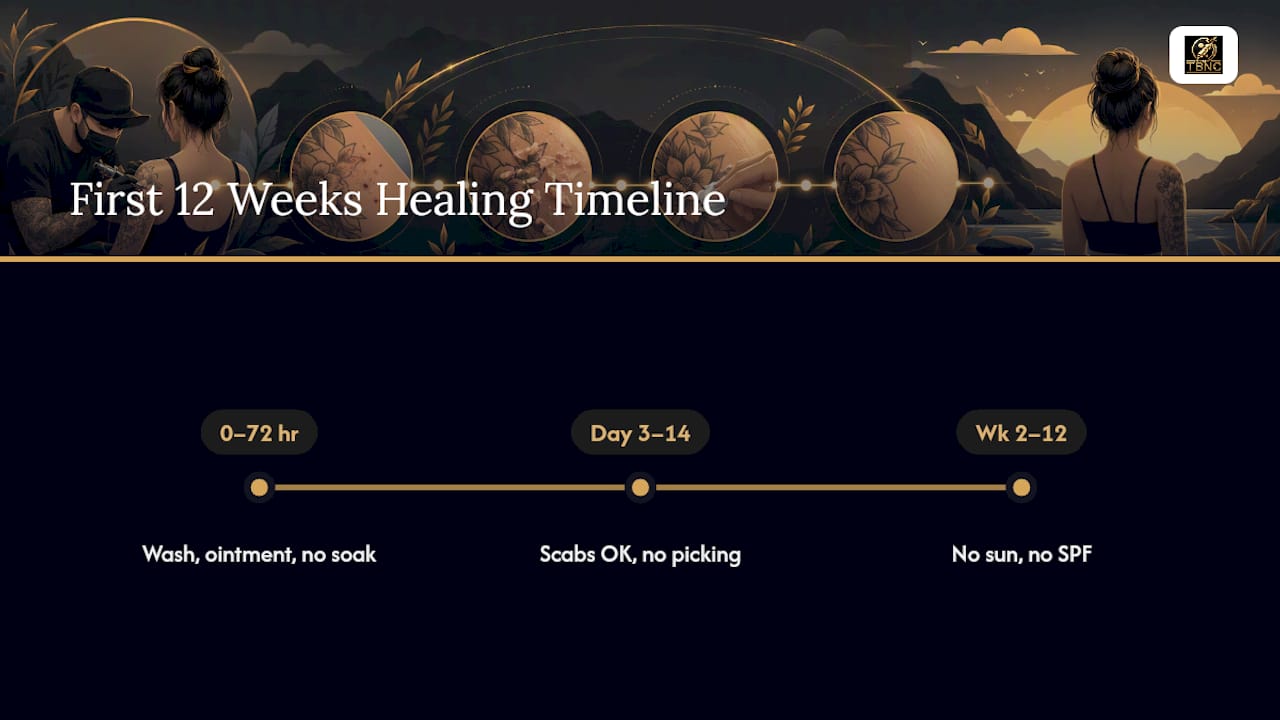
Days 3 to 14: Scabbing and light peeling are normal; resist picking. Once active weeping stops, usually around day two or three, dermatology guidance discourages continued heavy petroleum use, since prolonged occlusion can trap moisture and correlate with patchy pigment loss. Switch to a thin layer of unscented lotion instead.
Weeks 2 to 12: Keep the area out of direct sun and skip sunscreen entirely until the skin is fully healed, since SPF products on open or peeling skin can irritate rather than protect. Hold off on retinol or chemical exfoliants over the tattoo for at least three months.
Contact your artist if redness spreads, discharge looks unusual, or healing feels off. Most reputable studios recommend waiting at least 8 to 12 weeks before considering a touch-up, giving pigment time to fully settle.
How Do Daily Habits Keep a Tattoo Vibrant for Decades?
Long term tattoo care is less about any single product and more about what you repeat, unthinkingly, for years. Sunscreen is the anchor habit. Broad-spectrum SPF 30 to 50, mineral formulas preferred for color stability, reapplied every 80 to 120 minutes in direct sun and immediately after swimming or heavy sweating. Fading compounds cumulatively: every unprotected afternoon adds a small dose of photochemical damage that stacks with the next, which is why a daily habit beats occasional diligence by a wide margin.
Moisturizing runs a close second. Water-based, unscented lotions work for daily maintenance; heavier balms earn their place when skin runs dry, in winter, or over areas like elbows and shins that lose moisture fast. Apply after showering and again before bed.
Some exposures deserve permanent avoidance rather than moderation. Tanning beds have no safe threshold for tattooed skin. Frequent chlorinated-pool soaking without rinsing afterward dries and irritates pigment-bearing skin over time. Areas under constant friction, like waistbands or watch straps, fade faster regardless of sunscreen use.
On actives: avoid retinoids and AHAs over tattooed skin until fully healed, and even then, introduce them cautiously with a spot test on a small area first, since some collectors find these ingredients dull saturation over repeated use.
Pro Tip: If you smoke, quitting does more for tattoo longevity than most skincare products combined; nicotine constricts circulation, which slows the skin renewal that keeps pigment looking sharp. Staying hydrated and keeping your weight stable also helps protect detailed linework from stretch-related distortion.
Why Do Tattoos Fade, and How Do You Fix It?
Pigment doesn’t just sit still under your skin. Macrophages, the immune cells that first swallow tattoo ink during healing, engage in an ongoing cycle researchers describe as capture, release, and recapture.2025.4072), redistributing pigment particles slightly deeper into the dermis over years. That’s part of why even perfectly healed tattoos soften gradually, independent of anything you do wrong.
Run through this diagnostic if fading feels premature:
- Sun history: Unprotected exposure is the most common accelerant, and UV measurably breaks down retained ink.
- Healing behavior: Early scab loss or aggressive picking removes pigment before it settles.
- Location: High-friction or high-flex areas like palms, soles, and inner wrists fade faster than torso or upper arm placements.
- Lifestyle: Smoking and frequent unrinsed chlorine exposure both accelerate visible dulling.
Fixes are usually straightforward: reinstate consistent SPF and moisturizing immediately, and schedule a touch-up once you’ve passed the 8 to 12 week healing minimum. See a dermatologist if you notice raised, itchy, or unusually colored patches that don’t resolve. Genuine deep fading from age or sun damage often responds well to a touch-up; only significant pigment migration or unwanted ink typically calls for laser removal instead.
Which TBNC Tattoo Products Support Each Healing Stage?
Matching the product to the stage matters more than picking a single “best” option. TBNC Tattoo’s aftercare line is built around exactly that progression, formulated to dermatologist-aligned standards and used across more than 3,250 tattoo studios worldwide.
- Tattoo Aftercare Balm works best during the healing stage, once initial weeping has stopped, offering a thicker protective layer for scabbing and peeling skin.
- Tattoo Aftercare Lotion - Unscented is the daily maintenance workhorse for fully healed tattoos, lightweight enough for year-round use without clogging pores or adding fragrance irritants.
- Tattoo Butter earns its place in dry climates or on stubborn areas like elbows and shins that need deeper hydration than lotion alone provides.
The typical progression: balm for the first one to two weeks while skin is still actively healing, then a transition to unscented lotion as your everyday habit, reserving butter for seasonal dryness or extra-thirsty skin. For exact application steps, TBNC’s aftercare balm guide walks through frequency and layering in detail.
Does What You Eat and Drink Affect How Your Tattoo Looks?
Skin health starts from the inside, and tattooed skin is no exception. Well-hydrated skin holds pigment closer to the surface and looks more saturated; dehydrated skin turns dry, flaky, and dull, which makes even a well-healed tattoo look faded even when the ink itself hasn’t changed. Drinking enough water daily keeps skin cells plump and the epidermis smooth, which matters because pigment sits just below that surface layer.

Diet plays a supporting role too. Skin repairs itself constantly, and that repair process depends on protein for collagen production, vitamin C for wound healing, and healthy fats for cell membrane integrity. A diet consistently low in these building blocks tends to show up as slower healing after a fresh tattoo and, over years, in skin that looks thinner and less resilient overall.
Alcohol and excess sodium work against you in smaller, more immediate ways. Both promote water retention and dehydration cycles that leave skin looking puffy one day and dry the next, an inconsistency that makes color and contrast harder to judge accurately during the critical early healing window. If you’re getting a large piece, cutting back on alcohol for a few days before and after your session isn’t just about pain tolerance. It supports the kind of stable, well-hydrated healing environment that lets pigment settle evenly instead of unevenly.
None of this replaces sunscreen or lotion as your primary defense. It’s the quieter half of the equation that compounds right alongside your topical routine.
How Does Aging Skin Change the Way Tattoos Look?
Skin loses collagen and elastin as you age, and that shift changes how ink sits and reads on the surface regardless of how well you’ve cared for it. Thinner, less elastic skin scatters light differently, which can make even perfectly preserved pigment look softer or slightly blurred compared to how it looked at year one. Fine linework is usually the first style to show this, since it depends on crisp edges that blur as surrounding skin loses firmness.
Sun damage accumulated over decades compounds this effect. Skin that’s absorbed years of UV exposure develops changes in texture and pigmentation independent of the tattoo itself, and that background aging can make surrounding skin tone shift in ways that alter how the tattoo’s colors read against it.
You can’t stop skin from aging, but you can slow how much it affects your ink. Decades of consistent sunscreen use is the single biggest lever, since it limits the collagen breakdown that UV exposure accelerates. Keeping skin well moisturized supports elasticity longer, and maintaining stable body weight avoids the stretch-related distortion that comes with significant gain or loss over tattooed areas. For long-held pieces, a touch-up every 5 to 10 years is a normal part of ownership. Most fading visible at that stage is preventable with the sun protection and moisturizing habits already covered here, and touch-ups simply refresh what sun and time have gradually softened.
What Most Guides Get Wrong About Fading Prevention
Most tattoo aftercare content treats fading prevention like a one-time event: heal it right in the first two weeks, then move on. That framing undersells the problem. The peer-reviewed evidence on UV-driven pigment breakdown and macrophage redistribution both point to fading as a cumulative process that keeps running for the life of the tattoo, not something you finish and forget.
The overrated advice is obsessing over which specific ointment to use during the first 72 hours. That choice matters, but it’s a small variable compared to whether you’re still applying sunscreen consistently five years later. The underrated habit is the boring one: a daily, unglamorous moisturizing and SPF routine that doesn’t stop when the tattoo looks healed.
If you take one thing from this guide, prioritize consistency over intensity. A moderate SPF habit followed every single day beats an aggressive one you abandon after month two. That’s not the answer people want when they’re shopping for tattoo maintenance techniques, but it’s the one the evidence actually supports.
— The Best Numbing Cream
Get Aftercare Built for Every Healing Stage
Most people patch together aftercare from whatever’s already in their bathroom cabinet, mixing scented body lotion with leftover ointment and hoping for the best. TBNC Tattoo built its aftercare line specifically to avoid that guesswork, with a Balm, an unscented Lotion, and a Butter designed to match each stage of healing rather than force one product to do every job. The formulas are dermatologist-approved and already trusted across more than 3,250 studios and one million tattoo sessions, so you’re using the same products professional artists recommend to their own clients.
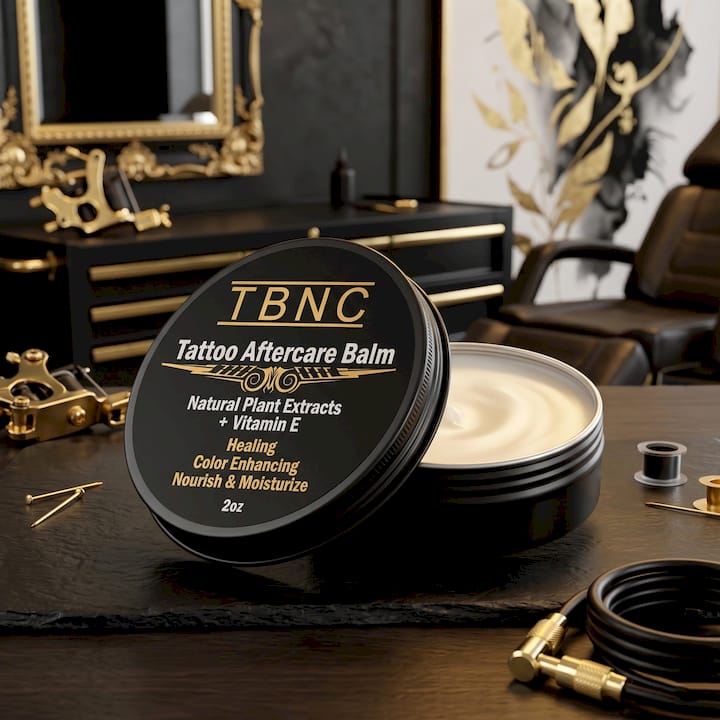
If you’re mid-healing right now, start with the Tattoo Aftercare Balm for protection while scabbing settles, then browse the full aftercare and healing collection to build out your daily lotion and butter routine before your next session.
Sources
- Caring for tattooed skin (American Academy of Dermatology)
- Tattoo ink nanoparticles in skin tissue and fibroblasts - PMC
- How To Stop A Tattoo From Fading - Shallows
FAQ
How Long Will a Tattoo Last Before Fading?
Tattoos begin fading gradually within a few years even with good care, since pigment naturally redistributes deeper into the skin over time. Consistent sunscreen and moisturizing slow this dramatically, and most people don’t notice significant fading for 5 to 10 years with proper care.
Can You Reverse Tattoo Fading?
You can’t fully reverse fading, but a touch-up after at least 8 to 12 weeks of healing effectively refreshes softened color and restores contrast. TBNC Tattoo’s aftercare products support the skin condition that makes touch-up results last longer.
Why Are My Tattoos Fading So Fast?
Rapid fading usually traces back to unprotected sun exposure, tanning bed use, early scab picking, or aggressive exfoliation over the tattooed area. Location also matters, since high-friction spots like palms and soles fade faster than the torso or upper arm.
My Tattoo Has Faded After 2 Weeks. Is This Normal?
Some initial dulling at 2 weeks is normal since peeling skin can look hazy before it fully sheds. If the ink looks patchy or unevenly light rather than uniformly dull, contact your artist to rule out early scab loss during healing.


