

Tattoo Infection Signs: How to Tell If You're Infected
If your tattoo shows spreading redness, thick yellow or green pus, escalating pain, red streaks radiating outward, or fever and chills, treat it as infected and seek medical care now. These are not normal healing responses. They are red flags for a spreading infection that can escalate to cellulitis or sepsis if ignored.
Scan this checklist first:
- Redness that is growing beyond the tattoo’s edge after day 3
- Discharge that is thick, yellow, green, or foul-smelling
- Skin that feels hot to the touch and increasingly painful
- Red streaks extending from the tattoo site
- Fever above 100.4°F, chills, or body aches
- Swollen lymph nodes near the tattoo
What to do right now:
- Stop applying heavy ointments or plastic wrap, which can trap bacteria
- Gently rinse the area with clean water and mild soap
- Do not squeeze or lance any pus
- Contact a primary care provider or urgent care clinic; go to the ER if you have fever, red streaks, or feel systemically unwell
- Photograph the tattoo and note when symptoms started, then inform your tattoo artist
Pro Tip: Draw a thin line around the outer edge of the redness with a skin-safe marker. If the redness crosses that line within a few hours, you have visible evidence of spreading infection to show your clinician.
Key Takeaways
Spreading redness, thick pus, red streaks, or fever after a tattoo are infection signs that require prompt medical evaluation, not home treatment.
| Point | Details |
|---|---|
| Top red flags | Spreading redness past the tattoo border, thick yellow/green pus, red streaks, and fever above 100.4°F all signal infection. |
| Healing vs. infection timeline | Normal redness and soreness fade by day 3–5; symptoms that worsen after the first week are abnormal and warrant clinical evaluation. |
| Treatment duration | Antibiotic courses vary from a short duration for minor infections to several weeks for deeper or atypical infections. |
| Seek emergency care | Fever, red streaks (lymphangitis), or feeling systemically unwell require an ER visit, not a wait-and-see approach. |
| TBNC Tattoo aftercare | Fragrance-free foaming soap, unscented lotion, and balm support the skin barrier during normal healing as an adjunct to medical care. |
This article is general information, not a substitute for advice from a qualified doctor. Consult a qualified healthcare professional about your own circumstances before acting on anything here.
Table of Contents
- What is a tattoo infection and how does it happen?
- Tattoo infection signs vs. normal healing: what’s the difference?
- Why do tattoo infections happen and who is at higher risk?
- How clinicians diagnose and treat tattoo infections
- Practical aftercare steps that reduce your infection risk
- What happens if a tattoo infection goes untreated?
- Common myths and home remedies that make infections worse
- What the clinical research actually shows
- A note from TBNC Tattoo
- TBNC Tattoo aftercare products that support safe healing
- Sources
- FAQ
What is a tattoo infection and how does it happen?
A tattoo infection is the microbial invasion of the open wound created by tattooing, producing local or systemic signs of illness. The needle punctures skin thousands of times per session, and any break in sterile technique or aftercare creates an entry point for pathogens.
Common infection types and their typical timing:
- Superficial bacterial infections (impetigo, folliculitis): appear within days 2–7
- Cellulitis: a deeper skin infection that can spread rapidly, often within the first two weeks
- Abscesses: localized pus pockets that may require drainage, typically days 5–14
- Atypical mycobacterial infections: linked to contaminated tattoo ink or nonsterile water used to dilute ink; can appear days to weeks after tattooing and are notoriously hard to diagnose
- Systemic spread: rare but life-threatening, including bacteremia and endocarditis
Staphylococci and streptococci are the most common bacterial culprits, though MRSA, gram-negative organisms, and fungi have all been documented.
The mechanism is straightforward but easy to underestimate: a tattoo is an open wound for days. Contaminated ink, nonsterile equipment, unclean water, or a lapse in aftercare can introduce pathogens directly into the dermis, bypassing the skin’s primary barrier entirely.
Tattoo infection signs vs. normal healing: what’s the difference?
Most collectors experience some redness, swelling, and tenderness in the first 48–72 hours. That is the body’s normal inflammatory response. The problem is that early infection can look almost identical. The difference shows up in the direction things move after day 3.
| Feature | Normal Healing | Infected Tattoo |
|---|---|---|
| Redness | Mild, confined to tattoo edge, fades by day 3–5 | Spreading beyond the tattoo border, worsening after day 3 |
| Pain | Tender, dull soreness that improves daily | Throbbing, intensifying, or returning after initial improvement |
| Discharge | Clear or slightly cloudy plasma (normal weeping) | Thick yellow, green, or foul-smelling pus |
| Heat | Mild warmth in first 48 hours | Skin hot to the touch beyond day 3 |
| Swelling | Localized, subsides within a few days | Expanding, firm, or fluctuant (fluid-filled) |
| Scabbing | Thin, flat, even scabs that peel naturally | Raised, crusty, or weeping scabs with surrounding inflammation |
| Lymph nodes | Not typically affected | Tender, swollen nodes near the tattoo site |
| Systemic symptoms | None | Fever, chills, fatigue, body aches |
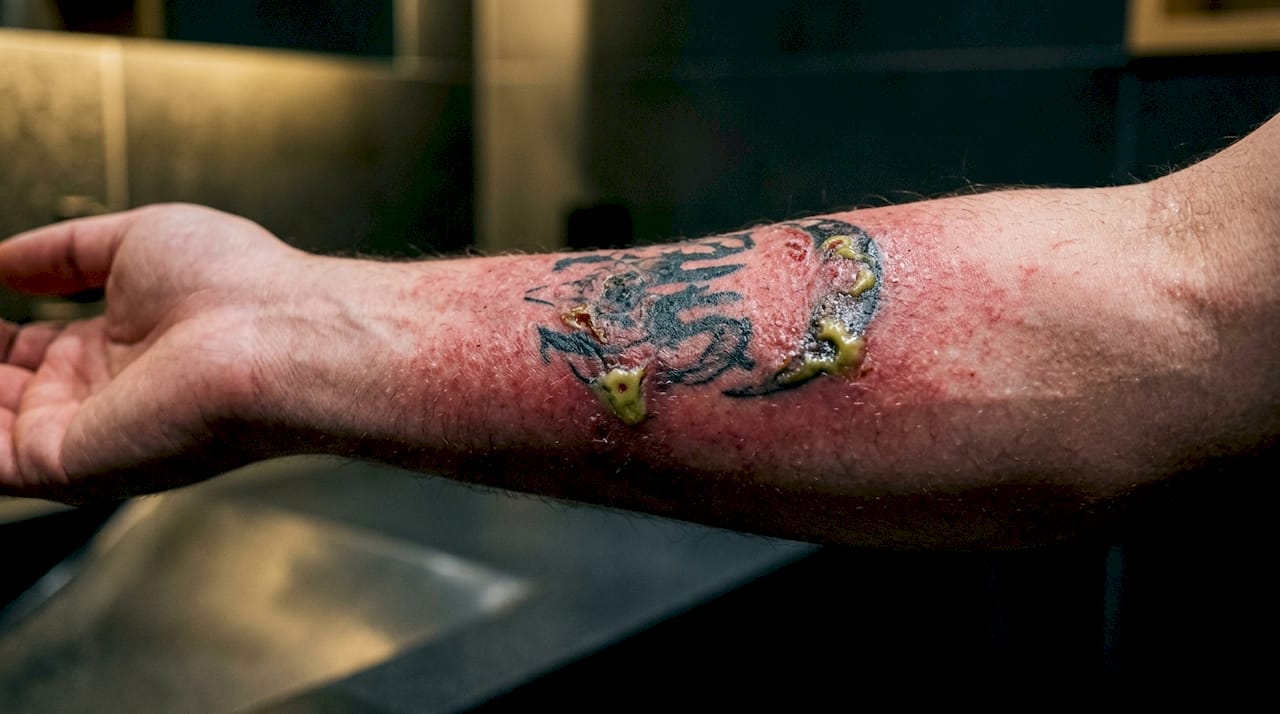
Symptoms that worsen after the first week, or that include spreading redness or red streaks, are strong indicators of infection rather than normal healing. Itching alone during days 5–14 is almost always benign peeling. Throbbing pain paired with heat and discharge is not.
Signs that demand same-day medical attention:
- Red streaks (lymphangitis) extending from the tattoo toward the body
- Fever of 100.4°F or higher
- Pus that is thick, colored, or odorous
- Redness expanding visibly over hours
Pro Tip: Check the tattoo in good lighting every morning. Take a photo with a ruler or coin for scale. A side-by-side comparison from day to day tells you more than memory alone.
Why do tattoo infections happen and who is at higher risk?
Infections don’t happen randomly. They follow predictable patterns tied to contamination sources and individual risk factors.
Contamination sources:
- Tattoo ink that was not sterile at manufacture or was diluted with nonsterile water
- Unsterilized needles or equipment (autoclave failures, reused single-use items)
- Artist or studio hygiene lapses (no gloves, contaminated surfaces)
- Certain inks recalled by the FDA due to contamination or unsafe formulations
- Nonsterile water used to rinse the skin during or after tattooing
Host risk factors that raise your personal odds:
- Diabetes or other conditions that impair wound healing
- Immunosuppression (chemotherapy, HIV, organ transplant medications)
- Chronic skin conditions like eczema or psoriasis that compromise the barrier
- Recent or current antibiotic use, which can shift skin flora toward resistant organisms
- Smoking, which reduces blood flow and slows healing
- Tattoo placement in areas with poor circulation (lower legs, feet)
Behavioral risks:
- Skipping or rushing aftercare in the first two weeks
- Soaking in pools, hot tubs, lakes, or the ocean before the tattoo is fully healed
- Picking or scratching scabs, which reopens the wound
- Using unregulated or uncertified inks purchased online
How clinicians diagnose and treat tattoo infections
Walk into an urgent care or primary care clinic with a suspected tattoo infection and here is what typically happens.
Diagnosis:
The clinician will examine the tattoo, assess the extent of redness, check for fluctuance (a sign of abscess), and ask about your timeline, aftercare, and systemic symptoms. For straightforward superficial infections, a clinical exam is usually enough. For unusual presentations, failed initial antibiotic therapy, or suspected atypical pathogens, a wound swab, culture, or even a skin biopsy may be ordered. Atypical mycobacterial infections in particular often require specialized culture media and can take weeks to grow, making early suspicion critical.
Treatment pathways:
- Oral antibiotics for superficial bacterial infections (cellulitis without systemic signs, mild abscesses post-drainage). Empiric choices typically target staphylococci and streptococci.
- IV antibiotics for severe cellulitis, rapidly spreading infection, or any systemic signs (fever, elevated white cell count, hemodynamic changes).
- Incision and drainage for abscesses. Antibiotics alone rarely resolve a walled-off pus collection.
- Specialist referral for atypical mycobacterial or fungal infections, which require targeted, prolonged therapy.
- Surgical debridement in rare cases of necrotizing infection or deep tissue involvement.
Treatment courses range from roughly one week for minor infections up to six weeks for deeper or atypical infections. Completing the full prescribed course matters. Stopping antibiotics early is one of the fastest ways to create a resistant, recurrent infection.
Key clinical point: there is no reliable DIY cure for a true tattoo infection. Home remedies can mask symptoms and delay the diagnosis that targeted antibiotics require.
Practical aftercare steps that reduce your infection risk
The best infected tattoo treatment is the one you never need. A consistent, clinician-friendly aftercare routine cuts your risk substantially.
- Clean gently, twice daily. Use a gentle tattoo foaming soap or a fragrance-free antibacterial soap. Lather with clean hands, rinse with lukewarm water, and pat dry with a clean paper towel. Never scrub.
- Moisturize lightly. Apply a thin layer of unscented lotion or balm after each cleaning. Thick layers of ointment trap moisture and bacteria. Less is more.
- Keep it covered only as directed. Follow your artist’s specific wrap instructions. Most modern artists use breathable second-skin bandages for the first 24–48 hours, then leave the tattoo open to air.
- Stay out of water. No pools, hot tubs, lakes, or long baths until the tattoo is fully healed, typically 2–4 weeks for the surface layer.
- Protect from sun. UV exposure degrades healing skin and can cause pigment reactions that mimic infection. Keep it covered or use SPF 50+ once healed.
- Don’t scratch or pick. Itching during peeling is normal. Breaking the scab is not.
Pro Tip: TBNC Tattoo’s Tattoo Aftercare Lotion (Unscented) and Tattoo Aftercare Balm are formulated without fragrances or harsh additives, making them a solid fit for the light-moisturizing step above. Fragrance is one of the most common irritants in the first two weeks, so unscented matters more than most collectors realize.
When to contact your artist vs. when to call a doctor:
- Contact your artist if you have questions about normal peeling, ink color changes, or the wrap schedule
- Call a clinician if you see spreading redness, pus, red streaks, or develop a fever
For a deeper look at daily routines and common mistakes, the TBNC tattoo aftercare guide covers product selection and timing in detail.
What happens if a tattoo infection goes untreated?
Delayed care is where a manageable skin infection becomes a serious medical event. The progression is not theoretical.
Local complications:
- Abscess formation: a walled-off pocket of pus that requires drainage and often leaves a scar
- Permanent scarring or pigment loss: deep infections destroy dermis and the ink within it
- Chronic wound: some infections, particularly mycobacterial, persist for months without targeted therapy
Systemic complications:
- Cellulitis: a rapidly spreading bacterial skin infection that can cover large body areas within hours
- Bacteremia: bacteria entering the bloodstream, producing fever, rigors, and organ stress
- Sepsis: a dysregulated, life-threatening immune response to infection. Tattoo-associated sepsis is documented and requires emergency care
- Endocarditis: rare but reported, particularly in people with pre-existing heart valve abnormalities
Any fever, red streaks, or rapid worsening of local signs warrants an ER visit, not a wait-and-see approach.
Common myths and home remedies that make infections worse
Rolling the dice on a home remedy when you have a genuine infection is one of the riskier decisions a collector can make. Here is what to avoid.
Harmful remedies to skip:
- Hot compresses: heat increases blood flow to the area, which can accelerate bacterial spread and drive pus deeper rather than drawing it out
- Unprescribed topical antibiotics (e.g., triple antibiotic ointment) without medical advice: these can mask symptoms, select for resistant organisms, and cause contact dermatitis that mimics or worsens infection
- Topical steroid creams without a prescription: steroids suppress the immune response locally, potentially allowing infection to deepen silently
- Household antiseptics (hydrogen peroxide, rubbing alcohol, iodine): these damage new skin cells and delay healing without reliably clearing a true infection
- Toothpaste or home poultices: no clinical basis, high contamination risk
Why heavy ointment and plastic wrap backfire:
Sealing an infected wound with a thick occlusive layer traps bacteria in a warm, moist environment. It also prevents the clinician from seeing the true extent of redness and discharge, which delays accurate diagnosis.
The harder truth: many people who “treat” a tattoo infection at home are actually treating normal healing inflammation. When a real infection is present, that delay costs days of antibiotic therapy and increases the risk of scarring, abscess, and systemic spread.
Additional risks:
- Using nonsterile tap water or pool water to rinse a fresh tattoo
- Purchasing uncertified inks from unregulated online vendors, which have been the source of documented outbreak clusters
- Assuming itching alone means infection. Itching during peeling is almost always benign; throbbing pain and discharge are not.
What the clinical research actually shows
The evidence on tattoo infections is more specific than most general health articles suggest.
Antibiotic treatment duration varies widely. Minor superficial infections may resolve with a short oral antibiotic course, while deeper infections or those caused by atypical pathogens can require therapy lasting several weeks. The Cleveland Clinic notes treatment courses ranging from approximately one week up to six weeks depending on infection depth and organism.
Key findings from clinical and public-health sources:
- Nontuberculous mycobacterial outbreaks traced to contaminated ink have been documented in the peer-reviewed literature. These infections often present as red papules localized to specific ink colors (commonly gray or black), require specialized cultures or biopsy for diagnosis, and may need prolonged macrolide-based therapy.
- MRSA and other bacterial outbreaks have followed nonprofessional tattooing, with presentations including pustules, cellulitis, and abscesses requiring surgical drainage.
- The FDA has issued advisories and recalls for specific tattoo inks found to carry contamination or unsafe formulations, underscoring that the risk starts before the needle touches skin.
When a swab or biopsy is necessary:
Standard wound cultures work well for common bacteria. Atypical mycobacteria and fungi require specialized media and longer incubation. If your infection does not respond to a first antibiotic course, push for culture-guided therapy and, if needed, an infectious disease or dermatology consult.
A note from TBNC Tattoo
At TBNC Tattoo, we work with over 3,250 studios and have supported more than one million tattoo sessions. That experience has taught us one thing clearly: the aftercare window is where most infections either happen or get prevented. We build our products around that reality, using dermatologist-approved formulations without fragrances or harsh additives. But we are an aftercare brand, not a medical provider. If you see spreading redness, pus, red streaks, or develop a fever, the right first call is to a clinician, not a product page. Keep your artist informed, document your symptoms, and use clinically appropriate aftercare as an adjunct to medical care, never as a substitute for it.
TBNC Tattoo aftercare products that support safe healing
Proper aftercare is the single most controllable variable in your infection risk. TBNC Tattoo’s line is built for exactly this window: dermatologist-approved, fragrance-free, and designed to support the skin barrier without occluding the wound.

The Tattoo Aftercare Bundle pairs the foaming soap with the unscented lotion and balm, covering every step of the daily cleaning and moisturizing routine. For collectors who want a complete kit from session day through full healing, the Tattoo Numbing & Aftercare Bundle adds lidocaine numbing cream to the aftercare essentials. Individual products, including the Tattoo Aftercare Lotion (Unscented), are available separately for those who already have part of their routine covered.
Important: TBNC Tattoo aftercare products support normal healing and help maintain the skin barrier. They do not treat infections. If you have signs of infection, see a clinician first. Use aftercare products only once your provider confirms the wound is appropriate for standard moisturizing care.
Browse the full post-tattoo aftercare collection to find the right fit for your healing stage.
Sources
- Tattoo infection — Cleveland Clinic
- Signs your tattoo might be infected — UPMC Share
- Nontuberculous mycobacterial infections linked to tattoo ink — NEJM
- Tattoo-related skin infections and outbreaks — PMC (open access)
- Tattoos & body piercings — Sepsis Alliance
- Microbial causes and clinical consequences of skin infections — ASM Journals
- MRSA — CDC
FAQ
Is my tattoo infected or just dry and peeling?
Dryness and peeling are normal between days 5 and 14 and usually come with mild itching but no pain increase. Infection produces throbbing pain, heat, spreading redness, or discharge, and symptoms worsen rather than improve day over day.
How do you treat an infected tattoo yourself?
You cannot reliably treat a true tattoo infection at home. Gently clean the area and stop applying heavy ointments, then see a clinician for a proper diagnosis. Prescription antibiotics are typically required, and home remedies can mask symptoms and delay care.
What will urgent care do for an infected tattoo?
An urgent care provider will examine the tattoo, assess how far the redness has spread, and determine whether you need oral antibiotics, drainage, or a referral. They may swab the wound if the presentation is unusual or if a first antibiotic course has already failed.
How do I know if my body is rejecting the tattoo ink?
Ink rejection, more accurately described as an allergic reaction, tends to produce chronic itching, raised or bumpy skin, and redness localized to specific ink colors, often appearing weeks or months after tattooing. Infections are typically acute, painful, and occur within the first two weeks, with discharge and spreading redness that allergic reactions do not produce.
When should I go to the ER for a tattoo infection?
Go to the ER if you have a fever above 100.4°F, red streaks extending from the tattoo, rapidly spreading redness, or feel systemically unwell with chills or confusion. These signs suggest the infection has moved beyond the skin and requires immediate evaluation.


