

Tattoo Itching Relief: Stop the Itch, Save Your Ink
Cold compresses, fragrance-free moisturizer, and clean hands are your fastest path to tattoo itching relief right now. Here is what to do in the next 30–60 minutes:
- Wrap a few ice cubes in a clean cloth or use a chilled gel pack. Hold it near (not directly on) the tattooed skin for 10–15 minutes.
- Wash your hands thoroughly before touching the area.
- Cleanse the tattoo gently with a fragrance-free foaming soap, then pat dry with a clean paper towel.
- Apply a thin layer of unscented, fragrance-free moisturizer or a dedicated aftercare lotion like TBNC Tattoo’s unscented aftercare lotion.
- Resist scratching or picking at any scabs, no matter how intense the urge feels.
Seek care immediately if you notice pus, a fever, spreading redness beyond the tattoo border, or severe swelling. Those are infection red flags, not normal healing signs.
Table of Contents
- Why tattoos itch during healing
- Common causes of tattoo itch: normal healing vs. something more serious
- How long tattoo itching usually lasts
- Safe at-home steps to stop tattoo itching now
- Over-the-counter and medical options for itchy tattoos
- Why older, healed tattoos itch and what dermatologists do about it
- What dermatologists and authoritative sources say about tattoo itch
- Key Takeaways
- The itch nobody warns you about
- TBNC Tattoo aftercare products built for healing skin
- Authoritative sources and further reading
- FAQ
Why tattoos itch during healing
Itching is almost always part of your body’s normal repair process, not a sign something has gone wrong. When a needle breaks the skin thousands of times, your immune system responds by sending mast cells to the area. Those mast cells release histamine, the same chemical behind hive reactions, and that histamine surge during scarring is what drives the intense itch you feel in the days after your session.
At the same time, your epidermis is regenerating. New skin cells push upward, the outer layer tightens and peels, and scabs form over the deeper dermis where ink sits. That combination of cellular activity, tightening skin, and scab formation creates a persistent, sometimes maddening itch that is genuinely hard to ignore.
“Histamine release during the scarring process causes itchiness similar to hives. Tattoos are areas of skin more prone to reactivity because ink particles sit between skin cells.” — Board-certified dermatologist, as cited by Allure
Understanding this biology matters for one practical reason: scratching disrupts both the scab and the ink beneath it. Pulling a scab early can drag pigment out of the dermis, leaving patchy, faded spots in your finished piece.
Common causes of tattoo itch: normal healing vs. something more serious
Not every itch has the same origin, and the cause determines the right response. Here is how the most common causes compare:
| Cause | What it looks like | Red flags? |
|---|---|---|
| Normal healing | Mild, diffuse itch; peeling skin; slight redness | None — expected |
| Dry skin | Tight, flaky skin around the tattoo | None if no swelling |
| Friction/clothing | Itch localized where fabric rubs | Mild irritation only |
| Allergic reaction to pigment | Raised, itchy area over a specific ink color (often red) | Persistent swelling, raised texture |
| Infection | Increasing redness, warmth, pus, or fever | Yes — seek care |
| Eczema/psoriasis flare | Scaly, inflamed patches on or near the tattoo | Consult a clinician |
The most common scenario is simple: dry, healing skin that needs moisture. Clothing friction, especially from tight waistbands or bra straps over fresh ink, adds mechanical irritation on top of the biological itch. Allergic reactions to pigment are less common but worth knowing about, particularly with red, yellow, and certain blue inks that contain metal salts. Infection is the scenario that demands immediate action, not home remedies.
One rule applies across all causes: do not scratch, and do not pick scabs. Broken skin invites bacteria, and disturbed scabs mean uneven pigment retention.
How long tattoo itching usually lasts
For a new tattoo, most itching peaks between days 3 and 7, when peeling and scabbing are at their most active. Normal healing itch typically resolves within 1–2 weeks as the surface skin closes and the scab naturally sloughs off.
Healing timeline at a glance: Surface skin usually closes by week 2. Deeper dermal layers continue healing for up to 3–4 months, though the itch is generally gone well before that.
Full surface healing takes roughly 2–3 weeks for most people, though larger pieces or areas with dense shading can run longer. The deeper dermis continues remodeling for months, but you will not feel that process as itch.
Older tattoos are a different story. A healed tattoo that suddenly becomes itchy, raised, or scaly months or years later is not a healing issue. Delayed pigment reactions, environmental triggers like sun exposure or dry winter air, and systemic conditions like sarcoidosis can all reactivate itch in long-settled ink. That kind of delayed reaction warrants a dermatologist visit, not just more lotion.

Safe at-home steps to stop tattoo itching now
The single best immediate action is a controlled cold compress: wrap a clean cloth around a gel pack or a few ice cubes, and hold it close to (not pressed against) the tattooed skin. Cold constricts blood vessels, temporarily reduces histamine activity, and gives the itch a competing sensation to focus on. Specialist guidance confirms that a wrapped compress, not bare ice, is the safe approach; direct ice can damage fragile healing skin.
Your 24–72 hour aftercare routine:
- Wash hands before every touch.
- Cleanse the tattoo 2–3 times daily with a gentle, fragrance-free tattoo foaming soap. Use lukewarm water and light circular motions with clean fingertips.
- Pat dry with a fresh paper towel. Never rub.
- Apply a thin layer of unscented aftercare lotion or TBNC Tattoo’s Aftercare Balm over dry or scabby patches. Thin is the operative word: a thick layer traps moisture and can soften scabs prematurely.
- Wear loose, breathable cotton over the area. Synthetic fabrics trap heat and increase friction.
- Repeat moisturizing 2–3 times daily, or whenever the skin feels tight and dry.
What to avoid:
- Scratching or picking at any scab or flaking skin
- Submerging the tattoo in baths, pools, hot tubs, or open water
- Fragranced lotions, alcohol-based products, or petroleum-heavy ointments on fresh ink
- Direct sunlight on the healing area
- Tight or synthetic clothing over the tattoo
Pro Tip: If the urge to scratch is overwhelming, try the “proximity rub” technique: rub the skin just outside the tattooed area, or lightly pat the tattoo itself with a clean palm. The tactile input interrupts the itch signal without breaking the skin. A chilled TBNC Tattoo Soothing Gel applied in a thin layer can deliver the same cooling distraction with added skin-calming ingredients.
For readers who want guidance on natural ingredients for sensitive skin, choosing fragrance-free, minimal-ingredient formulas during healing is the same principle that applies to tattoo aftercare.
Over-the-counter and medical options for itchy tattoos
Oral antihistamines like cetirizine (Zyrtec), loratadine (Claritin), or diphenhydramine (Benadryl) can reduce histamine-driven itch, but they do not treat infection and they do not address mechanical or pigment-related irritation. They work best for mild allergic-type reactions and can be especially useful at night when itch tends to intensify. Check with a pharmacist or physician before taking any antihistamine if you have other health conditions or take other medications.
Topical hydrocortisone (1%) is a different matter. It can reduce inflammation and itch on a healed tattoo, but applying it to fresh ink is risky: steroids can thin healing skin, disrupt the barrier, and potentially affect pigment retention. Reserve it for older, fully healed tattoos, and only use it as directed.
Medical warning: Applying random OTC creams to a fresh tattoo is not a neutral choice. Some formulas contain fragrances, preservatives, or occlusive agents that can irritate broken skin, introduce contamination risk, or interfere with ink settling. Stick to products specifically formulated for healing tattoos until the surface is fully closed.
When to call a clinician:
- Pus, yellow or green discharge, or a foul odor
- Fever or chills alongside tattoo symptoms
- Redness spreading beyond the tattoo border
- Severe or worsening swelling after the first 48 hours
- Itch that intensifies rather than improves after week 2
If infection is confirmed, a clinician will prescribe antibiotics. Severe allergic reactions may require prescription-strength topical or oral steroids. Neither is a situation where home remedies are sufficient.
Why older, healed tattoos itch and what dermatologists do about it
A tattoo that has been healed for months or years and suddenly becomes itchy, raised, or scaly is not a delayed healing issue. The most common culprits are delayed pigment allergies, particularly to red ink containing mercury sulfide or certain azo compounds, and autoimmune conditions like sarcoidosis, which can cause granulomas to form around ink particles. Environmental triggers, including sun exposure, dry air, and skin conditions like eczema, can also reactivate reactivity in settled ink.
Dermatologists treating persistent pigment reactions may use topical corticosteroids as a first step, then escalate to intralesional steroid injections (triamcinolone directly into the reactive area) when topical treatment fails. In cases where the reaction is severe or the pigment is confirmed as the trigger, laser removal of the affected area is sometimes the only lasting solution.
Seek a dermatology referral when you notice:
- Itch or raised texture in a healed tattoo lasting more than a few weeks
- Lumps, nodules, or scaly plaques forming over ink
- Symptoms appearing in multiple tattoos simultaneously
- Any systemic symptoms like joint pain, shortness of breath, or fatigue alongside tattoo changes
What dermatologists and authoritative sources say about tattoo itch
The consensus from dermatology and public health authorities is consistent: itching during healing is expected, but the line between normal and abnormal is clear when you know what to look for.
“Itching is a normal part of the tattoo healing process. However, if the itch is accompanied by redness, swelling, or discharge, it may indicate an infection or allergic reaction that requires medical attention.” — Dermatologist guidance, as summarized by Verywell Health
The FDA’s consumer guidance on tattoo inks highlights both ingredient-related reactions and contamination risk, reinforcing the practical rule: keep new tattoos clean and avoid unverified topical products. The AAD has specifically warned that newer tattoo inks can cause delayed complications, and recommends consumers monitor for unusual reactions and consult a dermatologist when symptoms persist.
Key points the evidence supports:
- Itchy tattoo: Causes and treatment
- Itchy tattoo: Why it happens and how to find relief
- Itchy Tattoos Happen: Here’s Why (and How to Treat Them) | Allure
- FDA consumer update on tattoo inks
- Dermatologist warns consumers about complications linked to newer tattoo inks (AAD)
- Itchy tattoo: How to reduce the itch (Verywell Health)
- Itchy tattoo (MDedge)
- How to stop tattoo itching: specialist guide (Tatt Lab)
Key Takeaways
Tattoo itching relief comes fastest from cold compresses, fragrance-free moisturizer applied in a thin layer, and strict avoidance of scratching throughout the 1–2 week healing window.
| Point | Details |
|---|---|
| Peak itch window | Most new-tattoo itching peaks days 3–7 and resolves within 1–2 weeks. |
| Safest immediate relief | A wrapped cold compress plus a thin layer of fragrance-free aftercare lotion reduces itch without risking ink. |
| OTC antihistamines | Cetirizine or loratadine can reduce histamine-driven itch but do not treat infection — consult a clinician first. |
| Red flags for care | Pus, fever, spreading redness, or worsening swelling after 48 hours require medical attention, not home remedies. |
| TBNC Tattoo aftercare | TBNC Tattoo’s unscented lotion, Aftercare Balm, and Soothing Gel are formulated for healing skin and cover the full itch-relief routine. |
The itch nobody warns you about
Here is what artists and clinicians both agree on: the routine matters more than any single product. Consistency with gentle cleansing and thin moisturizer applications protects your ink better than any one-time intervention.
A few practical tips that do not always make it into the standard aftercare sheet:
- Apply TBNC Tattoo Soothing Gel before bed — The cooling effect lasts long enough to help you fall asleep without scratching. Apply a thin layer, let it absorb, then cover lightly.
The collectors who protect their ink best are not the ones with the most products. They are the ones who do the simple routine consistently, every day, without skipping.
TBNC Tattoo aftercare products built for healing skin
Healing skin needs products designed for it, not repurposed hand lotions or generic drugstore ointments. TBNC Tattoo’s dermatologist-developed aftercare line covers every stage of the itch-relief and healing routine, from the first wash to the final weeks of recovery.
Here is how the lineup maps to your healing needs:
- Tattoo Aftercare Lotion (Unscented): Daily moisturizing for the full healing window. Fragrance-free, lightweight, and formulated to hydrate without clogging pores or softening scabs prematurely.
- Tattoo Aftercare Balm: Thicker occlusive protection for very dry or scabby patches. Apply a thin layer over areas that feel tight or cracked.
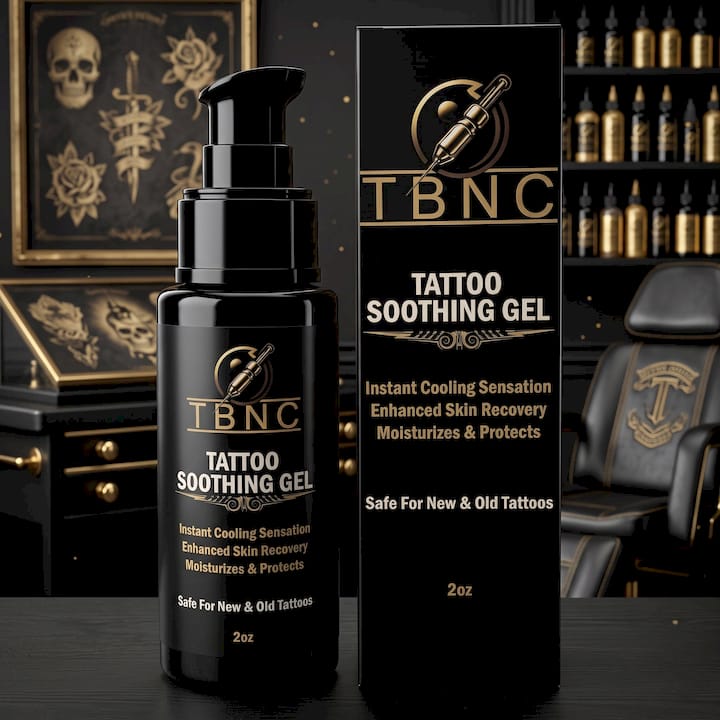
- Tattoo Soothing Gel: Immediate cooling relief for intense itch moments. Use it as a cold-compress adjunct or before sleep to reduce nighttime scratching.
- Tattoo Foaming Soap: Gentle cleansing without over-drying. Use 2–3 times daily during the active healing phase.
The Tattoo Numbing & Aftercare Bundle combines these essentials into one kit, covering both session comfort and the full healing window. Apply all topical products as directed, and never use numbing or medicated creams on healing skin unless a clinician has specifically recommended them.
Authoritative sources and further reading
- FDA consumer update on tattoo inks — Safety guidance on ink ingredients, contamination risk, and adverse reactions.
- AAD: Dermatologist warns about complications linked to newer tattoo inks — Dermatologist consensus on pigment-related complications and when to seek referral.
- Healthline: Itchy tattoo — why it happens and how to find relief — Practical aftercare steps and red-flag checklist.
- Medical News Today: Itchy tattoo causes and treatment — OTC options, antihistamine guidance, and healing timeline.
- Verywell Health: How to reduce the itch — Consumer-focused aftercare checklist and when to see a doctor.
- TBNC Tattoo aftercare products — Full aftercare kit for the healing window.
This article provides general information, not medical advice. Confirm current care recommendations with a qualified clinician or dermatologist for your specific situation.
FAQ
How long does tattoo itch last?
Most new-tattoo itching peaks between days 3 and 7 and resolves within 1–2 weeks as the surface skin closes. Itch that worsens or persists beyond two weeks may signal infection or an allergic reaction.
Can I lightly rub my tattoo if it itches?
Rubbing or scratching a healing tattoo risks pulling scabs, disrupting ink, and introducing bacteria. Instead, pat the area gently with a clean palm or apply a thin layer of TBNC Tattoo Soothing Gel to interrupt the itch signal safely.
Can I take Benadryl for an itchy tattoo?
Diphenhydramine (Benadryl) and other oral antihistamines can reduce histamine-driven itch, but they do not treat infection or mechanical irritation. Consult a pharmacist or physician before taking any antihistamine, especially if you take other medications.
Why is my tattoo raised and itchy after years?
A healed tattoo that becomes raised, itchy, or scaly years later often reflects a delayed allergic reaction to pigment, an autoimmune trigger like sarcoidosis, or an environmental factor such as sun exposure. See a dermatologist for evaluation rather than treating it as normal healing.


