

For Tattoo Clients: Numbing Cream Cuts First Hour Pain About 50%
Numbing cream is worth it for sensitive placements like ribs, sternum, and hands, and for short, high-detail sessions where surface pain outweighs your ability to sit still. It’s a poor match for marathon sessions unless your artist plans re-application. The FDA has warned against over-application, so always patch test, follow label limits, and clear it with your artist first.
TL;DR:
- Numbing cream provides the most benefit for sensitive areas like ribs, sternum, and hands during short, detail-focused sessions, with peak effects at 45-90 minutes.
- Application safety depends on patch testing 24-48 hours in advance, limiting coverage to recommended areas, and following FDA guidelines for concentrations no higher than 4 percent lidocaine.
- Topical anesthetics only dull surface pain and do not eliminate pressure or vibration, gradually wearing off and potentially causing rebound pain if not reapplied properly.
- Disclosing numbing cream use to your artist beforehand allows them to adjust technique and prevent texture or ink uptake issues during the session.
- For demanding sessions over two hours, a dedicated numbing bundle suited to longer durations, applied correctly, can improve comfort without risking health or tattoo quality.
Table of Contents
- When Is Tattoo Numbing Worth It for Your Session?
- How Numbing Cream Actually Works (and How Long It Lasts)
- Do the Benefits Outweigh the Downsides?
- What Concentration and Application Rules Keep You Safe?
- How to Apply Numbing Cream the Right Way
- Creams, Gels, Sprays, or Injections: Which Works Best?
- What Side Effects and Allergic Reactions Should You Watch For?
- Does Numbing Cream Affect Healing or How the Tattoo Looks Later?
- Should You Ask Your Artist Before Using Numbing Cream?
- Are There Legal Restrictions on Numbing Cream Ingredients?
- The Perspective TBNC Tattoo Brings to This Debate
- Which TBNC Product Matches Your Tattoo Plans?
- Sources
- FAQ
When Is Tattoo Numbing Worth It for Your Session?
The honest answer depends less on your pain tolerance and more on where the needle is going and how long you’ll be under it. Certain body parts have thin skin, dense nerve clusters, or bone right beneath the surface, and that’s where a good numbing product earns its keep.
- Sensitive placements: ribs, sternum, hands, feet, and inner arms consistently rank as the highest-pain zones, and they’re where numbing cream for sensitive spots makes the biggest practical difference.
- Short, detailed sessions: a two-hour fine-line piece benefits far more from numbing than a five-hour black-and-gray sleeve, since the cream’s window of peak effect is limited.
- Low pain tolerance or anxiety: if you know a bad reaction to pain will make you tense up or ask for breaks every ten minutes, numbing can keep the session moving.
- Medical sensitivity: clients managing conditions that heighten pain response should loop in a doctor first, not just their artist.
- Long sessions over two to three hours: numbing wears off mid-session unless your artist agrees to a controlled reapplication, and many won’t.
One factor overrides all of these: if your artist says no, the conversation ends there. Some studios have outright policies against numbed skin because it changes how the skin responds to the needle.
How Numbing Cream Actually Works (and How Long It Lasts)
Topical anesthetics like lidocaine work by blocking sodium channels in the nerve endings just under your skin’s surface, which interrupts the pain signal before it reaches your brain. It’s a mechanical, local effect, not a sedative, so you stay fully alert and aware during your session.
Timing matters more than most people realize. Most guides recommend applying numbing cream 30 to 60 minutes before your appointment, often under plastic wrap to trap heat and moisture and push the active ingredient deeper into the skin. Peak numbing generally hits somewhere between 45 and 90 minutes after application, and that’s your real window of relief. Research on 4 to 5 percent lidocaine creams found reported pain scores dropped by roughly 40 to 60 percent during that first hour when used correctly.
Here’s the catch: numbing cream only dulls surface nerve pain. It doesn’t touch the deeper pressure and vibration you feel from the tattoo machine itself, and it does nothing once the artist breaks the skin repeatedly over the same numbed area for hours. The effect also tapers, not cuts off, so expect a gradual return of sensation rather than a sudden switch flip.
Do the Benefits Outweigh the Downsides?
Ask ten tattoo artists about numbing cream and you’ll get ten slightly different answers, but the tradeoffs are consistent enough to lay out plainly.
The case for using it:
- Reduced surface pain during the first hour, which is when most clients are tensest anyway.
- Lower anxiety walking into the appointment, since dread over pain is often worse than the pain itself.
- Better ability to sit still through short, detail-heavy work like fine lines or small lettering, where flinching costs precision.
The case against it:
- Some creams can temporarily alter skin texture, making it firmer or more resistant to the needle.
- Poor application or low-quality products may affect ink uptake, and artists have raised concerns about line crispness on numbed skin.
- Rebound pain when the cream wears off mid-session can hit harder than the pain you avoided, especially if you weren’t prepared for it.
Artists who work with numbed clients regularly tend to manage it by testing the skin’s response before committing to detailed work, and by insisting on disclosure up front. An artist who finds out mid-session that you numbed without telling them isn’t just annoyed. Their whole approach to needle depth and pacing may have assumed unnumbed skin.
Pro Tip: Always tell your artist before you sit down, not after they notice your skin looks unusual. Full disclosure lets them adjust technique and prevents a numbed reaction to your line work from being an accident.
What Concentration and Application Rules Keep You Safe?
Safety here isn’t optional guidance. It’s the difference between a comfortable session and a genuine medical emergency. The FDA has specifically warned consumers that misusing topical anesthetics, especially applying too much over too large an area, can cause systemic toxicity that affects the heart and brain. Symptoms in severe cases include seizures, coma, or cardiac arrest.
Most over-the-counter lidocaine products cap out around 4 percent concentration, and that’s intentional. Higher percentages exist, but they come with real risk when used without medical supervision, which is why understanding OTC lidocaine limits before you buy matters more than picking whatever promises the strongest numb.
A few non-negotiable steps protect you:
- Patch test first. Apply a small amount 24 to 48 hours before your appointment and watch for redness, swelling, or itching.
- Limit surface area. Don’t apply cream to more skin than the label recommends, no matter how large your tattoo design is; check a surface-area and body-location guide if you’re unsure.
- Skip occlusion beyond instructions. Wrapping skin longer than directed increases absorption, which sounds helpful until it pushes you past safe dosing.
- Talk to a doctor if pregnant or on interacting medications. Some heart medications and lidocaine don’t mix well, and pregnancy changes how your body clears the drug.
How to Apply Numbing Cream the Right Way
Getting the timing and technique right is what separates a smooth session from a disappointing one. Skip a step here and you’ll either waste the product or walk in less numb than you expected.
- Talk to your artist first. Confirm they’re comfortable with numbed skin and ask if they have a preferred product or process.
- Patch test 24 to 48 hours ahead. This catches allergic reactions before appointment day, not during it.
- Clean the area the morning of your session, removing lotions, oils, or sunscreen residue.
- Apply a thick, even layer of cream over the tattoo area, following the label’s maximum coverage guidance.
- Cover with plastic wrap for 45 to 60 minutes. This traps warmth and moisture, which drives absorption and speeds onset.
- Remove the wrap and wipe the skin clean before your artist starts. Leftover cream can interfere with stencil adhesion and ink flow.
- Tell your artist you used numbing cream, even if you already mentioned it during booking. A quick reminder costs nothing.
Studies on tattoo-specific compound creams found pain reduction of roughly 50 percent during the first hour of application, which is the exact window this process is built to protect.
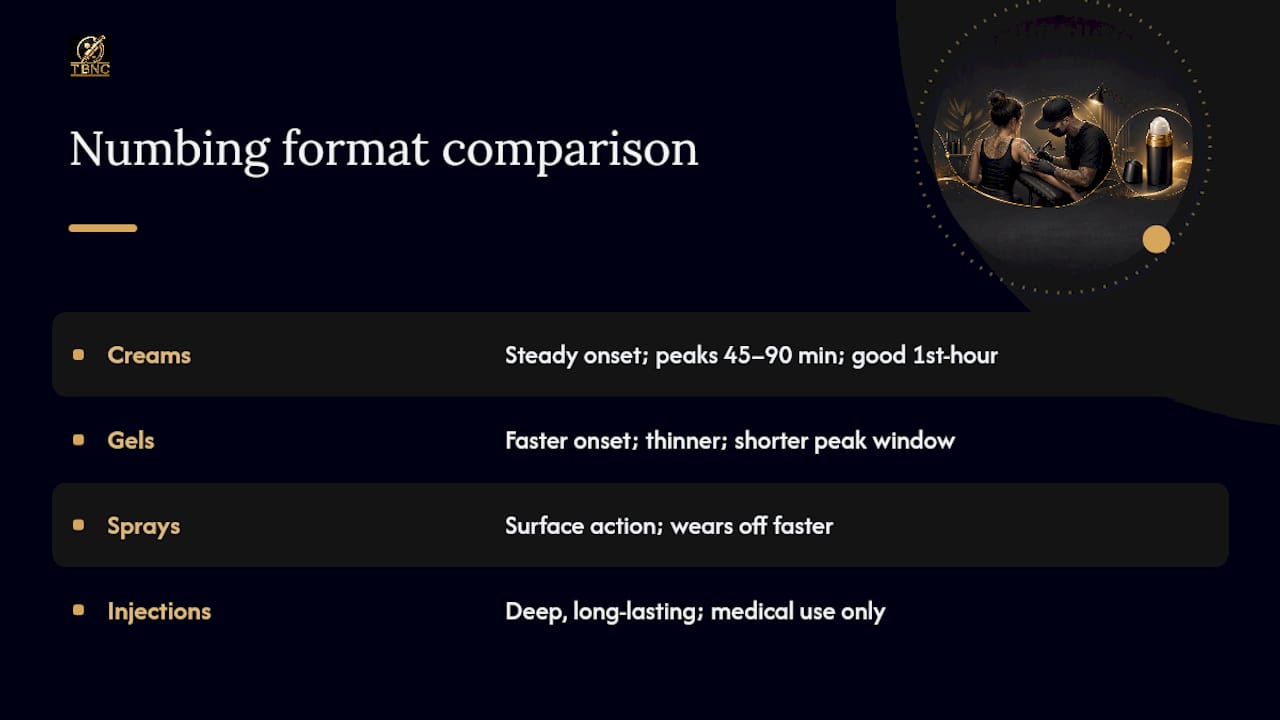
Creams, Gels, Sprays, or Injections: Which Works Best?
Not every numbing format suits every tattoo, and the differences aren’t cosmetic. They change how deep the anesthetic reaches and how long it holds.
Creams are the most common choice for a reason: they’re absorbed slowly through intact skin, giving a steady numbing effect that peaks around 45 to 90 minutes and holds reasonably well for the first hour of work. They’re also the format most tattoo studios are used to seeing, which matters for artist buy-in.
Gels work similarly to creams but often absorb faster because of their thinner consistency, which can mean a quicker onset but sometimes a shorter peak window. They’re a reasonable choice if you’re short on prep time before your appointment.
Sprays are convenient for large or awkward-to-reach areas, but they tend to sit more on the surface and wear off faster than an occluded cream, making them less reliable for longer stretches of detailed work.
Injections, typically administered by a medical professional rather than the tattoo artist, numb deeper tissue and last considerably longer, but almost no reputable studio allows injectable anesthetics on-site. They cross into medical procedure territory and raise both liability and safety concerns most artists won’t take on.
For the vast majority of clients, a quality topical cream applied correctly remains the most practical and studio-accepted option on this list.
What Side Effects and Allergic Reactions Should You Watch For?
Most people tolerate topical numbing cream without issue, but reactions do happen, and knowing what’s normal versus concerning matters before you’re sitting in the chair.
Mild, expected effects include temporary redness, a slightly puffy or swollen look to the skin, and a cooling or tingling sensation as the cream takes hold. These typically fade shortly after the cream is removed and don’t affect the tattoo itself.
Less common but more serious reactions include contact dermatitis, hives, or intense itching, which usually signal a sensitivity to an inactive ingredient rather than the lidocaine itself. This is exactly why a patch test 24 to 48 hours ahead isn’t optional advice, it’s the only reliable way to catch a reaction before it happens mid-session.
The rarest but most dangerous outcome is systemic toxicity from over-application or covering too much skin for too long, which the FDA has specifically flagged as a risk with misused topical anesthetics. Watch for dizziness, ringing in the ears, confusion, or an irregular heartbeat, and treat any of those as a reason to stop and seek medical attention immediately, not push through the appointment.
Does Numbing Cream Affect Healing or How the Tattoo Looks Later?
This is where a lot of misinformation circulates, so it’s worth separating what’s actually documented from what’s assumed. Used correctly, on intact skin, in the amounts directed, numbing cream doesn’t appear to compromise how a tattoo heals or how it looks once fully settled.
The concerns artists raise are almost always about the numbing process itself rather than the healing phase afterward. Skin that’s numbed can temporarily feel firmer or slightly swollen, which changes how it responds to the needle in real time. If an artist isn’t expecting that altered texture, it can affect line precision or ink saturation during the actual tattooing, not during recovery.
Rebound pain, when the numbing wears off mid-session, is more of a comfort issue than a healing one. It doesn’t damage the tattoo, but it can catch you off guard if you assumed you’d be numb the whole time.
The clearest way to protect both your comfort and your final result is choosing a reputable product, applying it exactly as directed, and giving your artist full visibility into what you used and when. Skin that’s mishandled before the appointment, not the numbing cream itself, is usually the actual source of any texture or uptake issues people blame on numbing.
Should You Ask Your Artist Before Using Numbing Cream?
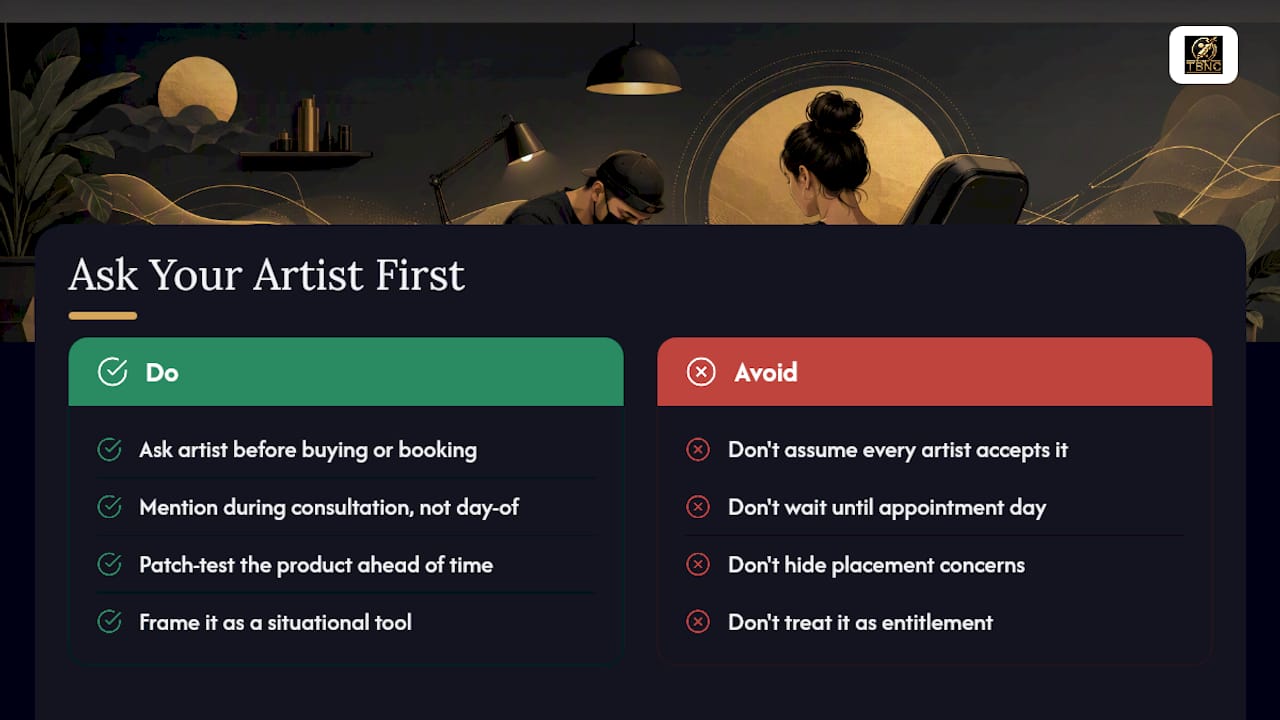
Yes, every time, before you buy anything or book your appointment if possible. This isn’t a courtesy step. It genuinely changes how your artist approaches the work.
Some artists have strong preferences or outright refuse numbed skin for certain styles, particularly fine-line or heavily detailed pieces where skin feedback helps them judge needle depth. Others are perfectly comfortable with it and may even recommend a specific product they’ve seen work well in their studio. You won’t know which category your artist falls into unless you ask directly.
Bring up numbing cream during your consultation, not the day of your appointment. This gives your artist time to factor it into their planning and gives you time to source and patch test a product properly. If they have concerns about a specific placement, like intricate work on a numbed area, they can suggest adjustments to the design or session length instead of discovering the issue mid-tattoo.
Framing numbing cream as a situational tool rather than a default expectation tends to land better with artists, since it signals you understand the tradeoffs rather than assuming pain relief is guaranteed or owed. The clients who get the best experience are usually the ones who treat their artist as a partner in the decision, not an obstacle to work around.
Are There Legal Restrictions on Numbing Cream Ingredients?
Regulations around topical anesthetics vary depending on concentration and where you’re buying. In the United States, lidocaine products sold over the counter are generally capped around 4 percent, with anything stronger typically requiring a prescription or medical oversight. This threshold exists specifically because higher concentrations raise the systemic toxicity risk the FDA has warned about.
Individual states and even some studios layer on their own rules. A handful of tattoo shops have internal policies restricting or banning numbed clients altogether, independent of what’s legally available for purchase. That’s a business decision, not a legal one, but it functions the same way for you as the client: if the studio says no, the product’s legal status doesn’t matter.
Outside the U.S., concentration limits and prescription requirements differ by country, and importing higher-strength products from abroad can put you outside your own region’s legal framework even if the product ships without issue. If you’re ordering online, sticking to products clearly labeled with their concentration and manufactured for your region is the safest way to stay compliant and avoid an unpleasant surprise at the counter or in the mail.
The Perspective TBNC Tattoo Brings to This Debate
The conventional wisdom treats numbing cream as either a miracle fix or a gimmick artists secretly hate. Neither is accurate. TBNC Tattoo is trusted by over 3,250 tattoo studios worldwide and used across more than one million sessions, and that scale exists precisely because studios have learned to treat numbing as a tool matched to specific scenarios, not a blanket solution.
A first-timer getting a small piece on their wrist has different needs than someone booking a six-hour session on their ribs. TBNC’s formulations are built with that distinction in mind, but no product replaces a patch test or a straight conversation with your artist before appointment day.
The gap between what numbing cream promises and what it delivers closes considerably when clients stop expecting it to erase pain entirely and start using it to manage the first, hardest hour.
— The Best Numbing Cream
Which TBNC Product Matches Your Tattoo Plans?
If you’re new to numbing or just want to try it before committing to a bigger purchase, the TBNC 2-Pack is the sensible starting point. It gives you enough product to patch test properly and still have plenty left for your actual appointment, without overbuying before you know how your skin responds.
Planning multiple sessions, whether that’s a large piece done in stages or separate tattoos scheduled a few months apart, the Tattoo Numbing Bundle pairs numbing product with aftercare essentials, so you’re covered on both ends of the process instead of restocking separately each time.
For longer, more demanding sessions, think full sleeves, back pieces, or anything stretching past a couple of hours, the Ultra Tattoo Numbing Bundle is built with that duration in mind. Buy enough for the surface area you’re actually covering, always patch test 24 to 48 hours ahead regardless of which product you choose, and purchase directly from TBNC Tattoo’s official site to avoid counterfeit versions circulating on third-party marketplaces. Once you’ve picked the right match for your session, you’re one order away from walking into your appointment prepared instead of just hopeful.
Sources
- FDA warns consumers to avoid certain topical pain-relief products due to potential dangerous health risks
- Tattoo Numbing Cream: Does It Work? Studies + Brands (2026)
- Skin numbing cream: What to know (Verywell Health)
- Does Numbing Cream Work for Tattoos? What Artists Need to Know – Yes needle
This article is general information, not a substitute for advice from a qualified doctor. Consult a qualified healthcare professional about your own circumstances before acting on anything here.
FAQ
Do Tattoos Hurt More After Numbing Cream Wears Off?
Rebound sensation can feel more noticeable once the cream tapers off, mostly because you had a comfortable baseline to compare it against, but the tattoo process itself isn’t more painful than it would have been without numbing.
Can Tattoo Artists Tell If You’ve Used Numbing Cream?
Often, yes. Numbed skin can look slightly swollen or feel firmer under the needle, which is exactly why disclosing use beforehand matters more than trying to hide it.
Why Do Some Tattoo Artists Not Recommend Numbing Cream?
Some artists worry about altered skin texture affecting line precision or ink uptake during detailed work, and a few studios have outright policies against numbed skin for that reason.
Is a $25 Tip on a $200 Tattoo Considered Low?
Tipping varies by studio and is often based on session length and complexity, so a tip of around $25 can be appropriate for shorter or simpler sessions.
Is Numbing Cream Worth It for a First Tattoo?
For most first-timers, yes, especially on sensitive placements, since it lowers anxiety and surface pain during the part of the session people dread most, provided you patch test first and clear it with your artist.


