

Tattoo Pain Relief Methods: How to Hurt Less
The most effective tattoo pain relief methods combine three things: solid pre-appointment preparation, a dermatologist-approved topical numbing cream cleared with your artist, and active in-session techniques like controlled breathing and distraction. Follow safe aftercare with acetaminophen (not NSAIDs) and you cover the full arc from prep to healing.
- Prepare your body: Get sufficient sleep, eat a full meal a few hours before, and hydrate for several days prior.
- Use a topical numbing cream: Choose a dermatologist-approved lidocaine formula, confirm with your artist, and follow label directions precisely.
- Manage pain in the chair: Paced breathing, music or podcasts, and scheduled breaks all reduce perceived pain.
- Recover smart: Acetaminophen for soreness, cold compresses for swelling, and clean moisturized skin for faster healing.
- Know the limits: Consult a medical professional before using prescription interventions; be aware of FDA safety warnings about certain OTC topical anesthetics.
Key Takeaways
Effective tattoo pain relief starts before you sit in the chair: physical prep, a dermatologist-approved numbing cream used correctly, and active in-session techniques cover the full range of what actually works.
| Point | Details |
|---|---|
| Physical prep is the foundation | Get sufficient sleep, eat a full meal a few hours before, and hydrate for several days prior. |
| Topical numbing creams require care | Apply lidocaine cream about 45 minutes before, patch test 24 hours earlier, and always clear use with your artist. |
| Breathing and distraction work | A 4-6 breathing pattern and focused distraction reliably reduce acute pain perception during the session. |
| Aftercare matters for pain too | Use acetaminophen for soreness; avoid NSAIDs post-session as they thin blood and slow healing. |
| TBNC Tattoo bundles cover every need | The Ultra Bundle, Tattoo Numbing Bundle, and 5 Pack are dermatologist-approved options for single sessions, regulars, and studios. |
Table of Contents
- Why does tattooing hurt, and which placements are worst?
- Before your appointment: practical prep that meaningfully reduces pain
- How do topical numbing creams work, and are they safe?
- What to do during the session to manage pain
- Post-session pain relief and aftercare to reduce soreness
- Safe ways to increase your pain tolerance before a long session
- Recommended dermatologist-approved numbing creams from TBNC Tattoo
- Can oral prescription medications help with tattoo pain?
- How does needle depth and technique affect pain?
- Do alternative therapies like acupuncture or massage help with tattoo pain?
- TBNC Tattoo bundles for your next session
- Sources
- FAQ
Why does tattooing hurt, and which placements are worst?
Tattoo needles puncture the skin repeatedly, driving ink into the dermis — the layer packed with nerve endings, blood vessels, and immune cells. Each puncture triggers pain receptors and sets off a local inflammatory response. That combination of mechanical trauma and inflammation is what produces the sharp, burning sensation most people describe.
Pain intensity varies significantly by placement. Spots where skin sits directly over bone, where nerve density is high, or where tissue is thin tend to hurt most: ribs, fingers, ankles, shins, the head, and the inner elbow. The outer thigh and upper arm, by contrast, have thicker muscle and fat cushioning, making them among the least painful options for first-timers. Medical News Today notes that soreness and swelling can persist for several days after a session, not just during it.
Psychological state amplifies everything. Stress, fatigue, low blood sugar, and excess caffeine all lower your pain threshold before the needle touches skin. Knowing this matters because it means a meaningful portion of tattoo pain is manageable before you ever sit in the chair.

Before your appointment: practical prep that meaningfully reduces pain
Physical preparation is the most underrated of all tattoo pain management tips. Healthline’s guidance confirms that sleep, food, hydration, and avoiding NSAIDs are among the most practical steps for reducing pain and bleeding risk.
- Sleep: Get 7–8 hours the night before. Fatigue lowers pain tolerance and slows healing.
- Eat: Have a full, balanced meal 1–3 hours before your session. Low blood sugar causes dizziness and heightened pain sensitivity, as Mayo Clinic’s guidance on hypoglycemia explains. Bring light snacks for sessions longer than two hours.
- Hydrate: Drink water consistently in the days leading up to your appointment. Well-hydrated skin takes ink more smoothly and is easier to work on.
- Moisturize: Apply unscented lotion to the area daily in the week before your session. Skip it the morning of — wet skin can affect ink adhesion.
- Avoid alcohol and NSAIDs: Both thin blood and increase bleeding, which makes the artist’s job harder and your pain worse. Skip ibuprofen and aspirin for at least 24 hours prior. If you need a pain reliever beforehand, acetaminophen is the safer choice.
- Skip heavy caffeine: It spikes anxiety and tightens muscles, both of which amplify pain perception.
- Wear the right clothes: Loose, comfortable clothing that gives easy access to the tattoo area saves time and reduces stress.
- Plan session length realistically: Shorter sessions mean less cumulative pain per visit. Breaking a large piece into two or three sessions is a legitimate pain management strategy, not a compromise.
Pro Tip: Don’t get tattooed when you’re sick. Your immune system is already working overtime, healing will be slower, and pain tolerance drops noticeably when your body is fighting something else.
How do topical numbing creams work, and are they safe?
Topical anesthetics work by temporarily blocking sodium channels in nerve endings near the skin’s surface, preventing pain signals from reaching the brain. Most tattoo-specific products use lidocaine as the primary active ingredient. The numbing effect is localized and temporary, typically lasting long enough to cover the initial and most intense phase of a session.
DailyMed’s lidocaine product labeling outlines the standard safe application procedure: clean the skin, apply a generous layer of cream, cover with plastic wrap for about half an hour to an hour, then remove and clean the area before the procedure begins. A patch test a day before your appointment is strongly recommended to rule out contact allergy.
| Format | Typical onset | Typical duration | Key caution |
|---|---|---|---|
| Numbing cream | 45 minutes | 1–2 hours | Apply only to intact skin unless directed otherwise |
| Numbing spray | 5 minutes | 40 minutes | Often used mid-session by artists; shorter window |
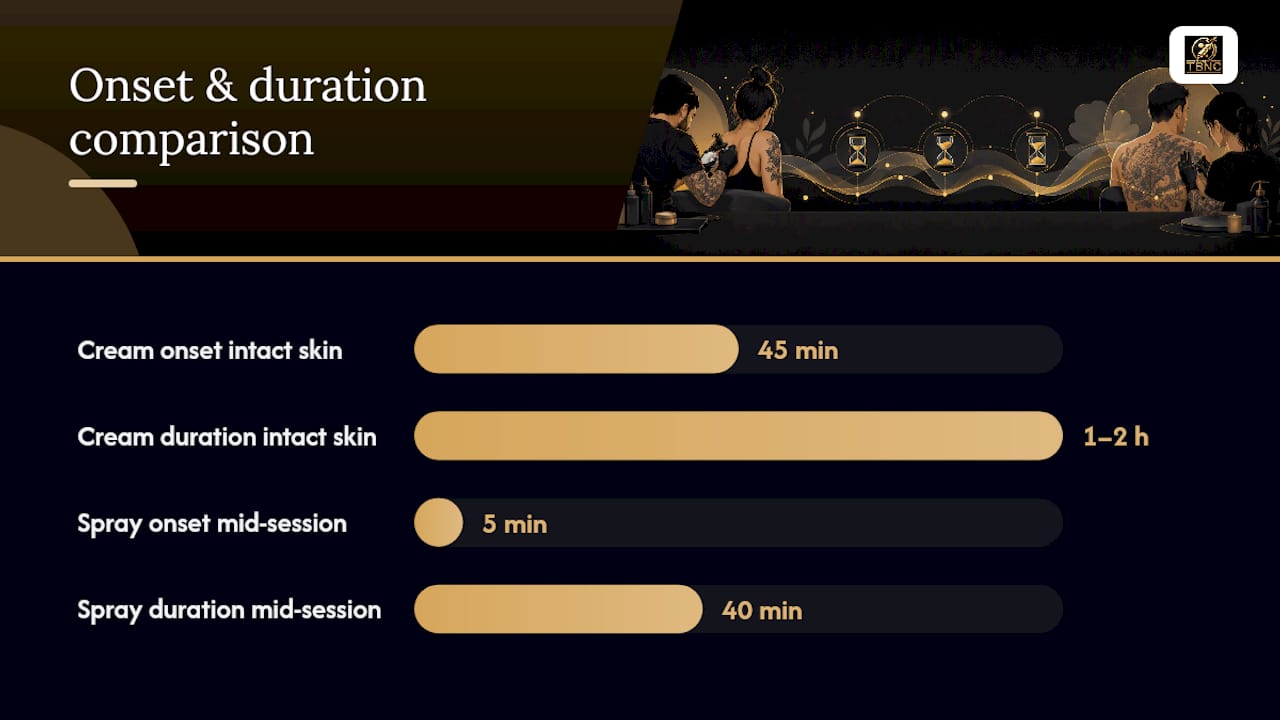
The FDA issued a warning letter in 2024 about certain OTC topical anesthetic products marketed for tattooing that exceeded permitted lidocaine concentrations or made unsupported claims. Applying these products over large areas, leaving them on too long, or using them on broken skin can increase systemic absorption and cause serious harm. Stick to dermatologist-approved formulas and follow concentration and time limits precisely.
Pro Tip: Always tell your artist you plan to use a numbing cream before your appointment. Some artists prefer to apply it themselves or adjust their technique based on how numbed skin responds to the needle. Skin texture can change slightly under numbing agents, and a good artist will account for that.
What to do during the session to manage pain
Staying mentally and physically engaged during a session is one of the most underused pain management tools available. Harvard Health reports that mindfulness and controlled breathing actively change how the brain processes pain signals, not just how you feel about them.
Breathing technique (4-6 pattern):
- Inhale slowly through your nose for a count of 4.
- Hold for 2 counts.
- Exhale through your mouth for a count of 6.
- Repeat continuously, especially during intense passes.
This rhythm slows your heart rate, relaxes muscles, and reduces the tension that amplifies pain. Clinical research published in PMC confirms that psychological interventions including breathing and distraction reliably reduce acute pain perception and anxiety.
Other in-session tactics:
- Music or podcasts: Choose something absorbing enough to hold attention but not so intense it raises your heart rate. Familiar playlists tend to work better than new ones.
- Conversation: Talking with your artist keeps your mind off the needle. Most artists welcome it.
- Guided imagery: Mentally placing yourself somewhere calm and specific (a beach, a forest trail) can shift focus away from sensation.
- Scheduled breaks: Ask for a short pause every 45–60 minutes on longer sessions. Stand up, stretch, drink water, and eat a small snack if blood sugar feels low.
When pain spikes suddenly, pause, breathe through it, and signal your artist. Tensing up is the instinctive response, but it makes everything worse. A brief stop costs you 90 seconds and saves you from white-knuckling through a pass that could have been manageable.
Post-session pain relief and aftercare to reduce soreness
Medical News Today notes that tattoo pain peaks during the procedure, but soreness and swelling can persist for several days. Smart aftercare keeps that window short and comfortable.
Follow your artist’s cleaning and bandaging instructions exactly. For swelling in the first 24–48 hours, a cold compress wrapped in a clean cloth (never applied directly to the tattoo) reduces inflammation without disrupting the healing skin. Keep the area clean with fragrance-free soap and apply a thin layer of unscented moisturizer to prevent cracking and itching.
Pro Tip: Avoid soaking the tattoo in baths, pools, or hot tubs for at least two weeks. Submerging a fresh tattoo introduces bacteria and pulls ink before it has set. Showers are fine; soaking is not.
Watch for red flags that require medical attention, per Cleveland Clinic’s infection guidance: pain that intensifies beyond the first few days, spreading redness, unusual discharge, swelling that worsens rather than improves, or fever. These are signs of infection, not normal healing.
Safe ways to increase your pain tolerance before a long session
Building tolerance is a gradual process, not a one-day fix. Here’s a practical sequence that works:
- Start small. If you’re new to tattooing, choose a smaller piece or a less sensitive placement for your first session. Experiencing manageable pain builds confidence for longer work.
- Practice mindfulness daily in the week before. Even five minutes of focused breathing or body-scan meditation reduces anticipatory anxiety, which is a major driver of perceived pain.
- Stabilize your physical baseline. Consistent sleep, hydration, and balanced meals in the days before your appointment raise your pain threshold more reliably than any last-minute remedy.
- Light aerobic exercise in the days before a session stabilizes mood and can modestly improve pain tolerance through endorphin release. Avoid intense workouts the day before, which leave muscles sore.
- Never use alcohol or sedatives to cope. Both impair judgment, thin blood, and create unpredictable interactions with topical anesthetics. If you feel you need chemical assistance to get through a session, consult a medical professional about prescription options before your appointment.
Recommended dermatologist-approved numbing creams from TBNC Tattoo
TBNC Tattoo’s product line is built specifically for tattoo use, formulated with lidocaine, and dermatologist-approved. Three bundles cover the most common needs:
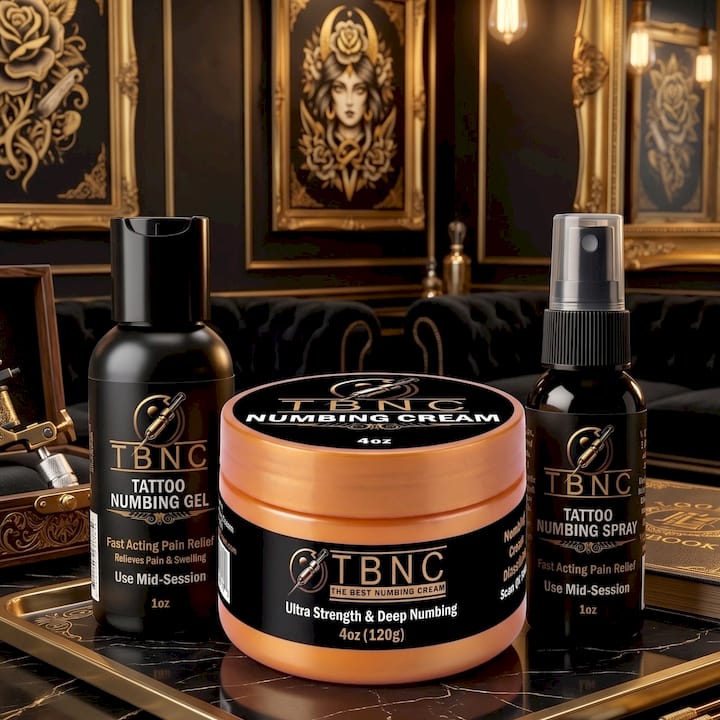
The Ultra Tattoo Numbing Bundle is the most complete option, designed for clients who want a ready-to-use multi-item kit covering both numbing and aftercare. It suits longer sessions and collectors who want a single purchase that handles everything.
For clients who want a focused numbing solution without the full kit, the Tattoo Numbing Bundle is a cost-effective choice that covers the core numbing steps. Regular clients who book sessions every few months tend to find this the most practical format.
Studios and frequent collectors who go through product quickly will find the TBNC 5 Pack the most economical route. It’s also the format most commonly ordered by studios buying for client use.
All TBNC Tattoo products are formulated for intact skin and should be used according to the official application directions. Do a patch test 24 hours before your session, confirm use with your artist, and follow concentration and coverage limits. For prescription-strength interventions, consult a medical professional.
Can oral prescription medications help with tattoo pain?
For most people, topical numbing creams and physical preparation are sufficient. Oral prescription medications are a different category entirely and carry real risks in the tattoo context.
Some clients with severe anxiety or very low pain tolerance ask their doctors about oral sedatives or prescription analgesics before a session. A physician may occasionally prescribe a low-dose anxiolytic for extreme cases, but this requires a consultation, a clear medical rationale, and coordination with your tattoo artist. Sedated clients can’t communicate clearly, which creates safety issues in the chair.
Prescription-strength topical anesthetics (higher lidocaine concentrations than OTC products allow) are another option some dermatologists offer. These require a prescription precisely because higher concentrations carry greater systemic absorption risk. The FDA’s 2024 enforcement action against products exceeding permitted concentrations underscores why this isn’t an area to experiment with independently. If you’re considering this route, the conversation starts with your doctor, not a search engine.
How does needle depth and technique affect pain?
Needle depth is one of the most direct technical drivers of pain, and it’s entirely in your artist’s hands. Ink must reach the dermis to be permanent, but needles set too deep cause unnecessary trauma, more bleeding, and significantly more pain. An experienced artist calibrates depth precisely, which is one reason the same design can feel very different depending on who executes it.
Needle configuration also matters. Shader needles (grouped in larger clusters) cover more area per pass but create a broader trauma zone. Liner needles are finer and more precise but hit the same spot repeatedly for outlines. Many clients find shading more tolerable than lining for this reason.
Machine speed and hand pressure are variables a skilled artist adjusts in real time. If a particular pass feels unusually sharp, telling your artist immediately lets them adapt. Some artists slow down over bony areas or thin skin without being asked; others need the feedback. Either way, open communication is a legitimate pain mitigation strategy, not a sign of weakness.
Do alternative therapies like acupuncture or massage help with tattoo pain?
Acupuncture has a documented history in pain management, and some clients report reduced anxiety and pain sensitivity when they schedule a session in the days before a tattoo appointment. The mechanism involves stimulating specific points that may modulate pain signaling pathways. It won’t numb the skin the way lidocaine does, but for clients who prefer to avoid topical anesthetics, it’s a low-risk option worth discussing with a licensed acupuncturist.
Massage of the area surrounding the tattoo site (not the tattoo itself) in the days before a session can reduce muscle tension and improve circulation, both of which contribute to a more comfortable experience. Post-session, gentle massage of surrounding tissue can help with soreness once the tattoo has closed and initial healing is underway, typically after the first week.
Neither approach replaces topical numbing or physical preparation, but both fit naturally into a broader pain management plan for clients who want to minimize reliance on pharmaceuticals.
The honest take on tattoo pain management
Most pain management advice focuses on products. The reality is that the biggest gains come from the least glamorous steps: sleeping well, eating before you go, and staying hydrated. Those three things alone shift the experience more than most people expect. Topical numbing creams are genuinely useful, but they work best on top of a body that’s already prepared, not as a substitute for preparation.
The safety piece matters too. Patch test every topical anesthetic 24 hours before use. Follow label instructions on coverage area and timing. Tell your artist what you’re using. And if you’re considering anything beyond OTC products, talk to a clinician first. Rolling the dice on unverified high-concentration products to avoid a conversation with your doctor is not a trade worth making.
TBNC Tattoo bundles for your next session
Preparation gets you most of the way there. TBNC Tattoo covers the rest. The Ultra Tattoo Numbing Bundle gives you a complete numbing and aftercare kit in one order, trusted by over 3,250 studios and used in more than one million sessions. The Tattoo Numbing Bundle is the focused option for clients who want reliable lidocaine numbing without the full kit. Frequent collectors and studios who go through product regularly will find the TBNC 5 Pack the most practical format. All products are dermatologist-approved, formulated for tattoo use, and backed by clear application directions. Confirm use with your artist before your session, then order at Thebestnumbingcream.
Sources
- Drug Label: Lidocaine topical products — DailyMed
- FDA warning letter to company marketing tattoo numbing products
- Mindfulness meditation to control pain — Harvard Health
- Research review on psychological pain management (PMC)
- Do tattoos hurt? What it feels like, areas, pain relief, and more — Medical News Today
This article is general information, not a substitute for advice from a qualified doctor. Consult a qualified healthcare professional about your own circumstances before acting on anything here.
FAQ
How do you reduce pain when getting a tattoo?
The most reliable approach combines physical preparation (sleep, food, hydration), a dermatologist-approved lidocaine numbing cream applied correctly and cleared with your artist, and controlled breathing or distraction during the session. Avoiding alcohol and NSAIDs in the 24 hours before also meaningfully reduces both pain and bleeding.
How can you increase pain tolerance for tattoos?
Start with smaller sessions or less sensitive placements to build familiarity, practice daily mindfulness or paced breathing in the week before your appointment, and stabilize your physical baseline with consistent sleep and hydration. Never use alcohol or sedatives as a coping mechanism; consult a medical professional if you feel you need prescription support.
Is acetaminophen or ibuprofen better after a tattoo?
Acetaminophen is the safer choice for post-session soreness. NSAIDs like ibuprofen and aspirin thin blood, which can increase oozing and slow the clotting your healing skin needs in the first few days.
Do numbing creams affect tattoo quality?
They can, if misused. Skin texture changes slightly under numbing agents, which is why telling your artist before your session matters. A skilled artist adjusts technique accordingly, and products formulated specifically for tattoo use, like those from TBNC Tattoo, are designed to minimize any effect on ink retention.
When should you see a doctor after a tattoo?
Seek medical attention if pain intensifies beyond the first few days, redness spreads outward from the tattoo, you notice unusual discharge, or you develop a fever. These are signs of infection, not normal healing, and they require prompt professional evaluation.


