

Vegan Tattoo Aftercare: The Clinical Studio Guide
Use dermatologist-approved, US-legal clinical aftercare from day one: a gentle Tattoo Foaming Soap, a water-based unscented aftercare lotion, and a dermatologist-approved Tattoo Aftercare Balm, each supplied in single-use packaging. That three-product sequence covers every phase of healing and meets both FDA OTC standards and studio hygiene requirements.
The three core items every client and studio needs:
- Tattoo Foaming Soap for gentle cleansing during the first 0–3 days and throughout healing
- Tattoo Aftercare Lotion, Unscented for daily water-based moisturization from day 3 onward
- Tattoo Aftercare Balm for targeted soothing and short-term occlusion in the first 48 hours
Safety note: The FDA has issued warning letters against certain topical numbing products marketed for tattooing that exceed OTC monograph conditions. Only use numbing products with clear, compliant OTC labeling, and never apply high-concentration anesthetics to broken skin unless the product is FDA-cleared for that use. Single-use packaging is non-negotiable for studio hygiene.
Key Takeaways
Dermatologist-approved, single-use vegan tattoo aftercare using foaming soap, unscented water-based lotion, and an aftercare balm is the clinically supported and FDA-aligned standard for safe tattoo healing.
| Point | Details |
|---|---|
| Three-product sequence | Use foaming soap, then unscented lotion, then aftercare balm in the correct phase order. |
| Single-use packaging | Bulk jars carry microbial contamination risk; individually sealed units are the studio standard. |
| FDA compliance first | Reject numbing products listing lidocaine above 4% OTC or disallowed ingredient combinations. |
| Red flags need fast action | Spreading redness, fever, or pus after 48–72 hours requires a dermatologist or emergency care. |
| TBNC Tattoo kit | TBNC Tattoo’s dermatologist-approved, vegan-friendly three-product kit is available for studio bulk orders and individual clients. |
Table of Contents
- What “vegan tattoo aftercare” means in this article
- What does a proper vegan tattoo aftercare timeline look like?
- What safety rules apply to numbing creams and aftercare products?
- How do you choose the right dermatologist-approved aftercare products?
- TBNC Tattoo makes clinical aftercare simple for studios and clients
- Studio protocols that actually reduce complications
- What does clinical research say about effective tattoo aftercare?
- When should you contact a dermatologist or seek emergency care?
- An editorial perspective on clinical vegan aftercare
- Sources
- FAQ
What “vegan tattoo aftercare” means in this article
Most search results for vegan tattoo aftercare point to DIY plant-oil remedies and botanical balms. That is a different subject entirely, and this article does not cover it.
Here, “vegan tattoo aftercare” means dermatologist-approved, US-legal clinical products: lidocaine numbing creams, foaming soap, unscented water-based lotion, and aftercare balms sold to studios and clients in single-use formats. These are formulated without animal-derived ingredients and without animal testing, but the defining standard is clinical safety and regulatory compliance, not ingredient sourcing alone. Studios stocking these products need individually sealed, traceable units, not bulk jars.
What does a proper vegan tattoo aftercare timeline look like?
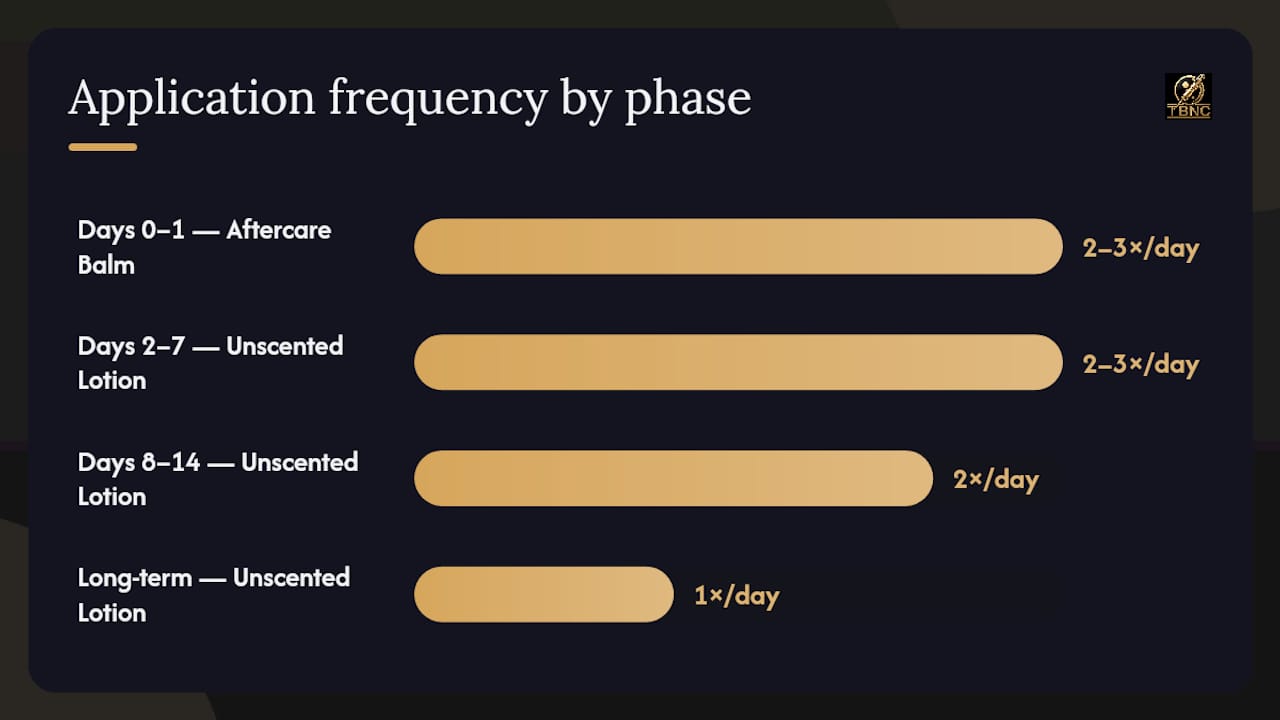
Healing follows a predictable arc. Clean gently, moisturize consistently, and protect from sun and water. The table below maps each phase to the right product and frequency.
| Timeframe | Cleanse | Product to Apply | Frequency | What to Avoid |
|---|---|---|---|---|
| Days 0–1 | Foaming Soap, lukewarm water | Aftercare Balm (thin layer) | 2–3x daily | Rewrapping unless artist-directed, submerging |
| Days 2–7 | Foaming Soap | Unscented Lotion or Balm | 2–3x daily | Petroleum products, fragranced lotions, scratching |
| Days 8–14 | Foaming Soap | Unscented Lotion | 2x daily | Sun exposure, swimming, tight clothing over tattoo |
| Long-term | Mild soap | Unscented Lotion | Once daily | Unprotected sun exposure; use sunscreen once healed |
Key dos and don’ts by phase:
- Days 0–1: Remove the initial dressing only when your artist instructs. Pat dry with a clean paper towel; never rub.
- Days 2–7: Wash with lukewarm water and foaming soap. Apply a thin layer of water-based lotion rather than a thick coat. Thick application traps exudate and slows healing.
- Days 8–14: Peeling is normal. Do not pick. Keep moisturizing twice daily.
- Long-term: Dermatologists recommend water-based, fragrance-free lotions for dry tattooed skin and advise against petroleum-based products for long-term care, as they can fade ink over time.
Numbing products are applied before and during the session, not after. Once the skin is broken, applying a high-concentration topical anesthetic without FDA clearance for that use is unsafe.
What safety rules apply to numbing creams and aftercare products?
The FDA has issued multiple warning letters targeting tattoo numbing products that do not conform to OTC external analgesic monograph conditions. Two specific enforcement actions make the regulatory picture clear.
A 2024 FDA warning letter cited products labeled with lidocaine 5% or ingredient combinations including prilocaine and epinephrine that exceed monograph conditions or list unapproved indications for tattooing. A 2025 FDA warning letter reinforced that numbing creams with disallowed concentrations or ingredient combinations are unapproved drugs that pose absorption risks on broken skin.
Studio and client safety checklist:
- Verify the active ingredient and concentration appear on the label and fall within OTC monograph limits
- Reject any numbing product listing lidocaine above 4% OTC, prilocaine, or epinephrine for tattooing use
- Never apply numbing cream to broken or actively infected skin unless the product is explicitly FDA-cleared for that use
- Use single-use packaging for all aftercare products; record lot numbers and expiration dates
- Obtain client consent before applying any numbing product and document it
Contraindications to communicate to clients:
- Known allergy to local anesthetics (amide class: lidocaine, prilocaine)
- Pregnancy or breastfeeding (consult a physician before use)
- Broken skin with active infection (delay tattooing and numbing application)
- Concurrent use of other topical medications that may interact
How do you choose the right dermatologist-approved aftercare products?
Pick products with a dermatologist endorsement, clear OTC labeling, permitted ingredient concentrations, and single-use or small-pack formats. That combination protects clients and keeps studios compliant.
Label checklist for every product you stock:
- Active ingredients and concentrations listed clearly (for numbing: lidocaine within OTC range)
- Intended use matches the actual application (aftercare, not an unapproved tattooing indication)
- Directions for use are specific and complete
- Fragrance-free and hypoallergenic designations present
- Water-based formulation for lotion (not petroleum-based)
Studio procurement list:
- Single-use foaming soap bottles or individually sealed sachets
- Individually packaged aftercare balm units
- Unscented lotion in pump dispensers with traceable lot numbers
- Printed client aftercare instruction cards
On vegan and cruelty-free signals: look for ingredient lists free of lanolin, beeswax, and collagen, plus a recognized cruelty-free certification. These signals matter, but they rank below dermatologist approval and regulatory-compliant labeling. A product can carry a vegan badge and still contain a non-compliant active ingredient concentration. Verify the clinical credentials first.
TBNC Tattoo makes clinical aftercare simple for studios and clients
Healing a fresh tattoo well comes down to three products used in the right order. TBNC Tattoo’s studio-ready kit delivers exactly that: the Tattoo Foaming Soap for gentle daily cleansing, the Tattoo Aftercare Lotion, Unscented for water-based daily moisturization, and the Tattoo Aftercare Balm for targeted soothing in the first 48 hours. All three are dermatologist-approved, formulated without animal-derived ingredients, and available in individually sealed units built for studio use.
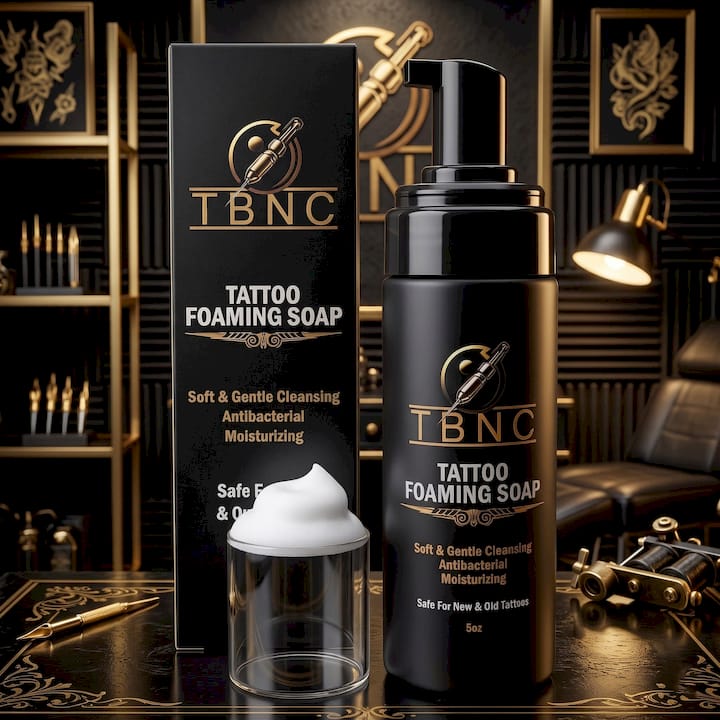
Studios can order in bulk wholesale, track lot numbers for recall readiness, and hand clients a printed instruction card at checkout. No bulk jars, no cross-contamination risk, no guesswork on compliance. Browse the full post-tattoo aftercare collection to stock your studio or order your personal healing kit today.
Studio protocols that actually reduce complications
Single-use products, single-use spatulas, and client handwashing before touching the tattoo are the baseline, not optional extras. A survey of 106 opened bulk cosmetic products used in tattoo studios found microbial contamination in some samples, including opportunistic pathogens capable of infecting fresh wounds.
Studio hygiene checklist:
- Use individually packaged aftercare units; discard after each client
- If decanting is unavoidable, use a sterile single-use spatula and label the open date
- Change gloves between clients and before handling any aftercare product
- Provide written aftercare instructions to every client before they leave
- Record lot numbers and expiration dates for every numbing and aftercare product used
EN 17169-style hygiene guidance recommends applying hypoallergenic aftercare ointment from single-use devices and giving clients documented washing and moisturization schedules. At conventions or high-throughput events, bulk jars are a contamination risk that scales with client volume.
Pro Tip: Log the lot number and expiration date of every product applied to a client in your session notes. If a product recall occurs, you can notify affected clients immediately rather than rolling the dice on whether they were exposed.
What does clinical research say about effective tattoo aftercare?
Clinical studies and dermatologists consistently support one approach: maintain a moist, clean wound environment using water-based, fragrance-free formulations. That is not a marketing claim; it is the consensus from multiple small but coherent trials.
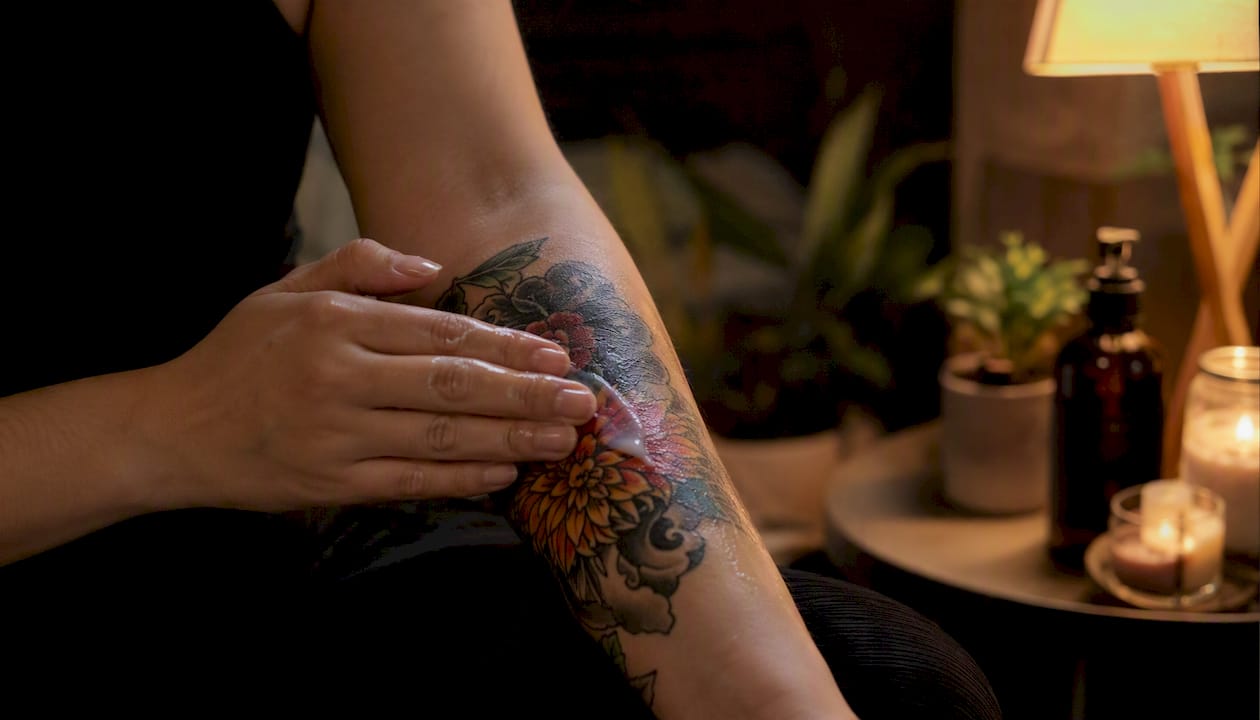
A small clinical study on a dermo-cosmetic aftercare product applied twice daily found reduced redness and edema and improved comfort over 14 days, with moisturizing actives including hyaluronic acid and glycerin supporting skin repair. The study was small and lacked a placebo arm, but the direction of evidence is consistent with broader dermatology guidance.
A Journal of Cosmetic Dermatology study reported erythema dissipating by around day 21 and transepidermal water loss recovering toward baseline by approximately day 14 with consistent product application. Purpose-designed post-tattoo products with actives like hyaluronic acid show objective improvements in hydration and barrier function in early trials, though evidence sample sizes remain limited across the field.
When should you contact a dermatologist or seek emergency care?
Stop using the suspected product immediately and seek medical attention if you notice any of the following:
- Spreading redness beyond the tattoo border, especially after 48–72 hours
- Fever above 100.4°F alongside tattoo-site swelling
- Pus, foul odor, or warm skin that worsens rather than improves
- Hives, facial swelling, or difficulty breathing after applying a numbing product (call 911)
- Raised, itchy bumps that persist beyond normal peeling (possible allergic reaction)
Action steps when a reaction occurs:
- Stop applying the product and photograph the affected area
- Contact your tattoo studio to report the product and lot number used
- Consult a board-certified dermatologist for evaluation
- For systemic symptoms (breathing difficulty, widespread hives, rapid heartbeat), go to the emergency room immediately
- Report non-compliant numbing products to FDA MedWatch at fda.gov/safety/medwatch
An editorial perspective on clinical vegan aftercare
The tattoo industry has spent years debating which aftercare product is “best” while largely ignoring the more pressing question: is the product safe and traceable? Switching to single-use, dermatologist-approved products is not a premium upgrade. It is the minimum standard for any studio that takes client outcomes seriously.
The practical rollout is straightforward: replace bulk jars with individually sealed units, add a printed aftercare card to every session checkout, and brief staff on the FDA’s OTC labeling requirements so they can field client questions confidently. The observed outcome is fewer irritation callbacks and stronger client trust. Dermatological certifications and client outcome data, when available, belong on the studio wall and the product page alike.
Sources
- Caring for tattooed skin
- Microbial contamination of opened skin care products used for tattooing (RWTH Aachen study)
- Clinical study of a dermo‑cosmetic product (Cicabio Pommade) in tattoo aftercare (PMC)
This article is general information, not a substitute for advice from a qualified doctor. Consult a qualified healthcare professional about your own circumstances before acting on anything here.
FAQ
What is vegan tattoo aftercare in a clinical context?
Vegan tattoo aftercare refers to dermatologist-approved, animal-ingredient-free products, including foaming soap, unscented water-based lotion, and aftercare balm, used in single-use formats to heal fresh tattoos safely.
Can you use numbing cream after getting a tattoo?
No. Numbing products are applied before and during the session. Applying high-concentration topical anesthetics to broken post-tattoo skin is unsafe unless the product carries explicit FDA clearance for that use.
How do you know if a tattoo numbing product is FDA-compliant?
Products listing lidocaine above that range or combinations like prilocaine and epinephrine for tattooing have received FDA warning letters.
What are the signs of a tattoo infection or allergic reaction?
Spreading redness beyond the tattoo border, fever, pus, or worsening swelling after 48–72 hours indicate possible infection. Hives, facial swelling, or breathing difficulty after product application signal a systemic allergic reaction requiring emergency care.
Does TBNC Tattoo offer studio bulk orders for aftercare products?
Yes. TBNC Tattoo’s dermatologist-approved aftercare kit, including the Tattoo Foaming Soap, Unscented Lotion, and Aftercare Balm, is available for bulk wholesale orders in individually sealed units with traceable lot numbers.


