

Wait 2–4 Days Before Using Aloe Vera on Tattoos
Aloe vera can be safe and genuinely helpful for a healing tattoo, but timing is everything: hold off until active weeping has stopped, usually a few days in, and never apply it to broken or infected skin. When you do reach for it, use a pure formula with no alcohol or added fragrance, and apply it in a thin, breathable layer rather than a thick coat. Dermatologist guidance from sources like the Cleveland Clinic backs this cautious approach, and TBNC Tattoo builds its aftercare line around the same logic.
TL;DR:
- Aloe vera should only be applied after the weeping stage has stopped, typically between days two to four, and not on broken or infected skin.
- Use pure, fragrance-free aloe in a thin layer during peeling, and avoid harvesting it directly from plants to prevent contamination and irritation.
- Check product labels for “Aloe Barbadensis leaf juice,” no alcohol or fragrances, and avoid latex extracts to ensure safety during healing.
- If redness, swelling, pus, or spreading infection signs occur, seek medical attention rather than applying aloe or home remedies.
- For reliable and consistent healing, follow a stage-based routine with dermatologist-approved products designed for each phase of tattoo recovery.
Table of Contents
- When Aloe Vera Helps: Matching It to Your Tattoo’s Healing Stage
- How Do You Apply Aloe Vera to a Tattoo Safely?
- What Should You Look for on an Aloe Vera Label?
- What Are the Warning Signs You Should Stop and See a Doctor?
- Why TBNC Tattoo’s Aftercare Line Fits This Stage-Based Approach
- Beyond Healing: Why Aloe Vera Calms More Than Just Fresh Tattoos
- Our Take: Stop Treating Aloe as a Universal Fix
- Ready for Aftercare That Matches Your Healing Stage?
- Sources
- FAQ
When Aloe Vera Helps: Matching It to Your Tattoo’s Healing Stage
Aloe vera earns its reputation for a reason. Clinical literature on wound-healing compounds like acemannan shows aloe can support tissue repair and reduce inflammation when it’s applied at the right point in the process, not the moment ink hits skin.
Here’s what aloe brings to the table during healing:
- Cooling and anti-inflammatory action that calms the burning, tight feeling common in the first week
- Lightweight hydration without the heavy, pore-clogging feel of petroleum-based ointments
- Mild antimicrobial properties that support a clean healing environment, though they don’t replace proper washing
- Itch relief during peeling, when skin tightens and flakes and the urge to scratch is strongest
Timing matters more than most people realize. In the first 24 to 48 hours, your tattoo is still an open wound, oozing plasma and excess ink. That’s not the moment for aloe, or for much of anything beyond gentle cleaning. Once the weeping slows down, typically around day two to four, skin enters the peeling and flaking stage. This is where aloe does its best work, soothing tight skin and easing itch without smothering it. As things settle into the deeper repair phase over the following weeks, a thicker daily moisturizer often takes over from aloe.
One thing aloe cannot do: protect your tattoo from the sun. It has no SPF value, and UV exposure is one of the fastest ways to fade fresh ink. Cover your tattoo or use a proper sunscreen once it’s fully healed.
How Do You Apply Aloe Vera to a Tattoo Safely?
Getting the application right is what separates aloe as a helpful ally from aloe as an irritant. Follow this sequence once you’ve confirmed your tattoo has moved past the open, weeping stage.
- Wash your hands and the tattoo with a fragrance-free, gentle cleanser. A dedicated tattoo foaming soap works well here because it cleans without stripping the skin barrier.
- Pat dry with a clean paper towel. Never rub, and never reuse a cloth towel that could harbor bacteria.
- Patch-test first on a small area of nearby, unbroken skin if this is your first time using a particular aloe product. Contact dermatitis to aloe is uncommon but real, and dermatologists routinely recommend this step before broader use, per Cleveland Clinic.
- Apply a very thin layer, just enough to see a light sheen, not a glossy coat.
- Let it absorb fully before covering the area with clothing.
Do this two to three times a day during the peeling phase, adjusting based on how your skin feels. If the tattoo looks shiny, soggy, or takes more than a few minutes to absorb, you’re using too much. UW Health’s aftercare guidance is direct on this point: thin layers heal faster than heavy, occlusive ones, because trapped moisture and bacteria slow the process down instead of speeding it up.
Avoid harvesting aloe straight from a houseplant. The sap contains latex compounds that can irritate healing skin, and you have no way to control contamination. Skip mixing aloe with essential oils or other additives, no matter what a home remedy blog suggests. Once your tattoo has fully re-epithelialized, usually two to three weeks in, you can taper off aloe and shift to standard moisturizing.
Pro Tip: Keep your aloe product in the fridge. The cool temperature amplifies the soothing effect on inflamed skin and makes application feel noticeably better during the itchiest days of peeling.
What Should You Look for on an Aloe Vera Label?
Not all aloe products are created equal, and the bottle matters as much as the plant itself. The NCCIH points out that commercial aloe products vary widely in composition, so label-reading isn’t optional if you’re using aloe on healing skin.
Check for these things before you buy:
- “Aloe Barbadensis leaf juice” listed near the top of the ingredient panel, ideally as one of the first two or three ingredients
- No alcohol denat. or isopropyl alcohol, both of which dry out and irritate healing skin
- No added fragrance or dyes, common triggers for contact irritation on compromised skin
- No latex-derived whole-leaf extract, which carries a higher allergy risk than purified inner-leaf gel
Fresh aloe straight from a leaf sounds appealing, but it introduces real contamination risk unless you know exactly how it was harvested and stored. Processed bottled gels, when properly formulated, offer more consistency and fewer unknowns. The tradeoff is that you’re trusting the manufacturer’s ingredient list, which is exactly why reading it matters.
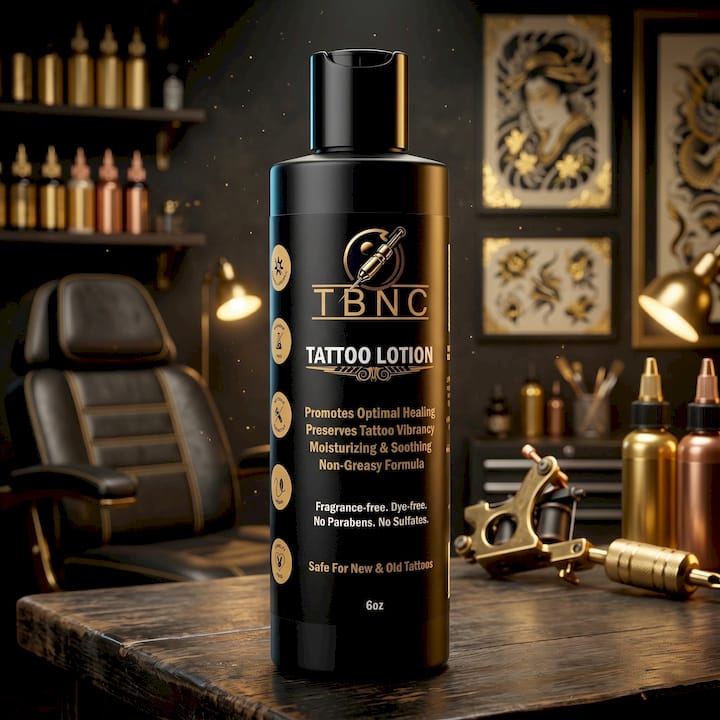
If you have sensitive skin or a history of allergic reactions, a dermatologist-approved, unscented aftercare product is often the safer bet over a general drugstore aloe gel. Formulated options are built specifically for compromised skin barriers, without the guesswork of decoding a label. A product like TBNC Tattoo’s unscented aftercare lotion removes that variable entirely.
What Are the Warning Signs You Should Stop and See a Doctor?
Most healing hiccups are normal. Some aren’t, and knowing the difference protects your tattoo and your health.
Watch for these infection red flags, all of which warrant professional evaluation:
- Redness that spreads outward rather than staying contained to the tattoo
- Warmth or swelling that increases rather than fades after the first few days
- Pus, unusual discharge, or a foul odor
- Fever, chills, or red streaking away from the tattoo
- Pain that worsens instead of gradually improving
If you notice hives, blistering, or a widespread rash after applying aloe, stop using the product immediately, wash the area gently with plain water, and avoid reapplying anything until you’ve spoken with a clinician. Mild redness limited to the tattoo itself can often wait for a follow-up with your tattoo artist. Spreading symptoms, fever, or visible pus need a primary care visit or urgent care, not a home remedy. The Cleveland Clinic’s guidance on recognizing infection is a useful benchmark if you’re unsure which category you fall into.
Why TBNC Tattoo’s Aftercare Line Fits This Stage-Based Approach
TBNC Tattoo builds its aftercare products around the same principle dermatologists emphasize: match the product to the healing stage, not the other way around. The formulas are dermatologist-approved, petroleum-free, and used across more than one million documented tattoo sessions.
Over 3,250 tattoo studios worldwide currently stock TBNC Tattoo products as part of their standard aftercare protocol.
Here’s how the lineup maps to what your skin actually needs:
- Tattoo Foaming Soap for the daily wash step, gentle enough for open, weeping skin in the first days
- Tattoo Aftercare Lotion, unscented, for longer-term moisturizing once weeping has fully resolved
A common combination that works well: cleanse with the foaming soap, apply a thin layer of soothing gel or plain aloe during active peeling, then transition to the unscented lotion for daily maintenance in weeks two and three. You don’t have to choose one path exclusively. Many people use pure aloe as a supplement to a formulated routine, particularly on days when skin feels unusually tight or itchy.
Beyond Healing: Why Aloe Vera Calms More Than Just Fresh Tattoos
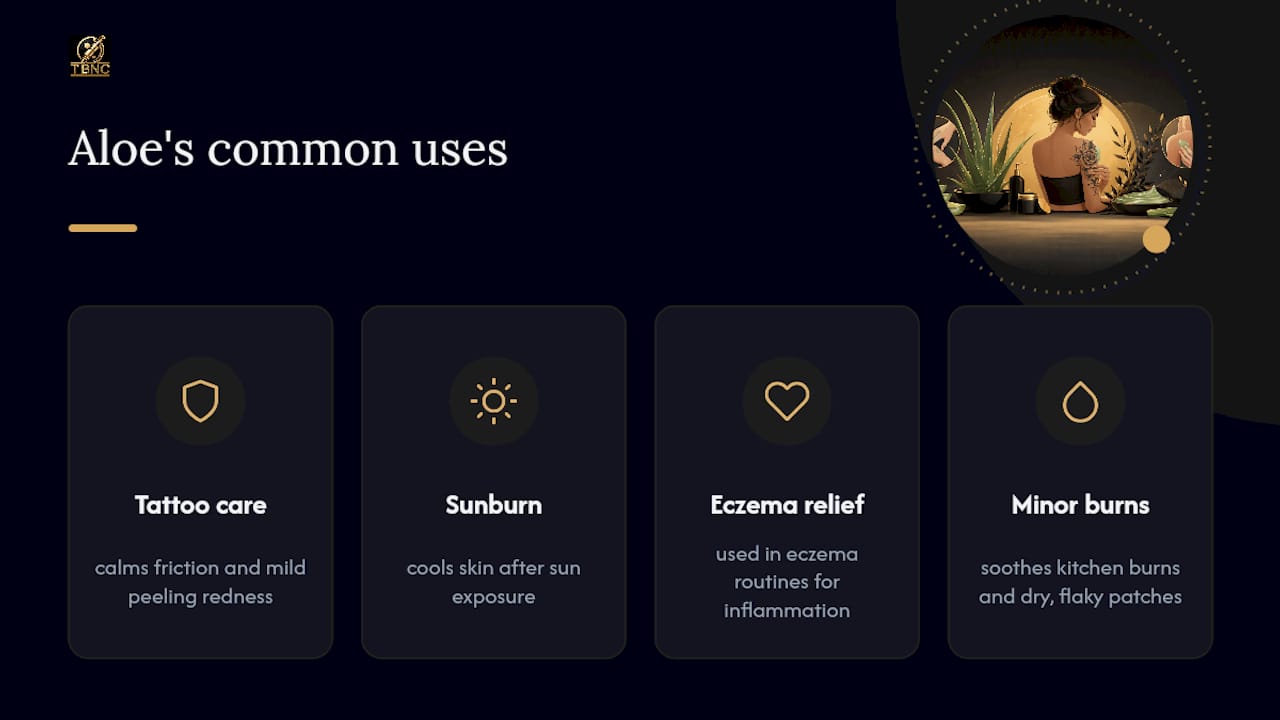
Aloe’s usefulness doesn’t stop at wound care. The same properties that make it helpful for tattoos, cooling, anti-inflammatory, and lightly hydrating, are why it shows up in sunburn remedies, eczema routines, and general skin irritation products.
If your tattoo sits in an area prone to friction, like inner arms or ankles, aloe can help calm the low-grade irritation that comes from clothing rubbing against healing skin. It’s also a reasonable option for the mild redness some people experience around the edges of a tattoo during peeling, distinct from infection, more akin to the skin equivalent of chapped lips.
Beyond tattoos, aloe is commonly reached for after sun exposure, minor kitchen burns, and dry, flaky patches unrelated to any wound at all. The mechanism is consistent across these uses: a water-based gel that hydrates without the greasy occlusion of petroleum products, while delivering a mild cooling sensation that takes the edge off inflamed skin. That versatility is part of why so many people already have a bottle in the medicine cabinet before they ever get inked, and part of why it transitions so naturally into a tattoo aftercare routine once the timing is right.
Our Take: Stop Treating Aloe as a Universal Fix
The biggest mistake we see in tattoo aftercare advice is treating aloe vera as either a miracle cure or a myth to avoid entirely. Neither is accurate. The research supports aloe as a legitimate, evidence-backed option for a specific window of healing, not a product you slather on from day one or ignore altogether.
Conventional advice often skips the timing conversation entirely, telling people to “use aloe” without specifying when. That’s how irritation happens, not from aloe itself, but from applying it to skin that isn’t ready for it. If you take one thing from this article, prioritize reading your skin’s healing stage over reading a generic product recommendation.
Formulated aftercare products exist precisely because consistency matters more than purity claims on a random bottle. A dermatologist-approved lotion removes the guesswork that comes with decoding aloe labels, which is often the more practical choice for most healing tattoos.
— The Best Numbing Cream
Ready for Aftercare That Matches Your Healing Stage?
Skip the label-reading and the guesswork. TBNC Tattoo’s aftercare line gives you dermatologist-approved, unscented, petroleum-free formulas built specifically for each phase of tattoo healing, so you’re not relying on a random drugstore aloe gel and hoping the ingredient list checks out. From the gentle foaming soap for daily washing to the soothing gel for the peeling phase, the full range is available on our tattoo aftercare collection page. Always follow your tattoo artist’s specific aftercare instructions first, patch-test any new product on nearby skin, and check in with a dermatologist if you notice anything that looks or feels off. Browse the lineup and find the right fit for where your tattoo is in its healing timeline right now.
Sources
This guide draws on aftercare guidance from the Cleveland Clinic, wound-healing research on NCBI/PMC, the NCCIH aloe vera overview, UW Health’s permanent tattooing aftercare instructions, and Acibadem International’s evidence-based aftercare review. For anything specific to your tattoo, check with your artist or a dermatologist.
- Tattoo aftercare: Instructions and healing tips — Cleveland Clinic
- Wound healing and Aloe vera — NCBI/PMC
- Aloe vera: NCCIH overview
- After-care instructions for permanent tattooing — UW Health
FAQ
What heals a tattoo the fastest?
A simple routine of gentle cleaning, light and consistent moisturizing, and avoiding sun exposure or soaking heals tattoos most reliably, according to Cleveland Clinic guidance. Aloe vera can support that process during the peeling phase, but no single product speeds healing on its own.
What should you not put on a new tattoo?
Avoid petroleum-heavy ointments in thick layers, alcohol-based products, fragranced lotions, and anything not specifically formulated for broken or healing skin. Heavy, occlusive layers can trap bacteria and actually delay healing, per UW Health.
Does aloe vera gel fade tattoo ink?
Aloe vera itself doesn’t fade tattoo color, but it offers no sun protection, and UV exposure is one of the leading causes of ink fading. Cover your tattoo or use sunscreen once it’s fully healed.
What’s the best thing to moisturize a new tattoo with?
During active peeling, a thin layer of pure aloe or a lightweight soothing gel like TBNC Tattoo’s Tattoo Soothing Gel works well. Once weeping has fully stopped, an unscented lotion supports longer-term hydration without added irritants.


