

Extend Numbness by Hours Safely: Epinephrine Numbing Cream for Tattoos
Yes, some topical numbing preparations include low-dose epinephrine to prolong the numbing effect, but its use demands safety-minded limits. Epinephrine tightens blood vessels near the application site, which slows absorption into the bloodstream and stretches out how long the numbness lasts. That benefit comes with real caveats: people with cardiovascular conditions, certain medications, or compromised skin need to approach these formulas with more caution than a standard lidocaine cream, and matching the product to your session length and skin surface matters more than most buyers realize.
TL;DR:
- Epinephrine in numbing creams constricts blood vessels, prolonging numbness and reducing bleeding, especially beneficial for lengthy tattoo sessions.
- Safety concerns rise with large surface areas, compromised skin, or individuals with cardiovascular issues, requiring strict attention to dosage and application area.
- Clinical data indicates lidocaine with epinephrine provides lasting anesthesia of about 2.5 to 3.5 hours when used appropriately, matching session needs.
- Proper application involves cleaning skin, applying a thin even layer under occlusion if directed, and avoiding multiple layered products that increase toxicity risk.
- Choosing the right product depends on session length, location, and health; conservative use within surface-area limits is essential for safe and effective numbing.
Table of Contents
- How Does Epinephrine Work in Numbing Creams?
- Is Epinephrine Safe in Numbing Creams? Risks to Know
- How Long Does Numbing Cream With Epinephrine Last?
- Choosing the Right Numbing Cream for Your Procedure
- Applying Numbing Cream Safely: Dosing and Warning Signs
- Why TBNC Tattoo’s Formulas Are Trusted for This
- What Actually Matters When Choosing a Numbing Product
- Ready to Choose Your Numbing Cream
- Sources
- FAQ
How Does Epinephrine Work in Numbing Creams?
Epinephrine works by activating alpha-1 receptors in the small blood vessels beneath the skin, causing them to constrict. That local vasoconstriction is the entire mechanism behind why an epinephrine topical anesthetic outlasts a plain lidocaine formula. Less blood flow through the treated area means the anesthetic molecules stay concentrated where you need them instead of washing out into general circulation.
This absorption-flattening effect does two things simultaneously: it prolongs the numbing window, and it lowers the peak plasma concentration of the anesthetic even when a larger total dose gets applied, according to research on epinephrine’s role in local anesthetics. The vasoconstriction also reduces bleeding, which is a genuine bonus for tattoo artists working through multi-hour sessions on skin that would otherwise ooze and interfere with ink saturation.
Concentration matters here. Dilute epinephrine solutions used in tumescent techniques (as low as 1 part per million) behave nothing like the low-concentration blends found in topical creams. The dilution, the delivery form, and whether the product sits under an occlusive wrap all shift the timeline. A cream is not a liquid injectable, and treating the two as interchangeable is where people get into trouble.
Is Epinephrine Safe in Numbing Creams? Risks to Know
Systemic toxicity from any topical anesthetic is dose-dependent and area-dependent. A thin layer on a small patch of skin behaves very differently than a thick coat spread across your entire back. Toxic plasma thresholds for lidocaine sit above 5 µg/mL, and appropriate, limited topical use rarely gets close to that line, but broad application on large surface areas can push exposure higher than most people expect, according to research on topical anesthetic systemic toxicity.
Certain situations raise the stakes considerably:
- Broken, irritated, or freshly abraded skin absorbs anesthetic faster than intact skin.
- Large treatment areas (think full back or thigh pieces) increase total systemic exposure.
- Infants, older adults, and anyone with severe peripheral vascular disease face higher risk from vasoconstriction.
- End-arterial sites, like fingers, toes, ears, and the tip of the nose, warrant extra caution because vasoconstriction there has less room to be forgiving.
Drug interactions deserve attention too. Tricyclic antidepressants and certain other medications can amplify epinephrine’s effect on heart rate and blood pressure, an interaction flagged by professional drug-interaction references. Tell your artist or clinician about every medication you take, prescription or otherwise, before applying an epinephrine-containing product.
Case reports of systemic epinephrine toxicity from topical gels exist, and while they’re rare, they’re a useful reminder that dose and surface area aren’t details to skip past, according to documented cases of topical anesthetic toxicity.
Pro Tip: Keep a running mental tally of every lidocaine-containing product touching your skin that day, cream, gel, or spray. Layering multiple “numbing” products stacks your total dose even if each one seems mild on its own.
How Long Does Numbing Cream With Epinephrine Last?
Clinical labeling for lidocaine with epinephrine gives us the clearest benchmark. Dental infiltration injections typically produce around 60 minutes of pulp anesthesia and roughly 2.5 hours of soft-tissue numbness, while nerve blocks stretch that to 90 minutes of pulp anesthesia and 3 to 3.5 hours of soft-tissue effect, per FDA drug labeling data. Onset for infiltration usually happens in under 2 minutes; nerve blocks take slightly longer, around 2 to 4 minutes.
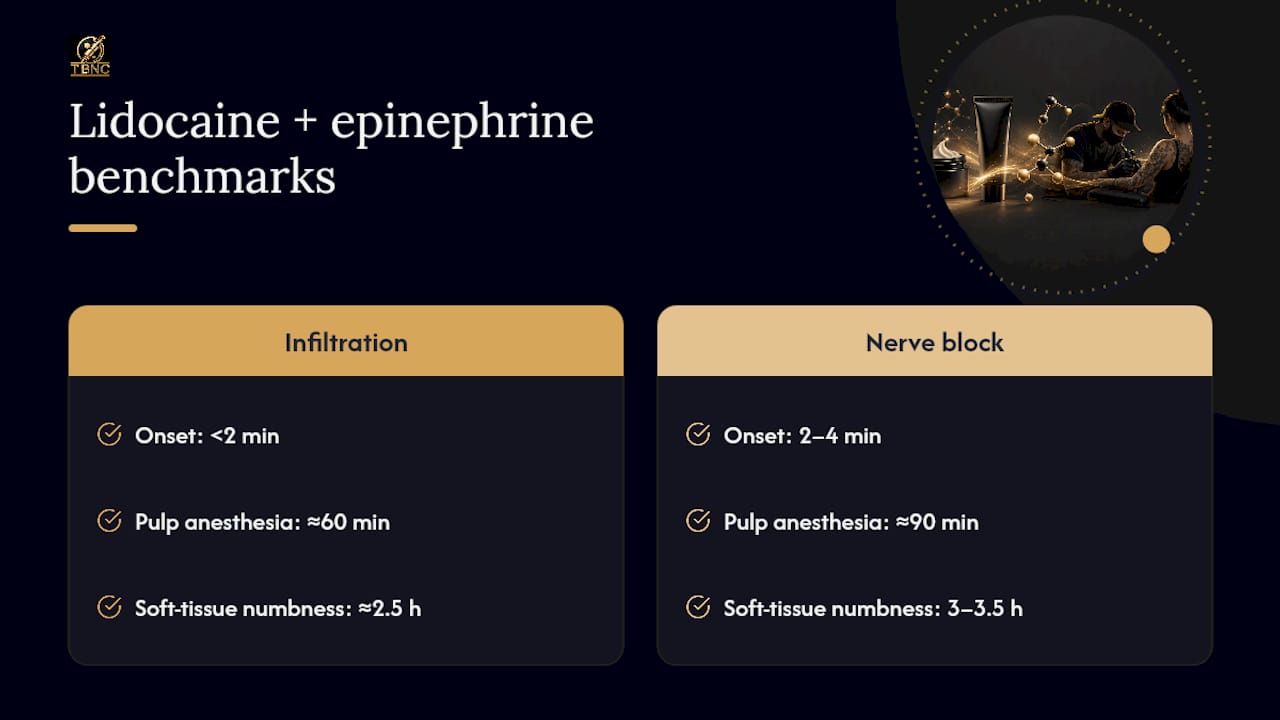
Translating that to a tattoo chair: a cream formula under occlusion won’t hit those exact numbers, but the pattern holds. Plain lidocaine numbs for a shorter window; adding epinephrine extends practical comfort by hours rather than minutes, which is exactly why long tattoo sessions and multi-step cosmetic procedures lean on it. Reapplication timing should follow the product’s own directions rather than a guess, since cream absorption under a wrap differs from an open liquid.
Choosing the Right Numbing Cream for Your Procedure
Not every session calls for the same formula. A 30-minute touch-up and a six-hour back piece have completely different numbing needs, and matching the product to the job prevents both under-dosing pain and over-application risk.
Start with these decision points:
- Session length. Short sessions under an hour rarely need maximum-duration formulas; longer sessions benefit from epinephrine’s extended window.
- Treatment location. Sensitive spots like ribs, sternum, shins, and palms often need a numbing cream built for high-pain zones.
- Surface area. Larger areas call for stricter surface-area limits and possibly a lower-concentration approach rather than maximum strength everywhere.
- Who’s applying it. At-home consumer use should stay conservative; clinician-administered procedures allow for more tailored dosing.
For scenario mapping, here’s how it typically shakes out:
- First-time clients or shorter sessions: the Tattoo Numbing Bundle covers the basics without overcomplicating things.
- Multi-hour sessions or larger pieces: the Ultra Tattoo Numbing Bundle is built for extended comfort.
- Repeat clients or studios buying for regular use: the TBNC 5 Pack makes more economic sense than restocking single tubes.
- Clients who want numbing and healing covered together: the Tattoo Numbing & Aftercare Bundle bundles both needs into one purchase.
Applying Numbing Cream Safely: Dosing and Warning Signs
Application technique matters as much as the formula itself. Follow this sequence for consumer use:
- Clean the skin thoroughly to remove oils and debris that block absorption.
- Apply a thin, even layer, not a thick paste. More product does not mean more numbing; it means more systemic exposure.
- Occlude if the product directions call for it, using plastic wrap to boost absorption into the skin rather than off it.
- Wait the recommended time before your artist begins, then wipe away excess cream per the product’s application directions.
Consumer use should stay well within the surface-area guidance manufacturers publish. Clinical mg/kg dosing charts don’t translate directly to a tube of cream, so err conservative rather than maximal.
Watch for red flags: unusual blanching or whitening that doesn’t fade, tingling that spreads beyond the treated area, dizziness, ringing in the ears, or a racing heartbeat. Persistent skin discoloration or blistering can signal a chemical burn from overuse rather than normal numbing sensation. Any systemic symptom, confusion, chest tightness, severe lightheadedness, warrants stopping immediately and seeking medical attention.
Pro Tip: If a finger, toe, or earlobe stays unusually pale or cold well after your session, tell someone immediately. Clinicians can reverse prolonged vasoconstriction with phentolamine, but that decision needs to happen fast, not the next morning.
Why TBNC Tattoo’s Formulas Are Trusted for This
TBNC Tattoo’s numbing line is widely used in many tattoo studios worldwide and has been part of countless documented sessions. That kind of repeat adoption from working artists tells you something a marketing claim alone can’t: these formulas hold up in real studio conditions, not just controlled testing. Every TBNC product ships dermatologist-approved and pairs with clear directions for safe application, so you’re never guessing at timing or technique. Whether you need a single-session solution or a professional-grade bundle, the catalog maps directly to the scenarios covered above.
What Actually Matters When Choosing a Numbing Product
Most advice on numbing creams treats “stronger is always better” as the default wisdom. It isn’t. The research on epinephrine-containing anesthetics tells a more nuanced story: the benefit comes from controlled, appropriate use, not maximum concentration slathered over the largest possible area. A dilute, well-matched formula applied correctly beats an aggressive one applied carelessly, every time.
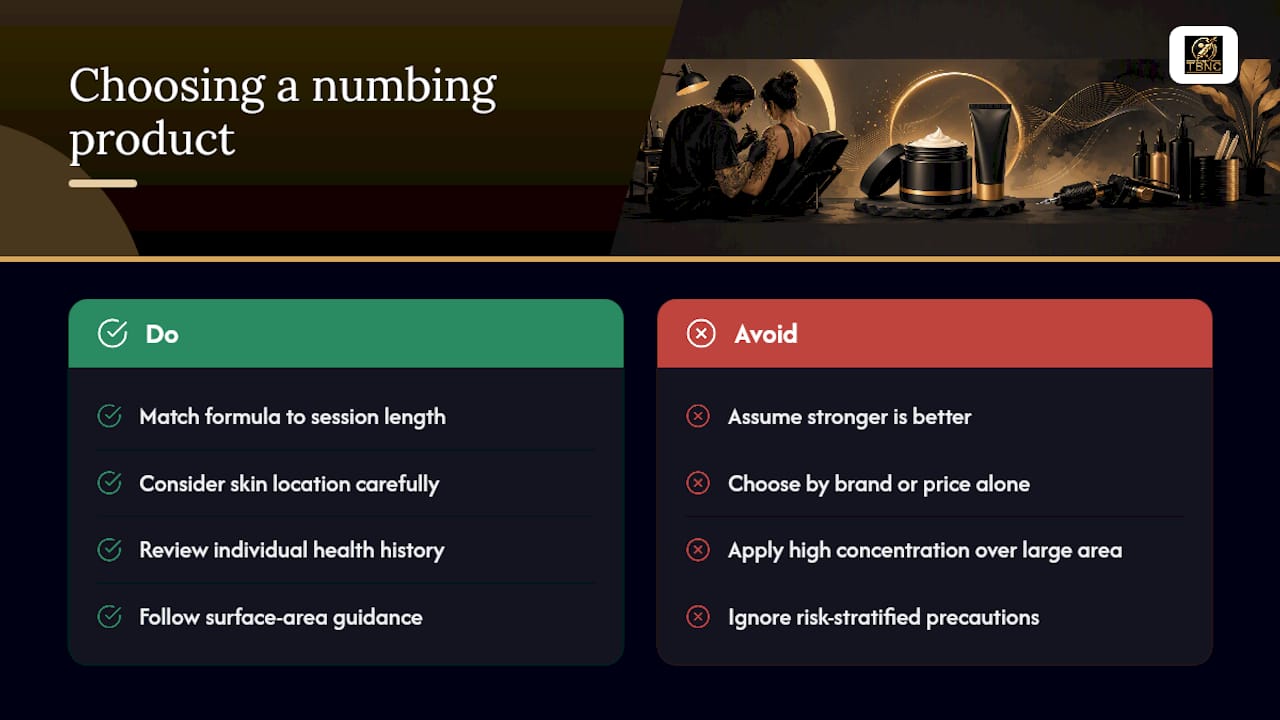
Where conventional advice falls short is in treating numbing cream selection like a one-size decision. Session length, skin location, and individual health history should drive the choice, not just brand reputation or price per ounce. The clinical literature on risk-stratified anesthetic use backs this up: even in higher-risk contexts, appropriate dilute epinephrine use has a strong safety record when the precautions are respected.
If you take one thing from this guide, let it be this: read the surface-area guidance before you read the marketing copy. The formula matters less than how much of it you’re putting on your skin and where.
— The Best Numbing Cream
Ready to Choose Your Numbing Cream
TBNC Tattoo built its catalog around exactly the scenarios covered above, so you’re not stuck guessing which strength or bundle fits your session. First-time clients or shorter appointments do well starting with the Tattoo Numbing Bundle, while anyone facing a multi-hour piece should look at the Ultra Tattoo Numbing Bundle for extended coverage. Studios and repeat collectors buying in volume get better economics from the TBNC 5 Pack than from restocking single tubes session by session. After the needle stops, pair your numbing routine with the Tattoo Soothing Gel to calm the skin and support healing. Every product page links back to full application directions, so you can apply with confidence instead of trial and error. Pick the bundle that matches your next session, and walk in prepared.
This article is general information, not a substitute for advice from a qualified doctor. Consult a qualified healthcare professional about your own circumstances before acting on anything here.
Sources
- The role of epinephrine in local anesthetics (PMC)
- DailyMed product labeling — lidocaine with epinephrine (durations/onset)
FAQ
How Long Does Lidocaine With Epinephrine Last?
Clinical labeling shows soft-tissue anesthesia from lidocaine with epinephrine typically lasts about 2.5 hours with infiltration and 3 to 3.5 hours with nerve blocks, with onset usually within a few minutes, according to FDA labeling data.
Is Numbing Cream With Epinephrine Safe for Tattoos?
Used correctly, on intact skin, in limited amounts, and per product directions, it’s generally low risk; the concern arises with large-area application, compromised skin, or underlying cardiovascular conditions.
Can I Use Epinephrine Numbing Cream if I Take Antidepressants?
Some antidepressants, particularly tricyclics, can interact with epinephrine and amplify cardiovascular effects, so disclose all medications to your artist or clinician before use.
What’s the Difference Between Numbing Cream With and Without Epinephrine?
Formulas without epinephrine numb faster but wear off sooner; epinephrine-containing formulas take slightly longer to establish full effect but extend numbness for hours longer, thanks to reduced blood flow at the site.
How Much Numbing Cream Should I Apply?
Apply a thin, even layer within the surface-area limits your product specifies. More cream doesn’t mean more numbing, it increases systemic absorption risk instead.


