

Back Tattoo Numbing: Safe Prep, 1–3 Hour Relief, and 4% Lidocaine Rule
Short answer: topical numbing creams can meaningfully reduce pain during the early hours of a back tattoo, but they do not maintain full-depth numbness across a multi-hour session. Follow the label’s lidocaine concentration limit and FDA guidance against heavy application or covering large treated areas. If your back piece requires several hours in the chair, plan reapplication and breaks with your artist before the needle ever touches skin.
TL;DR:
- Numbing creams are effective for the first one to two hours of a long tattoo session but do not sustain full numbness during extended hours.
- Application should be targeted to the active area, timing strictly according to the label, and reapplication coordinated with artist breaks to avoid overuse.
- The FDA warns against using lidocaine concentrations above 4% and cautions against occluding treated skin, as these can cause serious health risks.
- Most pain during back tattoo sessions is due to fatigue and stress, which tend to increase pain levels over time, regardless of numbing cream.
- Proper communication with your artist about numbing product use and reapplication plans significantly improves safety and comfort during long sessions.
Table of Contents
- How Well Does Numbing Cream Work on a Full Back Piece?
- How Do You Apply Numbing Cream Safely for a Long Back Session?
- What Are the Safety Limits for Lidocaine on a Back Tattoo?
- What Should You Expect From Your Artist and Your Own Pain Tolerance?
- How Does TBNC Tattoo Fit Into a Safety-First Numbing Plan?
- Why Most Advice on Numbing Creams Misses the Point
- Ready to Plan Your Back Session Numbing Routine?
- Sources
- FAQ
How Well Does Numbing Cream Work on a Full Back Piece?
Topical lidocaine works by blocking sodium channels in the nerve endings sitting just under the skin’s surface, in the epidermis and upper dermis. That’s where a tattoo needle does most of its damage, so the cream intercepts a real share of the pain signal before it reaches your brain. It doesn’t touch deeper pressure or vibration, which is why most people still feel something, just duller.
Most over-the-counter formulas reach peak effect in 20 to 60 minutes and hold for roughly one to three hours, depending on the concentration and how the product is layered. That window covers the front half of a shorter back session. It rarely covers a full-day back piece booked for six or eight hours straight.
By the numbers: A 2020 survey of 1,092 tattooed adults found the average pain rating during a session was 4.35 out of 10, and session length and stress predicted pain better than placement did.
That last point matters more than most people assume walking into a studio. Anecdotal reports on forums like Reddit consistently describe numbing wearing off two to three hours into large back pieces, forcing artists and clients to improvise mid-session.
What this means practically:
- Numbing cream earns its keep in the first hour or two, when anxiety and initial shock are highest.
- Fatty, padded stretches of the back tend to hurt less than bony ridges near the spine or shoulder blades, according to Healthline’s tattoo pain chart, though duration still outweighs placement as a pain driver.
- Treat cream as a tool that softens the first stretch of a long sit, not a guarantee of a pain-free eight hours.
How Do You Apply Numbing Cream Safely for a Long Back Session?
Getting the timing right matters as much as picking the right product. A rushed application, or one spread across the entire back at once, is where most people run into trouble.
- Prep your body the night before. Sleep a full night, eat a real meal before your appointment, stay hydrated, and skip alcohol and caffeine, both of which thin skin sensitivity control and can increase bleeding.
- Tell your artist you’re using a topical numbing product. Some studios have rules about this, and you want that conversation finished before you’re in the chair.
- Apply to targeted zones, not the whole back. Cover the section your artist is starting on, not the entire canvas. This limits absorbed surface area and lets you stagger reapplication as the artist works down or across the piece.
- Follow the label’s leave-on time exactly. Most creams need 30 to 45 minutes under light coverage to reach full effect. Longer isn’t better, and it doesn’t mean deeper numbness.
- Plan reapplication around natural breaks. Coordinate with your artist so cream goes on a fresh zone while they’re resting their hand or switching needles, not while the machine is running.
Pro Tip: Bring a spare product like a tattoo balm or spray in your bag for touch-ups during breaks, but never apply a second layer over skin that’s already been worked. Use fresh, unbroken skin only.
What to avoid matters just as much as what to do. Skip heavy layering across large sections of the back at once, skip wrapping treated skin in plastic film to “boost” absorption, and never apply cream to skin that’s already broken, inflamed, or bleeding. For a deeper walkthrough of timing and technique, TBNC Tattoo’s guide to numbing tattoos before your appointment breaks down zone by zone pacing in more detail.
What Are the Safety Limits for Lidocaine on a Back Tattoo?
The FDA has warned consumers directly not to use over-the-counter topical analgesics with more than 4% lidocaine for procedures like tattooing, and specifically flags heavy application or wrapping treated skin as dangerous. This isn’t a minor labeling suggestion. It’s the difference between a manageable numbing session and a trip to the emergency room.
Regulatory reality check: the FDA issued a warning letter to TKTX USA after finding products marketed for tattooing carried lidocaine concentrations and ingredient combinations beyond permitted OTC ranges, with tattoo-specific claims that didn’t match approved use.
Covering or occluding treated skin, whether with plastic wrap, tight clothing, or a thick bandage, traps lidocaine against the skin and drives more of it into your bloodstream than your body is built to process at once. At high enough systemic levels, that can trigger seizures, irregular heartbeat, or breathing problems. This is why targeted, uncovered application beats blanket coverage every time.
A few more things worth checking before you numb up:
- If you’re pregnant, have a cardiac condition, take heart rhythm medication, or have liver disease, talk to a doctor before using any lidocaine product.
- Read the active ingredient percentage on the label before buying anything. If it doesn’t clearly list a concentration at or under 4%, put it back.
- Cross-check the surface area you plan to cover against your body weight; TBNC Tattoo’s surface area and safety guide and its lidocaine breakdown walk through how to do that math.
What Should You Expect From Your Artist and Your Own Pain Tolerance?
Pain during a back session rarely stays flat. It tends to climb as hours pass, as adrenaline fades and the same muscles hold the same position for too long. That climb usually has more to do with fatigue and stress than with which exact spot the needle is on.
Studio policies on numbing cream vary more than most clients expect. Some artists prohibit topical anesthetics outright, worried about skin texture changes affecting their linework. Others are fine with client-applied cream as long as you disclose it and stick to a low concentration. Ask directly at your consultation, before you buy anything.
- Ask whether your artist has a preference or policy on numbing products.
- Ask how they’d like to handle reapplication breaks during a multi-hour sit.
- Watch for numbness wearing off, tingling returning, or sharper pain creeping back, and flag it early rather than pushing through silently.
- Confirm that any numbing product you use won’t interfere with how they read your skin for depth or saturation.
Numbing cream, used correctly, doesn’t compromise ink quality or healing. What compromises healing is skipping proper aftercare once the needle stops.
How Does TBNC Tattoo Fit Into a Safety-First Numbing Plan?
TBNC Tattoo builds its line around the same principle this article keeps coming back to: numbing works best when it’s targeted, timed, and paired with real aftercare, not treated as a one-and-done shortcut. The lineup covers cream and gel for pre-session prep, spray for quick mid-session touch-ups on fresh zones, and a full aftercare range, including balm, soothing gel, butter, and foaming soap, for what happens after the machine stops.
TBNC Tattoo describes its formulas as dermatologist-approved and reports use across more than 3,250 tattoo studios worldwide and over one million sessions, according to the brand’s own product overview. Those numbers reflect the brand’s own reported figures.
Using any of these products safely still means following the same rules covered above:
- Check the label’s lidocaine percentage before applying anything.
- Apply to the section your artist is actively working, not your entire back.
- Coordinate reapplication timing with your artist’s natural breaks.
- Skip wrapping or bandaging treated skin to “lock in” the effect.
Pro Tip: Pack the cream for pre-session prep and a spray for quick zone touch-ups during breaks. Save the aftercare balm and lotion for once you’re home and healing, not for use mid-session.
Why Most Advice on Numbing Creams Misses the Point
Most numbing cream content treats the product as the whole solution, as if a thick enough layer guarantees a painless sitting. That framing sets people up to either overapply, chasing a numbness that OTC lidocaine simply can’t sustain for six hours, or to feel like they failed when sensation creeps back in hour three.
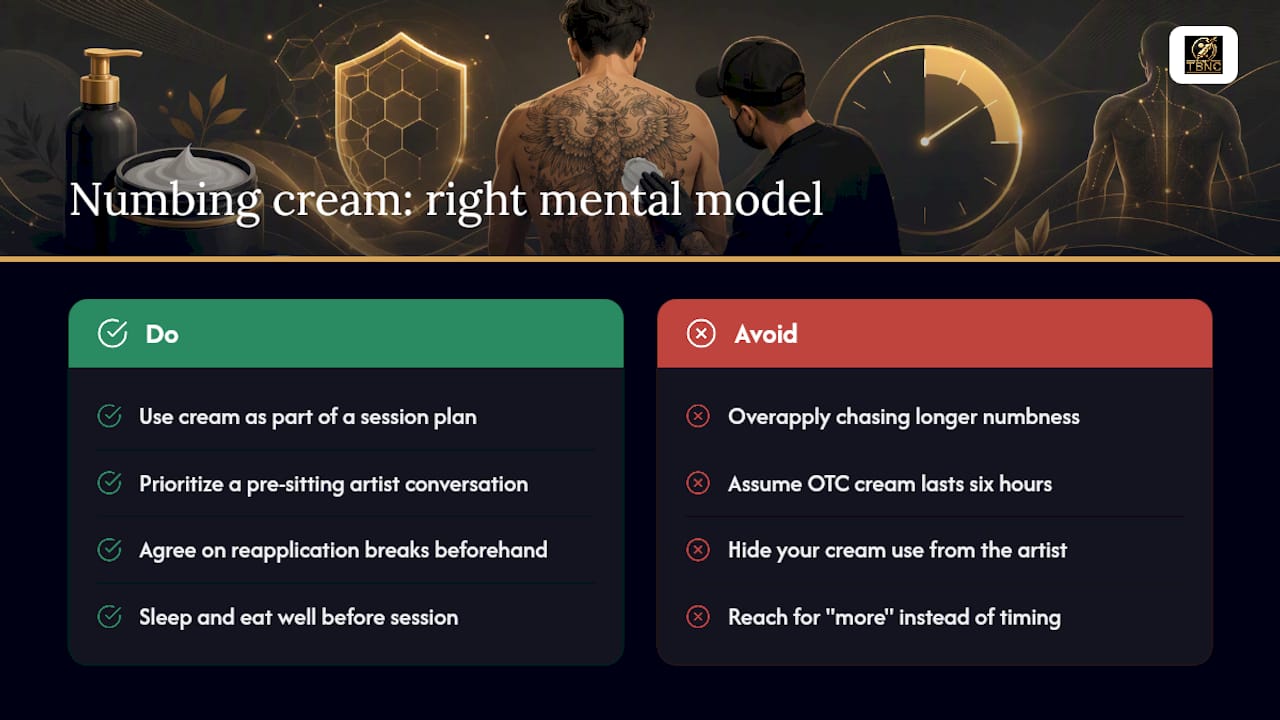
The better mental model treats numbing cream as one piece of a session plan, alongside sleep, food, honest communication with your artist, and realistic pacing. The FDA’s warnings about concentration limits and occlusion exist because people keep reaching for “more” as the fix when the actual fix is smarter timing and targeted application.
If there’s one thing worth prioritizing above the cream itself, it’s the conversation with your artist before you sit down. Agreeing on reapplication breaks and being upfront about what you’re using does more for a long back session than any single product claim.
— The Best Numbing Cream
Ready to Plan Your Back Session Numbing Routine?
For a full back piece booked across multiple hours, pairing a pre-session cream with a mid-session spray covers both ends of the sitting better than either alone. TBNC Tattoo’s Tattoo Numbing & Aftercare Bundle combines that pre-session and post-session coverage in one order, while the Ultra Tattoo Numbing Bundle is built for readers who want maximum in-chair and aftercare support for a longer sitting. If you’d rather start simple, The Best Numbing Cream 2 Pack is a straightforward entry point for pre-session prep, and the Tattoo Butter rounds out healing once you’re home.
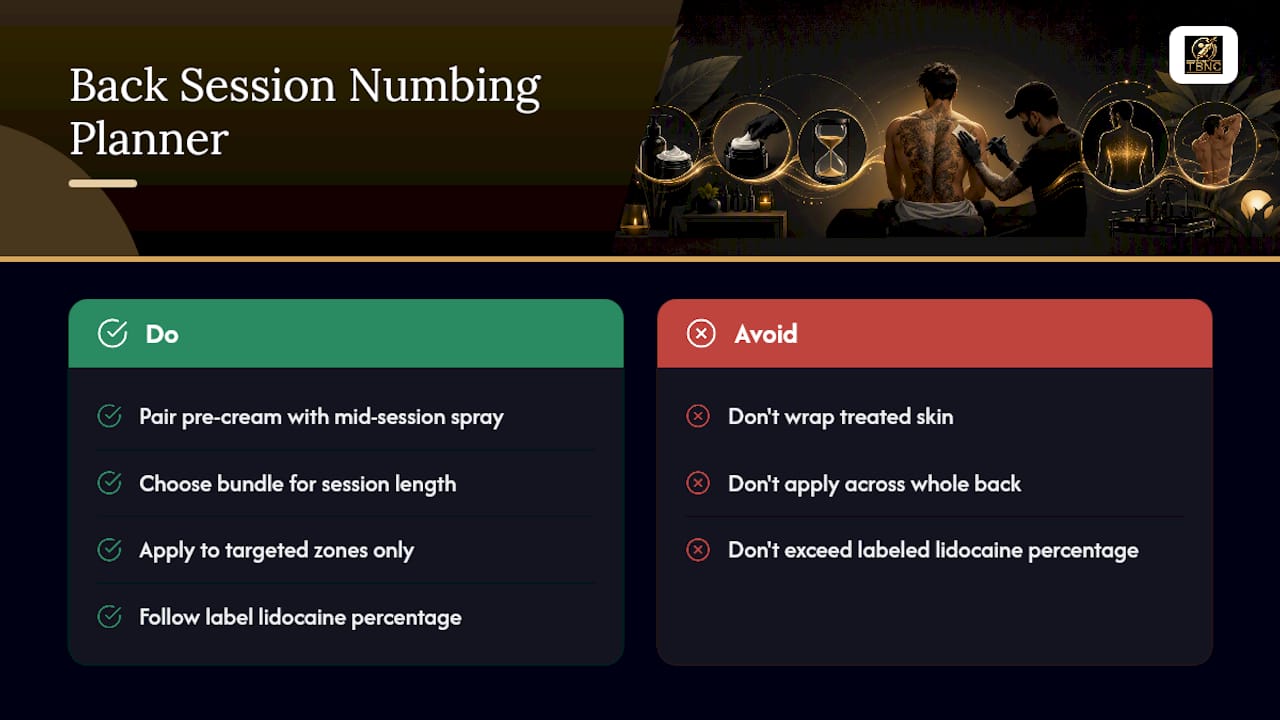
Whichever you choose, stick to the label’s lidocaine percentage, apply to targeted zones rather than the whole back, and skip wrapping treated skin. Browse the full numbing cream lineup and pick the combination that matches your session length.
Sources
- FDA warns consumers to avoid certain topical pain relief products due to potential for dangerous health effects
- Gender differences in subjective pain perception during and after tattooing
- Tattoo pain chart and practical advice (Healthline)
FAQ
Is the Back One of the More Painful Places for a Tattoo?
Not typically. Much of the back is padded and fatty, which tends to hurt less than bony or nerve-dense spots like ribs or the spine itself, per Healthline’s pain chart. Session length and stress affect overall pain more than placement does.
Where Does a Spine Tattoo Rank on a 1 to 10 Pain Scale?
Spine tattoos tend to cause sharper pain because the needle works directly over bone with little padding. That’s a general pattern rather than a fixed score, since individual pain tolerance and session length shift the number.
What Numbing Cream Is Safe to Use for a Spine Tattoo?
Look for a product listing 4% lidocaine or less, applied to a small, targeted section rather than the full spine strip at once, following FDA guidance. Some cream and gel products are formulated for targeted pre-session use along sensitive areas like the spine when applied by label directions.
Is Numbing Before a Tattoo a Bad Idea?
Not when it’s done correctly. Applying an OTC-strength cream to a targeted area and following label timing is generally considered safe; the risk comes from overapplying, using unregulated high-concentration products, or wrapping treated skin, all of which the FDA has specifically warned against.


