

Read the Label First to Find the Best Tattoo Soap
The best tattoo soap is a gentle, fragrance-free liquid cleanser used regularly until the surface heals. Skip antibacterial formulas unless your artist or a clinician tells you otherwise. They tend to dry out fresh skin more than they protect it. Aftercare bundles typically include a compliant wash with the right follow-up moisturizer for those who prefer a vetted kit rather than building one themselves.
TL;DR:
- Use a fragrance-free, sulfate-free liquid or foaming soap with minimal ingredients to support healing skin without causing irritation.
- Avoid antibacterial, medicated acne washes, alcohol-based gels, and scented soaps, as they can dry out or irritate a fresh tattoo.
- Wash with lukewarm water, gentle massage using fingertips, and pat dry with a clean paper towel, then apply moisturizer while skin is still damp.
- Choose products with glycerin, ceramides, or saponified plant oils for hydration and barrier support, and steer clear of marketing claims like “natural” or “gentle.”
- Follow your artist’s specific instructions for timing and technique, and consider pre-vetted aftercare bundles for simplified, compatible product selection.
Table of Contents
- What Makes the Best Tattoo Soap for Fresh Ink?
- How Do You Wash a Fresh Tattoo Properly?
- Which Tattoo Soaps and Aftercare Products Actually Work?
- What Soaps Should You Avoid on a New Tattoo?
- Why Trust This Tattoo Aftercare Guide?
- Where Most Tattoo Aftercare Advice Goes Wrong
- Ready-Made Aftercare Bundles Worth Considering
- Sources
- FAQ
What Makes the Best Tattoo Soap for Fresh Ink?
A fresh tattoo is an open wound, whatever the artist called it while it was happening. The soap you choose either supports that healing skin or fights it every time you wash. Get the label wrong and you risk faded ink, prolonged redness, or a rash that gets mistaken for infection.
“Fragrance-free” and “unscented” are not the same claim, and the distinction matters more than most shoppers realize. Unscented products can still contain masking chemicals that neutralize odor without actually removing added fragrance compounds. Fragrance-free means no perfume ingredients were added at all, which is the standard dermatologist recommendations that point to for healing skin. Always check the ingredient panel, not just the front label.
Format matters almost as much as formula. A liquid or foaming pump beats a bar every time for one simple reason: hygiene. A bar soap sits in a wet dish, collects bacteria, and gets touched by everyone in the house. A pump dispenser stays sealed between uses and lets you control exactly how much you apply with clean hands. Bar soaps can work if you keep one strictly for your own use and let it dry between washes, but liquid formats remove that guesswork entirely.
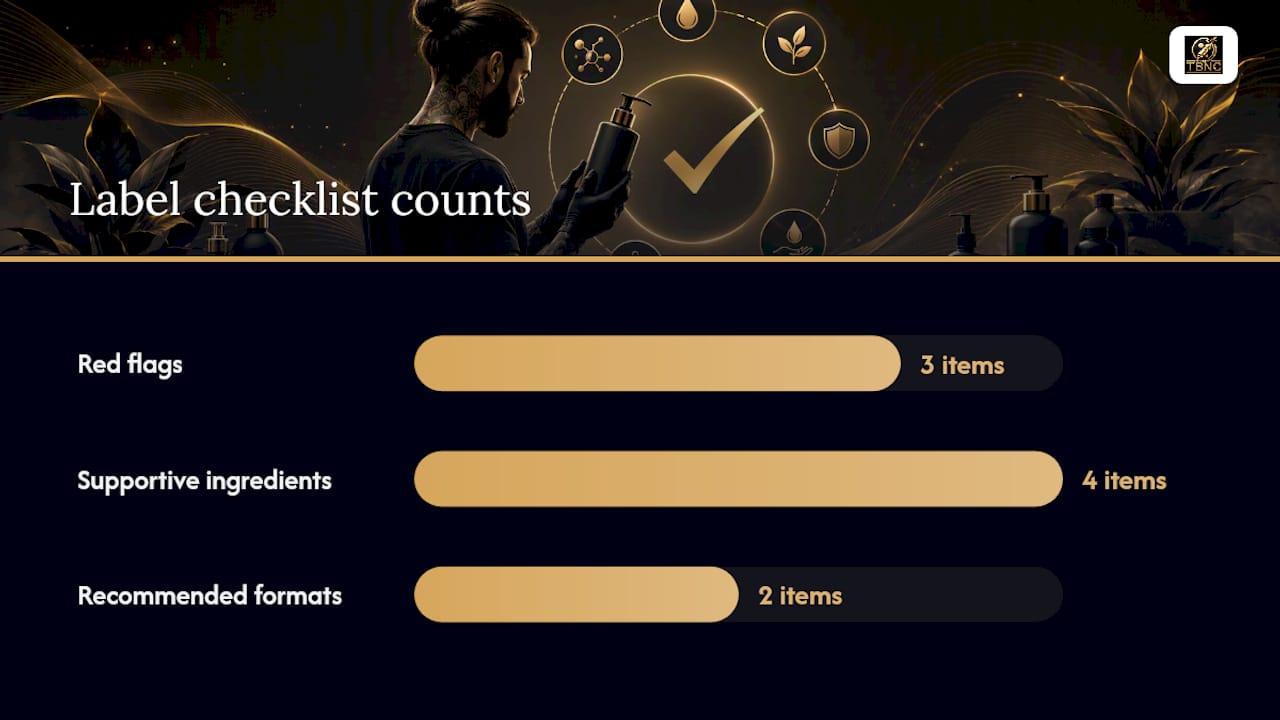
Beyond fragrance and format, scan for three more red flags: sulfates, drying alcohols, and exfoliating acids. Sulfates like SLS and SLES strip natural oils and can irritate a wound that’s still forming its barrier. Alcohol-based cleansers dehydrate skin exactly when it needs moisture to close properly. Salicylic acid and other exfoliants belong in an acne routine, not on fresh ink.
On the positive side, look for ingredients that support the skin barrier while you clean it:
- Glycerin or other humectants that hold moisture in
- Ceramides, which help rebuild the skin’s protective layer
- Saponified plant oils near the top of the ingredient list, a sign of a mild, soap-based cleanser (Castile-style products often qualify)
- A short overall ingredient list, since fewer additives mean fewer chances of a reaction
Pro Tip: Front-of-package words like “gentle” and “natural” are marketing claims, not regulated standards. Flip the bottle over. The first five ingredients tell you more than the label copy ever will.
How Do You Wash a Fresh Tattoo Properly?
Wait for your artist’s covering to come off before you touch water to the tattoo. Most studios recommend removing the initial bandage after the time your artist specifies, but follow whatever your specific artist tells you. That instruction outranks anything you read online, including this guide.
Once you’re cleared to wash, the routine is short and repeatable:
- Wet the tattoo with lukewarm water. Hot water opens pores and can pull ink out during the earliest healing days.
- Apply a small amount of fragrance-free liquid soap directly to your fingertips, never a wash cloth or loofah.
- Massage gently over the tattoo for a few seconds. You’re clearing plasma and ointment residue, not scrubbing.
- Rinse thoroughly until no soap film remains.
- Pat dry with a clean paper towel. Cloth towels can harbor bacteria and snag on scabbing skin.
- Apply a thin layer of fragrance-free moisturizer while the skin is still slightly damp.
Plan on washing regularly during the acute healing phase, typically the first few weeks before tapering into longer-term barrier repair over several weeks total. Dermatologists specifically recommend applying moisturizer while skin is still damp, since it locks in hydration far more effectively than moisturizing dry skin later.
Skip long showers over the tattoo, and never let it sit submerged in bathwater, pools, or hot tubs until it’s fully healed. Don’t scratch, pick at scabs, or press a cloth against it to dry it off. If you notice spreading redness, warmth, pus, or a fever, that’s your cue to call a clinician rather than push through with more soap. For a deeper walk-through of technique, A guide on how to wash a fresh tattoo covers timeline specifics by tattoo size and placement.
Which Tattoo Soaps and Aftercare Products Actually Work?
Liquid pumps and foaming dispensers outperform bar soap for one practical reason beyond hygiene: dosing control. A foaming pump lets you apply a thin, even layer with one press, which reduces the temptation to over-scrub a healing tattoo. Bar soap requires more contact time and pressure to work up a lather, which is exactly the kind of friction fresh ink doesn’t need.
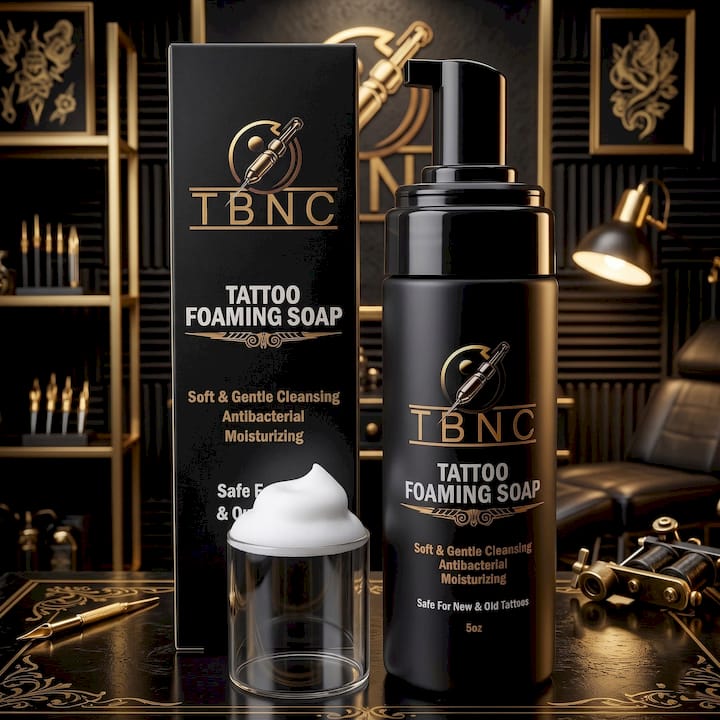
Here’s how an aftercare lineup maps against the label checklist, plus which situation each product fits best.
Tattoo Aftercare Lotion, Unscented. This is the moisturizing half of the routine, meant to go on right after your soap and pat dry. It’s built for the “apply while damp” step dermatologists emphasize, and the unscented formula avoids fragrance risk. Best for daily use across the full healing window, not just the first week.
Tattoo Aftercare Balm. A heavier option than the lotion, better suited to drier climates, larger pieces, or skin that tends to flake and tighten as it heals. Standout attribute: thicker occlusive coverage for overnight use or areas that see more friction from clothing.
Tattoo Soothing Gel. A lighter, cooling option for the first few irritated days when a heavy balm feels like too much. Works well layered under a moisturizer once the tattoo stops oozing and starts tightening.
Tattoo Numbing Gel, Mid Session. This numbing product is used for touch-ups and long sessions where reapplication of numbing is needed partway through. Useful to know about before your appointment.
Tattoo Numbing Bundle. Pairs a numbing cream for the session with a starter aftercare set, aimed at first-timers who want one purchase covering both ends of the appointment.
Tattoo Numbing and Aftercare Bundle. Combines numbing with a fuller aftercare rotation, suited to a large piece or a multi-session project where healing skin care is extended over weeks.
Ultra Tattoo Numbing Bundle. A higher-coverage kit designed for multiple sessions or those who want a stronger numbing option paired with a complete aftercare set.
The Best Numbing Cream, 2-Pack. Intended for collectors who already know their aftercare routine and need a reliable numbing supply for repeat sessions.
Before purchasing, check for fragrance-free formulas, absence of sulfates, glycerin or ceramides near the top of the ingredient panel, and use of a pump or gel dispenser instead of open jars. A bundle earns its value by matching that checklist rather than packaging alone.
What Soaps Should You Avoid on a New Tattoo?
Some of the most popular soaps in any drugstore are the worst choices for healing skin, and the reasons come down to the same handful of ingredients every time.
- Scented soaps and body washes. Added fragrance is one of the most common triggers for contact irritation on healing skin.
- Antibacterial hand soaps. Formulas built for germ-killing are generally unnecessary for routine tattoo aftercare and can disrupt the skin’s natural microbiome, leaving it drier and more reactive.
- Sulfate-heavy cleansers. SLS and SLES strip oils faster than healing skin can replace them.
- Medicated acne washes. Benzoyl peroxide and salicylic acid are designed to exfoliate and dry out oily skin, the opposite of what a tattoo needs.
- Alcohol-based sanitizing gels. Fine for hands, harsh on open or scabbing tissue.
Green soap deserves a specific callout. It’s a staple in the studio, used by artists during and immediately after the tattooing process, but it’s formulated for a controlled clinical setting, not daily home use. Treat it as an in-studio tool rather than something to buy for your bathroom.
Antibacterial soap isn’t banned outright. If your artist or a clinician specifically recommends one because of your skin type or a healing complication, use it as directed. Reaching for one by default, on the assumption that “antibacterial” means safer, usually backfires.
Why Trust This Tattoo Aftercare Guide?
This guide leans on dermatologist-sourced recommendations, published studio practice, and TBNC Tattoo’s own aftercare formulations, which are built around the same fragrance-free, ingredient-first standard dermatologists already endorse.
A few reasons this approach holds up beyond any one brand’s marketing:
- Numbing and aftercare products from this brand are reportedly used in many tattoo studios and numerous sessions, suggesting real-world exposure beyond laboratory testing.
- Every recommendation here traces back to a label checklist you can apply to any bottle, TBNC Tattoo’s or otherwise.
- For deeper product-specific detail, see posts on foaming soap for tattoo healing and antibacterial soap risks.
One honest caveat: no article replaces your artist’s specific instructions or a clinician’s judgment if something looks infected. Treat this guide as the framework, not the final word.
Where Most Tattoo Aftercare Advice Goes Wrong
Most aftercare content treats soap choice like a brand decision. Pick the “best” name, follow the routine, done. That framing misses the actual skill involved, which is reading an ingredient label under pressure, at a drugstore, three days after a session, when your skin is already irritated and you’re not thinking clearly.
The conventional advice oversells antibacterial products and undersells the moisturizing step that follows every wash. A soap that strips oil without a follow-up lotion or balm is doing half the job. That’s why the sequence matters as much as the soap itself: cleanse gently, then rebuild the barrier immediately while skin is still damp.
If there’s one priority worth fixing first, it’s this: stop shopping by brand reputation and start reading the back of the bottle. A $6 fragrance-free Castile soap and a purpose-built aftercare wash can both work, provided they pass the same five-ingredient scan. What separates a good routine from a bad one isn’t the price tag. It’s whether you actually use it twice a day, every day, until the tattoo is done healing.
— The Best Numbing Cream
Ready-Made Aftercare Bundles Worth Considering
Building your own aftercare routine from scratch means separately vetting a cleanser, a moisturizer, and possibly a numbing product for your next session, then hoping they all play well together. TBNC Tattoo’s bundles solve that by pairing a compliant, fragrance-free wash routine with the right follow-up moisturizer in a single order.
First-timers who don’t want to think through ingredient labels on their first appointment day should start with the Tattoo Numbing Bundle, which pairs session comfort with a starter aftercare set. If you’re planning a large piece or multiple sessions, the Tattoo Numbing and Aftercare Bundle covers a longer healing window with a fuller product rotation. Readers with sensitive skin or a stacked session schedule may prefer the Ultra Tattoo Numbing Bundle for its stronger coverage across both numbing and healing needs. Already sorted on numbing but need the moisturizing half dialed in? The unscented aftercare lotion fills that gap on its own.
Whichever kit you choose, check it against your artist’s specific aftercare instructions first. Then head to TBNC Tattoo’s shop to match a bundle to your session size and skin type.
Sources
This guide draws on dermatologist-backed aftercare recommendations, industry caution on antibacterial soap overuse, Castile soap guidance, ingredient-focused product reviews, and clinician-reviewed aftercare product tips. Always defer to your studio or a clinician for anything specific to your skin or healing progress.
- AFDO conference: Ink integrity / industry talk (2025)
- Popsugar: Best soap for tattoo aftercare — dermatologist recommendations
- TattooPiece: Choosing a tattoo soap — ingredients that matter
- NBC News Select: Tattoo aftercare tips and best products, according to experts
FAQ
Why Do Tattoo Artists Say Not to Use Aquaphor?
Many artists avoid recommending it because it’s thicker than needed for daily use and can trap excess moisture, leading to prolonged softening of scabs. A lighter, fragrance-free lotion or balm is usually the better follow-up after washing.
What Do Tattoo Artists Recommend for Cleaning a Tattoo?
Most artists point clients toward a mild, fragrance-free liquid soap used with clean hands, warm water, and a gentle touch, followed by a thin layer of unscented moisturizer. Specific timing and frequency should always follow your own artist’s written instructions.
What Type of Soap Should I Use on a Fresh Tattoo?
Use a fragrance-free, sulfate-free liquid or foaming cleanser with a short ingredient list, ideally one containing glycerin or saponified plant oils. TBNC Tattoo’s aftercare lineup and Castile-style washes both fit this profile when the unscented variant is used.
What Soap Should I Avoid for a Tattoo?
Avoid scented soaps, antibacterial hand washes, sulfate-heavy cleansers, and medicated acne products containing benzoyl peroxide or salicylic acid. All of these can dry, irritate, or otherwise disrupt healing skin.


