

Dermatologists: Avoid Petroleum Jelly on New Tattoos for 2 Weeks
Skip the petroleum jelly. Most dermatologists, including those at the American Academy of Dermatology, advise against petrolatum on a fresh tattoo because it seals the skin so tightly that bacteria, sweat, and plasma get trapped underneath, raising infection risk and sometimes dulling the ink. There are narrow exceptions worth knowing, along with breathable products that do the job better. Keep reading for the timing rules and safer swaps.
TL;DR:
- Applying petroleum jelly repeatedly after the initial bandage removal can trap bacteria, interfere with healing, and increase infection risk for a new tattoo.
- Single, thin applications of petrolatum under a sterile bandage immediately after tattooing are generally safe, but ongoing use on unhealed skin is discouraged.
- Water-based, fragrance-free lotions or tattoo-specific balms support healing by allowing skin to breathe, unlike occlusive petroleum products.
- For damaged skin or after accidental Vaseline use, gentle washing and switching to breathable moisturizers prevent complications and promote proper healing.
- A balanced, light layer of a suitable water-based product two to three times daily is recommended over thick, frequent applications of petrolatum during healing.
Table of Contents
- How Petroleum Jelly Affects a Fresh Tattoo
- When Might Petroleum Jelly Actually Make Sense?
- Better Options Than Vaseline for Healing Tattoos
- Already Used Petroleum Jelly on Your New Tattoo? Do This
- Why Dermatologist Guidance Should Settle This Debate
- What Actually Matters Here (and What Doesn’t)
- Petroleum-Free Aftercare Built for Every Stage of Healing
- Sources
- FAQ
How Petroleum Jelly Affects a Fresh Tattoo
A tattoo is an open wound, and open wounds heal fastest when they can breathe. Dermatologists sort wound care into two camps: occlusive products that form an airtight seal, and breathable, semi-occlusive ones that let oxygen and moisture vapor pass through while still protecting the skin. Petroleum jelly falls firmly into the first camp. It’s a non-porous barrier, which is exactly why it works so well for chapped lips or dry elbows. On a healing tattoo, that same property becomes a liability.
When petrolatum sits on broken skin, it doesn’t just block outside contaminants. It traps everything already there, including plasma, sweat, and any bacteria on the surface. That damp, sealed environment is a setup for maceration, a softening and breakdown of skin tissue that slows healing and invites infection. Clinical reviews of wound occlusion consistently point to this pattern: full occlusion helps in some wound types but tends to work against skin that needs to shed plasma and exchange gases as it heals.
A few specific problems show up with petroleum jelly on tattoos:
- It blocks airflow to the skin, which slows the natural healing process.
- It can trap bacteria against the wound, raising infection risk.
- Heavy, prolonged use is linked to ink fading, according to the AAD.
- It tends to attract lint, dust, and debris that stick to the greasy surface.
Cleveland Clinic dermatologists recommend skipping petrolatum for this exact reason and reaching for lighter, water-based options instead. That guidance isn’t a fringe opinion. It’s the mainstream dermatology position, and it’s worth taking seriously in the first two weeks of healing.
When Might Petroleum Jelly Actually Make Sense?
Here’s where nuance matters: what your artist does under the bandage during your session is not the same thing as what you should do at home three days later. Many artists apply a thin layer of petrolatum right after the tattoo is finished, before the first bandage goes on. That short, sterile, single-use application reduces friction from the bandage and protects the piece for the trip home. WebMD confirms this is common practice, and it’s generally low risk because it’s thin, brief, and covered.
The real danger comes from repeated, heavy, at-home layering after the bandage comes off. That’s continuous occlusion for hours or days at a time, which is a different exposure altogether than one thin coat under sterile wrap.
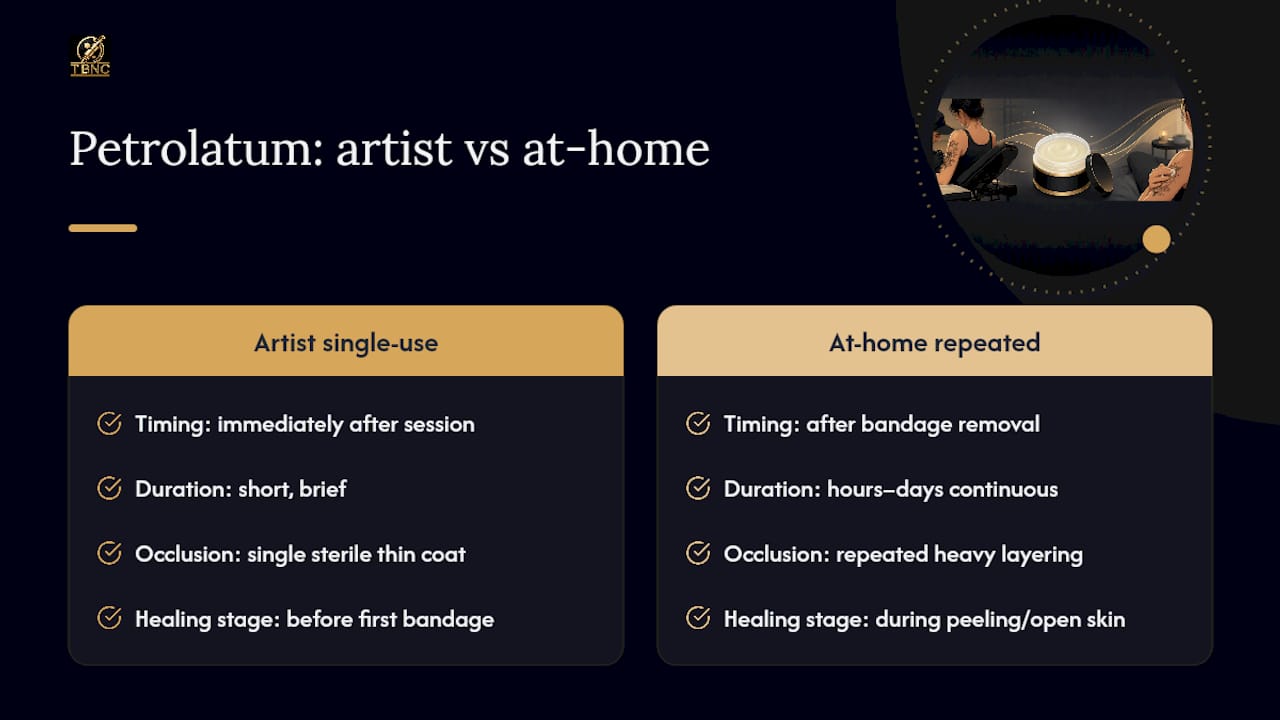
A simple rule of thumb: during the initial healing phase and through the peeling stage, avoid petrolatum entirely once you’re managing the tattoo yourself. If your skin is fully healed but still stubbornly dry weeks or months later, a very thin layer applied occasionally causes far less concern than daily use on open or peeling skin. Thin and occasional beats thick and constant, every time.
Better Options Than Vaseline for Healing Tattoos
Trade the tub of Vaseline for something that lets your skin do its job. Dermatologists point to fragrance-free, water-based lotions and tattoo-specific balms as the safer path, since they hydrate without sealing the wound shut. Cleveland Clinic’s aftercare guidance leans on exactly this combination: a mild moisturizer that supports the skin’s breathable healing process instead of smothering it.
Look for these qualities on the label:
- Fragrance-free. Added scent is a common irritant on broken skin and offers zero healing benefit.
- Water-based, not petroleum-based. Check the first few ingredients; water or aloe should lead, not petrolatum or mineral oil.
- Dye-free. Coloring agents serve no purpose here and add unnecessary irritation risk.
- No lanolin if you have a wool or lanolin allergy. It’s a common hidden ingredient in “natural” balms and can trigger contact dermatitis.
- No alcohol. Alcohol dries and irritates healing skin, the opposite of what you want.
For daily maintenance once the tattoo is unbandaged, a light, unscented aftercare lotion applied in a thin layer works well. For a tattoo-specific option built to support the peeling and settling stages, a dedicated aftercare balm tends to strike a better balance between hydration and breathability than a general-purpose ointment.
Apply a pea-sized amount, just enough to leave a light sheen without pooling or looking greasy, two to three times a day after gently cleansing. More is not better here. A thick layer just recreates the same occlusion problem you’re trying to avoid, only with a different product in the tube.
Already Used Petroleum Jelly on Your New Tattoo? Do This
If you already smoothed on some Vaseline before reading this, don’t panic. One accidental application rarely causes lasting damage, but a few quick steps lower the risk considerably.
- Wash it off gently. Use a mild, fragrance-free soap and lukewarm water. Work up a light lather with your fingers, never a washcloth or loofah, and rinse thoroughly. Pat the area dry with a clean paper towel; don’t rub.
- Let it breathe for a few minutes. Leave the skin uncovered briefly so it gets some air exposure before you apply anything else. Then follow up with a thin layer of a breathable, water-based moisturizer if the skin feels tight or dry.
- Watch for warning signs over the next 24 to 48 hours. Spreading redness beyond the tattoo border, increasing pain instead of gradual improvement, swelling that worsens, pus or unusual discharge, or fever all warrant a call to your artist or a clinician right away.
Most one-time slipups resolve with nothing more than a gentle cleanup and a switch to better products going forward. Dermatology guidance on accidental petrolatum exposure generally favors watchful waiting and twice-daily gentle cleansing over jumping straight to antibiotics, provided there’s no sign of infection.
Why Dermatologist Guidance Should Settle This Debate
Tattoo aftercare has always been a mix of studio folklore and hard science, which is part of why petroleum jelly still shows up in outdated advice columns. Historically, it was the default recommendation before dermatology took a closer look at how occlusion interacts with open skin, and some of that legacy advice still circulates in older tattoo aftercare guides. The AAD and Cleveland Clinic have since moved firmly toward breathable, water-based aftercare, and that shift reflects a better understanding of how skin actually recovers, not a trend.
TBNC Tattoo’s aftercare line was built around that same dermatologist-reviewed thinking, which is why the formulas skip petrolatum entirely in favor of lighter, skin-friendly bases.
Pro Tip: If your skin still feels tight after moisturizing, you’re probably under-applying, not under-moisturizing with the wrong product. Add a slightly thicker layer of your water-based balm rather than reaching for Vaseline. The goal is a light barrier, not a seal.
What Actually Matters Here (and What Doesn’t)
The debate over petroleum jelly on tattoos gets more attention than it deserves, honestly. The science is fairly settled: breathable beats occlusive for open skin, full stop. Where the conventional advice falls short is in treating every mention of petrolatum as equally dangerous. A thin, single application by your artist under a fresh bandage is not the same risk as smearing Vaseline on unbandaged, peeling skin every night for a week.
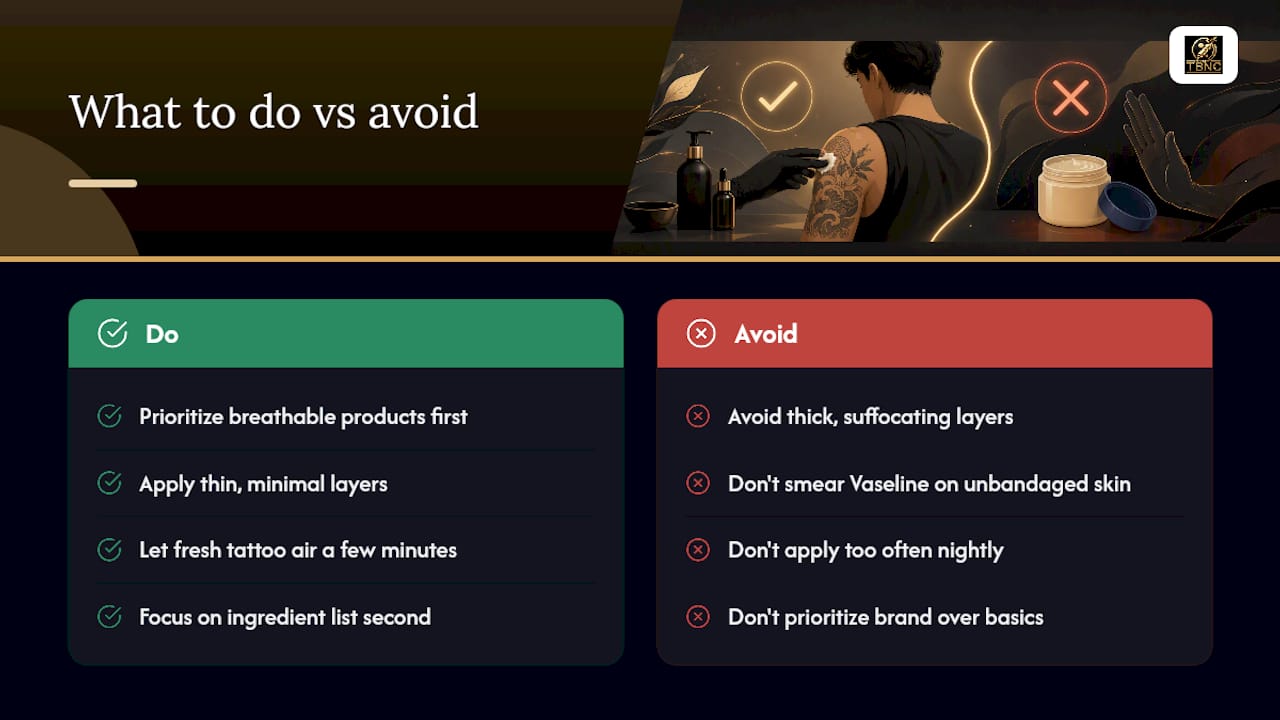
What deserves more attention is application habit, not ingredient panic. People chase the “right” product and then apply it too thick, too often, or on skin that just needs to air out for a few minutes first. A mediocre lotion applied thin and often will usually outperform a great one applied in a heavy, suffocating layer.
If you take one thing from this, prioritize breathability first, ingredient list second, and brand name a distant third. Get those first two right and most tattoos heal cleanly regardless of which fragrance-free balm sits in your bathroom cabinet.
— The Best Numbing Cream
Petroleum-Free Aftercare Built for Every Stage of Healing
An aftercare line that avoids the occlusion problem discussed here helps you avoid reading ingredient labels late at night to figure out what’s safe. For daily hydration once your bandage comes off, Tattoo Butter delivers a lightweight, water-based moisture layer without sealing the skin shut. If you’re dealing with stubborn dry patches during the peeling stage, the Tattoo Aftercare Balm is formulated to calm irritation without the greasy, pore-clogging weight of petrolatum. Traveling or heading back to work mid-heal? The Tattoo Butter Travel Sticks pack the same fragrance-free, dermatologist-reviewed formula into a pocket-sized stick for quick reapplication anywhere. Browse the full lineup and pick the format that matches your healing stage today.
This article is general information, not a substitute for advice from a qualified doctor. Consult a qualified healthcare professional about your own circumstances before acting on anything here.
Sources
- Caring for tattooed skin — American Academy of Dermatology
- Tattoo aftercare — Cleveland Clinic
- Taking care of your tattoo — WebMD
FAQ
What can I moisturize my tattoo with?
Use a fragrance-free, water-based lotion or a tattoo-specific balm applied in a thin layer two to three times a day after gentle cleansing.
Why do tattoo artists use petroleum jelly?
Some artists apply a thin coat of petrolatum right after finishing a tattoo to reduce bandage friction during transport home, which is a brief, sterile use different from ongoing at-home application.
What is the best cream to put on a new tattoo?
Dermatologists favor fragrance-free, dye-free, water-based products such as a dedicated aftercare balm over petroleum-based ointments, since they hydrate without blocking airflow to the healing skin.
I accidentally put Vaseline on my new tattoo. What should I do?
Gently wash the area with mild, fragrance-free soap and warm water, pat it dry, let it air briefly, then switch to a breathable moisturizer and watch for spreading redness, swelling, or pus over the next couple of days.


