

Speed Up Tattoo Healing by Preventing Setbacks: 14 Day Evidence Plan
Clean it, protect it, and keep it slightly moist with a hypoallergenic ointment for two to three weeks. That single habit prevents the setbacks that actually slow healing down. You cannot force skin cells to divide faster than biology allows, but you can absolutely stop scabbing, infection, and sun damage from adding weeks to the process, and that’s the game worth playing.
TL;DR:
- Proper hydration with a fragrance-free, dexpanthenol-based ointment reduces water loss and supports faster barrier repair during the two-week healing window.
- Keep the tattoo covered with a sterile bandage as recommended, then carefully wash with lukewarm water and mild soap, avoiding scrubbing or harsh antiseptics.
- Moist wound care is essential; avoiding dry healing methods prevents irritation, slow healing, and potential scabbing complications.
- Most healing issues occur if you pick scabs, use scented products, or expose the tattoo to excessive sun, which can prolong recovery and cause damage.
- Consult a doctor if you notice spreading redness, increasing pain, or signs of infection after day three to four, rather than relying solely on topical care.
Table of Contents
- How Do You Speed Up Tattoo Healing After Getting Inked?
- What Does the Tattoo Healing Timeline Actually Look Like?
- Which Tattoo Aftercare Habits Actually Slow Healing Down?
- When Should You See a Doctor Instead of Your Tattoo Artist?
- What Clinical Research Says About Tattoo Aftercare
- A Studio-Aligned Take on Healing Faster
- Where TBNC Products Fit Into Your Healing Routine
- Sources
- FAQ
How Do You Speed Up Tattoo Healing After Getting Inked?
There’s no shortcut that rewrites your skin’s repair timeline. What actually moves the needle is removing every obstacle that could derail a normal healing curve, starting the moment you leave the chair.
Here’s the sequence that matters, in order:
- Leave the studio bandage on as long as your artist recommends, typically a few hours to overnight, then remove it gently. Wash your hands first.
- Wash the tattoo with lukewarm water and a mild, fragrance-free soap. Use your fingertips, not a washcloth, and work in small circles for 20 to 30 seconds to lift plasma, ink residue, and lotion buildup without scraping the surface.
- Pat the area dry with a clean paper towel. Never rub. Cloth towels harbor bacteria and can snag on tender skin.
- Apply a thin layer of a hypoallergenic ointment. A dexpanthenol-based product supports barrier repair and has shown reduced water loss and better cosmetic outcomes over a 14-day window in clinical evaluation. You want a sheen, not a glossy coat you could see your reflection in.
- Repeat the wash-and-moisturize cycle two to four times daily until the scabbing phase resolves, usually around day 10 to 14. After that, switch to an unscented lotion for ongoing hydration.
- Re-bandage only if the tattoo is actively leaking onto clothes or sheets. If your artist suggests short-term plastic film occlusion right after the session, set a timer and remove it at the exact duration they specify. Leaving it on longer traps moisture against the skin and raises the risk of maceration, that soft, waterlogged look that invites bacteria.
Clothing choices matter more than most people realize. Loose, breathable cotton keeps friction and sweat away from the tattoo, while tight waistbands or synthetic fabrics trap heat and irritate healing skin. If you tattooed a spot that touches your mattress or pillow, sleep on clean sheets and consider a loose barrier layer for the first few nights so scabs don’t stick and tear when you shift positions.
Watch how your skin responses to moisturizer frequency. Tight, shiny, or cracking skin means you’re under-moisturizing. A slick, wet look with slow-drying ointment sitting on top means you’re overdoing it. Both extremes create the same problem: they invite the scab tension and irritation that drag healing out.
Pro Tip: Apply ointment right after a shower, when your skin is slightly damp. It absorbs more evenly and you’ll use less product overall, which cuts down on the greasy buildup that clogs pores around the tattoo.
Diet and sleep quality play a quieter but real role here. Protein-rich meals and steady hydration give your body the raw materials for tissue repair, and consistent sleep supports the hormonal cycles tied to skin regeneration. Skipping both won’t stop healing, but it can make the itchy, sluggish middle stretch feel a lot longer than it needs to.
What Does the Tattoo Healing Timeline Actually Look Like?
Healing isn’t a single event. It’s three overlapping phases, and knowing which one you’re in tells you what’s normal and what isn’t.
- Days 1 to 7: Expect redness, warmth, mild swelling, and clear or slightly bloody oozing for the first 24 to 48 hours. This is inflammation doing its job. In vitro skin models show inflammatory activity peaks within one to two days and starts subsiding by day four to seven, though the exact curve shifts depending on ink density and placement.
- Weeks 2 to 3: Scabbing and flaking take over, and the itching that comes with it is often the hardest part to manage. Keep moisturizing to reduce scab tension and resist scratching, since picking pulls out ink along with the scab.
- Months 1 to 3: The visible surface looks done, but deeper dermal remodeling continues well after the top layer settles. This is why aggressive exfoliation, tanning beds, and unprotected sun exposure can still cause damage months after the tattoo “looks” healed.
Placement changes the math too. Areas with thin dermis or reduced blood flow, like hands, feet, and ankles, tend to heal more slowly and carry a higher risk of delayed recovery, so if you got ink on one of these spots, budget extra patience and stick closer to the low end of your activity restrictions.
Which Tattoo Aftercare Habits Actually Slow Healing Down?
The “dry healing” method, where you skip ointment entirely and let a thick scab form, still circulates in tattoo forums. It’s not what the evidence supports. European dermatology guidance and dexpanthenol trials both point toward moist wound care as the approach that reduces irritation and supports faster barrier recovery, not a crusty, exposed wound.
A few other habits to drop immediately:
- Antibiotic ointments like Neosporin can trigger allergic contact dermatitis in a meaningful share of users and aren’t recommended for routine tattoo aftercare.
- Fragranced aloe gels and scented lotions introduce irritants right when your skin barrier is compromised.
- Harsh antiseptics such as rubbing alcohol or hydrogen peroxide damage new tissue and slow the repair process rather than speeding it.
- Picking or scratching scabs pulls ink out unevenly and creates open entry points for bacteria.
Stick with plain petroleum jelly if your artist recommends it, a fragrance-free dexpanthenol ointment, and a gentle, unscented soap. Simple wins here.
When Should You See a Doctor Instead of Your Tattoo Artist?
Most healing hiccups, like extra oozing or a stubborn itch, resolve on their own with basic care. A smaller set of symptoms means you need more than a moisturizer.
- Watch for spreading redness beyond the tattoo’s edges, yellow or green discharge, a foul smell, or pain that keeps increasing after day three or four. These point toward infection rather than normal healing.
- If you notice fever, red streaks radiating from the tattoo, or swollen lymph nodes nearby, treat it as urgent. Stop applying any topical product except gentle cleansing, photograph the area to track changes, and get evaluated by a medical provider the same day.
- For anything milder but still concerning, message your artist first. They’ve seen thousands of healing tattoos and can often tell you whether what you’re seeing is normal or worth a doctor’s visit.
Antibiotics and antiseptic treatments should only come from a clinician who has confirmed an actual infection, not as a preventive measure you start on your own.
What Clinical Research Says About Tattoo Aftercare
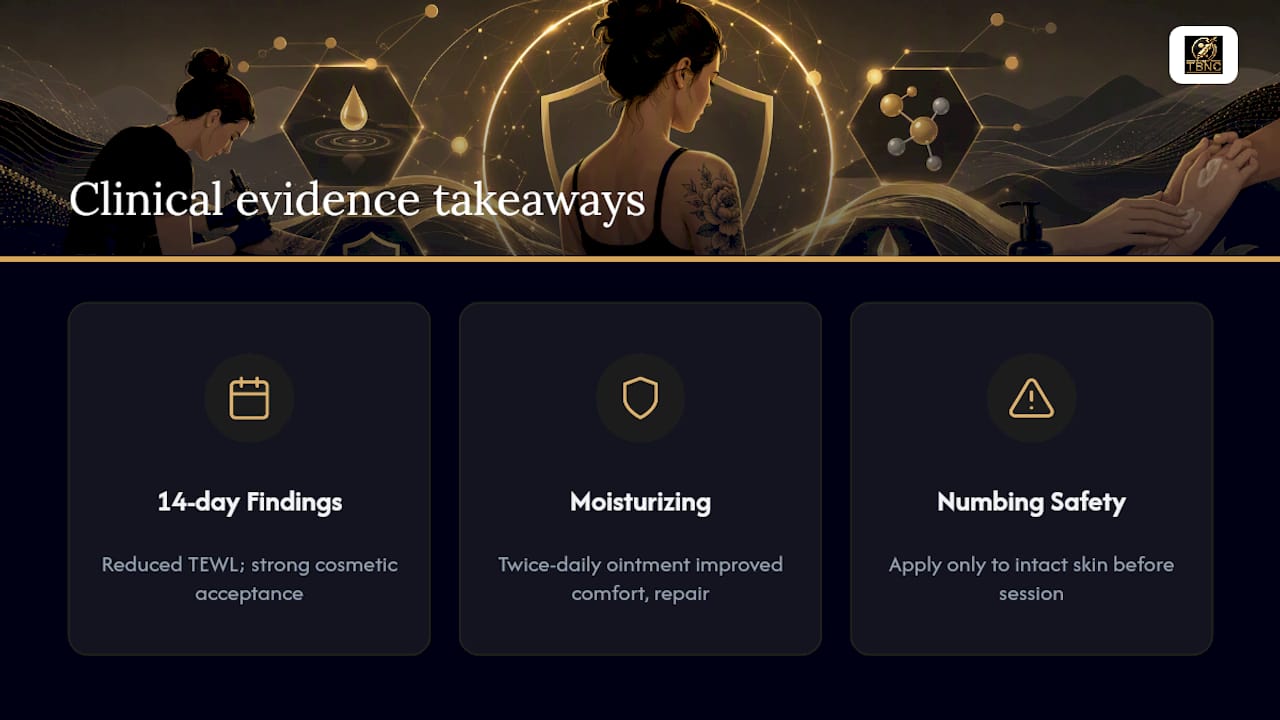
The routine above isn’t guesswork. A study evaluating dexpanthenol-containing wash and sun-care products for tattoo aftercare found measurable reductions in transepidermal water loss and strong cosmetic acceptance among participants over a 14-day period, the same window most tattoos spend in active scab and flake mode.
A separate clinical survey looked at a water-in-oil dermo-cosmetic ointment applied twice daily and found improved comfort scores and skin repair quality at the 14-day mark compared to baseline, reinforcing that consistent, gentle moisturizing outperforms letting a tattoo dry out and crack.
On the safety side, research on local anesthetics and wound healing found that some agents can affect tensile strength during tissue repair, and topical numbing products should never go on broken or healing skin. That’s a firm line, not a suggestion: numbing formulas belong on intact skin before a session, never on an open tattoo.
A Studio-Aligned Take on Healing Faster
Your artist’s instructions come first, always. What we add is the layer underneath: gentle, fragrance-free cleansing, consistent moisture, and genuine patience with a process that takes weeks, not days. Every product recommendation below exists to remove friction from that routine, not to promise a shortcut biology doesn’t offer.
Some aftercare products are formulated to work with your skin’s repair timeline rather than against it.
— The Best Numbing Cream
Where TBNC Products Fit Into Your Healing Routine
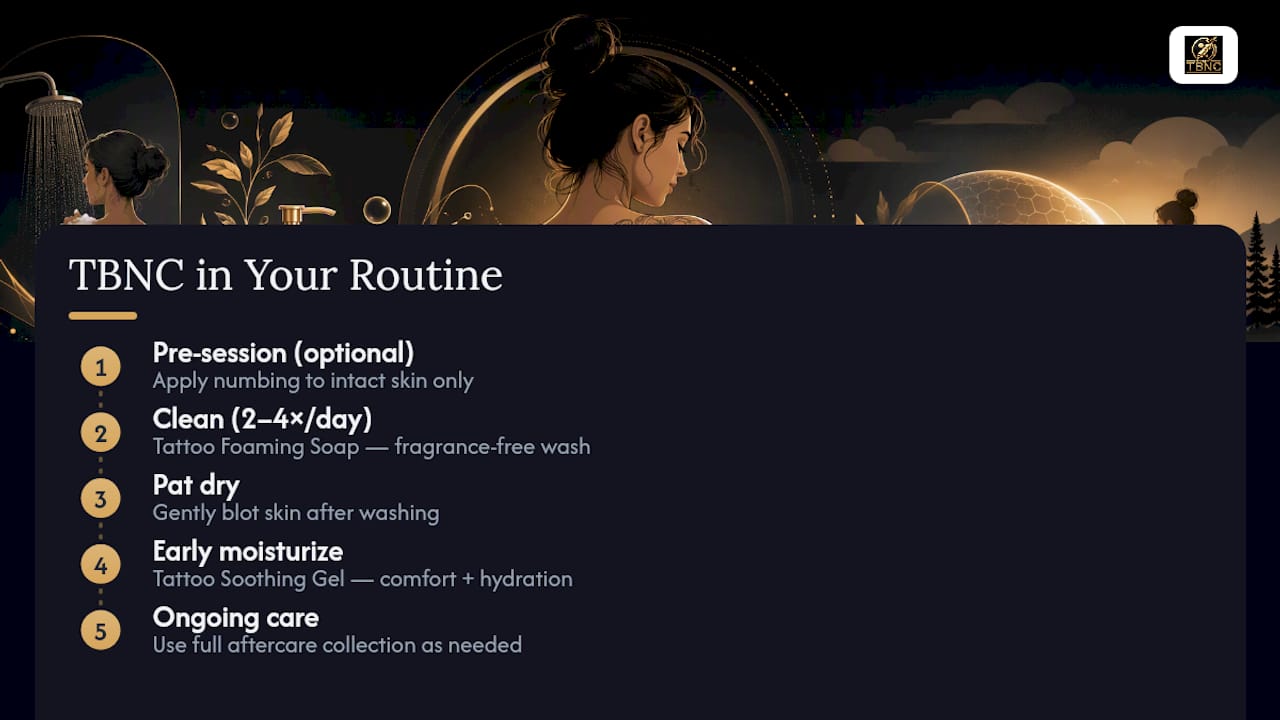
You don’t need a dozen products scattered across your bathroom counter to heal well. You need the right ones, used at the right moments. TBNC Tattoo’s Tattoo Foaming Soap is built for that twice-to-four-times-daily wash step, formulated fragrance-free so it won’t fight the barrier repair your skin is trying to do. Once your tattoo is clean and patted dry, the Tattoo Soothing Gel handles the early moisturizing stage, the window where comfort and hydration matter most and where harsh or scented products cause the most damage.
If you’re planning your next session and want pre-session comfort covered alongside your healing supplies, the Tattoo Numbing & Aftercare Bundle pairs TBNC’s lidocaine-based numbing formula with the aftercare products your skin needs once the needle stops. One caveat worth repeating: numbing products go on intact skin before your appointment, never on a fresh or healing tattoo. Some numbing creams are used by many studios worldwide because the pre-session comfort does not come at the cost of skin’s healing process afterward.
Browse the full aftercare collection to build a routine around your specific tattoo, whether that’s a small piece healing in two weeks or a larger session that needs a longer stretch of careful moisturizing.
Sources
- Exploratory evaluation of tolerability, performance, and cosmetic acceptance of dexpanthenol‐containing dermo‐cosmetic wash and sun‐care products for tattoo aftercare
- EADV tattoo aftercare guidance
- Tattoo aftercare management with a dermo-cosmetic product: Improvement in discomfort sensation and skin repair quality
FAQ
What Helps Tattoos Heal the Fastest?
Nothing speeds up the biological timeline itself, but gentle cleansing, consistent moisturizing with a hypoallergenic ointment, and strict sun avoidance prevent the setbacks that make healing feel slower. Dexpanthenol-based products have shown measurable improvements in barrier repair and comfort over a two-week span.
Can My Tattoo Heal in 3 Days?
No. The visible inflammation and oozing calm down within the first week, but scabbing, flaking, and deeper skin remodeling continue for weeks and months afterward. A tattoo that looks settled after three days is still in the earliest phase of repair.
Do Tattoos Heal Faster Covered or Uncovered?
Brief occlusion right after your session, exactly as your artist recommends, protects the area from bacteria and friction without slowing healing. Beyond that initial window, leaving the tattoo uncovered lets it breathe and reduces the risk of trapped moisture and maceration.
Do Tattoos Heal Better Dry or Moist?
Moist wound care outperforms letting a tattoo dry out and crust over. EADV dermatology guidance and dexpanthenol research both support keeping the skin lightly hydrated with a fragrance-free ointment throughout the scabbing phase.
How Much Does TBNC’s Aftercare Bundle Cost?
Current pricing for the Tattoo Numbing & Aftercare Bundle is available directly on the product page. Individual items like the Tattoo Butter start from $15.95 for a one-off purchase.


