

Derm Approved Two Product Small Tattoo Aftercare for Studio to Home
Your small tattoo needs less than you think. Remove the artist’s bandage as instructed, wash gently with lukewarm water and fragrance-free soap, pat dry, then smooth on a very thin layer of unscented, dermatologist-approved aftercare product once or twice daily. Skip the pool, the sun, and the urge to pick, and call a clinician if anything looks or feels wrong.
TL;DR:
- Small tattoos heal rapidly, with surface healing typically completing within two to four weeks, but deeper skin remodeling can take several months.
- Avoid submerging the tattoo in pools, baths, or hot tubs until fully healed to prevent infection, and always protect it from direct sun exposure to preserve ink color.
- Use only fragrance-free, hypoallergenic cleansers and apply a thin layer of dermatologist-approved moisturizer twice daily to support healing without trapping excess product.
- Watch for signs of infection such as spreading redness, worsening pain, or unusual discharge; seek medical advice if these occur.
- Simplified aftercare, focusing on gentle washing and minimal products, results in fewer complications and better long-term tattoo quality.
Table of Contents
- Your First-Week Small Tattoo Aftercare Routine
- How Long Does a Small Tattoo Take to Heal?
- What to Avoid During Tattoo Healing (and Why It Matters)
- Signs Your Tattoo Might Be Infected
- Why Simple Aftercare Beats Complicated Routines
- The Studio-Exit Checklist Every Small Tattoo Deserves
- The Easiest Way to Follow This Routine at Home
- Sources
- FAQ
Your First-Week Small Tattoo Aftercare Routine
The first week decides how your tattoo heals, and it starts the moment you leave the chair. Small tattoos heal fast, but the window for mistakes is just as tight.
Your artist will send you home with either a plastic film, a medical bandage, or a breathable second-skin covering. Most first bandages come off within two to four hours, though second-skin wraps can stay on for a few days per your artist’s instructions. If it sticks, don’t yank it. Run it under lukewarm water for a minute to loosen the adhesive first.
Here’s the routine to follow once that bandage is off:
- Wash your hands before touching the tattoo, every time.
- Rinse the tattoo with lukewarm water and a small amount of fragrance-free, hypoallergenic cleanser, using your fingertips, never a washcloth or loofah.
- Pat the area dry with a clean paper towel. Rubbing with a bath towel reintroduces bacteria and irritates fresh skin.
- Let it air-dry for a few minutes before applying anything.
- Apply a pea-sized amount of unscented lotion or balm and spread it into a thin, barely visible layer.
- Repeat this wash-and-moisturize cycle once or twice a day for the first week.
Most artists advise leaving the tattoo uncovered after the initial bandage comes off, unless they specifically instruct otherwise. Wear loose, breathable clothing over the area (think cotton, not synthetic or tight denim) to cut down on friction, and change your bedsheets more often than usual during this stretch. For a deeper walkthrough of technique, see how to wash a fresh tattoo without irritating it.
Pro Tip: If your tattoo looks shiny or greasy after moisturizing, you used too much. Wipe off the excess with a clean paper towel. Skin that’s trapped under too much product heals slower, not faster.
How Long Does a Small Tattoo Take to Heal?
A tiny tattoo heals faster than a full sleeve, but it still moves through the same stages, just compressed into a shorter timeline.
- Days 1 to 3: Expect redness, mild swelling, and some clear or slightly bloody fluid weeping from the skin. This is normal inflammation, not infection, and it usually calms down within 72 hours.
- Week 1: Scabbing sets in and the itching gets intense. This is the hardest part to sit through. Don’t scratch or pick. A thin layer of moisturizer takes the edge off far more effectively than clawing at it.
- Weeks 2 to 3: The surface usually looks healed within two to four weeks, but the color often looks dull or hazy. That’s dead skin sloughing off, not ink loss.
- Months 1 to 6: The deeper layers of skin are still remodeling long after the surface looks done. This is when consistent sunscreen and ongoing moisturizing pay off for keeping the piece sharp for years.
Small tattoos on thin skin (wrists, fingers, ribs) can sometimes finish surface healing closer to the two-week mark, while pieces on thicker skin may take the full four.
What to Avoid During Tattoo Healing (and Why It Matters)
Every “don’t” on a tattoo aftercare sheet exists for a specific, physical reason, not just tradition.
- Skip baths, pools, and hot tubs until the tattoo is fully healed to reduce infection risk. Submerging an open wound in standing water, even clean-looking water, raises infection risk significantly.
- Stay out of direct sun and tanning beds. UV exposure fades new ink faster than almost anything else and irritates skin that’s still repairing itself. Apply sunscreen only after the tattoo has fully healed. Here’s more on protecting fresh ink from the sun.
- Don’t pick at scabs or peeling skin. Forcing flakes off early pulls pigment out with them, and it’s one of the most common causes of scarring and patchy color.
- Avoid petroleum jelly, heavily scented lotions, and antibiotic ointments unless your clinician tells you otherwise. These can trap moisture against the skin and slow healing instead of speeding it up.
Signs Your Tattoo Might Be Infected
Most redness and itching during healing is completely normal. A real infection looks and feels different, and it’s worth knowing the difference before you panic over a scab.
Call a medical provider if you notice any of these:
- Redness that spreads outward instead of staying contained to the tattoo area.
- Pain that gets worse after day 3 instead of easing up.
- Thick yellow or green discharge, as opposed to the clear or slightly pink fluid that’s normal in the first 48 hours.
- Fever, chills, or red streaking radiating away from the tattoo.
If you’re only seeing mild redness, itching, or flaking with no fever or spreading discomfort, keep up your gentle routine. Contact your tattoo artist first if you’re unsure. They see healing tattoos daily and can often tell you over a photo whether something’s off. For a full breakdown, read how to tell if your tattoo is infected. Save urgent care, your primary doctor, or a dermatologist for anything that looks like a genuine infection or an allergic reaction to the ink itself.
Why Simple Aftercare Beats Complicated Routines
Dermatologists and clinic guidance keep landing on the same conclusion: wash gently, moisturize lightly, and skip the extras. A five-step skincare regimen is not what a fresh tattoo needs.
Over-moisturizing is the mistake almost nobody warns you about. Piling on lotion doesn’t protect skin, it suffocates it, raising the risk of maceration and clogged pores that actually slow the healing process down.
- Choose products labeled fragrance-free and hypoallergenic.
- Skip anything with alcohol or exfoliating acids while the skin is still healing.
- Apply a layer thin enough that you can barely tell it’s there.
Pro Tip: If the tattoo looks glossy ten minutes after you moisturize, you applied too much. Blot it with a clean paper towel instead of adding more product to “fix” dry-looking patches.
The Studio-Exit Checklist Every Small Tattoo Deserves
Most bad healing outcomes trace back to skipping one small step, not to some rare complication. Remove the initial bandage within the window your artist gave you, usually a few hours, and wash with a mild, fragrance-free soap the first time you clean it. Take home a purpose-built aftercare product rather than whatever lotion is already in your bathroom cabinet.
— The Best Numbing Cream
The Easiest Way to Follow This Routine at Home
You don’t need five different products to heal a small tattoo properly, you need the right two. This aftercare line is designed around exactly the routine described above: a thin balm for the earliest, weepiest days and an unscented lotion once your skin moves into the maintenance phase.
The Tattoo Aftercare Balm is meant for the first few days, when skin needs a light protective layer without heavy occlusives. Once the weeping stops, usually by day 4 or 5, switch to the Tattoo Aftercare Lotion for daily moisturizing through the peeling stage and beyond. If you’d rather not juggle two separate purchases, the Basic Tattoo Aftercare Bundle pairs both in one order, sized for exactly the two-to-three-week window your small tattoo needs most.
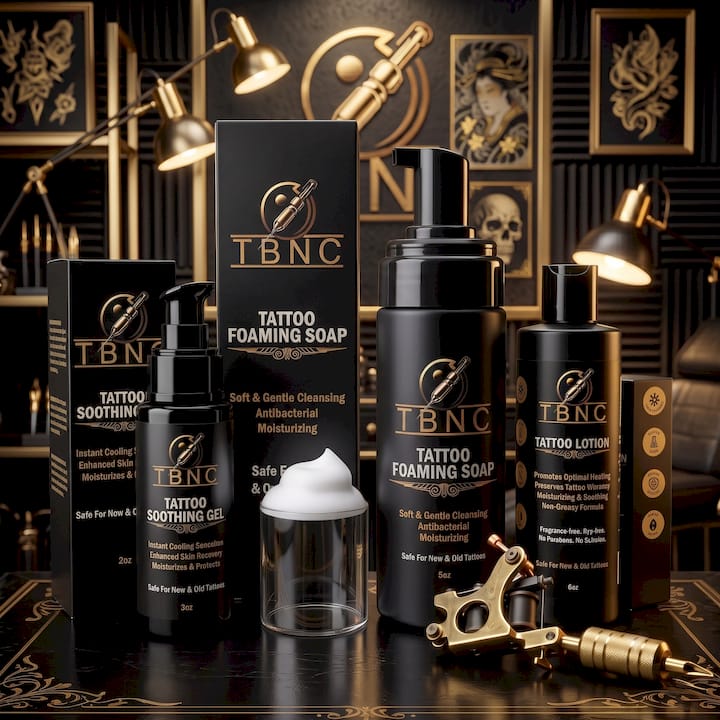
Apply a thin layer once or twice a day, or more often if your skin runs dry, and stop using any product immediately if you notice irritation. Check out the bundle before your next appointment so it’s already on your shelf when you get home.
Sources
- Tattoo aftercare: How to keep new ink clean and help it heal | Cleveland Clinic
- European Academy of Dermatology and Venereology — Tattoo aftercare guidance (EADV)
- Showering with a new tattoo: Everything you need to know | Healthline
FAQ
What should you not do after getting a small tattoo?
Don’t soak it in pools, baths, or hot tubs, don’t expose it to direct sun, and don’t pick at scabs or peeling skin, since all three raise infection or scarring risk during healing.
How long does it take to heal a tiny tattoo?
Surface healing on most small tattoos wraps up within two to four weeks, while the deeper skin layers continue settling for weeks to months afterward.
What is the best aftercare for a fresh tattoo?
Wash gently with a fragrance-free cleanser once or twice daily, then apply a thin layer of an unscented, dermatologist-approved product like the Tattoo Aftercare Lotion, avoiding anything heavy or scented.
Can I shower with my tattoo after 1 day?
Yes. Showering is safe once your artist’s initial covering comes off, as long as you keep the shower brief, avoid direct high-pressure spray on the area, and never submerge it.


