

30 Day Tattoo Aftercare: 24–48 Hour Weeping Rule and Product Plan
Wash gently with fragrance-free soap, pat dry, skip the moisturizer until oozing stops (usually 24 to 48 hours), then apply a thin layer of balm followed by unscented lotion as scabs form. Avoid soaking, direct sun, and picking at any point. If you notice spreading redness, pus, fever, or worsening pain, contact your artist and a clinician right away. That’s the entire routine, and one aftercare product line is built around exactly this sequence.
TL;DR:
- Keeping the initial bandage on for the precise time recommended by your artist prevents early infection or ink loss.
- Applying too much moisturizer during the first few days can trap bacteria and delay healing, so thin, careful application is essential.
- Scabs should be allowed to fall off naturally; picking or scratching can cause uneven color and damage the tattoo.
- Full healing of a tattoo typically takes three to four weeks, with water submersion and intense sweating delaying recovery and risking infection.
- Signs of infection include spreading redness, pus, fever, and worsening pain, necessitating immediate medical consultation.
Table of Contents
- What Should I Do in the First 24 Hours After a Tattoo?
- What Happens to a Tattoo in Days 1 Through 3?
- How Do I Handle Scabbing and Itching in Days 4 Through 7?
- When Is a Tattoo Fully Healed and Safe for Swimming or Sun?
- What Mistakes Slow Down Tattoo Healing the Most?
- What Are the Warning Signs of an Infected Tattoo?
- What Do Dermatologists Say About Tattoo Aftercare?
- Why Healing Never Looks the Same Twice
- Which products match each stage of healing?
- Sources
- FAQ
What Should I Do in the First 24 Hours After a Tattoo?
Your artist wrapped your new tattoo for a reason, and that bandage should stay put for the window they specified, typically two to five hours, though some studios use second-skin dressings that last several days. Don’t guess on this one. Follow their exact instructions, since wrap materials and recommended times vary by studio and technique.
When it’s time to remove the bandage, wash your hands first. Peel the wrap off slowly under lukewarm running water rather than ripping it away dry. This softens any dried plasma stuck to the film and keeps you from tearing off ink along with it.
- Wash immediately after unwrapping. Use lukewarm water and a fragrance-free liquid soap, working it in with clean fingertips in small circles. Never use a washcloth or loofah on fresh skin.
- Rinse thoroughly, then pat the area dry with a clean paper towel. Skip cloth towels for the first few days. They hold bacteria and can snag on tender skin.
- Leave it bare for a few hours. Most dermatologists advise holding off on moisturizer until the tattoo stops weeping, which usually takes 24 to 48 hours. Applying ointment too early can trap fluid and clog pores.
- Sleep smart. Use loose, breathable clothing or a clean, non-stick covering if bedding might rub the area, and try to keep pressure off it overnight. A pillow barrier or sleeping position change works better than tight bandaging.
What Happens to a Tattoo in Days 1 Through 3?
This stretch is when most people panic unnecessarily. Clear or slightly pink fluid seeping from the tattoo, mild swelling, tenderness, and warm-to-the-touch skin are all part of normal healing, not signs something went wrong.
What’s normal during days 1 to 3:
- Light redness around the linework, especially on bold or heavily saturated pieces
- Clear or slightly colored weeping (a mix of plasma and excess ink)
- Mild swelling, particularly on ribs, ankles, and other thin-skin areas
- Tenderness that feels like a mild sunburn
Clean the tattoo twice daily during this stretch. If you’re sweating heavily or spent time somewhere dusty or dirty, add a third gentle wash. Stick with the same lukewarm water and fragrance-free soap you used on day one. Once weeping tapers off, start applying a thin layer of balm two to four times a day. The keyword here is thin: a film you can barely see, not a visible coating.
Statistic Callout: Dermatologists interviewed by Men’s Health point to over-application, not under-moisturizing, as the more common mistake in this window. Too much product traps bacteria against the skin and actually slows healing down.
If your bandage or clothing gets soaked through with plasma more than once in a few hours, that’s worth a call to your artist. Heavy, persistent oozing beyond day two or three, especially if it’s cloudy or has an odor, deserves a second look from whoever tattooed you.
How Do I Handle Scabbing and Itching in Days 4 Through 7?
Scabs are supposed to show up now. Thin, flaky patches form as the outer skin rebuilds, and they’ll look duller and less vibrant than the finished tattoo underneath. That’s temporary. The color comes back once the scab falls away on its own.
Rules for this stage:
- Never pick, scratch, or peel a scab, even the small flaky edges. Picking pulls pigment out with the skin and leaves patchy, uneven color behind.
- Let scabs release naturally in the shower or during normal movement, never with your fingernails.
- Switch from thicker balm to a lightweight, unscented lotion once heavy weeping has fully stopped and scabs have formed. Thick ointment left on too long can clog pores and drag out healing.
- Wear loose clothing over the tattoo. Tight waistbands, bra straps, and fitted sleeves rub scabs loose before they’re ready.
Itching tends to peak here, and it’s genuinely one of the hardest parts of the process. Resist scratching. A cool, clean compress held against (not rubbed on) the skin calms the nerve response without disturbing the surface. A thin layer of unscented lotion also helps, since dry, tight skin itches more than well-hydrated skin.
Pro Tip: Keep a small bottle of unscented lotion in your bag during this week. A 10-second reapplication the moment itching starts beats a 3 a.m. scratching session that undoes days of careful healing.
Avoid harsh anti-itch creams with menthol, camphor, or added fragrance. They feel soothing for a minute, then irritate healing skin and can fade fresh ink.
When Is a Tattoo Fully Healed and Safe for Swimming or Sun?
The surface heals faster than the skin underneath it. Most tattoos look “finished” by the two-week mark, flat, matte, no more flaking, but the deeper layers of skin are still repairing themselves for another two to four weeks beyond that. Treat week two as the midpoint, not the finish line.
What to expect and do in weeks 2 through 4:
- Surface flaking should be done by day 10 to 14. Any lingering scabs at that point are usually thicker areas (like bold black work) that just need more time.
- Hold off on swimming, pools, hot tubs, and open water until the tattoo is completely healed, generally three to four weeks minimum, and longer for larger pieces. Submerging semi-healed skin invites bacteria and can pull out ink.
- Resume workouts gradually. Light movement is fine once tenderness fades, but skip activities that cause heavy sweating or direct friction against the tattoo for at least the first couple of weeks.
- Skip sunscreen entirely while the tattoo is still healing. Once it’s fully closed over, switch to SPF 30 or higher, with SPF 50 giving extra insurance against fading.
- Keep moisturizing daily, even after healing wraps up. Well-hydrated skin holds ink color longer and resists the dull, grayish look that dry, sun-exposed tattoos develop over years.
This later stretch is really about habit-building. The tattoo you protect at week three is the tattoo you’ll still like the look of five years from now.
What Mistakes Slow Down Tattoo Healing the Most?
Most complications trace back to a short list of avoidable habits, not bad luck.
- Soaking the tattoo. Baths, pools, hot tubs, lakes, and the ocean all expose healing skin to bacteria and can pull ink out through open pores. Showers are fine; submersion isn’t.
- Picking at scabs or flaking skin. It feels satisfying for about two seconds and costs you patchy color for months.
- Using scented products, alcohol-based sanitizers, retinoids, or exfoliants on or near the tattoo. These strip and irritate skin that’s still rebuilding its barrier.
- Jumping back into heavy exercise too soon. Give it one to two weeks minimum, longer if the area is still tender or weeping. Sweat, friction, and tight athletic gear are a bad combination for fresh ink.
What Are the Warning Signs of an Infected Tattoo?
Certain symptoms cross the line from normal healing into something that needs medical attention. Watch for pain that gets worse instead of better after day three, redness that spreads outward from the tattoo rather than staying contained, yellow or green pus, a foul smell, fever, chills, or red streaking away from the design.
The tricky part: allergic reactions to ink or aftercare products can mimic infection almost exactly, with similar redness, swelling, and itching. A clinician can tell the difference through visual exam or a wound culture, and treatment differs (antibiotics for infection, antihistamines or topical steroids for allergy) so getting an accurate read matters.
Statistic Callout: Cleveland Clinic lists worsening pain, spreading redness, pus, fever, and chills as the specific triggers that warrant medical care, distinct from the expected redness and mild oozing of normal healing.
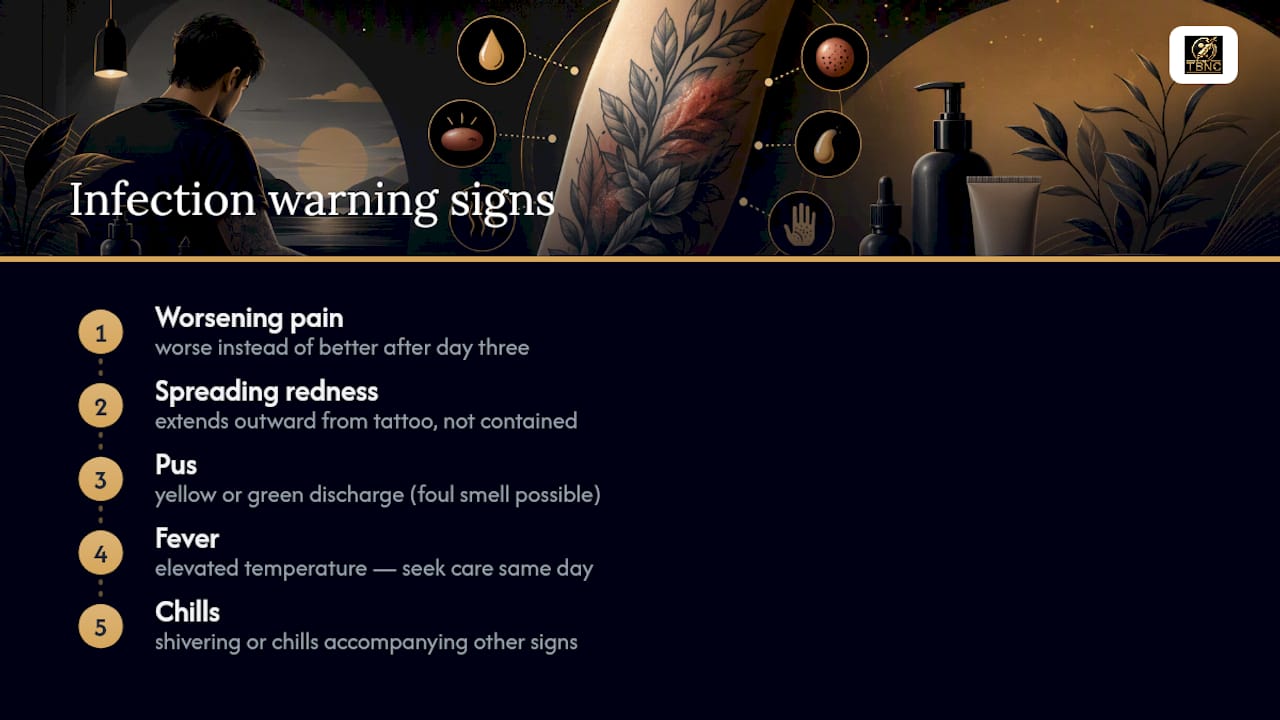
If you spot any of these signs, stop using any product you suspect is the cause, photograph the area for reference, and call your artist and a doctor the same day.
What Do Dermatologists Say About Tattoo Aftercare?
The wound-care approach recommended by the European Academy of Dermatology and Venereology lines up closely with what most studios teach: gentle washing, a hypoallergenic emollient to keep the area moist, and avoiding routine antibiotics or disinfectants unless real infection is present. Scabbing and gradual peeling are expected parts of the process, not complications.
- Wash with fragrance-free liquid soap, never bar soap or scrubs.
- Apply a light emollient two to three times daily in the early stage, tapering as scabs fully form.
- Skip alcohol-based disinfectants and antibiotic ointments unless a clinician has diagnosed an actual infection.
- Let skin exfoliate on its own timeline. Forcing it along causes more damage than it prevents.
One aftercare product line is built to track this same sequence: a protective balm for the early, heavier-care window, then an unscented lotion for the lighter, maintenance phase once scabbing sets in. Neither step asks you to guess at timing, since the product switch mirrors the same 24 to 48 hour weeping cutoff dermatologists reference. These formulas are also built without added fragrance, which matters given how often scented products show up as the trigger behind irritation that gets mistaken for infection.
Why Healing Never Looks the Same Twice
Every tattoo heals on its own schedule, and comparing your day 5 to someone else’s Instagram-perfect day 5 is a losing game. Placement, size, ink saturation, your skin type, even how well you slept the night before your session all shift the timeline. A solid color piece on your ribs will scab differently than fine linework on your forearm, and that’s expected, not a red flag.
What actually predicts a smooth healing outcome isn’t luck. It’s consistency: washing on schedule, moisturizing thin instead of thick, and resisting the urge to intervene when skin looks a little rough around day 6. Most complications that end up in a clinic are preventable ones, caused by over-treatment, picking, or premature swimming, not by anything mysterious about the ink itself. When something looks genuinely off, redness spreading rather than fading, pain climbing instead of easing, don’t wait it out. Call your artist, then a clinician if needed.
— The Best Numbing Cream
Which products match each stage of healing?
TBNC Tattoo’s approach to aftercare is simple: match the product to the stage, not the other way around. In the first 48 to 72 hours, when your tattoo needs a thicker protective barrier while weeping tapers off, the Tattoo Aftercare Balm gives you that heavier coverage in the exact pea-sized amounts dermatologists recommend, applied two to four times a day in a thin film. Once scabs form and the tattoo shifts into its lighter maintenance phase, the Tattoo Aftercare Lotion - Unscented takes over, keeping skin hydrated without the fragrance additives that trigger irritation in a lot of healing tattoos.
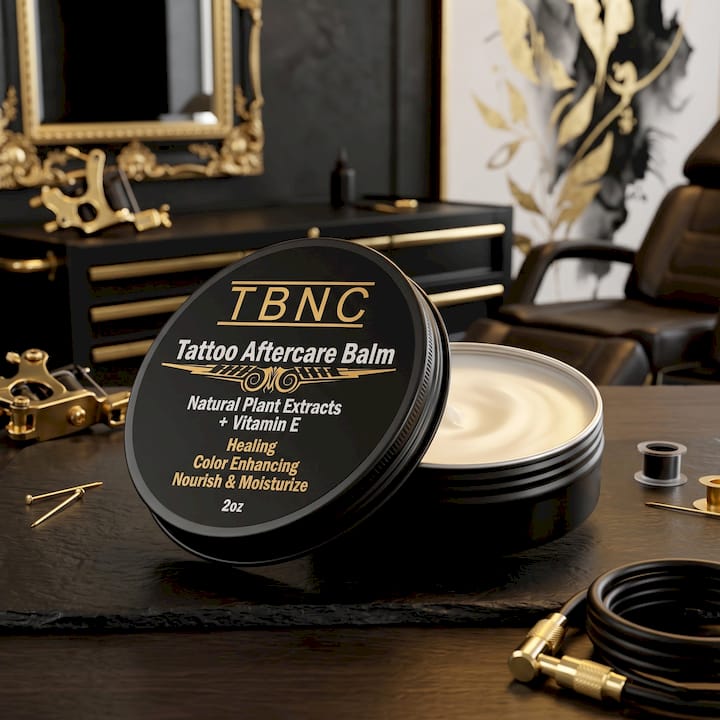
If juggling two separate purchases and timing the switch yourself sounds like one more thing to manage during an already careful routine, the Basic Tattoo Aftercare Bundle packages both stages into a single order, so the right product is already on your shelf when you need it instead of on a shipping truck. Readers who want a broader product lineup, including foaming soap and butter options, can browse the full aftercare collection or check out TBNC’s numbing products if your next session is still ahead of you. Order the bundle now and you’ll have your entire 30 day routine covered before you even leave the studio chair.
Sources
- Tattoo Aftercare: Instructions and Healing Tips — Cleveland Clinic
- Signs my tattoo is infected — UPMC HealthBeat
- EADV tattoo aftercare guidance — European Academy of Dermatology and Venereology (EADV)
- How to Care for Tattoos, According to Dermatologists — Men’s Health
- Tattoo aftercare: Tips and instructions — Medical News Today
This article is general information, not a substitute for advice from a qualified doctor. Consult a qualified healthcare professional about your own circumstances before acting on anything here.
FAQ
How Often Should I Moisturize a New Tattoo?
Once weeping stops, usually 24 to 48 hours in, apply a thin layer of balm or lotion two to four times daily. Less is genuinely more here since over-moisturizing traps bacteria against the skin more often than under-moisturizing causes dryness.
How Should a Tattoo Look After a Week?
By day 7, most tattoos are flaking or lightly scabbed, with color looking duller and slightly cloudy under the peeling skin. That’s normal, not a sign the ink is fading permanently.
What Are Signs My Tattoo Is Healing Well?
Mild redness, tenderness, itching, and light flaking that gradually decrease day over day are all normal healing signs. Steady improvement, rather than pain or redness getting worse, is the real marker of healthy progress.
Do Tattoos Heal Faster Covered or Uncovered?
Neither extreme works well. Showering uncovered is fine once initial weeping settles, but leaving a tattoo exposed to friction, sun, or dirty surfaces slows healing just as much as over-bandaging it does. Follow your artist’s specific covering instructions for the first day, then let the skin breathe with light, loose clothing afterward.


