

Three Stage Aftercare for New Tattoos: Best Tattoo Lotion per Phase
The best approach isn’t one lotion; it’s a sequence: a thin layer of gentle ointment for the first few days while the tattoo weeps, then a switch to a fragrance-free, lightweight lotion once peeling starts and continues through full healing. Your skin is essentially a fresh wound during this window, so thin layers matter more than thick ones. An effective aftercare line builds around exactly this progression.
TL;DR:
- During the first three days, apply a very thin layer of ointment to protect the open wound without trapping moisture.
- Switch to a fragrance-free, lightweight lotion once oozing stops, typically around days 4 to 14, to avoid trapping sweat and dead skin.
- Use moisturizers containing glycerin, ceramides, panthenol, and hyaluronic acid, and avoid fragrance, alcohol, exfoliating acids, and unnecessary antibiotics.
- Moisturize only when the skin feels dry, using a pea-sized amount two to four times daily, and adjust as the tattoo heals.
- Over-application or use of irritant ingredients can prolong healing or cause reactions; follow expert advice and stop moisturizing when skin no longer feels tight or dry.
Table of Contents
- Best Tattoo Aftercare Lotion Options by Healing Stage
- How Do You Choose the Right Tattoo Lotion for Your Skin?
- How Often Should You Moisturize a New Tattoo?
- What Mistakes Ruin Tattoo Healing (And How to Avoid Them)
- What Studios Actually Tell Clients About Aftercare Lotion
- Aftercare Products Built for This Exact Routine
- Authorities and Primary Sources Used for These Recommendations
- Sources
- FAQ
Best Tattoo Aftercare Lotion Options by Healing Stage
Following one product from day one to week four is where most people go wrong. Your tattoo behaves differently at 24 hours than it does at day 10, and the product on your skin should change with it.
Stage 1: The first 24 to 72 hours. Skin here is still technically an open wound, oozing plasma and ink, so it needs an occlusive barrier more than moisture. A very thin layer of gentle ointment protects against water loss and keeps the surface from drying into a hard scab. This is where a product like the tattoo healing ointment built for fresh ink earns its place, applied so thin you can barely see it.
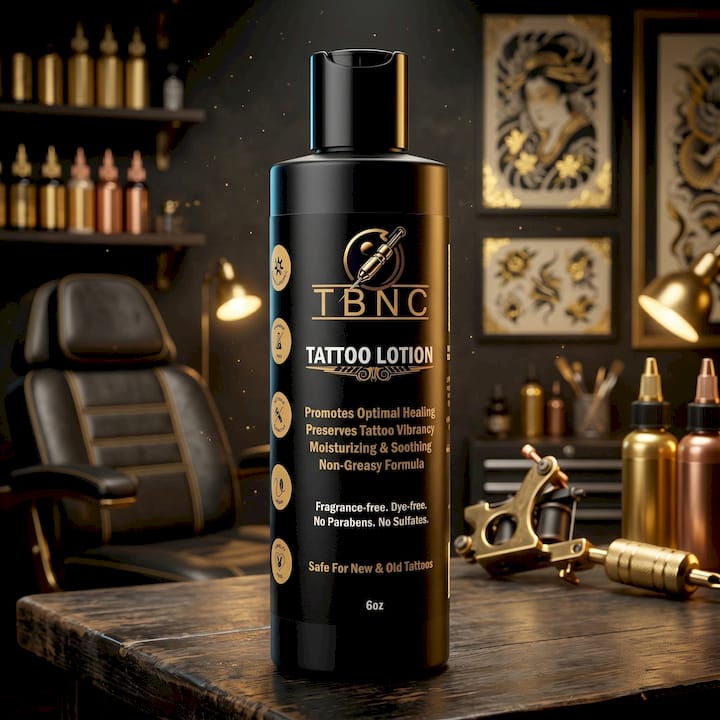
Stage 2: The peeling phase, roughly days 4 through 14. Once oozing stops, thick ointment becomes counterproductive. It traps sweat and dead skin against the tattoo, which slows peeling instead of helping it. This is the point to shift to an unscented, lightweight lotion. TBNC Tattoo’s unscented aftercare lotion or the Tattoo Aftercare Balm both work well here, since they hydrate without smothering.
Stage 3: Healed maintenance, after week three. Once the tattoo has fully peeled and the skin has settled, any good fragrance-free daily moisturizer keeps color vibrant. Sun protection matters more now than lotion choice, since UV exposure fades ink faster than almost anything else.
A few practical notes across all three stages:
- Apply less than you think you need. A translucent film is the goal, never a glossy sheen.
- Rub in fully. Product sitting on the surface does nothing for healing and just attracts lint.
- Stop applying once skin no longer feels tight or dry between doses. Over-moisturizing past that point causes its own problems.
How Do You Choose the Right Tattoo Lotion for Your Skin?
Picking the best moisturizing lotion for tattoos comes down to reading the ingredient list before you read the marketing copy. A handful of ingredients consistently show up in dermatologist-favored formulas, and a handful of others should send you back to the shelf.
Look for these:
- Glycerin draws moisture into the skin and helps prevent the tight, flaky feeling that shows up during peeling.
- Ceramides support the skin barrier while it’s actively rebuilding itself.
- Panthenol (provitamin B5) calms irritation and supports a smoother healing surface.
- Hyaluronic acid holds water at the skin’s surface without adding heaviness or grease.
Avoid these:
- Fragrance or parfum, a leading cause of contact irritation on healing skin.
- Alcohol-based formulas, which dry out already-compromised skin.
- Exfoliating acids like glycolic or salicylic acid, which have no business near an open wound.
- Neomycin or bacitracin, common antibiotic ointment ingredients tied to allergic reactions in a meaningful share of users; save antibiotics for a clinician’s direction, not routine care.
Skin type changes the calculation slightly. Dry skin tolerates richer balms well. Oily or acne-prone skin does better with a non-comedogenic lotion that won’t clog pores near the tattoo site. Sensitive or eczema-prone skin should stick to the shortest ingredient list you can find, since more ingredients simply means more chances for a reaction.
Pro Tip: Fragrance-free is not the same as unscented. “Unscented” products sometimes use a masking fragrance to cancel out other smells. Read the label for “fragrance-free” specifically if you’re prone to skin reactions.
Shopping fast? Prioritize fragrance-free, non-comedogenic, dermatologist-tested products with short ingredient panels. The complete guide to tattoo aftercare lotion breaks down label-reading in more depth if you want to go further.
How Often Should You Moisturize a New Tattoo?
Getting the routine right matters more than which brand sits in your bathroom cabinet. Here’s the sequence to follow for roughly the first two to three weeks:
- Wash first. Use a mild, fragrance-free cleanser with lukewarm water, gently cleaning the tattoo with your fingers, never a washcloth. Pat dry with a clean paper towel; don’t rub.
- Apply a thin layer only when skin feels dry. A pea-sized amount covers most tattoos the size of a palm. If the skin looks slightly hydrated but not shiny, you’ve used the right amount.
- Repeat two to four times a day, adjusting based on how quickly your skin dries out and whatever your artist specifically told you at checkout.
- Switch products as the tattoo transitions. Cleveland Clinic guidance points to day 3 through 5, once oozing stops, as the natural moment to move from ointment to lotion.
A few cautions apply the entire time. Don’t soak the tattoo in baths, pools, or long showers until it’s fully healed. Keep it out of direct sun, which can both burn compromised skin and fade fresh ink. Wear loose clothing over the area so fabric doesn’t drag on peeling skin.
Call a clinician if you notice spreading redness beyond the tattoo’s edge, pus, fever, or pain that gets worse instead of better after the first few days. Those are signs worth checking against a dermatologist’s evaluation rather than waiting it out.
What Mistakes Ruin Tattoo Healing (And How to Avoid Them)
Over-application is the single most common error in tattoo aftercare, and it’s rarely intentional. People assume more lotion equals faster healing, when the opposite tends to happen. Excess product traps moisture against the skin, which can lead to maceration, clogged pores, and peeling that drags on longer than it should.
Skip these product categories entirely during healing:
- Fragrance- or essential-oil-infused lotions, frequent triggers for contact irritation.
- Rubbing alcohol or high-alcohol toners near the tattoo.
- Topical antibiotic ointments used without a clinician’s direction, since dermatology guidance specifically advises against routine antibiotic use.
Allergy versus infection isn’t always obvious. Allergic reactions usually show up as itchy, raised bumps confined to the tattoo area, often tied to a specific ink color or a new product. Infection tends to bring spreading warmth, swelling beyond the tattoo’s border, pus, or fever. If you can’t tell which one you’re looking at, that uncertainty alone is reason enough to call a professional rather than guess. Our guide on recognizing infection signs walks through the visual differences in more detail.
If you have sensitive skin or a history of eczema, patch-test any new lotion on your forearm 24 hours before using it on the tattoo itself, and always defer to your artist’s specific instructions over generic internet advice.
What Studios Actually Tell Clients About Aftercare Lotion
The best technique advice we hear echoed across studios: apply thin, let the skin breathe between applications, and resist the urge to reapply just because it’s been a few hours. Skin needs air circulation to peel properly.
Loose clothing and avoiding hot, high-sweat environments (saunas, intense workouts, tight leggings over a fresh leg piece) make a bigger difference than most people expect. When in doubt, your artist’s specific instructions beat any generic guide, including this one. If something looks off, a quick call to a clinician costs less than a botched healing job.
— The Best Numbing Cream
Aftercare Products Built for This Exact Routine
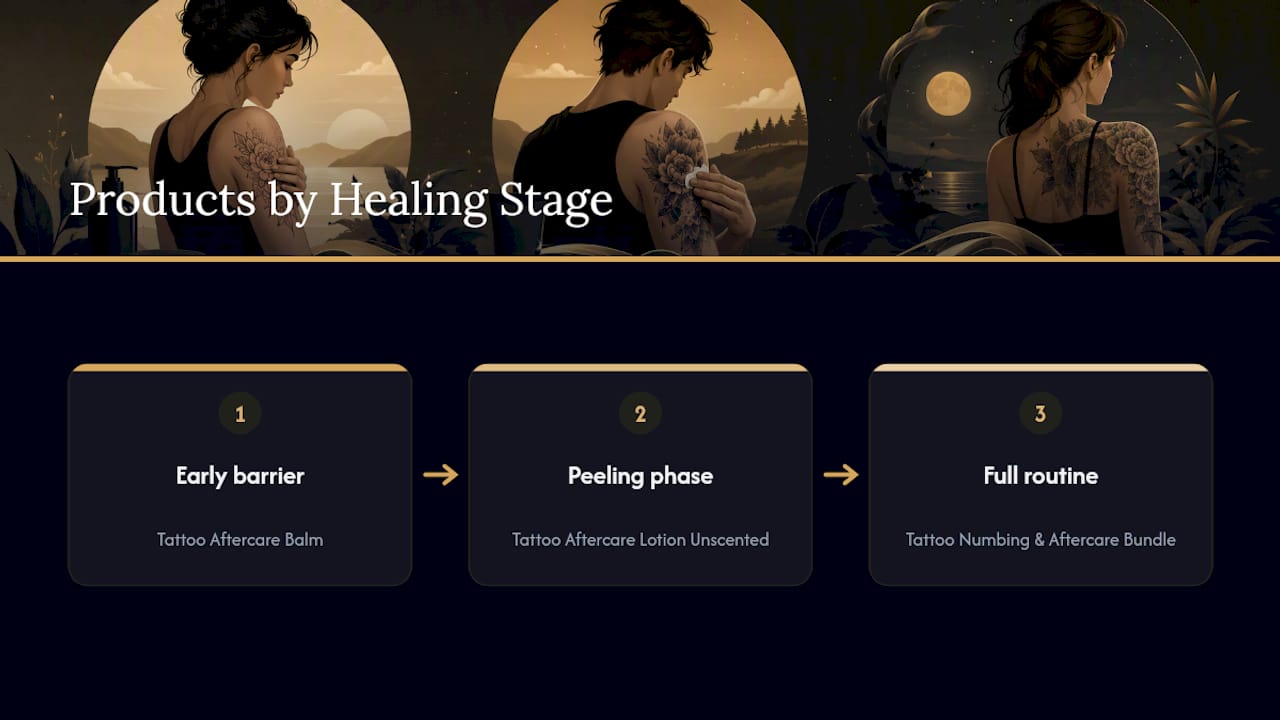
An aftercare lineup that maps directly onto the three healing stages above helps ensure the right product is used at each phase. For the early barrier phase, the Tattoo Aftercare Balm gives your skin the occlusive support it needs without the heaviness of a petroleum-heavy ointment. Once peeling kicks in, the Tattoo Aftercare Lotion - Unscented picks up where the balm leaves off, delivering lightweight hydration with a short, fragrance-free ingredient list.
If this is your first tattoo and you’d rather not piece together a routine product by product, the Tattoo Numbing & Aftercare Bundle covers the full arc from numbing through healed skin in one order. Some aftercare formulas are dermatologist-approved and designed to deliver comfort and steady hydration without the trial-and-error most people go through on their first tattoo. Consider selecting a product or bundle that matches your healing timeline.
Authorities and Primary Sources Used for These Recommendations
The stage-based routine in this guide draws directly from established medical authorities rather than internet consensus.
- Cleveland Clinic on wound-based aftercare timing
- European Academy of Dermatology and Venereology on product use and avoidance
- Acibadem Hospitals Group on evidence-based wound care
- NBC News Select on expert-recommended product transitions
Sources
The stage-based approach isn’t a marketing angle, it’s the consensus among the medical sources that actually study wound healing. Cleveland Clinic treats a fresh tattoo the same way it would treat any healing wound: thin ointment early, then a fragrance-free water-based moisturizer once oozing resolves, typically within three to five days.
The European Academy of Dermatology and Venereology goes further, recommending a light film of ointment two to three times daily for the first two to three days, followed by continued hypoallergenic emollient use until any scabbing fully resolves. It also flags disinfectants and topical antibiotics as things to avoid unless a clinician says otherwise.
Medical evidence consistently favors gentle cleansing and light, fragrance-free moisturizing over heavy ointments or trending “miracle” products. The real risk isn’t picking the wrong brand. It’s over-moisturizing or reaching for something with irritant ingredients, according to a summary from Acibadem Hospitals Group.
Lotion supports comfort and skin condition, but it doesn’t accelerate the biological healing clock underneath it. That’s set by your body. An effective aftercare line is built around this same logic, formulated to be dermatologist-approved and trusted across a network of tattoo studios that see this healing process daily.
- Tattoo aftercare: instructions and healing tips — Cleveland Clinic
- EADV tattoo aftercare guidance — European Academy of Dermatology and Venereology
- Tattoo aftercare explained by medical evidence — Acibadem Hospitals Group
- Tattoo aftercare: tips and best products, according to experts — NBC News Select
FAQ
Is Lubriderm or Aquaphor Better for Tattoos?
Aquaphor works well in the first few days as a thin occlusive layer while the tattoo is still weeping, but Lubriderm’s lighter, water-based formula is generally the better fit once peeling starts and you need hydration without heaviness.
Is Aquaphor or CeraVe Better for Tattoos?
Aquaphor suits the earliest healing hours because of its occlusive protection, while CeraVe-style fragrance-free lotions are typically recommended once oozing stops and you move into the peeling phase, per NBC News Select.
What Is the Best Cream to Use on a New Tattoo?
A thin layer of gentle, hypoallergenic ointment for the first three to five days, followed by a fragrance-free lightweight lotion like TBNC Tattoo’s unscented aftercare lotion, matches the routine dermatology sources recommend.
What Lotion Should You Avoid for a Tattoo?
Skip anything containing fragrance, alcohol, or exfoliating acids like glycolic or salicylic acid, and avoid topical antibiotic ointments unless a clinician specifically directs you to use one.
How Do You Know if a Tattoo Reaction Is an Allergy or an Infection?
Allergic reactions usually appear as itchy, raised bumps limited to the tattoo area, while infections tend to bring spreading redness, warmth, pus, or fever, any of which warrants a call to a clinician.


