

Shower After a Tattoo: 6 Step Dermatologist Aligned Routine to Protect Ink
You can shower after your artist’s recommended bandage time, which is usually a few hours for traditional wraps or longer for second-skin coverings. Keep showers brief, use lukewarm water and a mild fragrance-free cleanser, avoid loofahs, pat dry gently, and apply a thin layer of aftercare. Avoid baths, pools, and hot tubs until your tattoo is fully healed, and monitor for any signs of infection.
TL;DR:
- Shower after your artist’s recommended bandage removal time, ensuring the bandage edges are fully sealed before exposure to water.
- Use lukewarm water and gentle fingertips with fragrance-free cleanser, avoiding washcloths or exfoliating tools during the first two weeks.
- Pat the tattoo dry with a paper towel and apply a thin layer of dermatologist-approved aftercare balm or gel without heavy occlusions or petroleum-based ointments.
- Avoid soaking in baths, pools, hot tubs, or using loofahs until healing is complete to prevent infection and pigment loss.
- Monitor for signs of infection such as spreading redness, pus, or increasing pain, and contact a dermatologist if symptoms worsen.
Table of Contents
- When Is It Safe to Shower After a Tattoo?
- How to Shower With a New Tattoo Step by Step
- Drying and Moisturizing After the Shower
- What to Avoid in the Shower (and Why It Matters)
- What Normal Healing Looks Like vs. Warning Signs
- Matching Your Aftercare Products to Each Shower Step
- A Note on Cleanliness vs. Barrier Protection
- Get the Right Aftercare Products for Every Shower
- Sources
- FAQ
When Is It Safe to Shower After a Tattoo?
Your artist’s bandage choice sets the clock, not a generic rule you found online. Traditional wraps, plastic film or gauze taped over petroleum jelly, typically come off within a few hours, and your artist will usually tell you to shower once that wrap is removed. Medical-grade second-skin bandages, the clear adhesive film that looks almost like plastic wrap fused to your skin, work differently. These are designed to stay sealed for several days, and showering with the bandage still in place is often fine as long as the seal holds and water doesn’t pool underneath it.
Here’s the part people rush: not every artist uses the same product, and not every skin type heals the same way. When your instructions conflict with something you read, follow your artist. They know your specific tattoo, your skin, and the product they applied.
Before you step into the shower, run through this quick check:
- Is the bandage still fully sealed at every edge, with no lifting corners?
- Has the minimum wait time your artist gave you actually passed?
- Do you have a mild, fragrance-free cleanser ready, not whatever bar soap is already in the shower?
- Is your water heater set to lukewarm, not hot?
If any answer is no, wait. An extra hour costs you nothing. A torn bandage or premature soak can cost you ink.
How to Shower With a New Tattoo Step by Step
Rushing this part is where most healing problems start. Follow this order every time until your artist clears you for normal showers.
- Wash your hands first. You’re about to touch an open wound, so start clean.
- Set the water to lukewarm and lower the pressure. Hot water opens pores and increases swelling; a hard spray can irritate raw skin.
- Wet the tattoo briefly, then step back from the direct stream. Let water run over it rather than blast it.
- Apply a small amount of mild, fragrance-free cleanser with your fingers. No washcloths, no loofahs, no exfoliating tools. Your hands are the gentlest applicator you own.
- Rinse thoroughly but quickly. Don’t let the tattoo sit under running water longer than needed to clear the soap.
- Get out. A short shower is better than a long one during the first week or two.
On frequency, washing once or twice a day is the typical early recommendation, and you shouldn’t skip a shower just because you’re worried about the tattoo. If you sweat heavily at work or the gym, a brief rinse afterward matters more than waiting it out, since salt and bacteria sitting on healing skin cause their own problems. If you’re wondering how soon after a workout you should rinse off, the 48 hour rule for returning to the gym after a tattoo covers that overlap in detail.
Pro Tip: Keep a small squeeze bottle of your fragrance-free cleanser right on the shower shelf during the first week. Fumbling for a bottle mid-shower tempts you to grab whatever’s closest, and “whatever’s closest” is usually the wrong soap.
Drying and Moisturizing After the Shower
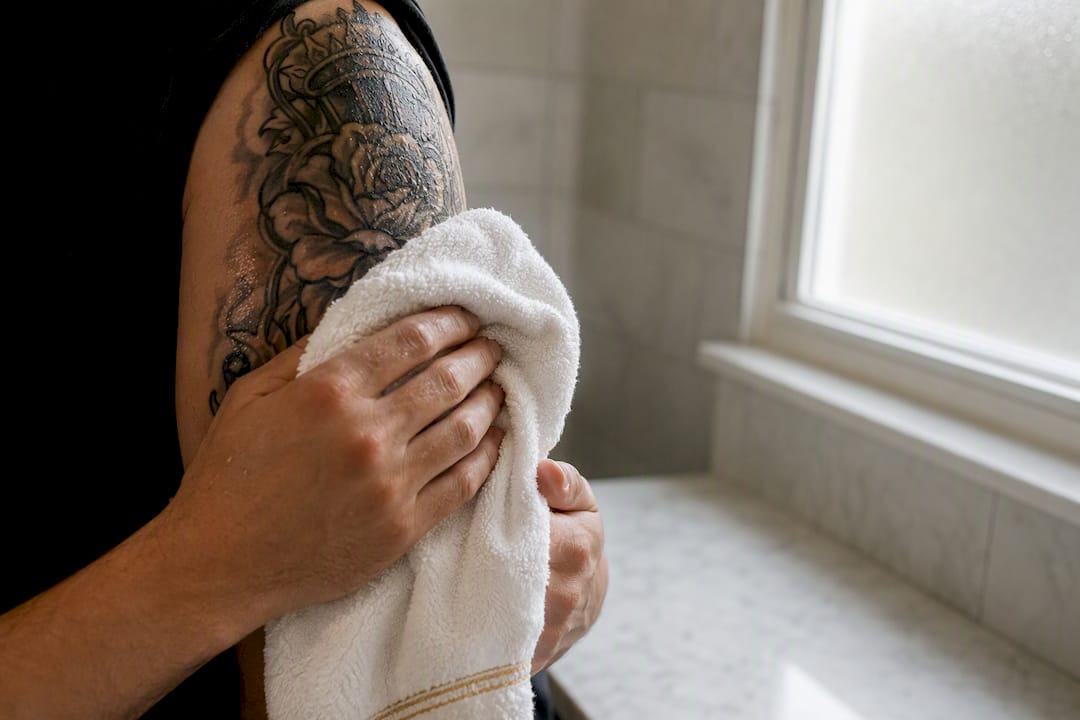
What you do in the sixty seconds after you turn off the water matters almost as much as the shower itself. Grab a clean paper towel, not the bath towel hanging on the hook, and pat the tattoo dry without rubbing. Rubbing creates friction on skin that’s still knitting itself back together, and reusable cloth towels can harbor bacteria a fresh wound doesn’t need.
Once the area is dry, apply aftercare in a layer thin enough that you can still see the tattoo through it.
- Skip thick petroleum-based ointments during early healing. Heavy occlusive layers trap heat and bacteria against the skin instead of letting it breathe.
- A dermatologist-formulated balm or lotion in a thin coat protects the skin barrier without smothering it.
- If your artist applied a second-skin bandage and told you to rewrap, do it fresh and dry, never over damp skin.
- Reapply aftercare two to three times a day as your skin starts to feel tight or dry, tapering off as healing progresses.
What to Avoid in the Shower (and Why It Matters)
Certain habits undo everything else you’re doing right, so skip these entirely until your tattoo has fully healed.
- Soaking in baths, pools, lakes, or hot tubs. Standing water is loaded with bacteria your open skin can’t fight off yet, and prolonged soaking can pull pigment right out of a fresh tattoo. If you’re planning a beach trip or pool day, check when it’s actually safe to swim after a tattoo before you go.
- Scrubbing with loofahs, washcloths, or exfoliating brushes. These tools abrade skin that’s still forming a protective layer, which raises both infection risk and scarring.
- Long, hot showers. Extended water exposure waterlogs the skin, and heat plus saturation can cause “bubbling,” where the top layer lifts and pulls ink with it.
What Normal Healing Looks Like vs. Warning Signs
Most tattoos follow a predictable pattern: mild redness and light swelling in the first couple of days, followed by scabbing and peeling that runs from roughly one to three weeks. Surface healing wraps up in that window, though the deeper skin layers keep remodeling for months after the surface looks finished. Some itchiness during peeling is normal and usually means healing is on track, not off track.
Watch for a different pattern, though. Redness that keeps spreading instead of fading, warmth radiating from the tattoo, pain that increases instead of easing after day three or four, pus, or a fever are not part of normal healing.
- Growing redness or heat around the tattoo edges
- Pus, unusual discharge, or a foul smell
- Fever or chills
- Pain that gets worse instead of better after the first few days
If you notice any of these, stop using any product you suspect is causing irritation and contact your tattoo artist or a dermatologist rather than waiting it out. Medical consensus treats a fresh tattoo as a controlled skin injury, and controlled injuries respond to prompt attention, not guesswork.
Matching Your Aftercare Products to Each Shower Step
Every step above maps to a specific product decision, and getting that pairing right is what separates a smooth healing process from a frustrating one.
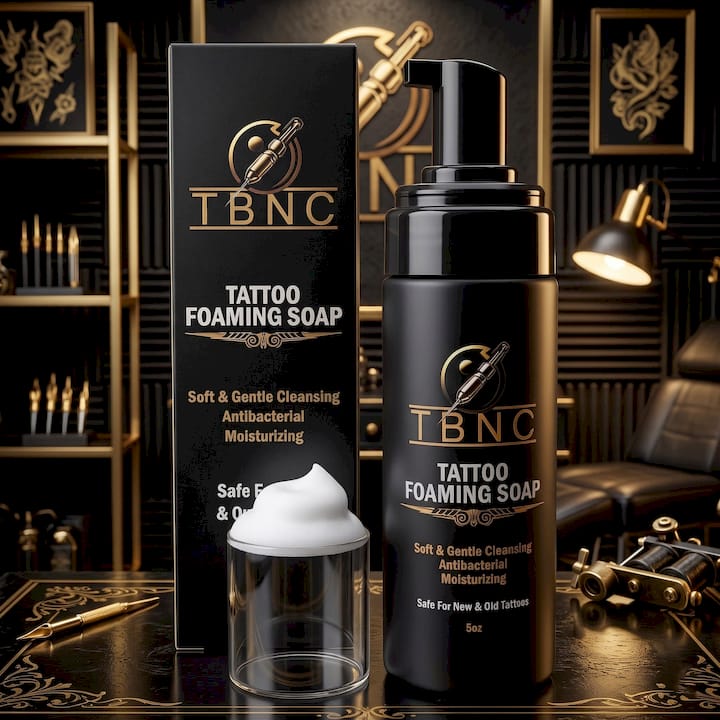
- During the shower itself, a small amount of Tattoo Foaming Soap lathered gently with your hands and rinsed thoroughly gives you the mild, fragrance-free clean dermatologists recommend, without the dyes or additives found in regular body wash.
- Once you’ve patted the area dry with a paper towel, a thin layer of Tattoo Aftercare Balm restores moisture without the heavy, pore-clogging feel of petroleum-based ointments.
- On days when the tattoo feels irritated or slightly inflamed rather than just dry, Tattoo Soothing Gel offers a lighter, non-occlusive option that calms the skin instead of sealing it.
Fragrance-free, dermatologist-approved formulas exist for a reason: they align with the same guidance clinics and dermatology bodies give directly, which is to keep the wound clean and lightly moisturized without introducing irritants your skin doesn’t need while it’s healing.
A Note on Cleanliness vs. Barrier Protection
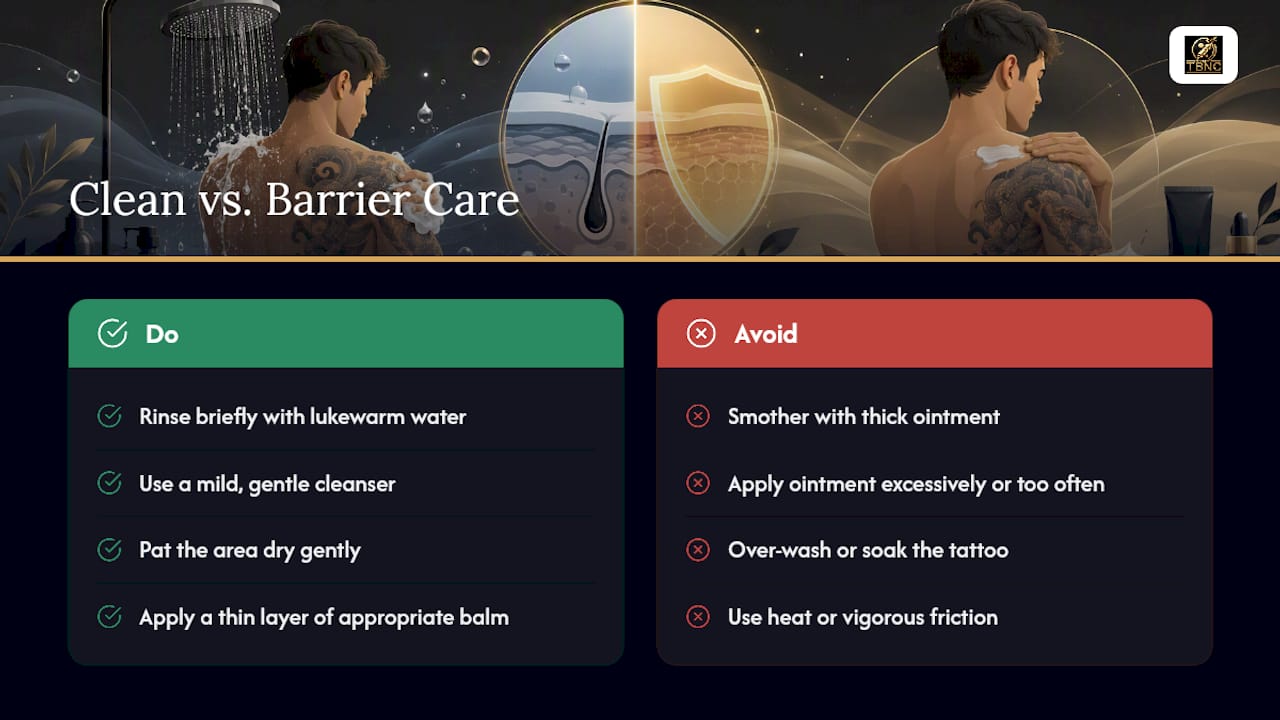
The biggest myth in tattoo aftercare isn’t about soap or ointment. It’s the idea that more product equals better healing. Skin heals through a delicate balance: clean enough to prevent infection, protected enough to retain moisture, and never so buried under product that it can’t breathe.
Simple wound care beats elaborate rituals almost every time. A tattoo that gets a brief, lukewarm rinse with mild cleanser, a gentle pat dry, and a thin layer of the right balm will typically outheal one smothered in thick ointment applied three times too often. Trust backed by clinical guidance, not internet folklore, is what should guide your routine from day one.
— The Best Numbing Cream
Get the Right Aftercare Products for Every Shower
TBNC Tattoo built its aftercare line around exactly the routine above, so you’re not guessing which product belongs at which step. Start with Tattoo Foaming Soap for the cleanse phase in the shower, a fragrance-free formula that lathers gently without stripping healing skin. Once you’ve patted dry, reach for Tattoo Aftercare Balm to lock in a thin, breathable layer of moisture, or Tattoo Soothing Gel on days your skin needs calming more than heavy hydration. Every formula is dermatologist-approved and built specifically for tattooed skin, not repurposed from a general skincare aisle. Browse the full aftercare lineup at TBNC Tattoo and get your routine sorted before your next shower.
Sources
- Tattoo aftercare: Instructions and healing tips — Cleveland Clinic
- Tattoo aftercare: How to clean and care for your tattoo — Healthline
- EADV tattoo aftercare guidance — European Academy of Dermatology and Venereology
- How long after a tattoo can you shower? — Saniderm FAQ
FAQ
When Can I Shower Normally Again After a Tattoo?
Most people return to fully normal, unrestricted showers once the surface has healed, typically one to three weeks, though deeper skin layers keep repairing for months. Follow your artist’s specific timeline since it depends on the bandage type and the size of your tattoo.
Is It Okay to Shower the Same Day You Get a Tattoo?
Yes, once your bandage time has passed. Traditional wraps often come off within a few hours of your session, while second-skin bandages may let you shower with the seal still in place the same day.
How Long After a Tattoo Can It Get Wet?
A quick, gentle shower is fine after your artist’s initial wait time, but avoid submerging the tattoo in baths, pools, or hot tubs until it’s fully healed, since soaking raises infection risk and can pull pigment from the skin.
Do Tattoos Heal Better Dry or Moist?
Neither extreme works well. A completely dry, cracked tattoo and an overly wet, soaked one both slow healing; the goal is a thin, breathable layer of moisture from a light lotion or balm, not saturation from either water or heavy ointment.
What Soap Should I Use to Wash a New Tattoo?
Use a mild, fragrance-free cleanser applied with clean hands, never a washcloth or loofah. A product like Tattoo Foaming Soap is formulated specifically to clean healing skin without the dyes or fragrances that irritate it.


