

First 3–5 Nights: Sleep With a New Tattoo Safely by Placement
Cover the tattoo for the first night. Either leave your artist’s second-skin bandage on or apply a thin layer of unscented aftercare product plus a clean covering, then sleep facing away from the tattooed side. The first night is the highest-risk window for pressure damage, sticking, and bacteria transfer, so a simple bedtime routine matters more here than at any other point in the healing process.
TL;DR:
- The first three nights are the highest risk period for pressure damage and bacteria transfer, so proper covering and positioning are crucial.
- Keeping a clean, fragrance-free layer of aftercare on hand and avoiding heavy or scented products reduces inflammation and promotes healing.
- Sleeping on the opposite side, propped at an angle, or elevating limbs prevents pressure and swelling that can damage fresh ink.
- If the tattoo sticks to sheets, gently loosen it with water and avoid yanking to prevent scabbing and ink loss.
- Most issues like bleeding or redness after the initial days are normal unless accompanied by spreading redness, pus, or fever, which require medical attention.
Table of Contents
- How Do You Sleep With a Fresh Tattoo Safely?
- The Best Sleep Position Depends on Where Your Tattoo Sits
- What If Your Tattoo Sticks to the Sheets?
- How Long Does the Risky Sleep Window Last?
- When Should You Worry About Infection?
- Matching Aftercare Products to Each Healing Stage
- Why the “Just Let It Breathe” Advice Misses the Point
- Nighttime Aftercare Products Worth Keeping on Hand
- Sources
- FAQ
How Do You Sleep With a Fresh Tattoo Safely?
Sleeping with a new tattoo comes down to three things: what’s covering it, what position you’re in, and what your sheets are made of. Get those right on night one and you avoid most of the damage that happens during healing.
What to do before bed tonight
Wash your hands first, then gently cleanse the tattoo with a fragrance-free soap and lukewarm water, and pat it dry with a clean towel. Do not rub it. If your artist applied a second-skin covering like Saniderm or Tegaderm, leave it exactly where it is. Dermatologists generally recommend keeping that first bandage on for 24 to 72 hours, since it acts as a barrier between the wound and your sheets while you sleep.
If your artist sent you home with just plastic wrap or nothing at all, apply a thin layer of a fragrance-free aftercare product and cover the area loosely for that first night only. Medical News Today advises against sleeping with a fresh tattoo uncovered until your artist gives you the go-ahead, largely because an exposed tattoo will bleed a little plasma and ink onto your sheets and pick up bacteria in the process.
A few things to keep off your skin and your shopping list:
- Petroleum jelly and heavy scented lotions, which can trap moisture against the wound and raise inflammation risk
- Any product with alcohol, fragrance, or essential oils
- Old bath towels that have been washed with fabric softener (it leaves a residue that irritates open skin)
- Tight clothing directly over the tattoo, even to bed
In the morning, remove the covering, cleanse gently, and let the tattoo breathe during the day. Only reapply a wrap that night if it’s still actively weeping plasma. Once the surface stops seeping, you’re moving from wound care to routine moisturizing.
Pro Tip: Keep your nighttime aftercare product on the nightstand, not in the bathroom cabinet. You’re far more likely to actually do the pre-bed step if it’s within arm’s reach when you’re already half asleep.
The Best Sleep Position Depends on Where Your Tattoo Sits
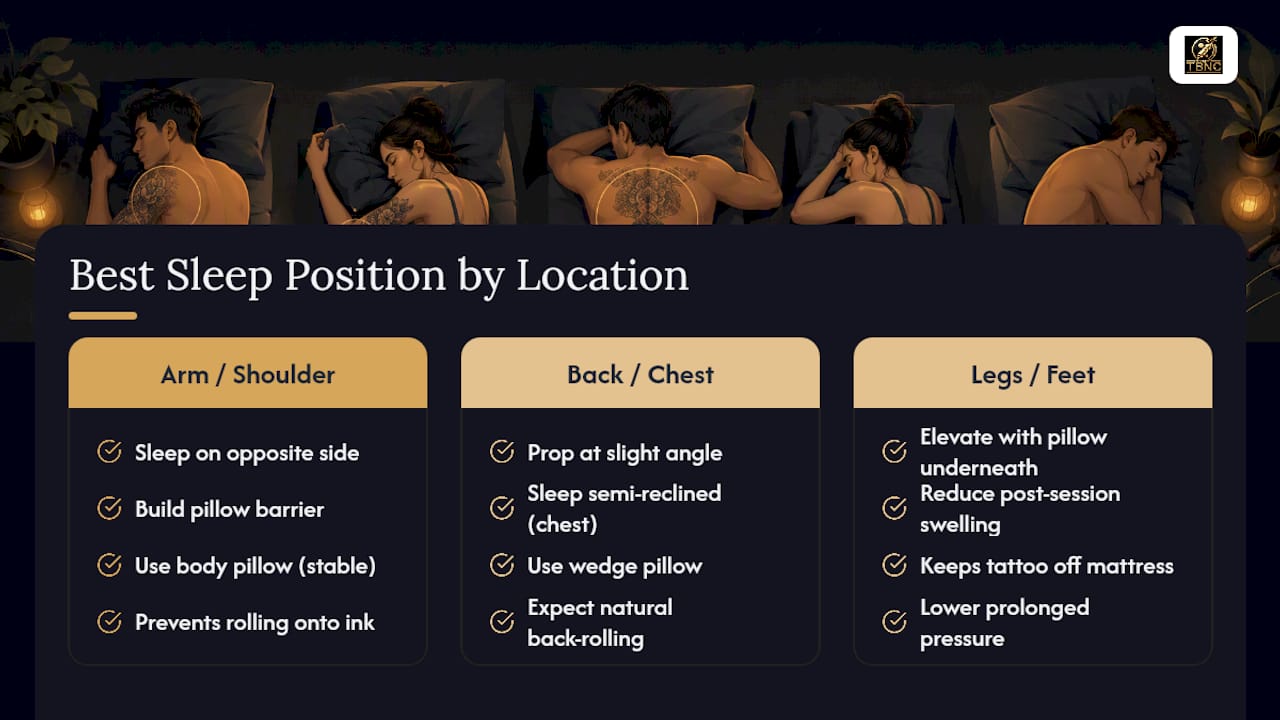
There’s no single “correct” sleep position for a new tattoo. What works for a shoulder piece will crush a fresh rib tattoo. Match your setup to the location and you’ll wake up with intact ink instead of a stuck, throbbing mess.
Arm, shoulder, and side tattoos. Sleep on the opposite side and build a barrier with pillows so you physically can’t roll onto it. A body pillow works well here because it gives you something substantial to lean against instead of a single throw pillow that slides away by 2 a.m.
Back and chest pieces. These are trickier because most people naturally roll onto their back at some point in the night. Propping yourself at a slight angle with a wedge pillow reduces direct contact time, and for chest tattoos, sleeping semi-reclined for the first couple of nights keeps pressure off without being uncomfortable.
Legs, feet, and other extremities. Elevate the area slightly with a pillow underneath. This cuts down on the swelling that naturally shows up after a long session and keeps the tattoo from pressing flat against the mattress for hours.
Whatever the location, a rolled towel or firm pillow wedged against your back gives you a tactile cue that stops unconscious rolling before it happens. Pillow barricades work because they create resistance you’ll feel even half asleep, not because they physically pin you in place. A firmer mattress also helps, since soft, sinking surfaces increase the surface area of skin in contact with fabric. If you share a bed, warn your partner, and keep pets off the mattress entirely for the first few nights. A cat curling up against a fresh tattoo is a bad night for everyone involved.
What If Your Tattoo Sticks to the Sheets?
Don’t yank the fabric off. Dried plasma bonds sheet fibers to your skin, and pulling that free can lift scabs and pull ink straight out with it.
- Wet it first. Soak the stuck area with clean, lukewarm water directly on the fabric until it softens and starts to loosen on its own.
- Separate slowly. Once the fabric goes slack, peel it away in small sections rather than one motion. Stop the second you feel resistance and add more water.
- Can’t reach it easily? Step into the shower with the sheet still stuck and let the water do the work under gentle stream pressure before you touch it.
Once it’s free, cleanse the area gently, apply a thin layer of your aftercare product, and re-cover only if it’s still actively weeping. If you notice bleeding that won’t stop, missing patches of skin, or ink that clearly came off with the fabric, contact your tattoo artist and consider a same-day check with a medical provider. Most stuck-sheet incidents are a scare, not a disaster, but a compromised patch of skin needs eyes on it sooner rather than later.
How Long Does the Risky Sleep Window Last?
The first three to five nights carry the highest risk for pressure damage, which lines up with when your skin is still in the inflammatory phase. Days one through six are inflammatory. Days four through twenty-one are proliferative, where new skin cells are actively rebuilding the surface. Sleep habits should shift as you move through both.
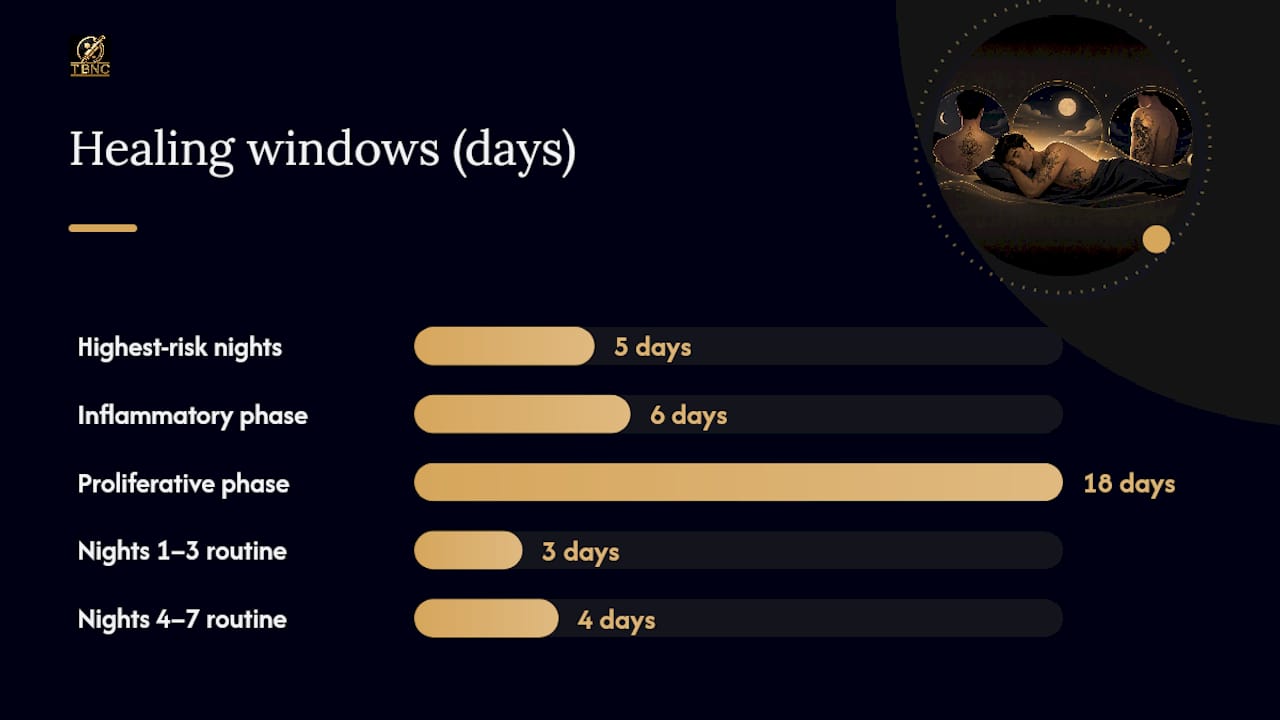
Nights one through three: Clean before bed, apply a thin layer of ointment, and cover if your artist advised it. Breathable clothing works if you’re past the bandage stage.
Nights four through seven: Clean, moisturize, skip the occlusive wrap once the surface has sealed and stopped weeping. This is usually when peeling starts, and trapping moisture underneath a wrap at this point does more harm than good.
Beyond week one: Regular moisturizing at bedtime is enough. No more coverings unless a spot reopens.
Practical bedding habits matter through this whole stretch:
- Lay a dark towel or old sheet under the tattoo for the first week to protect your good linens.
- Swap sheets more often than usual. Fresh, breathable cotton beats anything synthetic against healing skin.
- Skip pools and hot tubs entirely until the surface fully closes.
- Keep pets and partners off that side of the bed for at least the first few nights.
When Should You Worry About Infection?
Some irritation is expected. Mild redness, warmth, light clear or slightly pink weeping, scabbing, and itching are all part of normal healing. What’s not normal is redness that spreads outward from the tattoo, pus, fever, chills, or pain that gets worse instead of better after day three.
If something looks off, take a photo so you can track changes day to day, stop using any occlusive covering, and reach out to your tattoo artist first. Cleveland Clinic notes that spreading redness, fever, and pus are signs to get medical attention, not wait it out. Red streaks running away from the tattoo or a fever are urgent care territory, not a “wait and see” situation.
Stick to gentle cleansing and whatever antiseptic your artist or a clinician actually recommends. Skip the internet home remedies, especially anything involving toothpaste, essential oils, or numbing sprays not meant for open skin. A tattoo that’s genuinely infected needs professional treatment, not a home fix that delays real care by another two days.
Matching Aftercare Products to Each Healing Stage
The aftercare line is designed around common healing phases described by dermatologists, and the product you use at bedtime should change as your tattoo does.
- First 48 hours, heavy weeping: A lightweight soothing gel calms inflamed, plasma-heavy skin without the heaviness of a balm.
- Days 3 through 10, flaking and dry: A thicker aftercare balm holds moisture better against scabs that are starting to lift and peel.
- Week two onward, surface sealed: An unscented lotion keeps skin supple for nightly use without introducing fragrance to a still-sensitive area.
None of this replaces your artist’s specific instructions. Every studio has slightly different preferences on bandage timing and product choice, and the person who did the work knows your particular skin and design. Use these categories as the practical bedtime layer that sits underneath whatever your artist told you at checkout.
Why the “Just Let It Breathe” Advice Misses the Point
Plenty of tattoo forums push the idea that fresh ink should go uncovered from day one because “skin needs air to heal.” That advice ignores what actually happens overnight: cotton sheets, pet hair, and eight hours of unconscious rolling do far more damage than a few hours under a breathable wrap ever will.
The conventional wisdom also tends to treat all tattoos the same, when location changes almost everything about your sleep setup. A wrist piece and a rib piece have nothing in common in terms of risk, yet most generic aftercare advice gives you one bedtime routine for both.
If there’s one thing worth prioritizing over everything else in this guide, it’s the first three nights. Get the covering, position, and bedding right during that window and the rest of healing tends to take care of itself. Get it wrong, and you’re dealing with touch-ups, patchy color, or worse, an infection that could have been avoided with a pillow and a little patience.
— The Best Numbing Cream
Nighttime Aftercare Products Worth Keeping on Hand
Following the routine above gets a lot easier with the right product on your nightstand instead of whatever’s left over from a drugstore run. TBNC Tattoo’s aftercare lineup is built around the exact healing stages covered in this guide, not a one-size-fits-all tub of cream.
For the first 48 hours of inflammation and weeping, the Tattoo Soothing Gel applies thin and absorbs fast, so you’re not going to bed with a greasy layer that transfers onto sheets. Once flaking sets in around day three, the Tattoo Aftercare Balm holds moisture longer against dry, tight skin. And for the ongoing nightly routine once the surface has sealed, the Tattoo Aftercare Lotion in an unscented formula keeps skin soft without introducing fragrance near still-healing ink. Apply a thin layer each night, never over-occlude, and always defer to your artist’s specific instructions over any general guide, including this one. If you’re stocking up before your next session, TBNC Tattoo also carries numbing cream and aftercare butter options worth adding to the same order.
This article is general information, not a substitute for advice from a qualified doctor. Consult a qualified healthcare professional about your own circumstances before acting on anything here.
Sources
- Tattoo aftercare: what to expect and how to care for new ink | Cleveland Clinic
- Tattoo aftercare: What to expect — Medical News Today
- How to Keep a Tattoo From Sticking to Bedsheets - AuthorityTattoo
- New Tattoo Sleep Position Guide | Mattress Miracle
FAQ
How Long Can I Sleep on a New Tattoo?
Avoid direct pressure on the tattoo during the initial nights, when the risk for pressure damage and sticking is highest. After the first week, once the surface has sealed, normal sleep positions are generally fine.
Is It Okay to Fall Asleep While Getting a Tattoo?
It’s not ideal. Falling asleep mid-session can shift your body position, which forces the artist to stop and reset, and it makes it harder for you to communicate if something feels wrong. Most studios will gently wake you if it happens.
What If I Accidentally Sleep on My New Tattoo?
Check for stuck fabric, unusual bleeding, or lifted skin as soon as you wake up. If nothing looks torn or excessively irritated, clean it gently and apply a thin layer of aftercare product; if you see missing patches of ink or skin, contact your artist.
What Should I Do Right Before Going to Sleep With a New Tattoo?
Wash your hands, cleanse the tattoo with fragrance-free soap, apply a thin layer of an unscented product like TBNC Tattoo’s aftercare lotion, and cover it only if your artist recommended a bandage for that stage of healing.


