

Protect Your Tattoo: When to Use Zinc Oxide After 2–4 Weeks
Zinc oxide has no place on a fresh tattoo, but it becomes one of the smartest tools in your aftercare kit once the skin has fully healed, typically two to four weeks post-session. The checkpoint is simple: no more scabs, no more peeling, skin looks smooth and matte instead of shiny or raw. Once you hit that mark, a broad-spectrum SPF 30+ mineral sunscreen built on zinc oxide is a preferred, reapplied-regularly choice for keeping your ink from fading in the sun.
TL;DR:
- Zinc oxide sunscreen is safe for tattoos only after the skin has fully healed, which generally takes two to four weeks and requires no active scabbing or flaking.
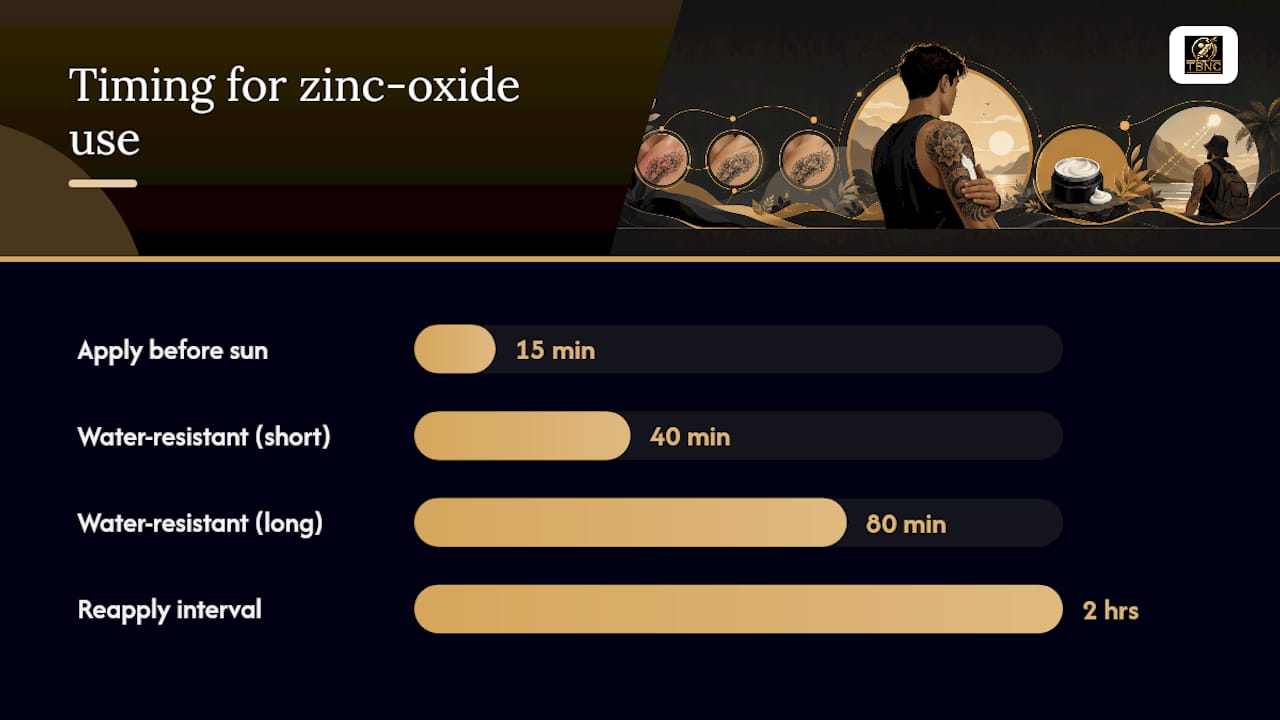
- Proper application involves choosing a broad-spectrum SPF 30+ product with zinc oxide listed as the main ingredient, applying it 15 minutes prior to sun exposure, and reapplying every two hours.
- Mineral sunscreens like zinc oxide reflect UV rays at the surface, making them lower risk for causing irritation on healed tattoos, unlike chemical sunscreens that absorb into the skin.
- A white cast from traditional zinc oxide formulas can be mitigated with micronized versions, especially over dark ink, but consistency in reapplication is crucial for long-term tattoo protection.
- Heavy ointments and occlusive products should be avoided after the initial healing stage, with a transition to lighter lotions and daily sunscreen to maintain optimal tattoo preservation.
Table of Contents
- When Can You Put Zinc Oxide on a Tattoo?
- What Are the Benefits and Risks of Zinc Oxide on Healed Tattoos?
- How Do You Choose and Apply Zinc Oxide Sunscreen on a Tattoo?
- Which Aftercare Products Should You Avoid, and How Do You Transition to Sunscreen?
- What Do Dermatology Standards Say About Zinc Oxide on Tattoos?
- Can Zinc Oxide Cause Fading or Texture Changes on Older Tattoos?
- Is Zinc Oxide Better Than Chemical Sunscreen for Tattoos?
- Does Zinc Oxide Affect Different Ink Colors or Skin Types Differently?
- Our Take on Zinc Oxide and Tattoo Safety
- Where TBNC Tattoo Products Fit in a Sun-Safe Aftercare Routine
- Sources
- FAQ
When Can You Put Zinc Oxide on a Tattoo?
A fresh tattoo is an open wound, whether it looks like one or not. The needle has punctured thousands of tiny channels into your skin, and until those close up, slathering on any sunscreen, including zinc oxide, risks irritation, clogged healing tissue, and trapped bacteria under a layer of product that was never designed for broken skin.
Surface healing generally takes two to four weeks, though some product labels suggest waiting closer to three weeks to be safe. That window shifts depending on tattoo size, placement, your skin type, and how well you stick to aftercare. A large back piece heals slower than a small wrist tattoo. Areas that flex a lot, like knuckles or elbows, tend to take longer too.
Here’s how to check if your tattoo has cleared the safety threshold:
- No active scabbing or flaking remains on the surface.
- The skin looks matte and smooth, not shiny, tight, or wet-looking.
- There’s no tenderness when you touch it lightly.
- Color looks settled rather than blotchy or raised.
If any of those boxes go unchecked, wait longer. There’s no prize for rushing sunscreen onto skin that’s still doing repair work, and jumping the gun is exactly how people end up with irritation they blame on the sunscreen when the real issue was timing. When in doubt, ask your tattoo artist or a dermatologist, especially for larger pieces where healing can be uneven across the design.
What Are the Benefits and Risks of Zinc Oxide on Healed Tattoos?
Zinc oxide works by sitting on top of your skin and physically deflecting UV rays before they ever reach living tissue. Think of it less like a sponge and more like a mirror. Titanium dioxide works the same way. Together, these two minerals make up what’s known as physical or mineral sunscreen, as opposed to chemical formulas that absorb into skin and convert UV energy into heat.
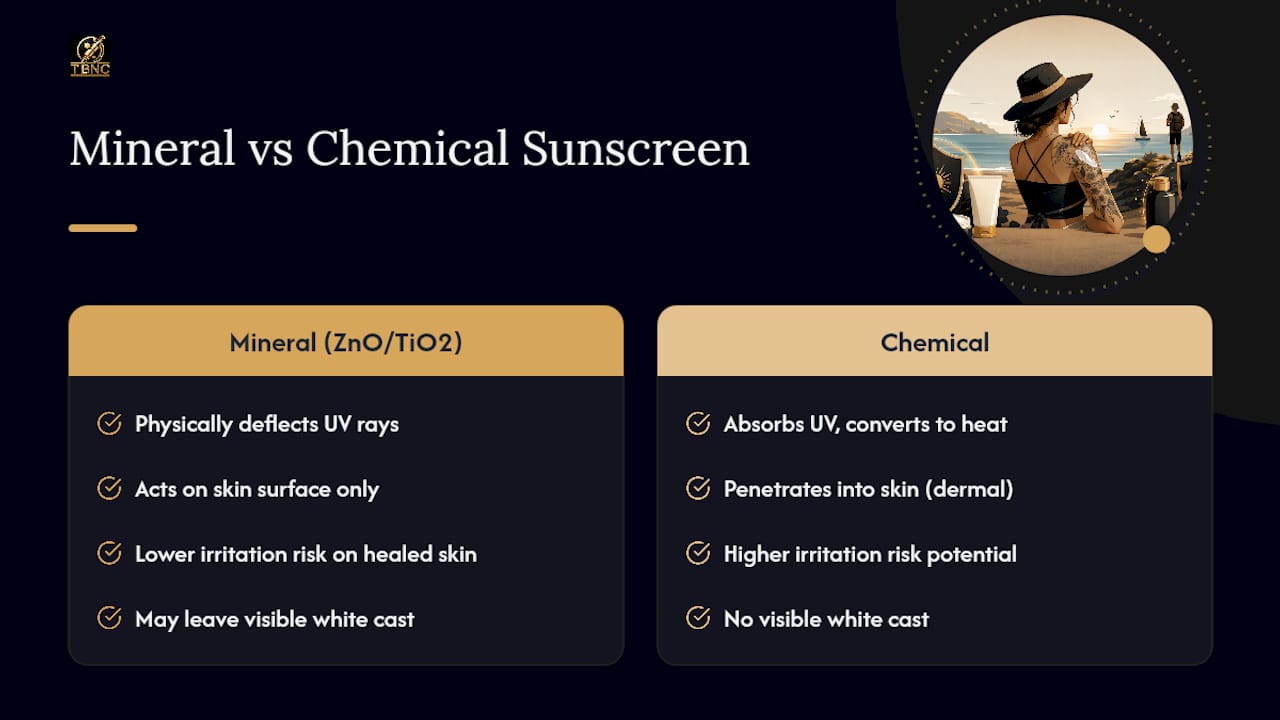
That surface-level action is exactly why mineral sunscreens are generally the lower-risk choice for recently healed tattoos. Minimal dermal absorption means less chance of triggering irritation on skin that just finished repairing itself. Dermatologist Dr. Jeremy Fenton has pointed to zinc oxide-based SPF 30+ as a strong first choice for sensitive or newly healed skin, citing that same lower irritation profile.
Zinc oxide doesn’t dissolve or pull ink out of your skin. That’s a persistent myth worth killing. Ink sits in the dermis, well below where zinc oxide operates. When people notice fading or blotchy spots after starting sunscreen, the actual cause is almost always mechanical: rubbing too hard, scrubbing during application, or piling on an occlusive product too early and disturbing pigment that hadn’t fully settled.
The tradeoff with mineral sunscreen is cosmetic, not medical. Traditional zinc oxide formulas can leave a visible white cast, especially over darker or more saturated ink. Micronized versions reduce that chalky look while keeping the same surface-blocking mechanism intact, though some people prefer non-nano particles for personal comfort reasons. Either way, a slight white tint is a small price for protecting months of healing and hundreds of dollars in tattoo work.
How Do You Choose and Apply Zinc Oxide Sunscreen on a Tattoo?
Not every sunscreen labeled “mineral” is created equal, and application technique matters almost as much as the product itself.
Look for these features when picking a bottle:
- Broad-spectrum SPF 30 or higher. Anything lower won’t hold up against a full day outdoors.
- Zinc oxide listed as the primary active ingredient. Some blends pair it with titanium dioxide, which is fine.
- Fragrance-free and hypoallergenic. Healed tattoos are less reactive than fresh ones, but sensitive skin still benefits from fewer additives.
- Water-resistant if you’re swimming or sweating. Check the label for duration, usually 40 or 80 minutes.
- Micronized formula if you want to avoid a heavy white cast over color work or dark linework.
Apply sunscreen about 15 minutes before you head outside so it has time to settle. For a small tattoo, roughly a quarter teaspoon, about the size of a large grape, covers the area without leaving it greasy. Larger pieces need proportionally more. Reapply every two hours, and immediately after swimming or heavy sweating no matter what the water-resistance label promises.
Pat sunscreen on gently rather than rubbing it in aggressively. If you’re also using a daily moisturizer, let that absorb fully first, then layer sunscreen on top. Small areas like hand or finger tattoos wear off faster from friction and washing, so check them more often. Tattoos under clothing still need coverage on days when sleeves come off or shirts get sheer in the sun.
Pro Tip: Keep a travel-size zinc oxide sunscreen in your bag during the first sunny season after getting inked. Healed tattoos fade fastest in year one, and reapplication habits formed early tend to stick.
Which Aftercare Products Should You Avoid, and How Do You Transition to Sunscreen?
Heavy petroleum-based ointments have a place immediately after your session, but they become a liability if you keep using them too long. Thick, occlusive products can smother healing skin and trap bacteria underneath, which slows healing rather than speeding it up.
A smarter sequence looks like this:
- Days 0 to 3: a thin layer of healing ointment or balm to protect the wound and lock in moisture.
- Day 4 until fully healed: switch to a lighter balm or water-based lotion as scabbing resolves.
- After healing is complete: unscented daily lotion becomes your base layer, with sunscreen applied on top only once skin is smooth and matte.
Even mineral sunscreens can be too occlusive for skin that’s still actively peeling, so don’t rush that last step. Watch for red flags that mean it’s time to call a professional instead of waiting it out: spreading redness, increasing pain instead of decreasing, pus or unusual discharge, or fever. Those symptoms point to infection, not normal healing, and no topical product fixes that.
What Do Dermatology Standards Say About Zinc Oxide on Tattoos?
Dermatology guidance on this topic is consistent: protect healed tattoos with broad-spectrum SPF 30 or higher, reapplied every two hours, and skip tanning beds entirely since they deliver concentrated UV exposure that accelerates fading. General skin-health guidance from the Cleveland Clinic backs the same principle: UV exposure damages skin whether or not it’s tattooed, and consistent protection is the actual lever that matters over time.
TBNC Tattoo emphasizes a conservative approach to tattoo aftercare, recommending a healing-first sequence: ointment, then balm, then lotion, and only then sunscreen once skin has genuinely closed. TBNC Tattoo’s aftercare content, including guidance on protecting ink from fading, aligns with this approach.
Can Zinc Oxide Cause Fading or Texture Changes on Older Tattoos?
Zinc oxide itself doesn’t cause fading. It’s designed to prevent it. The risk on older, fully settled tattoos comes almost entirely from misuse rather than the mineral itself.
Applying sunscreen too aggressively, rubbing it in with heavy pressure instead of patting it on, can gradually stress the top layers of skin over years of repeated use. That’s a technique issue, not a chemistry issue. The same goes for skipping sunscreen altogether: unprotected UV exposure is the single biggest driver of tattoo fading over time, breaking down pigment particles in the dermis regardless of what skincare routine you follow otherwise.
Texture changes on older tattoos are more often tied to natural skin aging, sun damage accumulated before you started using sunscreen, or weight fluctuations that stretch the skin than to any topical product applied correctly. If you notice unusual texture changes, dryness, or unexpected color shifts on an old tattoo after starting a new sunscreen, check the ingredient list for the actual formula. It could be a fragrance or preservative in that specific product rather than zinc oxide itself.
The practical takeaway for tattoos that have been healed for months or years: consistent, correctly applied zinc oxide sunscreen protects color longer than skipping protection or using it inconsistently. Reapplication habit matters more than brand loyalty here.
Is Zinc Oxide Better Than Chemical Sunscreen for Tattoos?
For tattooed skin specifically, zinc oxide holds an edge, though the comparison depends on what you’re optimizing for.
Chemical sunscreens work by absorbing into the skin and converting UV radiation into heat, which then dissipates. That absorption step is where the difference matters for tattoos. Chemical filters penetrate deeper into skin layers, which raises the odds of irritation on skin that’s still sensitive from tattooing, even well after visible healing looks complete. Mineral filters instead reflect and scatter UV at the surface, never penetrating deep enough to interact with pigment sitting in the dermis.
Chemical sunscreens do have real advantages elsewhere. They tend to rub in clearer, without the white cast, and many people find the texture lighter for everyday wear. If you’re covering a large tattooed area daily and cosmetics matter more than minimizing irritation risk, a chemical formula isn’t dangerous. It’s just a different tradeoff.
For anyone with sensitive skin, a recently healed tattoo, or a history of reacting to skincare products, zinc oxide remains the safer starting point. You can always test a chemical formula later on a small patch once you know how your healed tattoo responds to sun exposure in general.
Does Zinc Oxide Affect Different Ink Colors or Skin Types Differently?
Ink color itself doesn’t chemically react with zinc oxide. Zinc oxide sits on the surface; ink sits in the dermis. There’s no direct interaction between the two.
Where color matters is purely cosmetic. Light-colored inks, whites, pastels, light grays, show a mineral sunscreen’s white cast far less than saturated blacks or deep colors, where a thin white film can be more noticeable immediately after application. Micronized zinc oxide formulas minimize that visibility across the board, which is worth seeking out if you have heavily saturated color work you want to keep looking crisp in photos.
Skin type plays a bigger role in comfort than in safety. Naturally oilier skin may find traditional zinc oxide formulas feel heavier or greasier, while drier skin often tolerates the same formula more comfortably. Deeper skin tones sometimes notice the white cast more starkly against contrast, which is another reason micronized or tinted mineral formulas have grown popular. None of this changes the underlying safety profile. Zinc oxide protects all skin tones and ink colors from UV-driven fading in essentially the same way, since the mechanism is physical reflection, not a chemical reaction tied to pigment or melanin.
Our Take on Zinc Oxide and Tattoo Safety
The advice on this topic gets muddled because most guides treat “sunscreen for tattoos” as one topic instead of two entirely different questions: fresh healing versus long-term maintenance. Conflating them is where people get hurt, either by applying sunscreen too early and irritating a wound, or by skipping it entirely for years out of caution that no longer applies once the skin has closed.
What the evidence actually supports is a strict binary, not a gradual gray zone. Before healing: nothing goes on except what your artist recommends. After healing: zinc oxide sunscreen isn’t optional if you care about how your tattoo looks in five years. The biggest gap we see is reapplication discipline, not initial product choice. People buy the right sunscreen and then forget it needs reapplying every two hours, which defeats most of the benefit.
Prioritize the checkpoint first, then the habit. Skip the guesswork about which fancy formula performs best and focus on consistency with a formula you’ll actually use daily.
— The Best Numbing Cream
Where TBNC Tattoo Products Fit in a Sun-Safe Aftercare Routine
Getting from fresh ink to sun-ready skin means the right product at the right stage, not one all-purpose cream stretched across the entire timeline. TBNC Tattoo built its aftercare line around that exact sequencing, so you’re never guessing which stage a product belongs in.
In the first few days, Tattoo Butter protects the wound and locks in moisture while your skin does the heaviest repair work. As scabbing resolves, typically day four through the end of active peeling, Tattoo Aftercare Balm offers a lighter touch that won’t smother healing tissue. Once your tattoo hits that smooth, matte checkpoint, Tattoo Aftercare Lotion in Unscented becomes your daily base layer, prepping skin for sunscreen without added fragrance that could irritate.
That’s the full arc: butter for the wound stage, balm for the transition, lotion for maintenance, and sunscreen layered on top only after epidermal closure is confirmed. Check out the full aftercare lineup and build your routine around the stage your tattoo is actually in right now.
Sources
For deeper detail on the timeline and product choices covered here, see the American Academy of Dermatology’s tattoo care guidance, the Cleveland Clinic on sun damage, and TBNC Tattoo’s own breakdown of when to safely start sunscreen on a tattoo.
- DailyMed — drug information / label (healing timeline guidance)
- American Academy of Dermatology — Caring for tattooed skin
- Poli International — Sunscreen and tattoos: a chemistry guide
- Cleveland Clinic — Sun damage: protecting yourself
FAQ
What Is the Best Ointment to Heal a New Tattoo?
A thin layer of a gentle, purpose-made healing ointment or balm applied in the first few days works best, since it protects the wound without the heavy occlusion of thick petroleum-based products.
Can You Put Desitin on a Tattoo?
Desitin is a zinc oxide diaper rash cream, not a tattoo aftercare product, and it’s generally not recommended on fresh ink because its thick, occlusive texture can trap bacteria and irritate healing skin.
Does Zinc Help Tattoo Healing?
Zinc oxide doesn’t speed up the healing process itself. Its real value comes after healing, when it protects settled ink from UV-driven fading as a mineral sunscreen.
What Cream Should Not Be Used on Tattoos?
Avoid thick petroleum-based ointments and unscented products with heavy fragrance or alcohol once past the initial wound stage, since occlusive creams can smother healing skin and trap bacteria underneath.
Is Zinc Oxide Safe for Tattoos Right After Getting Inked?
No. A fresh tattoo is an open wound, and sunscreen, including zinc oxide, should wait until the two to four week surface-healing window has passed and skin looks smooth and matte.


