

72 Hours to Tell When Tattoo Redness Is Normal or Infection
Mild redness, warmth, and slight swelling around a fresh tattoo are normal for the first one to three days. Redness that steadily fades day by day means you’re healing on track. If it gets worse after 72 hours, or you notice spreading redness, increasing pain, yellow or green pus, fever, or red streaks, that’s your signal to get medical care promptly.
TL;DR:
- Redness confined to the tattoo area that diminishes each day within the first week indicates normal healing, while expanding redness after 72 hours signals potential infection.
- Thick, colored drainage or increasing pain after day three require prompt medical attention, whereas clear fluid in the first two days is considered normal.
- Persistent redness without worsening pain or systemic symptoms typically suggests an allergic reaction, not an infection, especially if limited to specific ink colors or contact areas.
- Light peeling and itching during days 4 to 7 are normal, but redness that worsens or spreads beyond the initial border calls for professional evaluation.
- Consistent, gentle aftercare with fragrance-free soap and petroleum jelly supports healing; avoid harsh products like hydrogen peroxide or alcohol, especially on high-friction or low-circulation areas.
Table of Contents
- Is Tattoo Redness Normal in the First Few Days?
- How Long Should a Tattoo Be Red? A Day-by-Day Timeline
- What Are the Warning Signs of an Infected Tattoo?
- Could It Be an Allergic Reaction Instead of Infection?
- How Do You Track Whether Your Tattoo Is Healing Normally?
- What Aftercare Actually Reduces Redness and Irritation?
- Our Take: Trust the Trend, Not a Single Bad Day
- Aftercare Products Built to Calm Redness and Support Healing
- Sources
- FAQ
Is Tattoo Redness Normal in the First Few Days?
Yes. Your skin just endured thousands of tiny needle punctures, and redness is your immune system doing exactly what it should. That inflammation brings blood flow to the area to start repair, which is why fresh ink almost always looks angrier than the finished design will.
Normal tattoo healing redness stays confined to the tattooed skin itself. It comes with mild warmth, light tenderness, and sometimes a thin, clear or amber-tinted plasma weeping through in the first 24 to 48 hours. Slight puffiness is common, especially on thinner skin like wrists or ribs, and itching tends to show up once scabbing begins.
Here’s the distinction that actually matters:
- Normal: redness that hugs the tattoo’s outline and calms down a little each day.
- Concerning: redness that pushes outward past the original border, especially after the third day.
Pro Tip: Clear or slightly pink-tinged fluid oozing in the first two days is expected. Thick, opaque, colored drainage is not, and it’s one of the clearest signs of tattoo infection to watch for.
How Long Should a Tattoo Be Red? A Day-by-Day Timeline
Healing follows a fairly predictable arc, even though everyone’s skin moves at a slightly different pace.
- Days 1 to 3: Expect redness, warmth, mild swelling, and light fluid. Keep the area clean and lightly moisturized, and resist the urge to over-bandage it.
- Days 4 to 7: Redness should visibly fade. The surface starts peeling and flaking, and itchiness kicks in. Don’t pick at it, no matter how tempting it looks.
- Weeks 2 to 4: Deeper healing continues under the surface. Color settles into its final tone, remaining scabs fall away, and the skin often looks fully healed before it actually is.
- Months beyond: Outer skin typically finishes healing within two to four weeks, but deeper skin layers can take up to a year to fully remodel.
That gap between “looks healed” and “is healed” trips up a lot of first-timers who assume redness returning weeks later means something went wrong. Usually it just means the deeper tissue is still catching up.
What Are the Warning Signs of an Infected Tattoo?
A clinician’s rule of thumb matters more than any single photo: track the pattern of change, not just how things look on one particular day. Most tattoos look irritated for the first two to three days and then steadily calm down. If yours is trending the wrong direction after day three, that trajectory itself is the red flag.
Watch for these signs, and treat any of them as reason to act rather than wait:
- Redness expanding beyond the tattoo’s edge after 72 hours
- Pain that increases rather than decreases after day three
- Thick yellow or green pus, or a foul odor
- Fever or chills
- Red streaks radiating outward from the tattoo
These findings line up with what Fishtown Medicine and Cleveland Clinic both flag as the clearest signals that something beyond normal healing is happening.
Pro Tip: If you spot any of these, stop using scented lotions or anything new on the area, take a clear photo, and contact your artist or a clinician the same day. Fever or spreading red streaks mean urgent care, not a wait-and-see approach.
Could It Be an Allergic Reaction Instead of Infection?
Not every stubborn patch of redness is an infection. Tattoo inflammation that lingers without getting worse often points to an allergic reaction or contact dermatitis instead, and red pigments are frequently the culprit behind ink allergies. Scented soaps, lotions, or ointments applied during aftercare can trigger a similar reaction on sensitive skin.
Signs that lean toward allergy rather than infection:
- Persistent itching without escalating pain
- Raised bumps or a rash limited to one color of ink or wherever a cream was applied
- No fever, chills, or spreading red streaks
If a rash tracks the exact shape of a specific pigment or a cream application, a dermatologist can often help through patch testing or a short course of topical steroid. Persistent systemic symptoms, on the other hand, belong with a primary care provider or urgent care. For readers managing reactive skin, hypoallergenic tattoo aftercare options can reduce the odds of this happening in the first place.
How Do You Track Whether Your Tattoo Is Healing Normally?
You don’t need a medical background to monitor this well. You need consistency.
- Take one photo daily, same angle, same lighting, ideally near a window in daylight.
- Jot down the day number alongside any change in pain level, swelling, or drainage.
- Compare each day to the one before it, not to how the tattoo looked fresh out of the chair.
The trajectory rule does the heavy lifting here: if it’s improving day over day, you’re very likely fine. If it’s worse after day three, that’s your cue to reach out. When you do contact your artist or a clinician, send your photo timeline and a short note on pain trend. It gives them far more to work with than “it looks red.”
Pro Tip: A five-second phone photo each morning, before you touch anything, gives you an honest record instead of a memory shaped by how worried you’re feeling that day.

What Aftercare Actually Reduces Redness and Irritation?
Simple, consistent care beats anything elaborate. Wash gently with a mild, fragrance-free soap, pat the area dry rather than rubbing it, and apply a thin layer of plain petrolatum or an unscented aftercare product. Skip hydrogen peroxide, rubbing alcohol, and Neosporin unless a clinician specifically tells you otherwise. All three can slow healing or irritate skin that’s already working hard to repair itself, according to Health.
Beyond the basics:
- Don’t pick at peeling skin or scabs, even when it itches.
- Wear loose, clean clothing over the area to cut down on friction and trapped sweat.
- Limit direct sun exposure while the skin is still healing.
Location changes the math, too. Tattoos on hands, feet, ribs, or other high-friction, low-circulation spots often stay red longer simply because those areas see more movement and less steady blood flow. If your new piece lands somewhere like that, budget extra patience and extra protection. Our guide on second skin tattoo care walks through transitioning from a protective dressing to lotion without disrupting healthy healing.
Our Take: Trust the Trend, Not a Single Bad Day
Tattoo inflammation that improves is normal; redness that worsens after 72 hours is the exception that deserves real attention. Most of the panic we see from new clients traces back to judging one snapshot in time instead of the pattern across several days. Allergic reactions deserve the same respect as infections, just a different specialist.
TBNC Tattoo has built its aftercare formulas around that same principle, dermatologist approved and trusted by over 3,250 tattoo studios worldwide across more than one million sessions. That scale doesn’t replace a clinician’s judgment, but it does mean the products behind your aftercare routine have seen a lot of skin heal.
— The Best Numbing Cream
Aftercare Products Built to Calm Redness and Support Healing
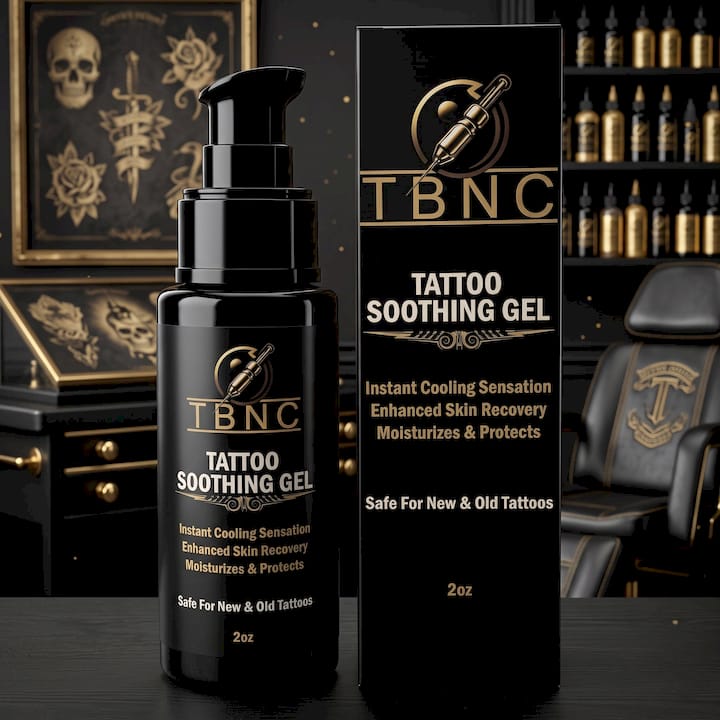
Good aftercare doesn’t need to be complicated, but it does need the right product for the right stage. TBNC Tattoo’s Tattoo Soothing Gel is formulated for that first wave of warmth and tenderness, giving fresh ink a cooling, dermatologist-approved layer of relief without fragrance or harsh additives. As the surface starts peeling and needs a barrier against friction, the Tattoo Aftercare Balm locks in moisture and protects against the rubbing that keeps hands, feet, and rib pieces red longer than they need to be.
Once you’re past the early stage and into long-term hydration, the Tattoo Aftercare Lotion - Unscented keeps skin supple without introducing scents or dyes that can trigger contact dermatitis. All three come from the same dermatologist-approved line trusted across thousands of studios worldwide. Browse the full aftercare collection to build a routine that matches your healing stage, or check TBNC Tattoo’s numbing cream lineup before your next session if long sittings are part of your plan.
Sources
- Tattoo aftercare | Cleveland Clinic
- Is my tattoo or piercing infected? | Fishtown Medicine
- Tattoo infection | Cleveland Clinic
- Health
This article is general information, not a substitute for advice from a qualified doctor. Consult a qualified healthcare professional about your own circumstances before acting on anything here.
FAQ
How Long Is Redness Normal After a Tattoo?
Mild redness is normal for the first two to four weeks while the surface heals, with the most noticeable redness in the first three to seven days. Deeper skin layers can take up to a year to fully settle, so faint redness returning occasionally isn’t automatically a bad sign.
How Can You Tell If a Tattoo Is Healing Poorly?
The clearest sign is trajectory: redness, pain, or drainage that gets worse after day three instead of improving. Thick yellow or green pus, fever, red streaks, or redness spreading past the tattoo’s edge all point toward infection rather than normal tattoo healing redness.
Is It Okay If My Tattoo Is Still a Little Red at Five Days Old?
Yes, in most cases. Days four through seven often still show fading redness alongside peeling and itching, which is a normal part of the process. It only becomes a concern if that redness is expanding, more painful than it was a day or two earlier, or paired with fever or pus.
How Can You Tell If Your Body Is Rejecting a Tattoo?
True tattoo rejection is rare and usually shows up as persistent itching, raised bumps, or a rash localized to one specific ink color, often signaling an allergic reaction rather than infection. A dermatologist can confirm this through patch testing, while systemic symptoms like fever call for a primary care or urgent care visit instead.


